Should You Enable Automatic Device Locking Using Bluetooth Dynamic Lock In Windows 11

Dynamic Lock in Windows 11 locks your PC automatically when you step away. It does this by measuring the Bluetooth signal strength of your paired phone. When you walk out of range and the signal stays weak for about 30 seconds, Windows brings up the lock screen so no one else can see your work.
You need to pair your phone to your computer via Bluetooth before you can turn this feature on. Bluetooth range changes with walls, furniture and radio interference, so the lock does not happen at the same distance or the same moment every time you leave.
So should you enable it? For most people with a phone in their pocket, yes. It costs nothing and covers the times you forget to press Win+L. Keep these limits in mind:
- The PC stays unlocked for roughly 30 seconds after you leave, so it is a safety net, not a replacement for locking the PC yourself.
- It only locks the PC. It does not unlock it when you come back, so you still sign in as usual.
- If you leave your phone on the desk, the PC sees it as still nearby and does not lock.
- Keeping Bluetooth on all day uses a little more battery on a laptop and on your phone.
Yes. Dynamic Lock automatically locks your PC when your paired Bluetooth phone leaves range, covering times you forget to manually lock it. For most people with a phone, enable it in Settings Accounts Sign-in options Dynamic lock by ticking Allow Windows to automatically lock your device when you’re away.
Prerequisites for Setting Up Dynamic Lock in 🪟 Windows 11
You must also pair your smartphone to the PC before the feature will work. If the hardware is missing, or the phone is not paired, the Dynamic lock option stays greyed out in Settings. Check the three items below before you go further.
- Your Windows 11 computer must have built-in Bluetooth or a working Bluetooth USB adapter.
- You must own a smartphone or another Bluetooth -enabled device that you can physically carry with you.
- Your phone must be actively paired to your Windows 11 computer via Bluetooth before you begin the configuration process.
If you are not sure the PC has Bluetooth , look for a Bluetooth entry on the Bluetooth & devices page in Settings. If that toggle is missing altogether, the PC has no working Bluetooth radio or its driver is not installed.
How to Pair Your Smartphone via Bluetooth
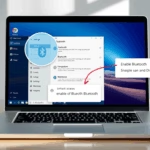
To pair your phone, open Bluetooth & devices in Settings, turn on the main Bluetooth switch, and click Add device. The PC and phone must establish an active Bluetooth link before you can use automatic locking. This works the same way on Home and Pro.
- Open Settings (press Windows key + I) and select Bluetooth & devices from the left-hand menu.
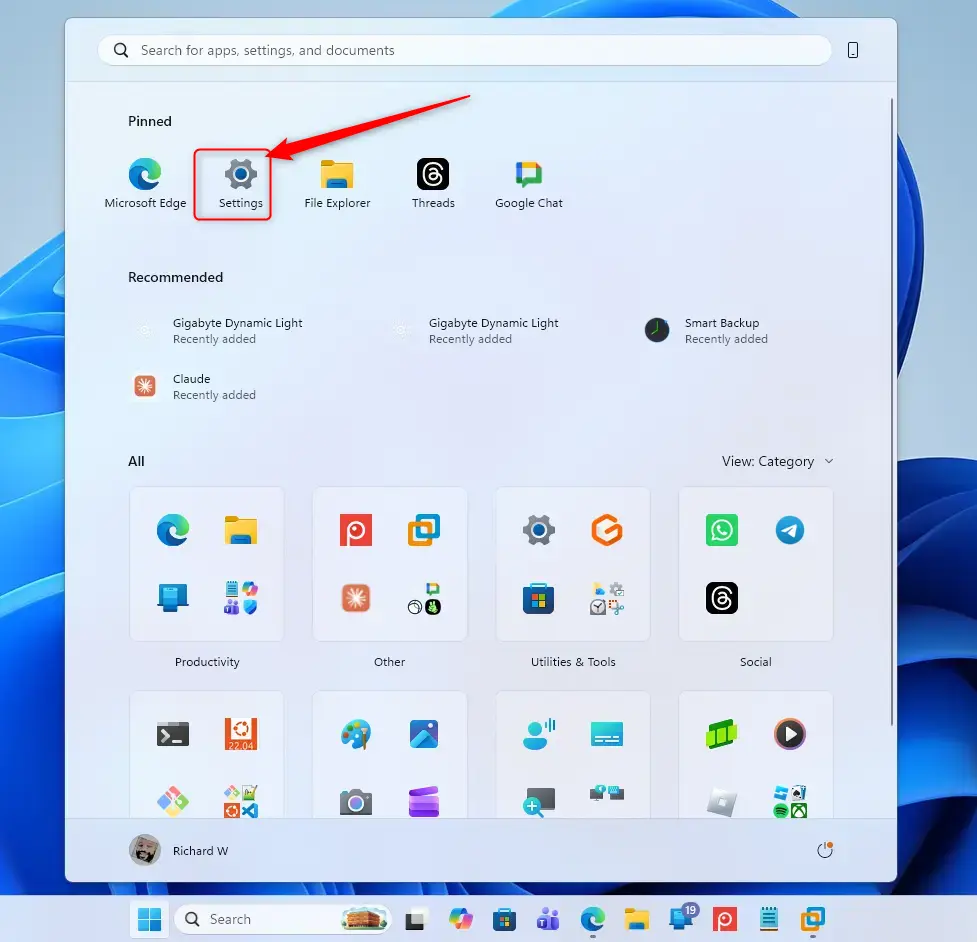
Windows 11 Start menu with Settings gear icon highlighted. - Turn on the main Bluetooth toggle switch if it is currently off. It should now read On.
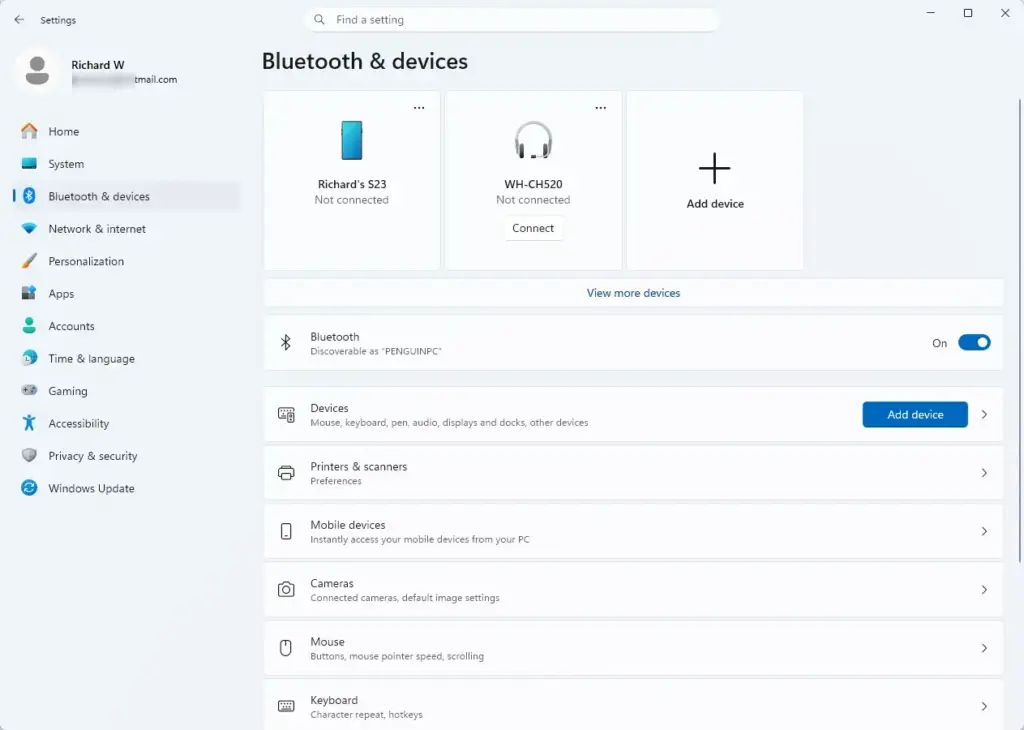
Windows Settings menu highlighting the Bluetooth and devices option for printers - Click the Add device button near the top of the window. The Add a device window opens.
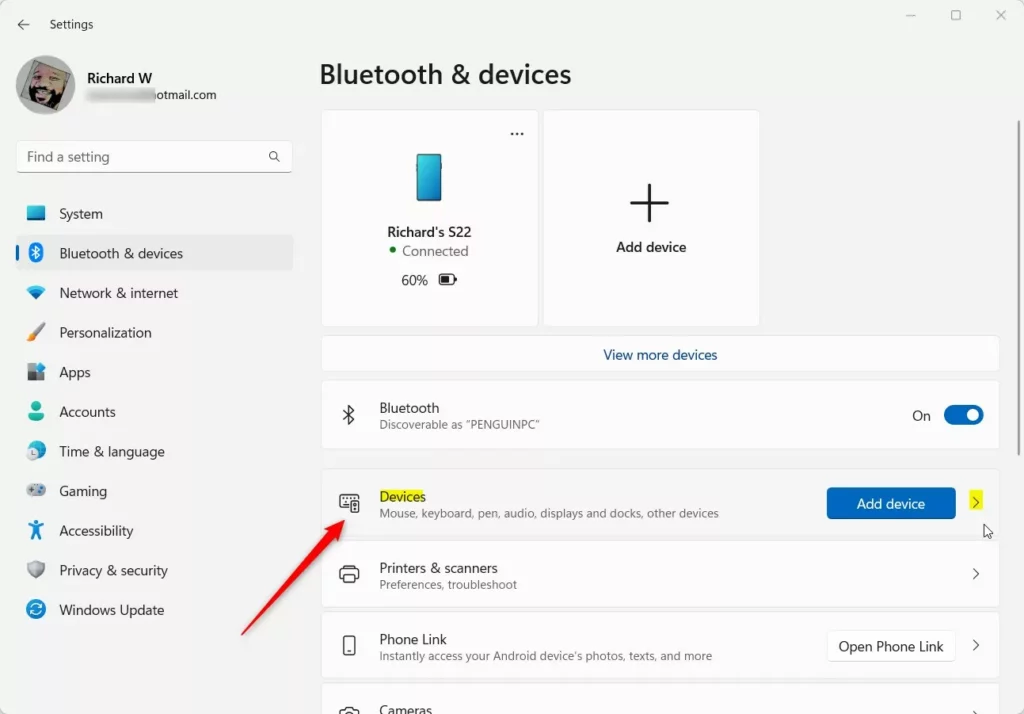
Windows 11 Bluetooth and devices settings with add device option. - Choose Bluetooth in the Add a device window. Windows starts searching for nearby devices.
- On your smartphone, turn on Bluetooth and make it discoverable. On most phones, keeping the Bluetooth settings screen open does this. Then select your phone from the list of available devices on your computer screen.
- Confirm that the numeric PIN matches on both your computer and your phone. Then click Connect on the PC, accept the pairing request on the phone, and select Done.
Your phone should now appear under your devices in Bluetooth & devices. If it does not show up in the search list, move the phone closer to the PC and check that its Bluetooth screen is still open.
How to Enable Dynamic Lock in 🪟 Windows 11 Settings
Once the phone is paired, turning on Dynamic lock takes a few clicks. You open Settings, go to Accounts, select Sign-in options, and tick the box in the Dynamic lock section. Windows can then lock your screen when you walk away.
- Click Accounts in the left-hand navigation pane of Settings.
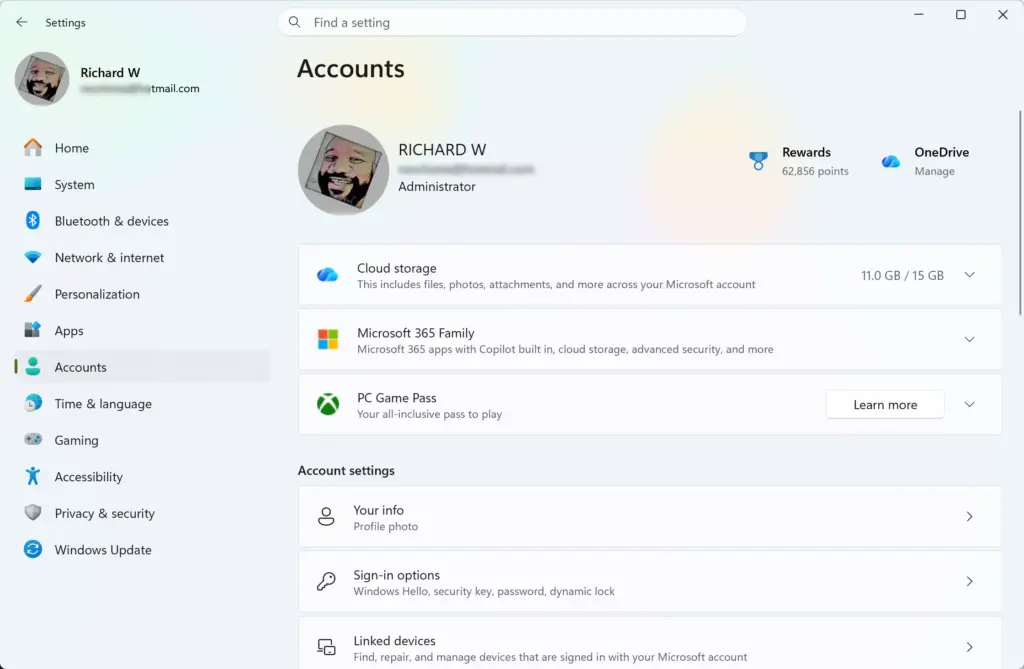
Settings › Accounts - Select Sign-in options from the account settings choices.
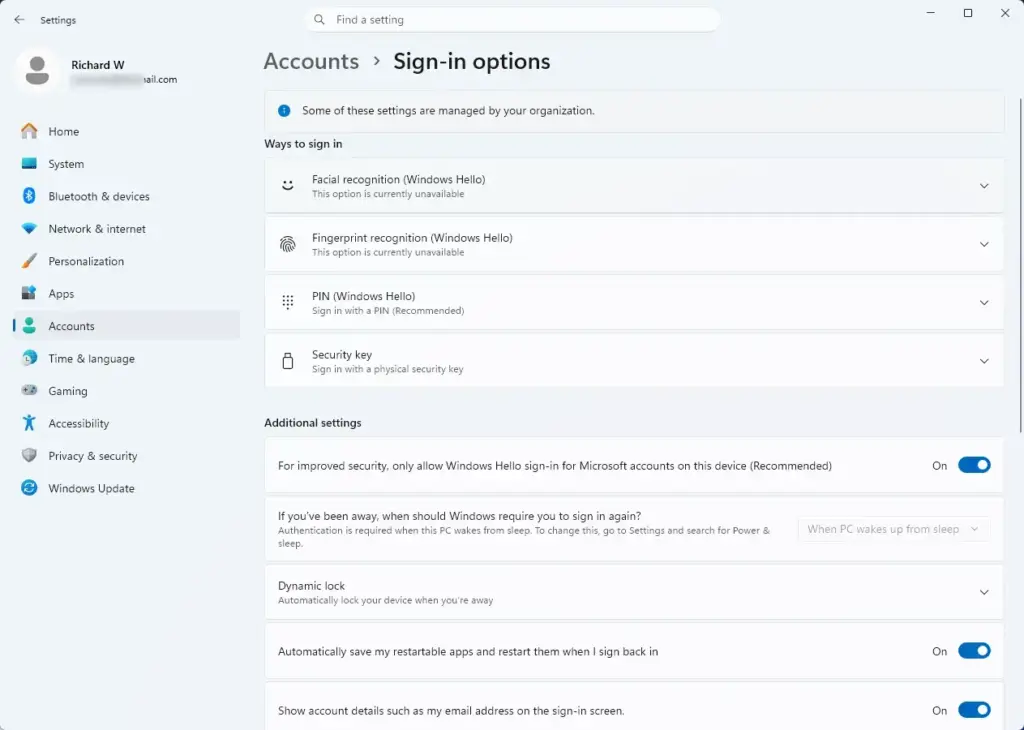
Settings › Accounts › Sign-in options - Scroll down until you find the Dynamic lock section, then click it to expand the menu.
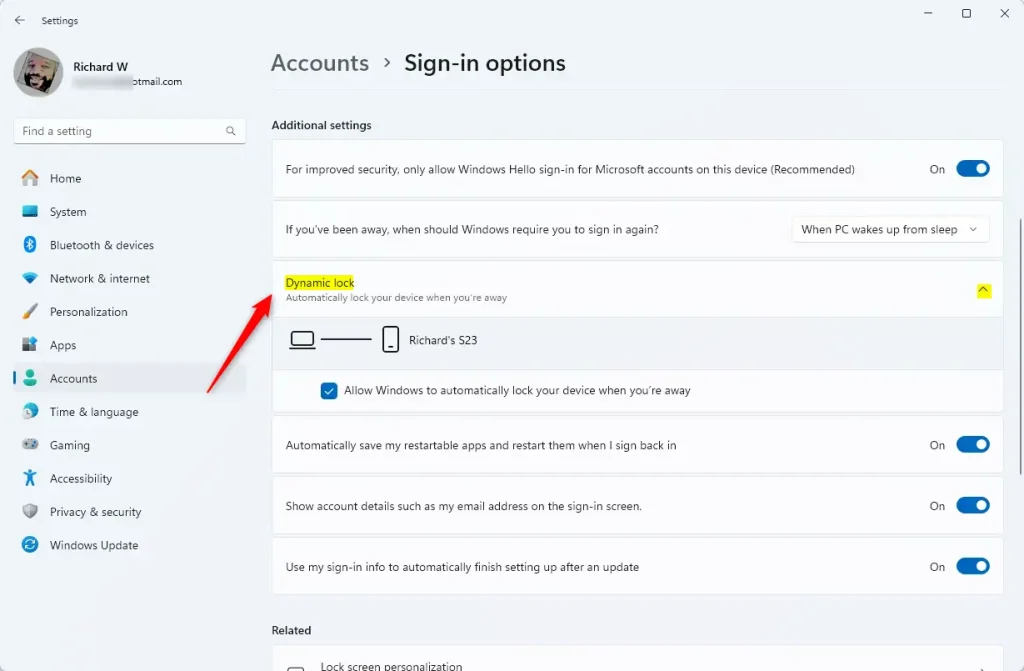
Windows 11 Dynamic Lock settings screen showing pairing options. - Tick the box next to Allow Windows to automatically lock your device when you're away. If the box is greyed out, the phone is not paired or Bluetooth is off, so go back to the pairing steps.
- Confirm that your paired smartphone's name appears below the checkbox. That tells you Windows has linked the device to the lock feature.
No restart is needed. To test it, keep the phone in your pocket, walk out of Bluetooth range and wait about 30 seconds or a little longer. When you come back, the lock screen should be showing. To turn the feature off later, clear the same checkbox.
Configuring Dynamic Lock via Group Policy Editor
You can also configure Dynamic lock through the Local Group Policy Editor. This lets you enforce automatic locking on Windows 11 Pro, Enterprise or Education, and you need administrator privileges. It is useful if you manage several machines and do not want to change each one by hand. Windows 11 Home does not include the Local Group Policy Editor, so Home users should use the Settings method above.
- Press Windows key + R to open the Run dialog box, type
gpedit.msc, and press Enter. The Local Group Policy Editor opens. - In the left directory tree, expand Computer Configuration, then Administrative Templates, then Windows Components. Click Windows Hello for Business.
- In the policy list on the right, double-click Configure Dynamic Lock factors. The configuration window opens.
- Select the Enabled radio button in the top-left corner of the window.
- Review the signal rule options in the Options pane at the bottom. Leave them alone unless you know which rules your organisation wants.
- Click Apply and then OK to save your changes and close the policy window.
- Restart your computer so the new policy takes full effect across your user profile.
If this didn't work
If Dynamic lock does not work, check for wireless driver updates, remove and re-pair your phone, or fall back on locking manually. These steps clear out a bad pairing and fix connection drops that stop your PC from noticing when you walk away. Work through them in this order, and test after each one.
- Check that Bluetooth is still On in Bluetooth & devices, and that Bluetooth is on and connected on your phone.
- Update the Bluetooth driver. Open Windows Update in Settings and check Advanced options and Optional updates for driver updates. Otherwise, get the latest Bluetooth driver from your PC or adapter maker.
- Remove the phone. In Bluetooth & devices, open Devices, select the three-dot menu next to your phone and choose Remove device. Also delete the PC from the Bluetooth list on your phone.
- Pair the phone again using the pairing steps earlier in this tutorial, then recheck the Dynamic lock checkbox under Sign-in options.
- If it still fails, lock the PC yourself with Windows key + L whenever you leave. It is quick and does not depend on Bluetooth range.
Was this guide helpful?

About the Author
Richard
Tech Writer, IT Professional
Richard is a writer at Geek Rewind who turns complex IT tasks into clear, step-by-step guides. He draws on years of hands-on experience in system administration and enterprise IT operations, focusing on Windows, Linux and WordPress: the problems people actually run into, and the fixes that work. His server and WordPress guides come from systems he runs himself. Richard builds and maintains the platform behind Geek Rewind, from its Ubuntu servers and Nginx configuration to its custom WordPress plugins. Many new tutorials start with readers' questions, and he's always glad to answer them in the comments.
No comments yet — be the first to share your thoughts!