How to Unpair Bluetooth Devices on Windows 11

Unpairing a Bluetooth device on Windows 11 removes it from your saved device list. Your PC then stops trying to connect to old mice, headphones, or speakers you no longer use. Removing old hardware keeps the connection menu short and stops Windows from searching for gear that is gone.
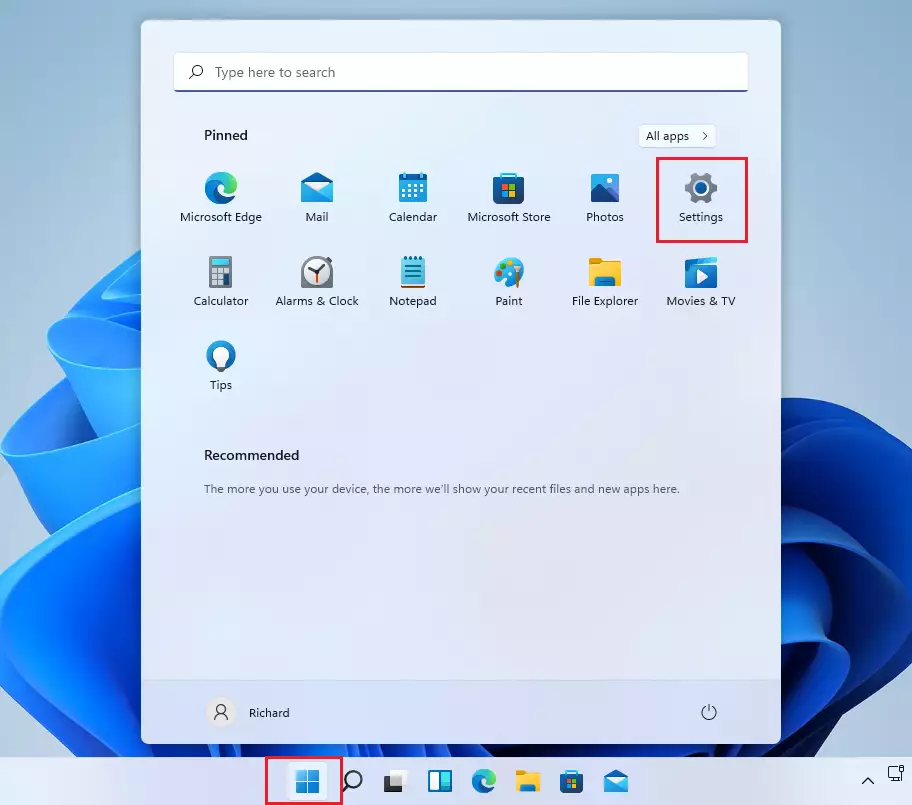
The quickest route is the Settings app. Press the Win plus I to open Settings , select Bluetooth & devices, and pick the item you want to remove. You do not need admin rights for this. If the device was only paired and never installed with extra software, the removal takes a few seconds.
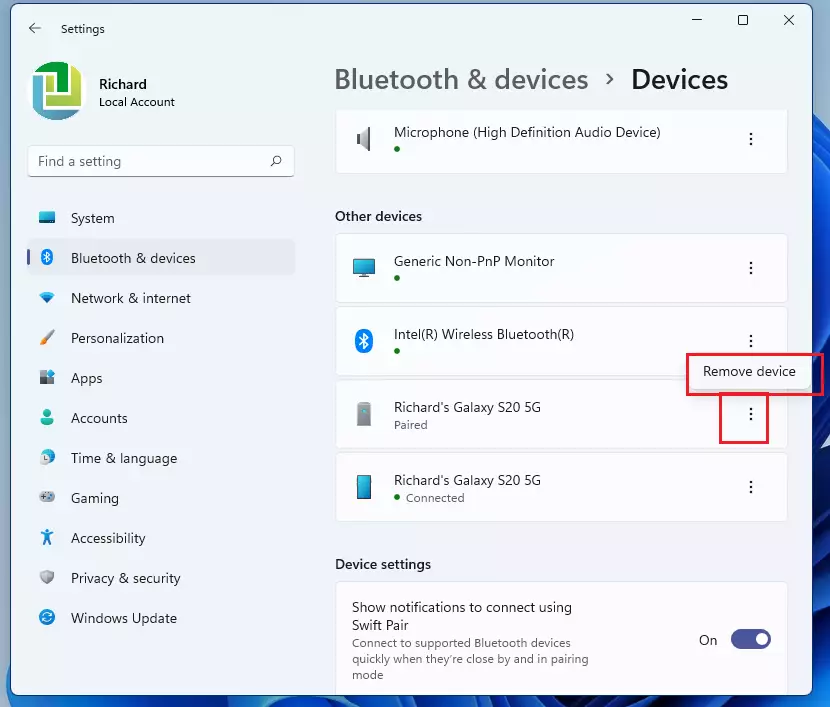
Press the Win plus I to open Settings , select Bluetooth & devices, then Devices. Find the device you want to remove, click the three dots next to it, and select Remove device. Windows disconnects and forgets it immediately.
Standard Removal Method
To unpair a device through Settings, work through these steps:
- Press the Win plus I to open Settings .
- Select Bluetooth & devices from the left menu. The Bluetooth page opens on the right.
- Make sure the Bluetooth toggle is set to On. If it is Off, the paired list may not load properly.
- Select Devices to see everything your PC has paired with.
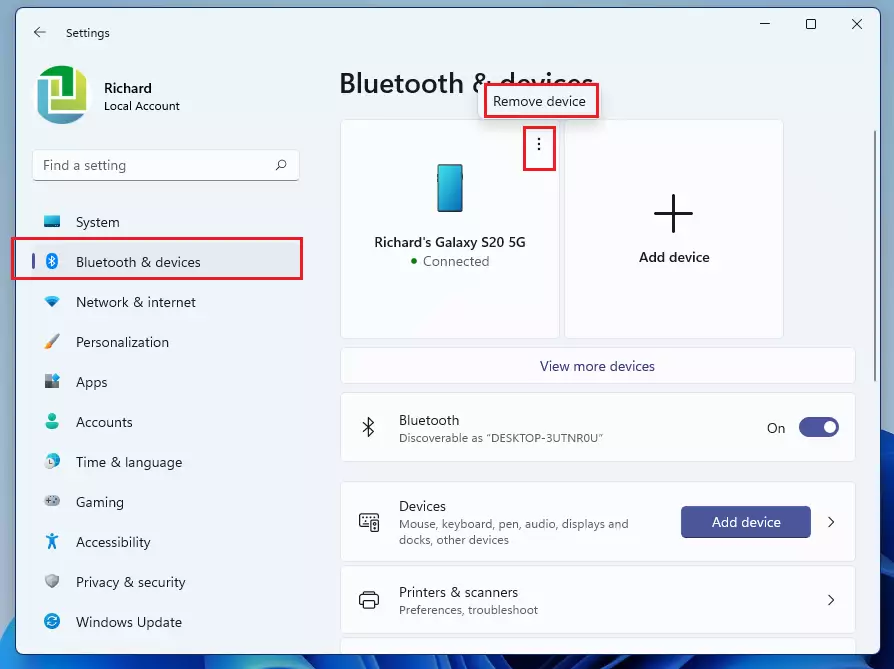
You will see a list of all devices currently paired with your computer. Connected devices are labelled as such, and devices that are paired but switched off or out of range show as Paired or Not connected.
If the device is nearby, switch it on first so Windows can talk to it, then follow these steps:
- Find the device in the list.
- Click the three dots (the ellipse) next to the device name.
- Select Remove device.
You do not need the device to be switched on or in range to remove it. To remove a Bluetooth device that is not currently near your computer, open the Bluetooth settings and go to the list of paired devices. Click the name of the device you wish to remove, or use the three-dot menu beside it, and select Remove device. Confirm if Windows asks. Windows 11 will disconnect and forget the device.
The headphones or speaker may still remember your PC. If you pair them again later, put the device into pairing mode first. If it still refuses, reset the device using the maker's instructions.
- Click on View more devices.
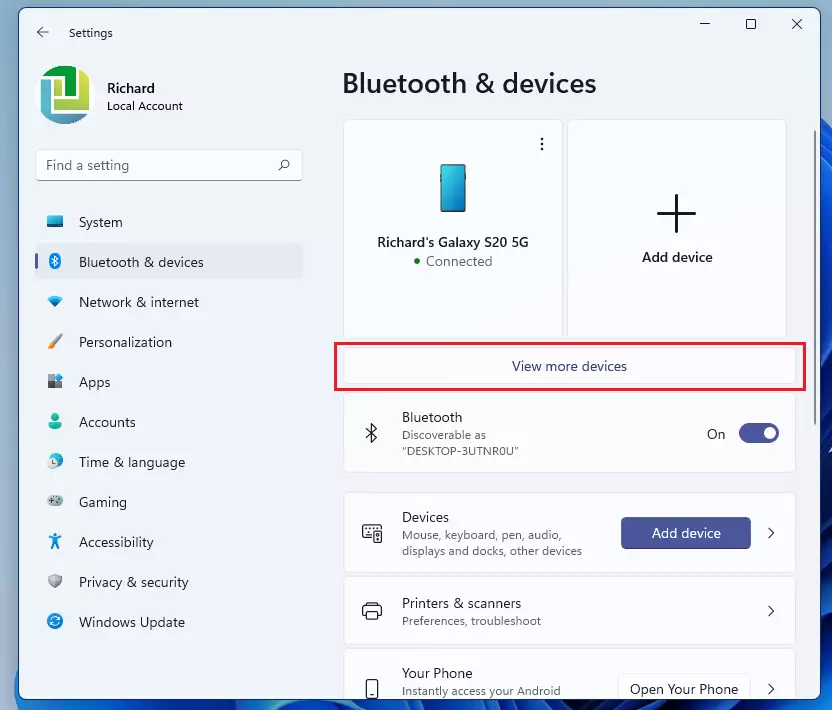
Some hardware does not appear in the main paired list. It shows up under "Other devices" instead, usually because it is a dongle, a receiver, or a device that Windows does not class as a standard Bluetooth accessory. If the device is listed there, do the following:
- Scroll down to the Other devices section.
- Click the three dots next to the device you want to delete.
- Select Remove device.
Troubleshooting Failed Removals
A "remove failed" error when you unpair a Bluetooth device usually means the background service that handles wireless connections is stuck. Restarting that service fixes it most of the time. You need an administrator account for this.
- Press the Windows key plus R to open the Run box.
- Type services.msc and press Enter. The Services window opens with an alphabetical list.
- Scroll down and find Bluetooth Support Service.
- Right-click it and select Restart. If Restart is greyed out, the service is not running. Choose Start instead.
- Go back to Settings and try to remove the device again.
If restarting the service doesn't work, check the Bluetooth Support Service settings:
- Press Windows key + R, type services.msc, and press Enter.
- Find Bluetooth Support Service in the list.
- Right-click it and select Restart.
If the error still appears after that, restart the PC. A restart clears any half-finished Bluetooth operation that the service could not release, and it is worth doing before you move on to the forced methods below.
Advanced Removal Methods
When the Settings app fails to remove a device, you can force it out with Device Manager. This clears stuck or hidden hardware entries. Right-click the Start button and open Device Manager. Click View and choose Show hidden devices. Then expand the Bluetooth section to find the problem device.
Those are devices that were paired before but are not currently present, and they are often the ones that cause trouble. Right-click the device and choose Uninstall device. Do not tick the option to delete the driver unless you know you want it gone, because that can affect other devices that share the same driver. Follow the steps below:
- Right-click the Start button and select Device Manager.
- Click View and select Show hidden devices.
- Expand the Bluetooth section.
- Right-click your problematic device and select Uninstall device.
After the device is removed, restart your PC and check the paired list in Settings. If the entry has gone, you can pair the device again whenever you need it.
You can also use Command Prompt to force removal. Open it as an administrator, because the command will not run with normal rights. Use the command shown below:
[Requires Admin Privileges]devcon.exe remove *YourDeviceID*
Summary
If a device keeps coming back or still will not go, these points are worth checking:
- Open Settings using Windows key + I.
- Go to Bluetooth & devices to remove standard connections.
- Use services.msc to restart the Bluetooth Support Service if removal fails.
- Use Device Manager to uninstall stubborn drivers.
- Always restart your computer after making deep system changes.
Was this guide helpful?

About the Author
Richard
Tech Writer, IT Professional
Richard is a writer at Geek Rewind who turns complex IT tasks into clear, step-by-step guides. He draws on years of hands-on experience in system administration and enterprise IT operations, focusing on Windows, Linux and WordPress: the problems people actually run into, and the fixes that work. His server and WordPress guides come from systems he runs himself. Richard builds and maintains the platform behind Geek Rewind, from its Ubuntu servers and Nginx configuration to its custom WordPress plugins. Many new tutorials start with readers' questions, and he's always glad to answer them in the comments.

No comments yet — be the first to share your thoughts!