How to Create Desktop Shortcuts for Microsoft Store Apps

A desktop shortcut for a Microsoft Store app lets you open it with a double-click from your main screen, instead of digging through the Start menu . Windows keeps Store apps in protected system folders and gives you no “Create shortcut” option when you right-click them in the usual places. That is why launching them can take a few extra clicks.
You can make a shortcut for any app in under 60 seconds. The quickest way is to drag the app’s icon from the Start menu onto your desktop. This guide also covers a second method that uses a hidden Applications folder, and it works when dragging from Start does not.
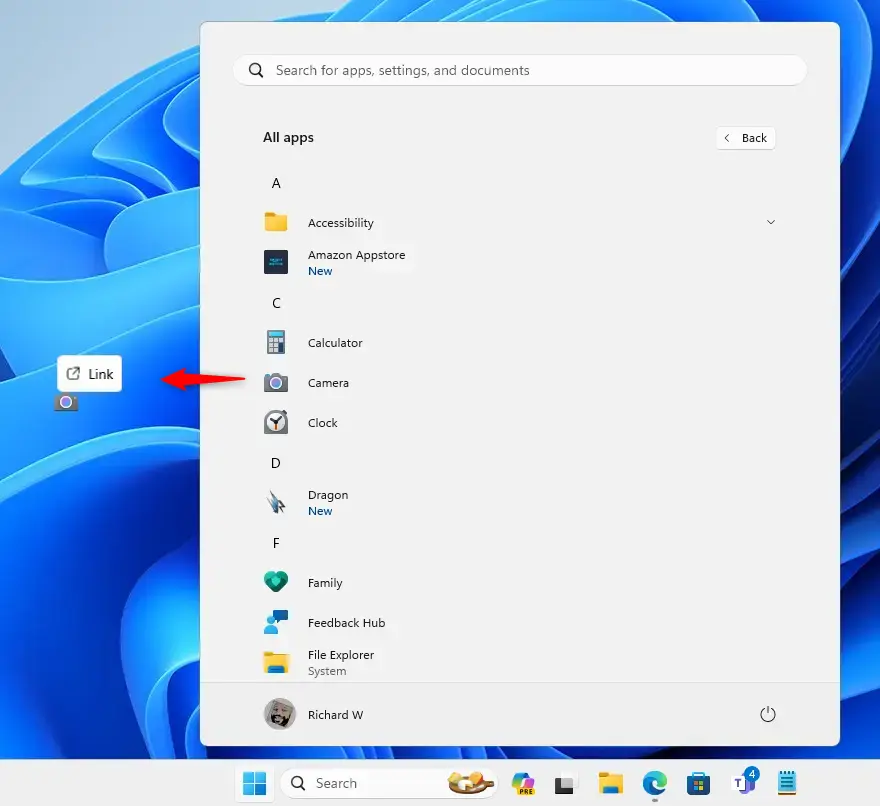
Drag the app’s icon from Start All apps onto your desktop. Open the Start menu , click All apps, then click and hold the app’s icon and drag it onto the desktop until a Link label appears, and release. The shortcut appears with a small arrow on its icon.
Why Create Desktop Shortcuts for Microsoft Store Apps?
A desktop shortcut opens a program much faster than going through the Start menu . It is a small pointer to the app, so creating one does not move, copy or change the app itself.
Daily tasks go more smoothly when your most-used apps sit right on the screen. Programs like Calculator or Calendar then take a single double-click to open. Shortcuts also save you from remembering where Windows filed each app or scrolling a long app list.
Create Desktop Shortcuts from the Start Menu
Method 1 is the simplest. You drag the app from the Start menu ’s app list straight onto your desktop. It takes the same steps on Windows 11 Home and Pro, and you do not need administrator rights or a restart.
In short: open the Start menu , click All apps to find the program, and drag its icon onto the desktop. The steps below go through it one at a time.
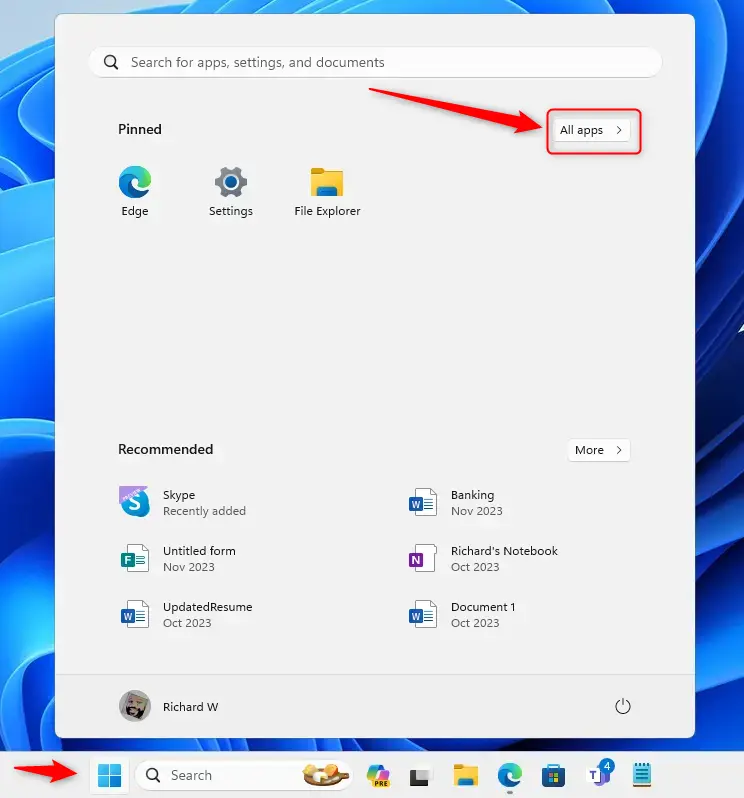
- Open the Start menu and click All apps. You will see an alphabetical list of every installed app, Microsoft Store apps included. Scroll down to the app you want, or click a letter heading to jump to it.
- Click and hold the app’s icon, then drag it out of the All apps list and over your desktop. Keep the mouse button held until a Link label appears next to the icon. Then release the button to drop the app on the desktop. The new shortcut appears on the desktop with a small arrow on its icon. If the Start menu closes and covers nothing but the desktop, that is normal. If the label does not appear or nothing is created, use Method 2 instead.
Create Desktop Shortcuts from the Apps Folder
It lists every app installed for your account, including Store apps, in one File Explorer window. This is the most reliable way to build a shortcut when the Start menu drag does not work. It also helps with apps that are hard to find in All apps.
In short: open File Explorer (Win+E), type shell:appsfolder into the address bar, and press Enter. Find your app in the list and drag its icon onto the desktop to finish the shortcut.
- Open File Explorer by pressing Win+E, or by clicking the folder icon on the taskbar . A File Explorer window opens.
- Click the address bar at the top of File Explorer and type the following command. Then press Enter to open the Applications folder. You will see a list of all your installed apps, with icons and names.
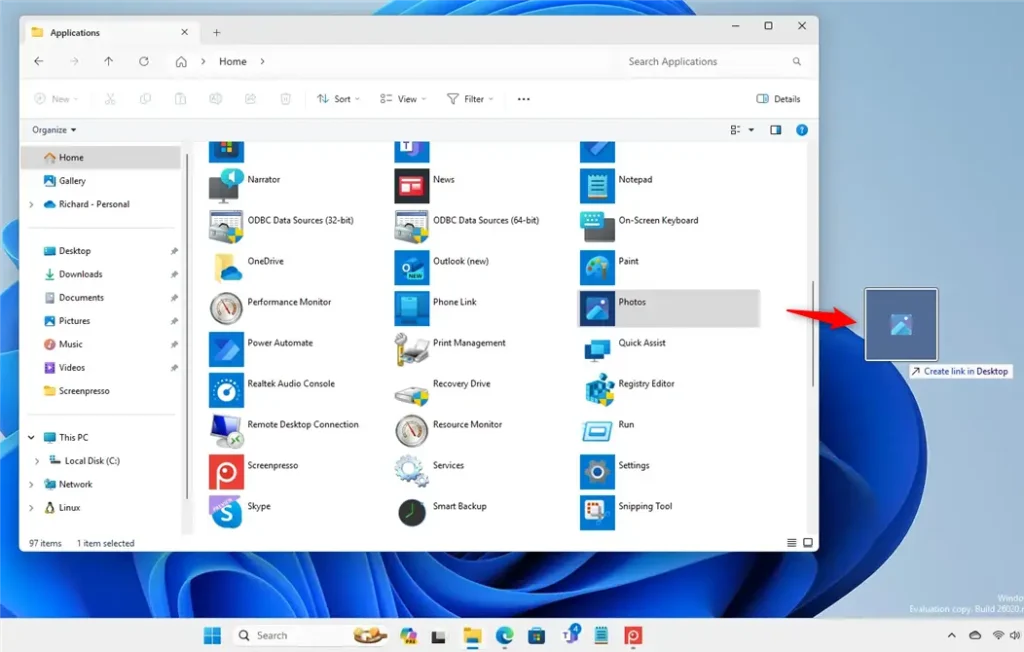
shell:appsfolder- Find the app in the list, then drag its icon from the Applications folder to the desktop. Keep holding the button until the Create link option appears on the desktop, then drop the app there. You need part of the desktop visible to do this, so make the File Explorer window smaller or move it aside first. The shortcut then appears on your desktop.
Alternatively, right-click the app’s icon in the Applications folder and select Create shortcut. On Windows 11 you may need to click Show more options first to see the full menu. Windows will say it cannot create a shortcut in that folder and offer to place it on the desktop instead. Click Yes to accept.
Double-click the new icon to check that the app opens. To undo it, right-click the shortcut and choose Delete. This removes only the shortcut. The app stays installed and is still in the Start menu .
Summary
Desktop shortcuts for Microsoft Store apps save time because you can open your favorite programs at once. You no longer need to hunt through menus or open the Microsoft Store each time you want to launch an app. Daily work gets faster and easier.
Efficient workflow: Desktop shortcuts streamline your work by giving you direct access to specific apps. You skip the Microsoft Store and the Start menu entirely.
Desktop icons are convenient because one double-click launches the app you want. Tasks start sooner, so you get more done over the day.
Have a question about this guide?
Answered by AI from this guide. Good questions may be added to this page — please don't include personal details.
Did this guide fix your problem?

About the Author
Richard
Tech Writer, IT Professional
Richard is a writer at Geek Rewind who turns complex IT tasks into clear, step-by-step guides. He draws on years of hands-on experience in system administration and enterprise IT operations, focusing on Windows, Linux and WordPress: the problems people actually run into, and the fixes that work. His server and WordPress guides come from systems he runs himself. Richard builds and maintains the platform behind Geek Rewind, from its Ubuntu servers and Nginx configuration to its custom WordPress plugins. Many new tutorials start with readers' questions, and he's always glad to answer them in the comments.
[…] are multiple ways to install the app. You can get it from the Microsoft Store, download its executable and install or use the winget […]
[…] the command line or shortcut, you can open Edge InPrivate browsing window. Below are the commands to do […]