How to Use Pop-Out Window in Outlook for Windows 11


The pop-out window feature in the new Outlook for Windows 11 opens draft emails and replies in a separate, dedicated window instead of your main inbox view. You get more room to type, and you can keep the inbox open next to your draft.
By default, new emails and replies open inline, right inside the main inbox view. The steps below change that setting so every new message, reply and forward opens in its own window.
Open Outlook settings via the gear icon, navigate to Mail Compose and reply, and select “Pop-out to a new window” under Pop-out settings. You can also use Ctrl+O or double-click an email to open it in a separate window.
Write, reply, and forward a message in a new window in Outlook
With a pop-out window you can write, reply to and forward emails in a separate window while you check your main inbox at the same time. The setting lives in the new Outlook app. The classic Outlook desktop app has its own, different options, so if your window looks different from the screenshots, check that you are in the new Outlook.
Follow these steps to configure the setting.
- First, open the new Outlook app on Windows 11.
- Click Start All apps Outlook. Alternatively, type Outlook in the Start menu search box and open it from the results. Wait for your mailbox to load.

- When the app opens, click the
Settingsbutton (the gear icon at the top right). The Settings window should open.

- In the Settings window, pick the mail settings tab in the left sidebar. Then choose Layout in the right pane. The path is Settings Mail Layout
If you have more than one email account in Outlook, the message format settings apply to one account at a time. Select the account you want to change first. Then repeat the same steps for each additional account you want to set up.
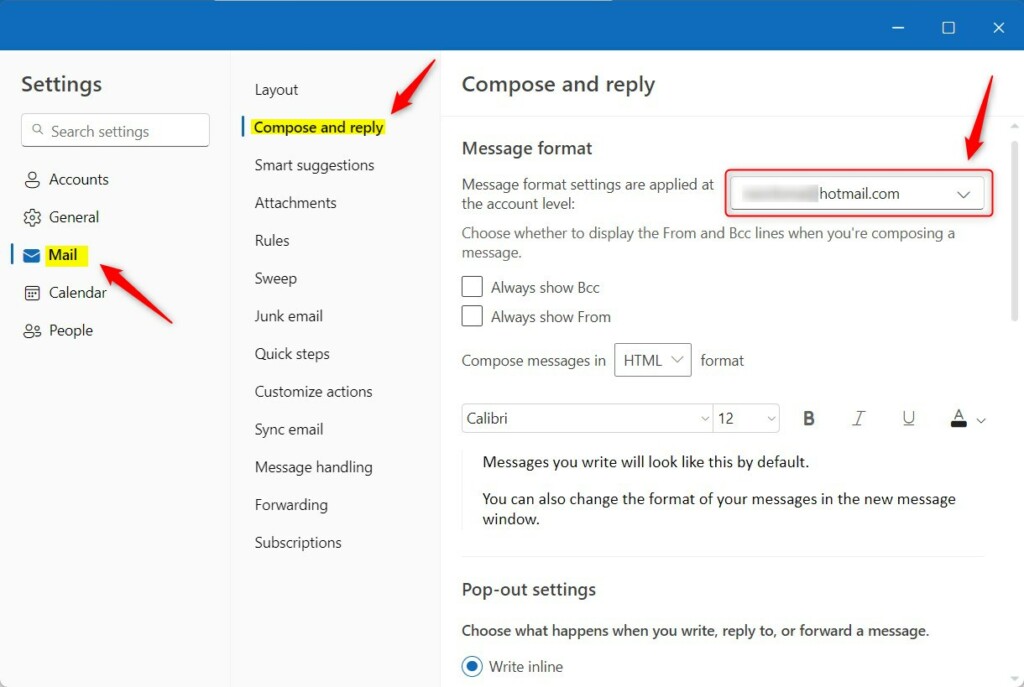
- On the Layout settings page, scroll down to the Pop-out settings section.
- Choose one of the available options:
- Write inline – Opens the message in the same window, inside the main Outlook view. This is the default behavior.
- Pop-out to a new window – Opens each new message, reply or forward in a new, separate window.
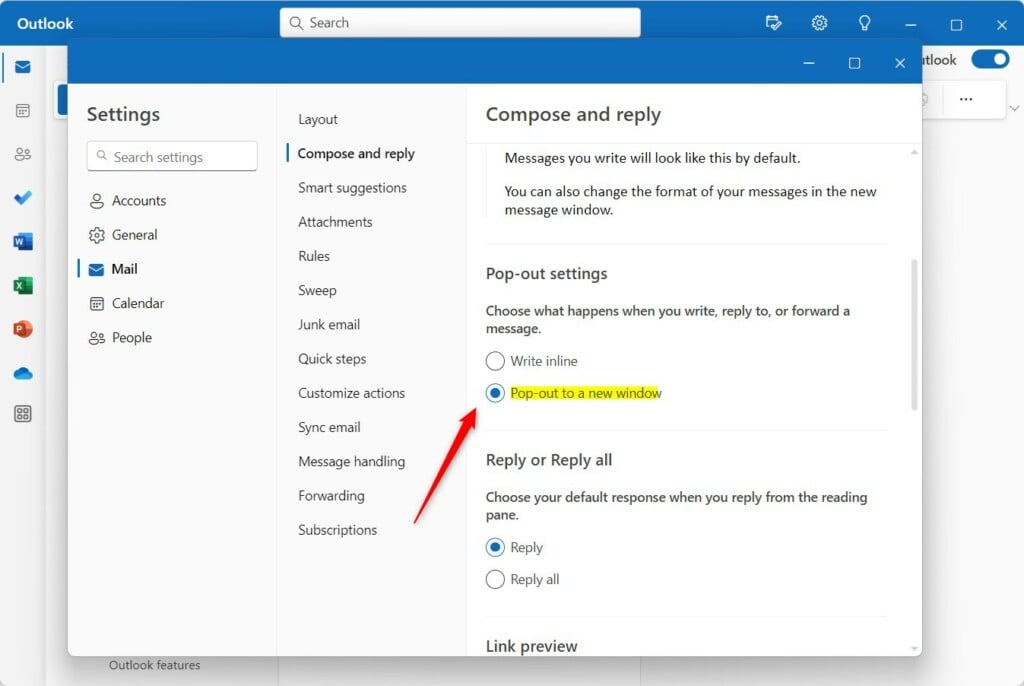
- Make your selection and save the changes. If a Save button is shown at the bottom of the Settings window, click it. Then close Settings.
- Test it. Select a message and click Reply, or start a new email. The draft should now open in its own window. No restart of Outlook or Windows is needed.
To undo the change, go back to Settings Mail Layout, select Write inline again and save. That completes the setup process.
Conclusion:
- The new Outlook app in Windows 11 lets you write, reply to and forward messages in a separate pop-out window.
- A pop-out window gives you a larger composing area. It also keeps your inbox and other emails from distracting you while you write.
- It makes multitasking easier. You can look up other emails or information in the main window while your draft stays open.
- A separate window also lowers the risk of losing a message in progress. Closing or switching the main Outlook view by accident no longer takes your draft with it.
- Because the setting is per account, you can match it to your own workflow on each mailbox.
Have a question about this guide?
Answered by AI from this guide. Good questions may be added to this page — please don't include personal details.
Did this guide fix your problem?

About the Author
Richard
Tech Writer, IT Professional
Richard is a writer at Geek Rewind who turns complex IT tasks into clear, step-by-step guides. He draws on years of hands-on experience in system administration and enterprise IT operations, focusing on Windows, Linux and WordPress: the problems people actually run into, and the fixes that work. His server and WordPress guides come from systems he runs himself. Richard builds and maintains the platform behind Geek Rewind, from its Ubuntu servers and Nginx configuration to its custom WordPress plugins. Many new tutorials start with readers' questions, and he's always glad to answer them in the comments.
[…] default From address, backing up your mailbox, changing the reading pane, opening a new window for a message, language translations, turning text predictions on or off, switch primary […]
[…] default From address, backing up your mailbox, changing the reading pane, opening a new window for a message, language translations, turning text predictions on or off, switch primary […]
[…] default From address, backing up your mailbox, changing the reading pane, opening a new window for a message, language translations, turn text predictions on or off, and […]
[…] default From address, backing up your mailbox, changing the reading pane, opening a new window for a message, and […]
[…] forwarding, setting default From address, backing up your mailbox, changing the reading pane, opening a new window for a message, language translations, turning text predictions on or off, switch primary account, sharing a […]
[…] default From address, backing up your mailbox, changing the reading pane, opening a new window for a message, language translations, turning text predictions on or off, switch primary […]
[…] forwarding, setting default From address, backing up your mailbox, changing the reading pane, opening a new window for a message, language translations, turning text predictions on or off, switch primary account, sharing a […]