How to Upgrade from Windows 10 to Windows 11

- 14 steps
- Includes a restart or sign-out
Upgrading from Windows 10 to Windows 11 is free for PCs that meet Microsoft’s hardware requirements. You get a refreshed interface, a redesigned Start menu and Settings app, and newer features. Windows 10 also reaches end of support on October 14, 2025, so after that date it no longer gets security updates. That is a good reason to move if your PC qualifies.
Upgrade from Windows 10 to Windows 11 for free through Settings Update & Security Windows Update, then select Download and install when the Windows 11 offer appears. Your PC must meet the hardware rules, including TPM 2.0 and Secure Boot; run PC Health Check first to confirm. Your files and apps usually carry over.
Latest Update
You can start your free Windows 10 to 11 upgrade directly through the built-in system updater if your PC meets all the hardware rules. This is the easiest and safest way to get the new operating system without needing to download extra tools or create bootable USB drives. Open your system settings, check for new updates, and look for the banner that invites you to download the new software.
There are two main ways to upgrade. The first is Windows Update, which is the easiest because the offer appears in Settings and everything downloads in the background. The second is the Windows 11 Installation Assistant, a small tool you download from Microsoft that runs the upgrade for you. This guide covers Windows Update first, then the fallback options if the offer never shows up.
Upgrade Methods
You can get your free Windows 10 to 11 upgrade using several official methods, including Windows Update, the Windows 11 Installation Assistant, or a bootable USB drive. Before you start, make sure your computer meets the hardware requirements by turning on Secure Boot and having a Trusted Platform Module (a security chip built into your motherboard) version 2.0 turned on in your system firmware.
Check your hardware before you start. Your PC needs a Trusted Platform Module (TPM 2.0 security chip) and Secure Boot enabled in your firmware. It also needs a 64-bit processor with at least two cores at 1 GHz or faster, 4 GB of RAM and 64 GB of storage. Most hardware made after 2017 meets these requirements, but check your specific model rather than assuming. The PC Health Check app does this in a few seconds.
The upgrade replaces the operating system but leaves your personal files where they are.
Even so, back up anything important before a major change like this. Copy your documents, photos and other key data to an external drive or a cloud service. You can go back to Windows 10 within 10 days of upgrading if you change your mind. Do not delete the old Windows files with Disk Cleanup during that window, or the rollback option disappears.
Check if your PC is ready
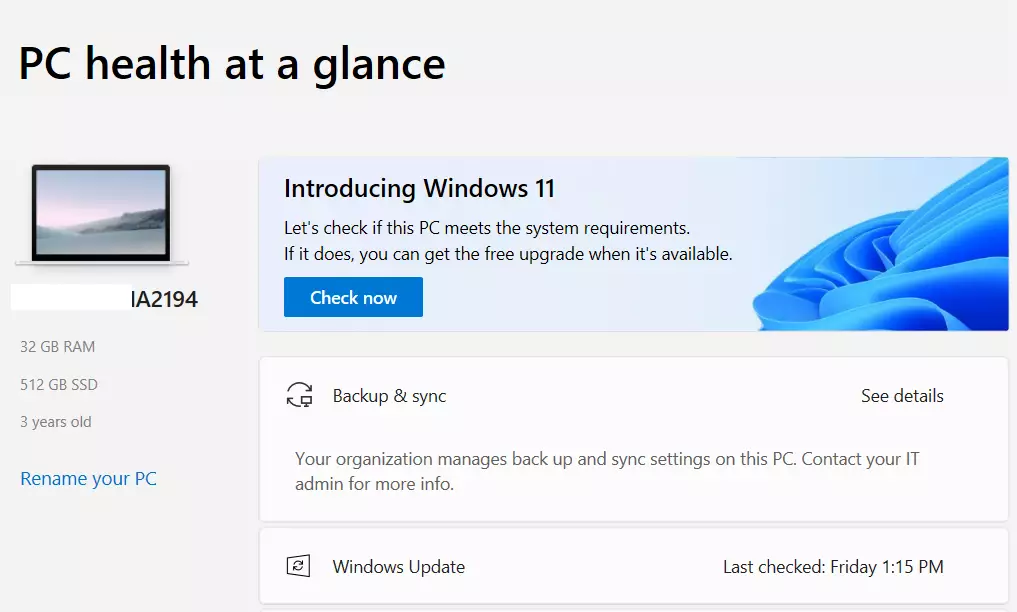
Before you start the upgrade, run Microsoft’s PC Health Check app. It tests whether your PC meets the Windows 11 requirements. If it passes, you can go ahead. If it fails, the app tells you which requirement is the problem. The steps are below.
Using the PC Health Check App
- Download the PC Health Check app from Microsoft’s official website. Use Microsoft’s own site, not a third-party download page.
- Run the installer, then open the application. You should see the PC Health Check window with a banner called Introducing Windows 11.
- Click the Check now button under the Introducing Windows 11 section. The check takes a few seconds.
- Review the results. If the message says your PC can run Windows 11, you can continue. If your PC is not compatible, the app explains why and suggests possible solutions. Note the reason, because it tells you what to fix in the firmware or whether the hardware is simply too old.
- Click the Search box on your taskbar. A search panel opens above it.
- Type
healthinto the box. The matching result appears at the top of the list as you type. - Select PC Health Check App from the results. The app opens in its own window.
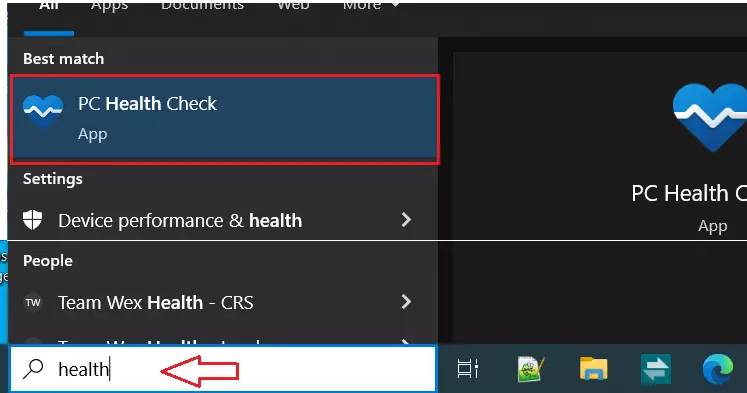
The PC Health Check app scans your processor, memory and security settings and tells you straight away whether your system meets Microsoft’s hardware rules. If your computer fails the check, the app shows which part is the problem. Fix that before you try to install the new operating system. A common cause is a firmware setting that is switched off, which you can change yourself. An unsupported processor is different: the CPU cannot be changed on most PCs, and that usually means the PC cannot officially upgrade.
Installation Methods Comparison
| Method | Best For | Difficulty |
|---|---|---|
| Windows Update | Standard users | Easy |
| Installation Assistant | Forcing an update | Medium |
| Media Creation Tool | Clean install | Advanced |
How to upgrade to 🪟 Windows 11
Once your PC passes the compatibility check, you can start the upgrade from Windows 10 Settings. Windows Update downloads and installs Windows 11 for you. Your PC must be running Windows 10 version 2004 or later, and fully up to date, for the offer to appear. If Windows 10 is behind, install the pending updates first and restart.
Latest Update
Verified systems can launch the upgrade directly inside Windows Update located in Windows 10 Settings. Locate the ‘Upgrade to Windows 11’ prompt. This pathway provides the most convenient route for general users.
- Click the Start button and select Settings (the gear icon). The Windows Settings window opens with a grid of categories.
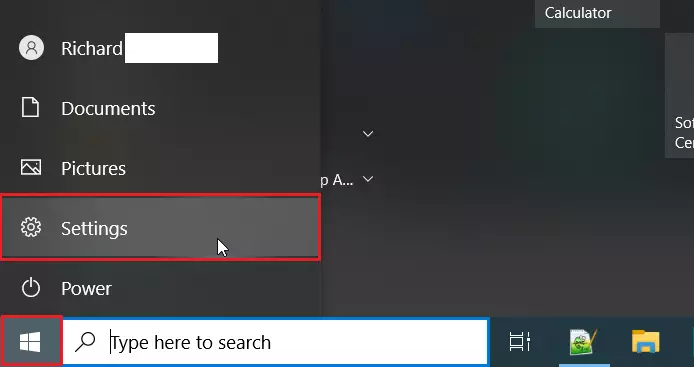
- Click on Update & Security. The Windows Update page usually opens first, with a list of categories down the left side.

- Select Windows Update in the left pane if it is not already open, then click Check for updates. Windows takes a moment to contact Microsoft and then lists anything available.
- If you see “Feature update to Windows 11,” click Download and install. If you do not see it, your PC has not been offered the upgrade yet. Microsoft rolls it out in stages, so the offer may arrive later. You do not have to wait. You can use the Installation Assistant or the Media Creation Tool described later in this guide.

When the files finish downloading, Windows asks you to restart. Save your work and click the restart button. The setup tools then start automatically and finish the configuration. The PC may restart more than once, and the screen may show a progress percentage for a while. That is normal. Do not turn off the power during this stage, and keep a laptop plugged in.
- Click Next to continue the setup process. If the setup window shows a license agreement, read it and accept it to move on.

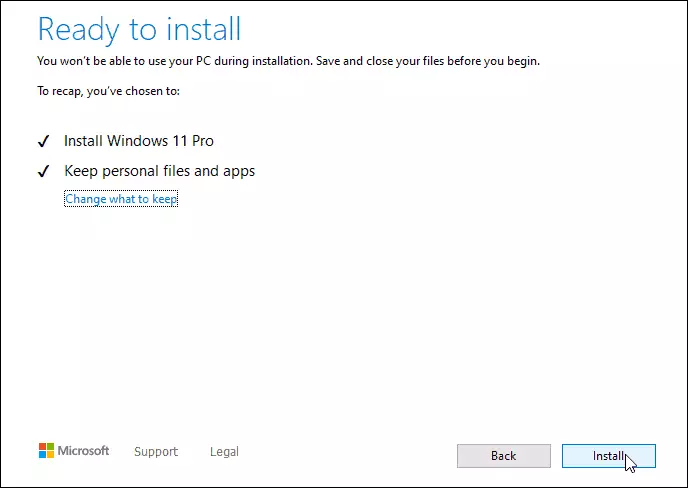
- Choose which files and apps you want to keep, then click Next. Keeping personal files and apps is the safest choice for a normal upgrade. Choosing to keep nothing removes everything on the drive.
- Click Install to begin. This may take some time depending on your internet speed and how fast your drive is. When it finishes, the PC restarts into Windows 11 and shows the new sign-in screen.
Troubleshooting and Errors
Most errors during the upgrade come from security settings that are switched off in your motherboard’s firmware. A message like “What needs your attention” usually means Secure Boot or Trusted Platform Module (TPM, a hardware-based security system) 2.0 is turned off. To fix it, restart your computer and enter the firmware settings (often called BIOS or UEFI). The key to press at startup depends on the manufacturer. Common ones are Delete, F2 and F10. Turn both features on, save, and exit.
The names vary by maker. On Intel PCs, TPM may be listed as PTT. On AMD PCs it may be listed as fTPM. Secure Boot also needs the PC to start in UEFI mode, not legacy mode (CSM), so you may have to change that setting too. Run PC Health Check again afterwards to confirm the error is gone. If you cannot find a TPM option anywhere, the PC probably has no TPM 2.0 and cannot officially upgrade.
Summary
Meeting the hardware requirements is what makes the upgrade work smoothly, so always run the PC Health Check app first. It takes under a minute and saves you from a failed install halfway through.
Alternative Installation: Media Creation Tool
Use the Media Creation Tool when Windows Update fails to offer the upgrade, or when you want to install the operating system from scratch. This official Microsoft tool downloads the installation files onto a blank USB flash drive or saves them as an ISO file. A drive of at least 8 GB works. The tool erases everything on the USB drive, so copy off anything you need first. You can then start the installation from that drive.
There is a difference in how you start it. If you run the setup file from the USB drive while you are signed in to Windows 10, you can choose to keep your files and apps. If you boot the PC from the USB drive, you get a clean install, and everything on the system drive is wiped. Back up your data before you do that.
Rollback Option
You can go back to Windows 10 within 10 days of upgrading if you change your mind. Navigate to the recovery menu and select ‘Go back’. After 10 days pass, reverting requires a complete clean installation of Windows 10.
Is the 🪟 Windows 11 Upgrade Free?
The upgrade costs nothing for qualifying PCs. Your existing Windows 10 license carries over to Windows 11, so you do not need to buy a new one or enter a product key. Activation stays in place throughout the process. After the upgrade, you can check it in Settings System Activation. It should show that Windows is activated.
Have a question about this guide?
Answered by AI from this guide. Good questions may be added to this page — please don't include personal details.
Did this guide fix your problem?

About the Author
Richard
Tech Writer, IT Professional
Richard is a writer at Geek Rewind who turns complex IT tasks into clear, step-by-step guides. He draws on years of hands-on experience in system administration and enterprise IT operations, focusing on Windows, Linux and WordPress: the problems people actually run into, and the fixes that work. His server and WordPress guides come from systems he runs himself. Richard builds and maintains the platform behind Geek Rewind, from its Ubuntu servers and Nginx configuration to its custom WordPress plugins. Many new tutorials start with readers' questions, and he's always glad to answer them in the comments.
No comments yet — be the first to share your thoughts!