How to Manage Notifications in Microsoft Teams on Windows 11

Notification settings in Microsoft Teams on Windows 11 control the banners, sounds and alerts that appear on your screen when someone messages you or mentions your name. Too many alerts break your concentration. You can change these settings to hide non-urgent pop-ups or set quiet hours, so only the things that matter reach you.
Open Microsoft Teams and click your profile picture at the top right to adjust what alerts reach your desktop. Your picture also sets your status, such as Available or Do not disturb, which affects which alerts you see. The sections below cover the notification settings themselves.
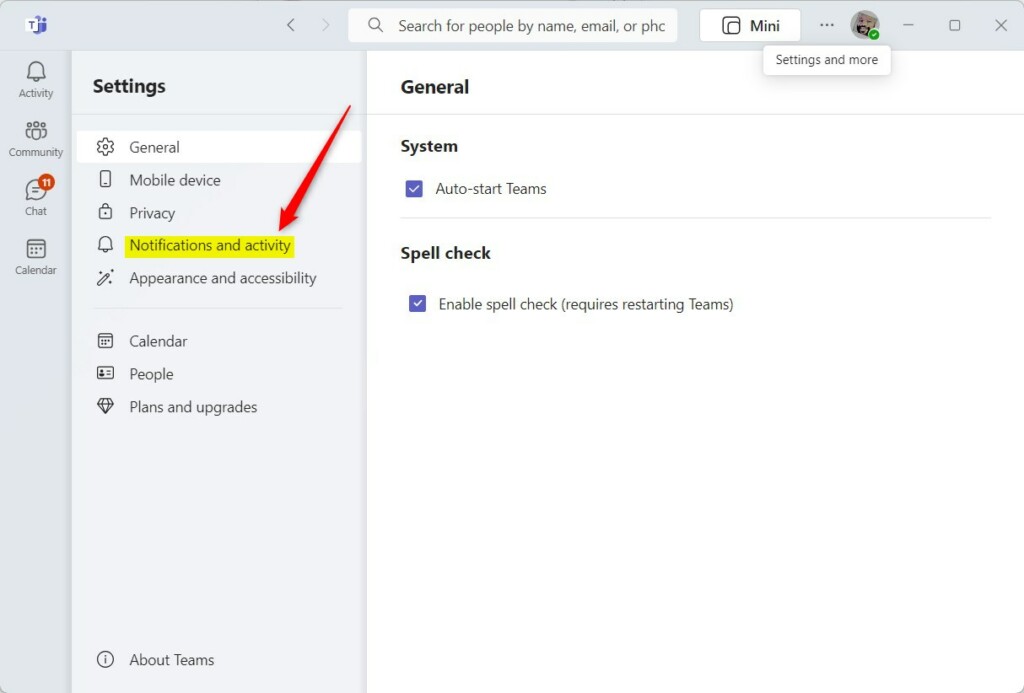
Access Teams notification settings by clicking the (…) icon, selecting Settings, then Notifications and activity. Customize banner styles, sounds, and quiet hours to control alerts for messages and activity. You can also mute specific channels for less noise.
Why manage Teams notifications?
Managing your Microsoft Teams notifications helps you stay focused by cutting down the constant pings and pop-ups. You don’t have to turn everything off. A good setup keeps direct messages, @mentions and meeting reminders, and quiets the rest.
Your changes are saved to your Teams account and apply as soon as you make them. You don’t need to restart Teams or Windows, and you can change them back at any time.
What happens when done?
Once you finish configuring your settings, you’ll have a quieter, distraction-free environment. You won’t be overwhelmed by constant banners or sounds anymore. Instead, you’ll receive alerts only when you choose, helping you stay organized and calm throughout your workday.
If you later find you are missing something important, come back to the same settings and turn that alert on again. Nothing here is permanent.
How to access notification settings
Start in the Teams settings. The steps are the same for any account type, but the layout can differ slightly between versions of Teams.
- Open the Microsoft Teams app on your Windows 11 computer.
- Click the Settings and more (...) icon at the top right, next to your profile picture. A dropdown menu opens.
- Select Settings from the dropdown menu. The Settings window opens.
- Click the Notifications and activity tab on the left sidebar. You should now see the notification options for chats, channels, meetings and more on the right.
If you don't see Notifications and activity, your organization may manage some settings for you, or you may be on an older version of Teams. Update Teams and check again.


Granular channel and thread management
Manage Teams notifications for specific channels to avoid getting too many alerts. Busy channels are the usual cause of constant pings, so it pays to set each one on its own instead of changing everything at once.
- In Teams, find the channel in the team list on the left.
- Hover over the channel name and click the More options (...) icon that appears next to it.
- Select Channel notifications. A list of choices opens.
- Pick the level you want, such as all activity, off, or Custom if you want to choose which events alert you.
The change applies to that channel only. Other channels keep their own settings.
Presence and Meeting alerts
Control how you get alerted for Teams meetings, like when a meeting starts or someone joins. Meeting alerts are worth keeping on for most people, because a missed start reminder costs more than a banner.
- Go to Settings and more (...) > Settings Notifications and activity.
- Look for the meetings options in the list.
- Choose how each meeting alert reaches you, for example as a banner, as a banner with a feed entry, or not at all.
Your choices save as you make them. Join a test meeting afterwards if you want to confirm the alerts behave the way you expect.
Troubleshooting and common issues
Microsoft Teams notifications not showing up on Windows 11 usually happens when Windows Focus Assist (a tool that hides alerts during certain times) blocks them. To fix missing alerts and manage Teams notifications properly, turn off Focus Assist or add Teams to your priority list in the Windows settings app so messages and calls come through right away.
- Open Settings System Notifications
- Check whether Focus Assist is on. In newer builds of Windows 11 it is called Do not disturb. Turn it off, or edit its priority list so Teams is allowed through.
- In the same Notifications page, scroll to the list of apps and make sure Microsoft Teams is switched on.
The name and layout of these options depend on your Windows 11 version, so look for whichever one you have. Also check that your Teams status isn't set to Do not disturb, since that silences banners inside Teams too.
This applies if you modify files in C:\Windows\System32 or registry keys like HKEY_CURRENT_USER\Control Panel\Desktop. These are advanced system settings; standard user settings in Teams don't need this level of access.
For everything in this guide, a normal user account is enough. Only go into those system areas if you know what you are changing, and back up first.
For more detailed information, visit the official Microsoft support page. Microsoft updates Teams often, so the official page is the best place to check if a menu looks different from what is described here.
Summary
Customizing your Microsoft Teams notification settings for sounds, banners, and emails helps you avoid distractions while working. Start with the noisiest channels, keep your meeting reminders on, and check the Windows notification settings if alerts stop appearing.
Was this guide helpful?

About the Author
Richard
Tech Writer, IT Professional
Richard is a writer at Geek Rewind who turns complex IT tasks into clear, step-by-step guides. He draws on years of hands-on experience in system administration and enterprise IT operations, focusing on Windows, Linux and WordPress: the problems people actually run into, and the fixes that work. His server and WordPress guides come from systems he runs himself. Richard builds and maintains the platform behind Geek Rewind, from its Ubuntu servers and Nginx configuration to its custom WordPress plugins. Many new tutorials start with readers' questions, and he's always glad to answer them in the comments.



[…] preview on or off, turn spell check on or off, turn on or off phone number in search results, manage notifications, turn on or off suggested replies in chat, and […]
[…] or off, turn spell check on or off, turn on or off phone number in search results, manage notifications, turn on or off suggested replies in chat, and […]
[…] preview on or off, turn spell check on or off, turn on or off phone number in search results, manage notifications, turn on or off suggested replies in chat, enable or disable sound notifications, and […]
[…] or off, turn spell check on or off, turn on or off phone number in search results, manage notifications, turn on or off suggested replies in chat, enable or disable sound […]