How to Configure Speech Synthesis Rate in Settings Time and Language Speech

The speech synthesis rate in Windows 11 controls how fast the built-in text-to-speech voice reads words aloud. Slowing it down helps when you are working through dense text or learning a language. Speeding it up helps when you want to get through long documents or notifications quickly.
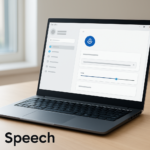
You change the rate in the Settings app, under Time & language and then Speech. The setting is a slider you move left or right. The steps below cover the slider, adding voices, third-party apps and troubleshooting.
The setting is the same on Windows 11 Home and Pro, and you do not need administrator rights to change it. The exact labels on the Speech page can vary slightly between Windows 11 versions. The names below match recent releases.
Open Settings , press Win+I, click Time & language, then Speech. Scroll to the Voices section, find the Speed slider, and drag it left to slow down or right to speed up the speech synthesis rate. Click Preview to hear a sample at your chosen speed.
Accessing Speech Settings in Windows
The keyboard shortcut gets you to the right page fastest.
- Press the Win+I together to open Settings . The Settings window should appear with a list of categories on the left.
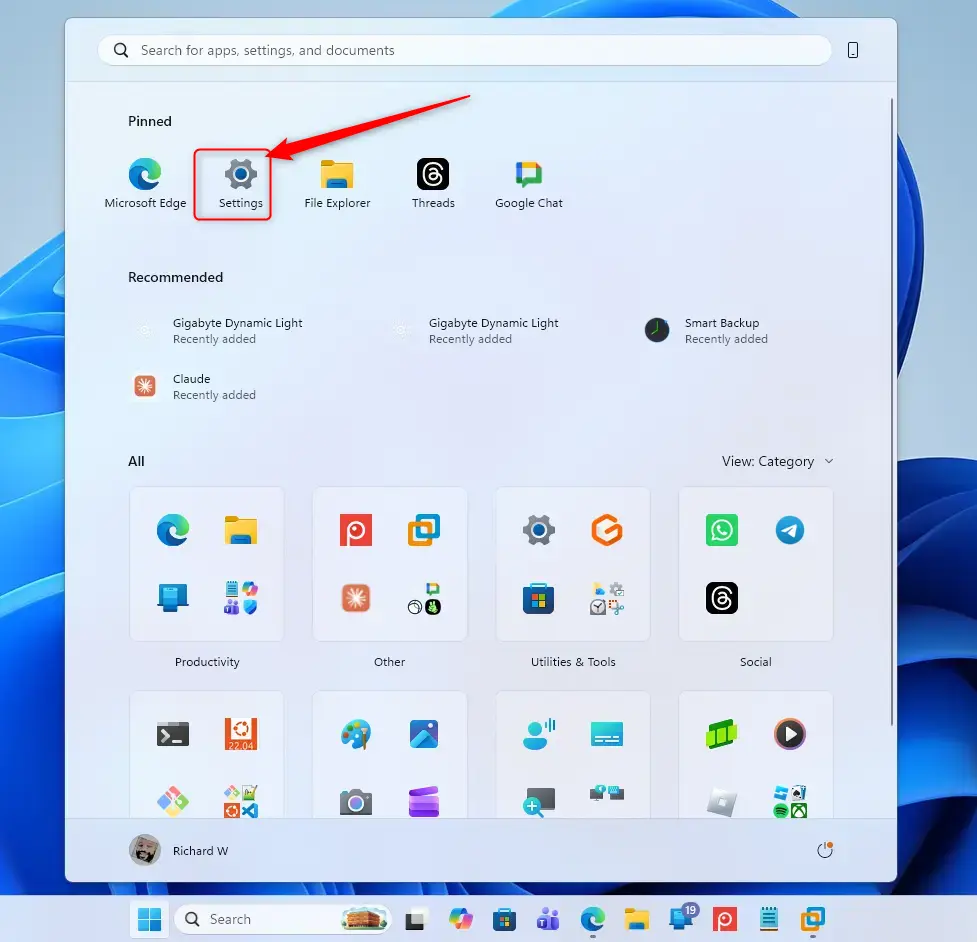
Windows 11 Start menu with Settings gear icon highlighted. - Click Time & language in the left-hand navigation menu. The page now shows options such as Date & time, Language & region and Speech.
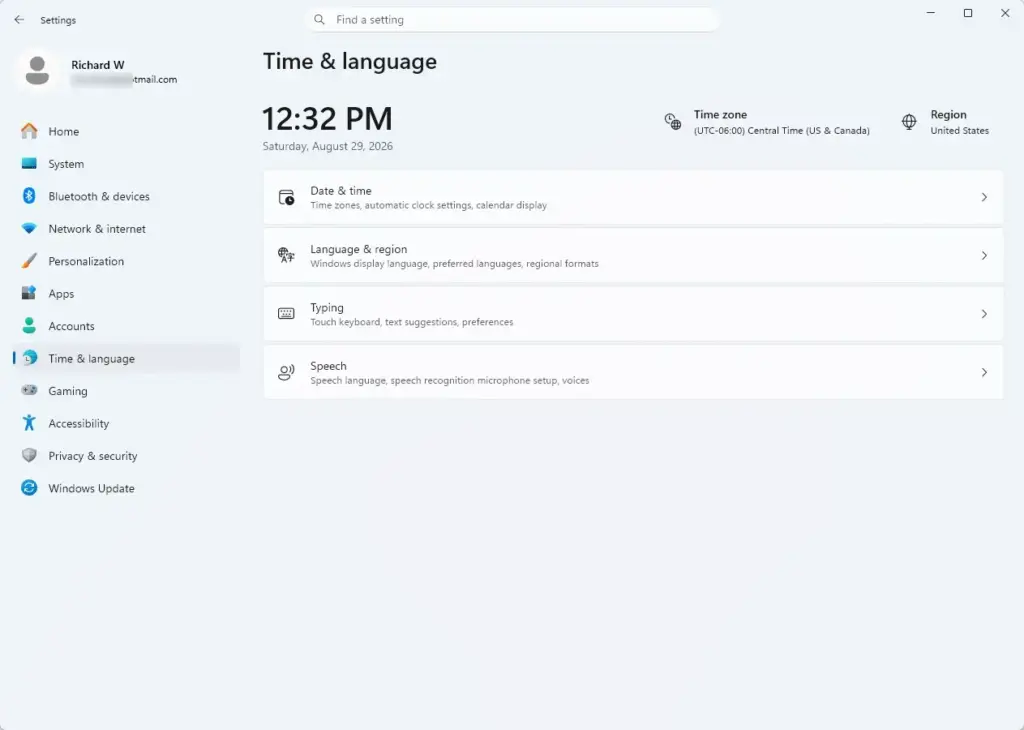
Settings › Time & language - Click Speech. This opens the page with the text-to-speech and voice options.
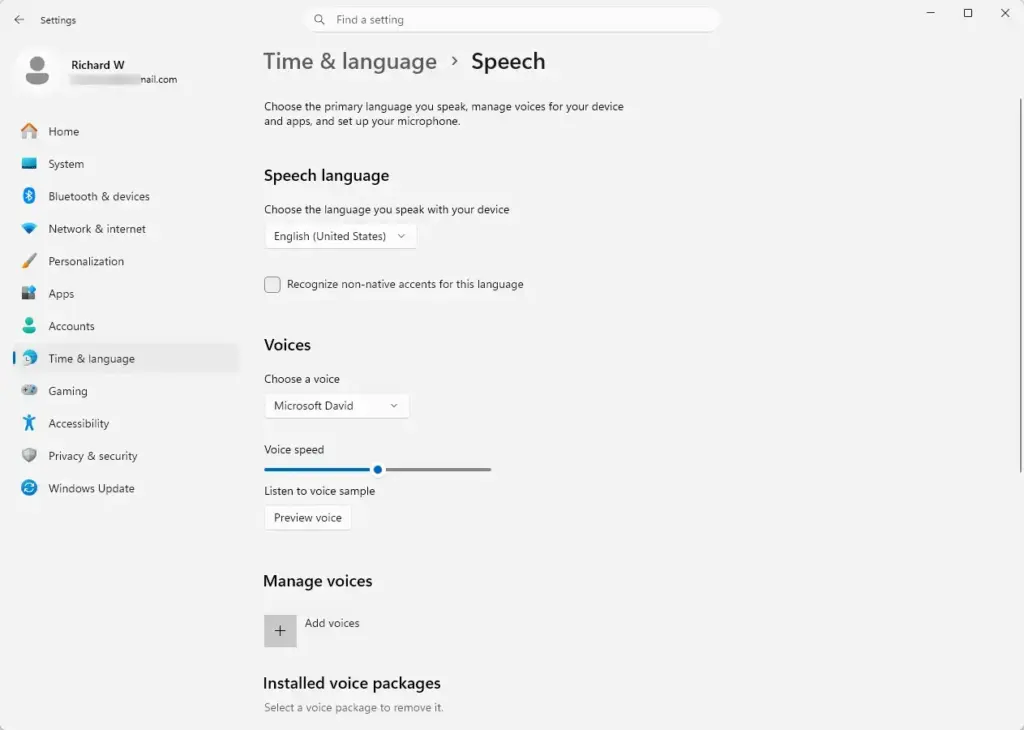
Settings › Time & language › Speech
When the window is narrow, the left menu collapses behind a menu icon.
How to Configure Speech Synthesis Rate
Once the Speech page is open, the speed control is a single slider. Dragging it to the left slows the voice down, and dragging it to the right speeds it up. Use the preview button to test each change.
- Scroll down to the voice section of the Speech page, which holds the voice and speed options. Recent builds label this area Voices or Manage voices.
- Find the slider labeled Speed.
- Click and drag the slider handle to the left to slow the speech rate, or to the right to speed it up.
- Click the Preview button below the slider. You should hear a sample sentence read in the current voice at the speed you just set.
- Repeat the adjustment and preview until the pacing feels right. The change applies automatically, so you do not need to restart Windows or click a save button.
To undo a change, drag the slider back to where it was. If you are not sure what the original value was, move it to the middle and preview again.
This slider sets the speed for the system text-to-speech voice. Narrator keeps its own voice settings, so its speed may not follow this slider. If Narrator still sounds too fast or too slow, check the voice options inside the Narrator settings.
Managing Installed Voices and Language Packs
You can also change how your computer sounds by installing extra voices and language packs. This adds regional dialects and other languages. You manage them from the same Speech page.
- Open Settings, click Time & language, and select Speech, as in the steps above.
- Find the Add voices section.
Settings › Time & language › Speech - Click the Add button next to the prompt. A pop-up window opens with a list of languages.
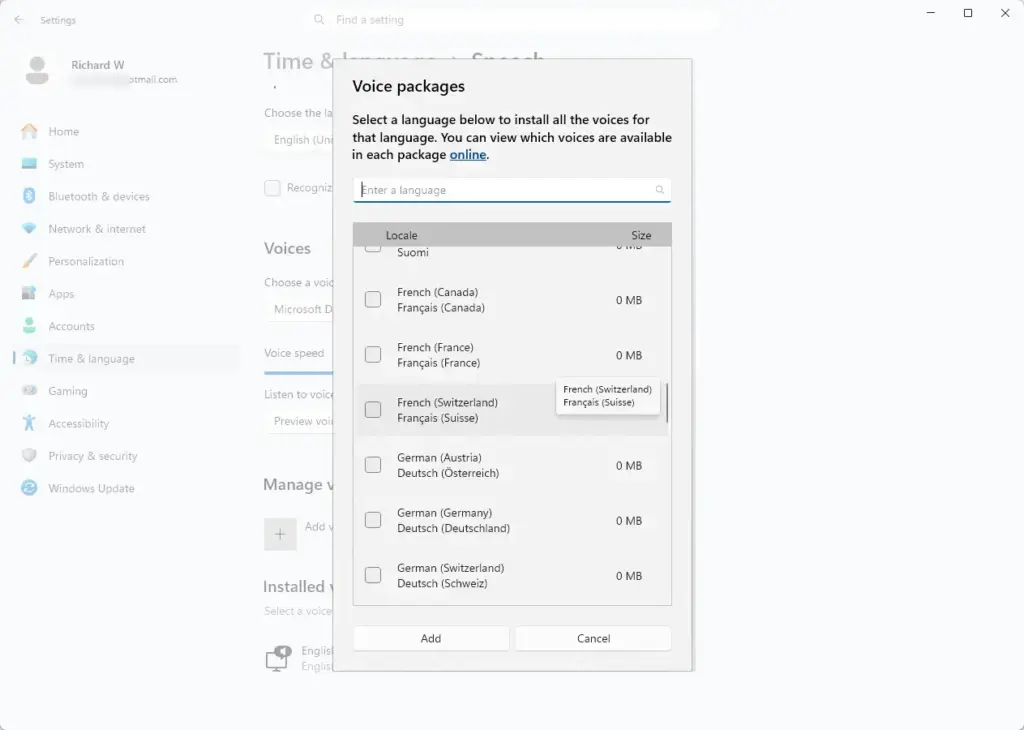
- Search for or select the language you want from the list.
- Check the box for text-to-speech if it is not already selected.
- Click Add to download and install the new voice package. The voice appears in the voice list once the download finishes.
The download needs an internet connection. If the install stalls, check your connection and try again. To remove a voice you no longer want, use the same page and uninstall it from the list of installed voices.
Using the Speech Synthesis Rate in Third-Party Applications
Third-party applications do not always follow the Windows speed slider. It depends on whether the program uses the system voice or its own engine. Many web browsers and custom tools use a JavaScript interface called SpeechSynthesisUtterance to control how text is read aloud, instead of relying on Windows settings.
In web development, the rate property sets the speed of the spoken text. A value of 1.0 is the default, normal speed. Values below 1.0 slow the speech down, and values above 1.0 speed it up.
These web adjustments are separate from the global Windows setting. They only affect the browser tab or application script that runs the code. If an app ignores your Windows speed change, look for a speech or voice option inside that app.
Troubleshooting Common Speech Rate Issues
If the speed slider stops working or speech output goes quiet, start with your audio hardware and then restart the Windows Audio service. These steps fix most problems.
- Confirm that your main audio output device works by playing a system sound or a media file. If you hear nothing, check the volume, the cable or Bluetooth connection, and the selected output device.
- Restart the Windows Audio service if speech output stops entirely. Open the Start menu, type services.msc, and press Enter. In the Services window, find Windows Audio in the list, right-click it, and select Restart. Sound may cut out for a second or two while the service restarts.
- Check for pending updates. Open Settings, select Windows Update, and click Check for updates. Outdated system files can occasionally break the built-in accessibility speech drivers. Restart the PC if Windows asks you to.
If the preview still does not play after these steps, try a different installed voice or reinstall the voice from the Add voices section.
What to do next
You should now hear your computer reading text at the speed you chose. If you use speech often, look into screen reader shortcuts and Narrator keyboard commands to speed up your daily work.
Was this guide helpful?

About the Author
Richard
Tech Writer, IT Professional
Richard is a writer at Geek Rewind who turns complex IT tasks into clear, step-by-step guides. He draws on years of hands-on experience in system administration and enterprise IT operations, focusing on Windows, Linux and WordPress: the problems people actually run into, and the fixes that work. His server and WordPress guides come from systems he runs himself. Richard builds and maintains the platform behind Geek Rewind, from its Ubuntu servers and Nginx configuration to its custom WordPress plugins. Many new tutorials start with readers' questions, and he's always glad to answer them in the comments.
No comments yet — be the first to share your thoughts!