Developer mode in Windows 11 changes how your PC handles software by turning on tools for writing programs, testing local apps, and running Linux environments. These system switches stay hidden by default to keep your desktop stable, but you can turn them on in less than a minute through the main Settings app ⚙️.
Advertisement
Turning on these options lets you side-load apps from outside the Microsoft Store, adjust File Explorer 📁 views for debugging, and manage symbolic links without seeing administrator permission prompts every time. Everything here can be switched off again from the same page, so you can try it without committing to it.
⚡ Quick Answer
Open Settings ⚙️, go to System›Advanced›For developers, then toggle Developer Mode to On and confirm the warning. Windows may download a small package from Windows Update 🔃. You can then configure File Explorer 📁 options and enable Remote Desktop or SSH from the same page.
Advertisement
How to Open Developer Settings
The developer settings live on the For developers page of the Settings ⚙️ app. This page gives you access to sideloading permissions, File Explorer 📁 options, and remote access tools. The path below matches current Windows 11 builds. On some older builds (such as early 22H2 releases), For developers sits directly under System and there is no Advanced entry. If you do not see Advanced, look for For developers in the System list instead.
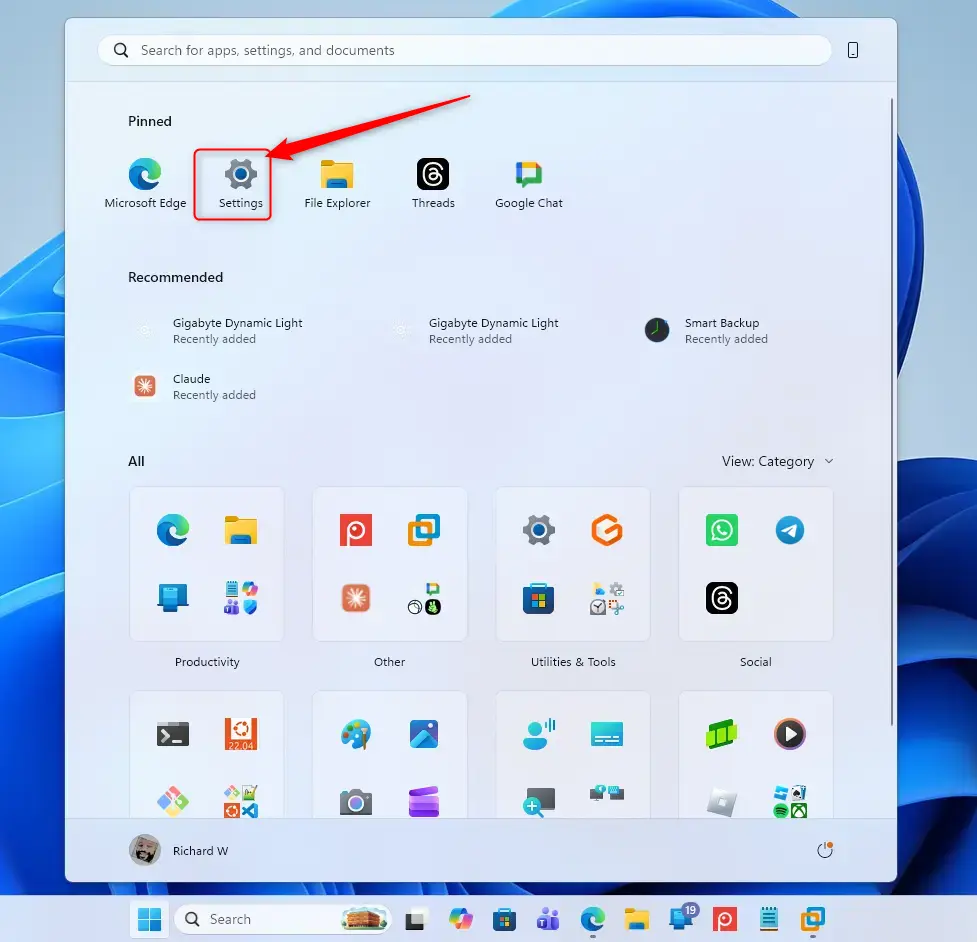
Press the Win and the I key together to open Settings. Windows 11 Start menu with Settings gear icon highlighted.
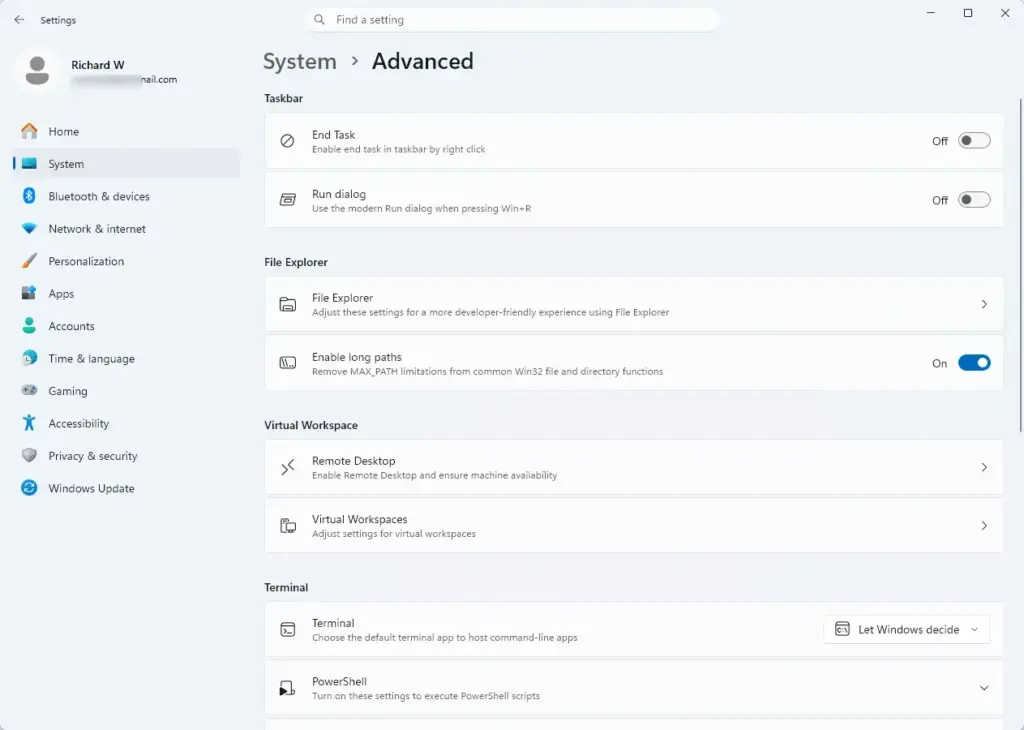
Select System from the left menu, then select Advanced on the right. Settings › System › Advanced The page now lists further system options.
Click For developers in the list. The page opens with the Developer Mode toggle near the top, followed by the other developer sections.
Turning on Developer Mode
Developer Mode is the main switch on the For developers page. It lets you run unpackaged apps and install apps from outside the Microsoft Store. It also lets you create symbolic links without elevating, and it gives you access to the other developer features. Windows may download a small developer package from Windows Update 🔃 the first time you turn it on, so keep the PC online.
📝Good to KnowThis step requires administrator privileges.
If you are signed in with a standard account, Windows asks for administrator credentials, or the toggle may refuse to change.
Open the For developers page in Settings.
Find the Developer Mode toggle at the top of the window.
Click the toggle to switch it from Off to On. Settings › System › Advanced A warning prompt appears.
Read the warning. It tells you that Developer Mode lets you install apps from outside the Store, which can put your device and data at risk. Click Yes to confirm. The toggle now shows On.
To undo this, return to the same page and switch the toggle back to Off. You do not normally need to restart, but if an app still behaves as if the mode is on, sign out and back in.
Advertisement
Configuring File Explorer for Development
The File Explorer options on the For developers page expose hidden system files, full directory paths in the title bar, and file extensions. These are the views you need most when debugging code, since build tools and config files often live in hidden folders. The exact wording of the labels varies slightly between Windows 11 builds, and some builds show them as toggles rather than check boxes. Use the matching option either way.
Open the For developers page in Settings.
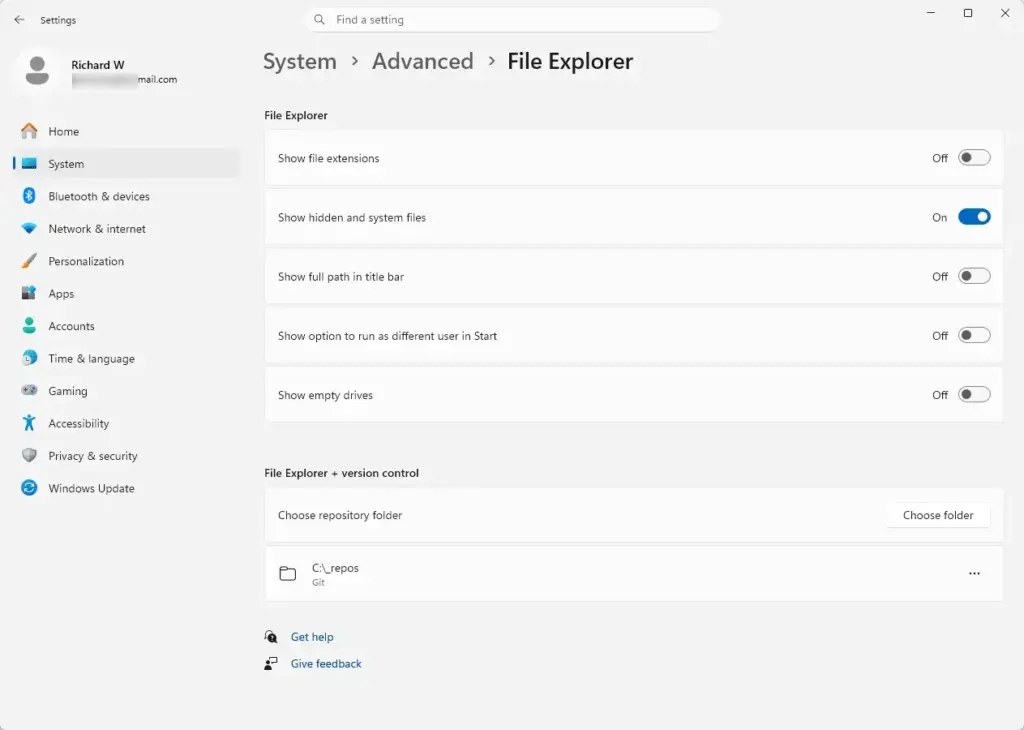
Scroll down to the File Explorer section. Settings › System › Advanced › File Explorer
Turn on Show hidden files, folders, and drives.
Turn on Show file name extensions.
Turn on Show full path in title bar.
Open a File Explorer window to check. Hidden items now appear slightly faded, file names end with their extensions, and the title bar shows the full folder path. To go back to the default view, return to this section and turn the same options off.
Setting Up Remote Desktop and SSH
Remote Desktop and SSH let you connect to your Windows 11 machine from another device on your local network. This is handy for testing applications without sitting at the physical keyboard. Note that Windows 11 Home can connect out to other PCs using Remote Desktop, but it cannot accept incoming Remote Desktop connections. The Remote Desktop toggle only works as a host on Pro, Enterprise, and Education. If it is missing or greyed out on a Home PC, that is the reason.
Open the For developers page in Settings.
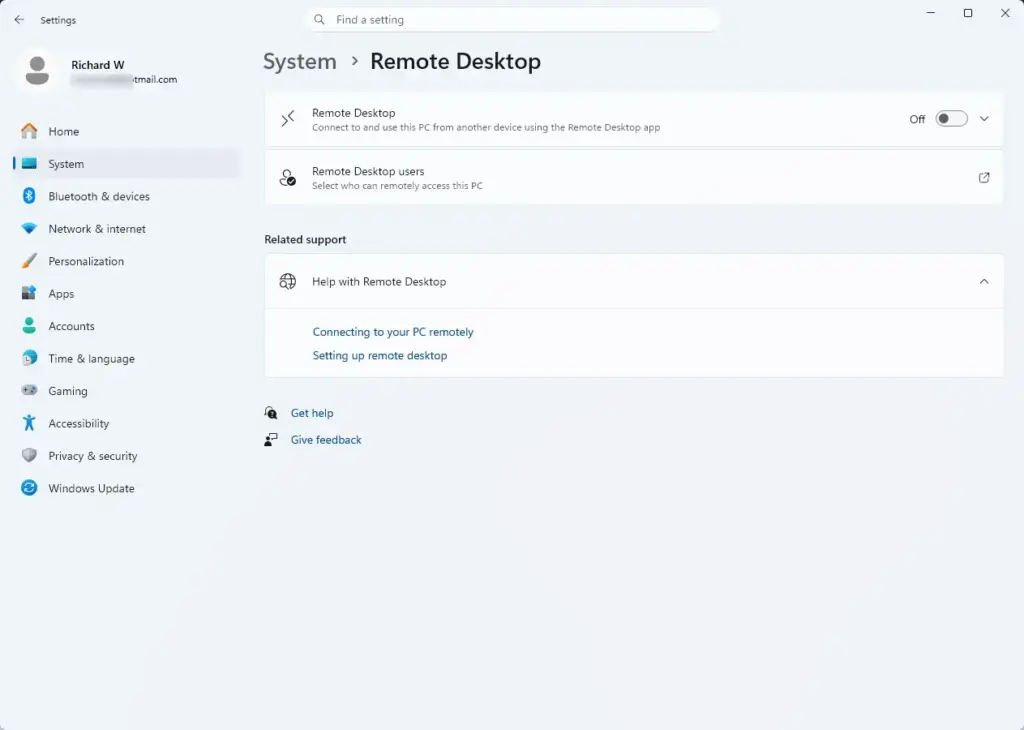
Scroll to the Remote Desktop section. Settings › System › Remote Desktop
Click the toggle to turn on Remote Desktop connections for this PC. If Windows asks you to confirm, click Confirm.
Find the Terminal or SSH section and make sure your preferred secure shell server is running if you plan to connect with command-line tools. If no SSH server is installed, you need to add one before remote shell connections will work.
⚠️WarningOnly enable these on a trusted network, and turn them off again when you finish testing.
Remote access that you do not use is an open door for no reason.
Advertisement
Unlocking Advanced PowerShell Execution Policies
PowerShell blocks scripts by default as a protection. If you build projects or manage packages with local scripts, you may need to loosen the execution policy. This is a change to a system-level setting, so you must use an administrator terminal. Choose the least permissive policy that lets your scripts run, because a looser policy lets more untrusted scripts execute.
This step requires administrator privileges.
Right-click the Start button and select Terminal (Admin) or PowerShell (Admin). Click Yes if User Account Control asks for permission.
Type the command Set-ExecutionPolicy RemoteSigned and press Enter. Make a note of any value it prints before you change anything, so you can restore it later.
Type Y and press Enter to confirm the change when prompted.
After the change, you can run your local scripts in a new PowerShell window. If a script is still blocked, close and reopen the terminal. If a group policy controls the setting on your PC, Windows will report that the change was overridden. In that case, see the last section of this guide.
Troubleshooting Common Developer Mode Errors
If Developer Mode will not turn on, start with the basics. Check your internet connection first, because Windows fetches specific components from Windows Update. Missing updates or corrupted system files can stop that download. Restarting your computer often clears temporary installation blocks.
Advertisement
Confirm that the PC is online and can reach Windows Update. A metered or restricted connection can delay the download.
Restart the PC, then try the Developer Mode toggle again.
If the toggle still reverts to Off, open Settings, go to Windows Update, and click Check for updates. Let all pending system patches finish installing, restart if asked, and try again.
If this didn't work
If the basics do not help, check your account rights. Developer settings change system-level policies, so your user account must hold administrator rights. A standard account can open the page but cannot apply the change.
Domain-joined work or school computers often block these settings through group policy. In that case the toggle may be greyed out, or it may switch back to Off after you set it. You may also see a message that some settings are managed by your organization. You cannot override this from Settings. Check with your IT department, or test the configuration on a personal PC or a local administrator account that is not managed by a policy.
Frequently asked questions
How do I open developer settings?
Press Windows key + I to open Settings. Select System from the left menu, then click Advanced on the right. Choose For developers from the main window list. Toggle on Developer Mode to enable the feature and access sideloading and debugging tools.
How do I turn off developer mode on a phone?
This question asks about phones, not Windows 11. On Android phones, open Settings, tap About phone, and tap Build number seven times to reveal Developer options again. Then go back to Settings and toggle Developer options off.
Advertisement
How do I find hidden Developer options on Android?
This question asks about Android phones, not Windows 11. On Android, open Settings, scroll to About phone, and tap Build number seven times rapidly. Developer options will then appear in your main Settings menu under System options.
Which developer settings should I use?
For most users, leave Developer Mode off. Turn it on only if you're testing your own apps, sideloading software, or using Windows Subsystem for Linux. Enable only the specific features you need—like Device Discovery or Device Portal—rather than all options at once.
Still have a question?
Answered by AI from this guide. Good questions may be added to this page — please don't include personal details.
📬 Get new Windows tips in your inbox
One email when we publish something worth your time. No spam, unsubscribe anytime.
Richard is a writer at Geek Rewind who turns complex IT tasks into clear, step-by-step guides. He draws on years of hands-on experience in system administration and enterprise IT operations, focusing on Windows, Linux and WordPress: the problems people actually run into, and the fixes that work.
His server and WordPress guides come from systems he runs himself. Richard builds and maintains the platform behind Geek Rewind, from its Ubuntu servers and Nginx configuration to its custom WordPress plugins.
Many new tutorials start with readers' questions, and he's always glad to answer them in the comments.
One email when we publish a guide worth your time — new Windows features, the fixes that actually
work, and a heads-up when Microsoft breaks something. Unsubscribe in one click.
📬 Get new Windows tips in your inbox
One email when we publish something worth your time. No spam, unsubscribe anytime.


No comments yet — be the first to share your thoughts!