How to Enable or Disable Android App Notifications in Windows 11

Android app notifications in Windows 11 send alerts from your phone to your PC screen, so you can read them without picking up your device. The feature runs through the Phone Link app, which is built into Windows 11. On current builds, including version 22H2 and newer, you can open it from the Start menu .
You can turn off distracting pings from games or shopping apps and keep the alerts that matter, such as text messages and chat apps. Your phone needs Android 7.0 or newer for this feature. Both devices should also be on the same Wi-Fi network, at least while you set things up.
Open Phone Link on your PC, click Settings , select the Features tab, then toggle notifications on or off for individual Android apps under the Notifications section. Changes apply immediately without restarting.
Prerequisites and System Requirements
Skipping this check is the most common reason notifications never show up.
- Your phone runs Android 7.0 (Nougat) or newer.
- Your PC runs Windows 11 with the Phone Link app installed. It comes with Windows 11, and you can reinstall it from the Microsoft Store if it is missing.
- The Link to Windows app is installed on your phone. Many Samsung phones already include it.
- Both devices are on the same Wi-Fi network.
- You are signed in to the same Microsoft account on both devices.
How to Enable or Disable Android App Notifications in 🪟 Windows 11
You manage Android notifications in Windows 11 through the Phone Link app, and it takes only a few clicks. You can turn alerts on or off for all apps at once, or pick the individual apps that may show pop-ups on your computer screen. That stops phone alerts from interrupting you while you work.
Finish pairing the two devices first, then come back to these steps. The numbered steps below show each action in order.
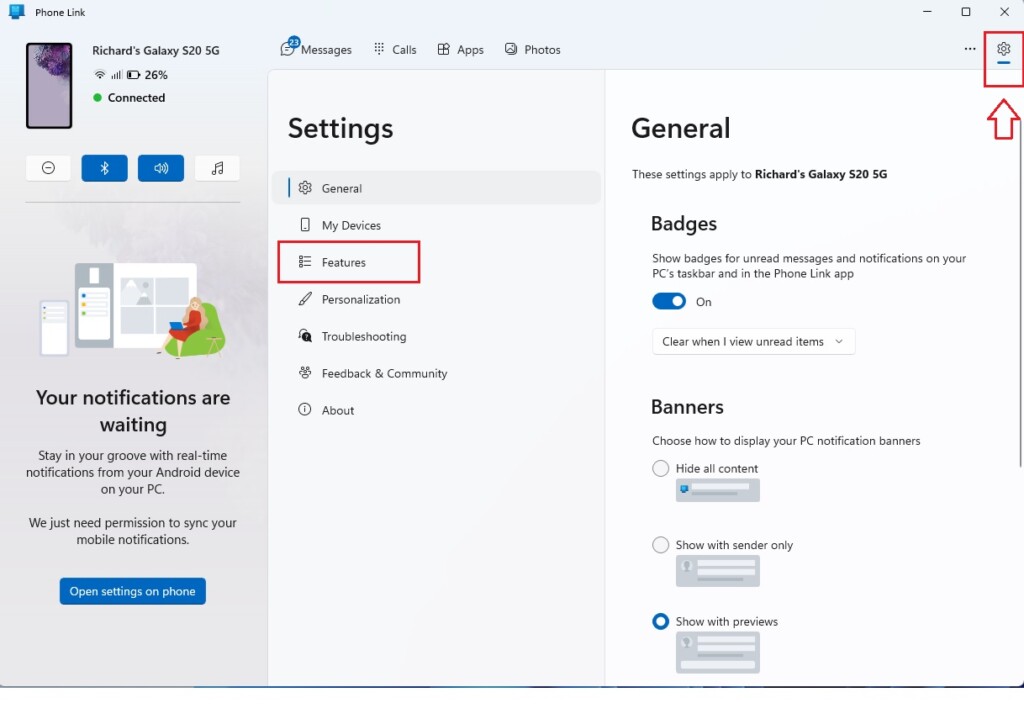
- Open the Phone Link app on your PC.
- Click the Settings gear icon located in the top right corner.
- Select the Features tab.
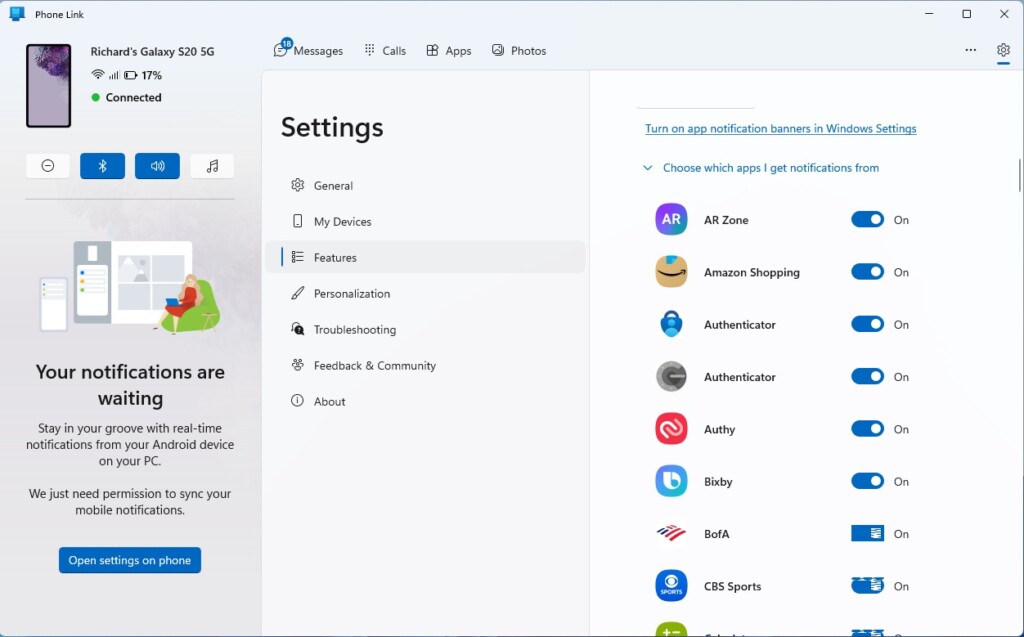
- Find the Notifications section.
- Click the link that says Choose which apps I get notifications from to see your full list of apps.
- Toggle the switch to On or Off for each app to allow or block its notifications.
Managing Specific App Permissions
Block the noisy apps and keep the important ones active. In the Phone Link app, open the Notifications settings and switch individual apps on or off. Alerts you care about, like calls, messages and work chat, still reach your desktop. Games and shopping apps stay out of sight.
You can undo any of this later. Return to the same screen and switch the app back on. Changes apply right away, and you do not need to restart your PC.
Windows also has its own controls for how Phone Link alerts look. Go to Settings System Notifications and find Phone Link in the app list. There you can turn banners and sounds on or off, or silence the app entirely without touching the phone-side settings.
Troubleshooting Phone Link Connectivity
If notifications do not arrive, work through these checks in order.
- Restart both your phone and your PC. This clears most stalled connections.
- Open the Link to Windows app on your phone and confirm it holds all the permissions it asks for. Notification access is the key one. On Android it sits under the system notification access settings, and the exact menu name varies by phone maker.
- Check that battery saver or an app-sleeping feature is not stopping Link to Windows from running in the background. Many phones do this on their own.
- Confirm both devices are on the same Wi-Fi network and that you are signed in to the same Microsoft account.
- Check that Focus or Do Not Disturb is not switched on, on either the PC or the phone. Either one hides banners.
Advanced steps, such as resetting network settings or updating drivers, may need administrator rights on your PC. Try the simple checks above before you go that far.
Summary
Linking your devices bridges desktop and mobile and gives you a much cleaner notification experience. Choosing which apps may ping your computer keeps the desktop organized. You stay on top of important mobile alerts without losing your concentration.
Related Posts
Manage Android notifications on Windows 11 alongside several related guides worth exploring.
Why are my Android notifications not showing up on 🪟 Windows 11?
Check if your phone and PC are on the same Wi-Fi network. Ensure Bluetooth is active on both devices. Verify that Focus Assist or Do Not Disturb mode is disabled on your PC, as these settings block incoming notifications from appearing on your screen.
Can I reply to messages directly from the 🪟 Windows 11 notification center?
Most messaging apps permit direct replies from the notification banner on your Windows 11 desktop. Click the reply button within the notification pop-up, type the message, and hit send without touching your physical Android phone.
Have a question about this guide?
Answered by AI from this guide. Good questions may be added to this page — please don't include personal details.
Did this guide fix your problem?

About the Author
Richard
Tech Writer, IT Professional
Richard is a writer at Geek Rewind who turns complex IT tasks into clear, step-by-step guides. He draws on years of hands-on experience in system administration and enterprise IT operations, focusing on Windows, Linux and WordPress: the problems people actually run into, and the fixes that work. His server and WordPress guides come from systems he runs himself. Richard builds and maintains the platform behind Geek Rewind, from its Ubuntu servers and Nginx configuration to its custom WordPress plugins. Many new tutorials start with readers' questions, and he's always glad to answer them in the comments.
No comments yet — be the first to share your thoughts!