How to Check Modern Standby Support on Windows 11


- 11 steps
- Needs administrator rights
- Includes a restart or sign-out
Modern Standby support on Windows 11 shows whether your PC can use the S0 Low Power Idle power state. A PC with this state wakes instantly, like a phone, and keeps apps online while the screen is off. Older PCs use the S3 sleep state instead. S3 saves more power at idle, but it wakes more slowly and stops background activity.
Run the powercfg /energy command in the Command Prompt to check this feature and build a web report that flags background tasks draining your battery. This guide shows how to check your sleep states, read the battery report, and try turning Modern Standby off if it causes problems.
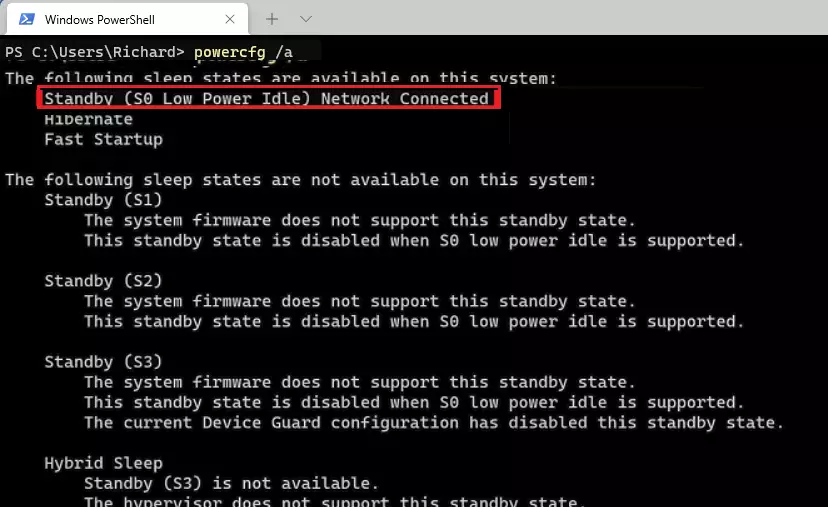
You can check Modern Standby support by opening Command Prompt as administrator and typing `powercfg -a`. If you see “Standby (S0 Low Power Idle) Network Connected,” your device uses Modern Standby.
Why check for Modern Standby?
Modern Standby keeps your PC connected to the internet while the screen is off, so apps can update in the background. Mail can sync, notifications can arrive, and the PC can wake in a moment when you open the lid or press a key.
The trade-off is that the PC is never fully asleep. A badly behaved app or driver can keep the hardware busy for hours. If you put a laptop in a bag and it comes out warm with a flat battery, this is the usual cause.
What happens when you are done?
Hardware indicators reveal whether the system uses the modern S0 state or the older S3 sleep mode. Diagnostic reports expose precisely what wakes the computer, helping resolve overheating and battery drain.
Modern Standby depends on the hardware and firmware, not on your Windows edition. Home and Pro behave the same way. You can’t install it on a PC that was built for S3, and Windows 11 won’t add it to such a PC.
How to check your sleep mode
Modern Standby Windows 11 support determines if your computer uses low-power idle states for instant wake times. You can check which sleep states your computer supports by running a simple command in the Terminal app. This test reveals whether your system uses modern low-power standby or older sleep modes.
The check only reads information and changes nothing on your PC. It takes about a minute.
- Click the Start button and type “Terminal”. The Terminal app should appear at the top of the search results.
- Right-click the app and select Run as administrator. (Admin privileges required) Click Yes if the User Account Control prompt appears. A Terminal window opens, and “Administrator” should show in its title bar.
- Type the following command and press Enter. The window then lists the sleep states your PC supports.
powercfg -a
Screen output indicating “Standby (S0 Low Power Idle) Network Connected” confirms the system uses Modern Standby. Seeing “Standby (S3)” indicates the device relies on traditional, slower sleep methods.
The output also lists sleep states your PC can’t use, with a short reason for each. Read these lines too. They often explain why a state is missing, for example because the firmware doesn’t support it or because a driver blocks it.
Troubleshooting battery drain and overheating
Modern Standby battery drain on Windows 11 happens when background programs keep your hardware awake while the screen is off. You can track down these power-hungry tasks by generating a detailed power report using the Terminal app. This report shows you exactly which apps and drivers wake your computer and drain the battery.
This report is most useful on a laptop that uses Modern Standby. On a PC that only supports S3, it may have little or nothing to show, because those PCs don’t run in the low-power idle state.
- Open Terminal as administrator. (Admin privileges required) Use the same steps as in the previous section. The title bar should show “Administrator”.
- Type
powercfg /sleepstudyand press Enter. Windows then prints a message that the report was saved. - Windows will save an HTML file to 📁C:\
Windows\ . Copy the path from the message in the window, since that is where this report was written.System32\ sleepstudy-report.html
Opening this file in a web browser reveals which apps prevent the computer from entering a deep sleep state. Additional guidance remains available in the official Microsoft Sleep Study documentation.
To open it, press Win+E to open File Explorer, paste the folder path into the address bar, and double-click the file. If Windows blocks you from opening it in System32, copy it to your Desktop first. Look for sessions with high drain, then check which apps or drivers are listed against them. Close or update those apps, or remove the ones you don’t need.
Can I disable Modern Standby?
Disable Modern Standby Windows 11 settings by editing the system registry if your computer suffers from constant overheating and battery loss while sleeping. You can turn off this sleep behavior by adding a specific override key to the Registry Editor. This forces your computer to use traditional sleep modes instead of low-power idle states.
Try the fixes from the report first, because this is a last resort. The registry is easy to damage, so back it up before you edit it. In the Registry Editor, choose File Export, and save a copy of the Power key you are about to change. You need an administrator account for these steps. The method works on Home and Pro.
- Press Win+R, type
regedit, and press Enter. (Admin privileges required) Click Yes at the User Account Control prompt. The Registry Editor window opens. - Navigate to 🗝️HKEY_LOCAL_MACHINE\
SYSTEM\ . You can also paste this path into the address bar at the top of the Registry Editor. The values of the Power key should then appear in the right pane.CurrentControlSet\ Control\ Power - Look for a value named “PlatformAoAcOverride”. If it does not exist, right-click an empty space in the right pane, select New DWORD (32-bit) Value, and name it “PlatformAoAcOverride”. The new value appears in the list.
- Set the value to 0 to disable Modern Standby. Double-click the value, enter 0 under Value data, and click OK. Then restart the PC, because the change doesn’t apply until the next boot.
After the restart, run the check from the first section again to see which sleep states are now listed. If the change had no effect, your hardware probably has no S3 to fall back on. To undo it, return to the same key, right-click PlatformAoAcOverride, choose Delete, and restart.
Summary
Modern Standby delivers rapid wake times for Windows 11 machines. Unmanaged background tasks can deplete battery reserves, though built-in commands help verify status and diagnose problems.
Check your sleep states first. If you have Modern Standby and the battery drains overnight, read the power report and deal with the apps it names. Treat the registry override as a last resort, and remember that it may not work on newer hardware.
Have a question about this guide?
Answered by AI from this guide. Good questions may be added to this page — please don't include personal details.
Did this guide fix your problem?

About the Author
Richard
Tech Writer, IT Professional
Richard is a writer at Geek Rewind who turns complex IT tasks into clear, step-by-step guides. He draws on years of hands-on experience in system administration and enterprise IT operations, focusing on Windows, Linux and WordPress: the problems people actually run into, and the fixes that work. His server and WordPress guides come from systems he runs himself. Richard builds and maintains the platform behind Geek Rewind, from its Ubuntu servers and Nginx configuration to its custom WordPress plugins. Many new tutorials start with readers' questions, and he's always glad to answer them in the comments.
I’m pretty sure you misspelled the word “everytime” on your site. You might want to check out a site like SpellRadar.com or SiteCheck.com which have helped me with problems like this in the past.