How to Change Windows Terminal Launch Size


Windows Terminal launch size sets the height and width of the app window when it first opens. Both values are counted in character cells, not pixels: columns for the width and rows for the height. You can replace the default with your own dimensions, for example 120 columns wide by 30 rows tall.
Setting a starting size means you no longer drag the window edges every time you open a command-line session. It also helps when you work on a high-resolution or multi-monitor setup, where the default window can look small.
Edit the settings .json file by holding Alt and clicking Settings, then add or modify initialCols and initialRows properties within profiles.defaults or a specific profile. Save the file and restart Windows Terminal to apply the new launch size.
What happens when you are done?
After you save your settings, Windows Terminal opens at the width and height you chose. The size applies whichever shell you start, whether that is Command Prompt, PowerShell, or a WSL distribution. A size change only affects windows opened after you save. A window that is already open keeps its current size until you close it and start a new one.
Understanding the settings.json file
Windows Terminal keeps all of its settings, including window size, in a file called settings.json. The Settings screen in the app is a friendlier front end for the same file. When you change something there, Terminal writes the change to settings.json for you.
A missing comma or bracket can make Terminal ignore the file or show an error on launch. To find the file, hold the Alt key while you click the Settings menu item in the Terminal. Copy it to another folder, or paste its contents into a new text file, and keep that copy somewhere safe. To undo a bad edit, put the backup contents back and save.
Global vs. Profile-specific settings
You can set one default size for all windows, or set sizes for individual profiles such as PowerShell or Command Prompt. The table below shows the difference. If you only want one consistent window size, use the default. Use a per-profile size only if one shell really needs a different window from the rest.
| Setting Type | Scope | Use Case |
|---|---|---|
| Global (Startup) | App-wide | Consistent size for every terminal window. |
| Profile-specific | Individual shell | Different sizes for specific tasks like coding vs. server management. |
How to change the Windows Terminal launch size
You control the launch size either by editing the settings file or by using the Settings screen to enter a number of columns and rows. Either way, the app opens at the dimensions you chose every time, so you no longer have to drag the window to fit your screen. Pick the Settings screen if you are not comfortable with JSON. Use the file if you want to set several options at once or copy your configuration to another PC.
- Open the Windows Terminal app. A Terminal window should appear with your default shell running.
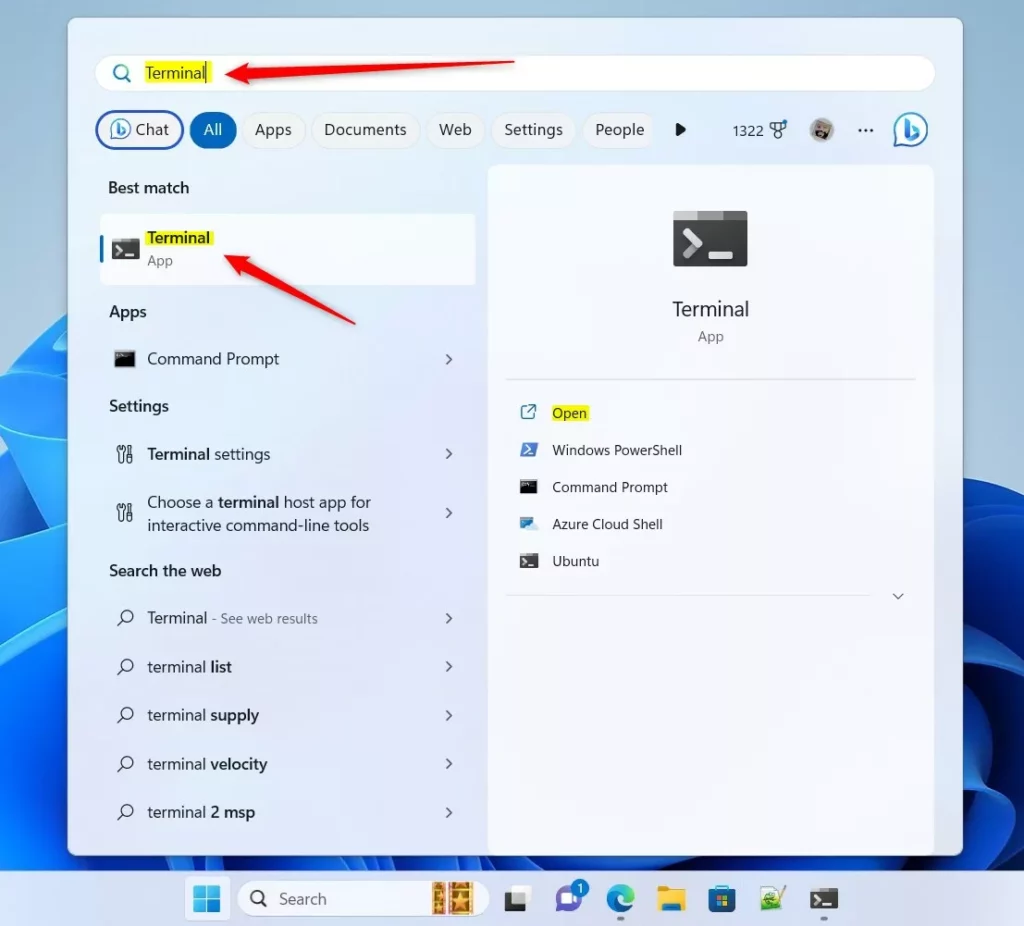
open the Terminal app in Windows - Click the down arrow button on the top bar and select Settings. The Settings screen opens in a tab, with a list of categories on the left.
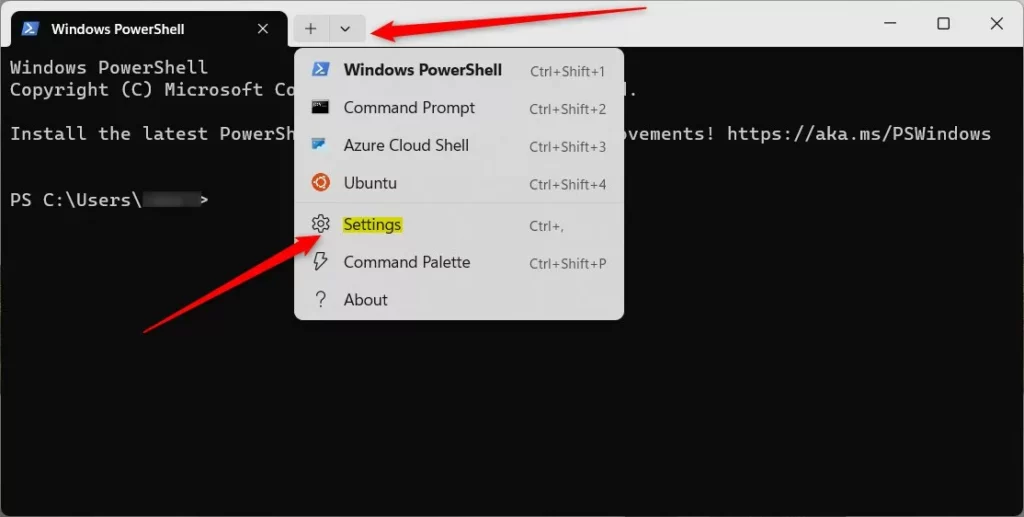
Windows Terminal Settings button updated - To edit the JSON file directly, hold the Alt key and click Settings. This opens the configuration file in your default text editor. If the file you land in is a read-only list of defaults, go back to the Settings screen and click Open JSON file at the bottom of the left-hand list instead.
- Locate the
profiles.defaultssection to change settings for all profiles, or find a specific profile ID to change only one. Take care to edit inside the existing braces, so the file stays valid JSON. - Add or modify the
initialColsandinitialRowsproperties as shown above. If one of them already exists, change its value instead of adding a second copy. Keep a comma after each line except the last one in its block. - Save the file, then close every open Terminal window and start Terminal again to see your changes. The new window should open at the size you set. If it does not, check the file for a typo or a missing comma, or restore your backup.
They apply only to your own user account, and on Windows 11 Home and Pro they work the same way.
Summary
You can change the Windows Terminal launch size in the settings.json file or on the Startup page of the Settings screen, so the window fits your screen the way you want. If a change does not take effect, close all Terminal windows and reopen the app. If the problem is a file you edited, restore your backup and try again.
Have a question about this guide?
Answered by AI from this guide. Good questions may be added to this page — please don't include personal details.
Did this guide fix your problem?

About the Author
Richard
Tech Writer, IT Professional
Richard is a writer at Geek Rewind who turns complex IT tasks into clear, step-by-step guides. He draws on years of hands-on experience in system administration and enterprise IT operations, focusing on Windows, Linux and WordPress: the problems people actually run into, and the fixes that work. His server and WordPress guides come from systems he runs himself. Richard builds and maintains the platform behind Geek Rewind, from its Ubuntu servers and Nginx configuration to its custom WordPress plugins. Many new tutorials start with readers' questions, and he's always glad to answer them in the comments.
[…] Adjust the Launch Size […]
[…] Adjust Launch Size […]
[…] can customize many things in the Terminal app in Windows. You can change the language, adjust the launch size, set the default profile, change the startup behavior, open the admin window, open Terminal […]
[…] Terminal app in Windows allows many customizations. You can change the language, adjust the launch size, set the default profile, change the startup behavior, open the admin window, open Terminal […]
[…] Terminal app in Windows allows many customizations. You can change the language, adjust the launch size, set the default profile, change the startup behavior, open the admin window, and […]
[…] Windows Subsystem for Linux (WSL). You can customize many settings in the app, such as language, adjust the launch size, set the default profile, change the startup behavior, open the admin window, open Terminal […]