How to Change Device Visibility in Android Nearby Share

Device visibility in Quick Share (the file-sharing tool formerly known as Nearby Share) controls which phones and tablets can see your Windows 11 PC over Bluetooth and Wi-Fi . You can switch this setting between three options to block strangers from sending you random files.
Locking down who can spot your computer stops unwanted file pop-ups on your screen. You can set your PC to stay hidden, show up only to your signed-in devices, or open up to everyone nearby for a quick 10-minute window. The change applies as soon as you make it. You don’t need to restart the PC or the app.
Open the Quick Share app, click the Settings gear icon in the top right corner, select the Device visibility tile, and choose from Everyone, Contacts, Your devices, or No one. The change applies immediately without restarting.
Important Update: Nearby Share is Now Quick Share
Google renamed “Nearby Share” to Quick Share. It handles file transfers between Android, ChromeOS, and Windows devices. The functionality is the same despite the name change, so older guides and menus that say “Nearby Share” describe the same feature. You can find more details on the official Google Support page.
Why Manage Quick Share Visibility?
A PC that is visible to everyone can get file requests from any device in range.
What happens when you are finished? The computer only accepts files from the people or devices you chose, which keeps your data private. If you want to undo anything later, open the same setting and pick a different level.
Changing Device Visibility in Quick Share
Android Nearby Share visibility lets you control who can send files to your phone or tablet. You can set your device to be visible to everyone nearby, only your contacts, or hidden completely from other users. The same idea applies on your PC. Open the Quick Share app and go to its settings whenever you want to change these options before you share photos, documents, or links.
Launch the app by opening the Start menu and finding it in your application list, or open it directly from the Taskbar or Taskbar overflow. The Quick Share window should open on your desktop.
If you can't find the app, it isn't installed yet. Quick Share for Windows is a separate download from Google, and it works on both Windows 11 Home and Pro.

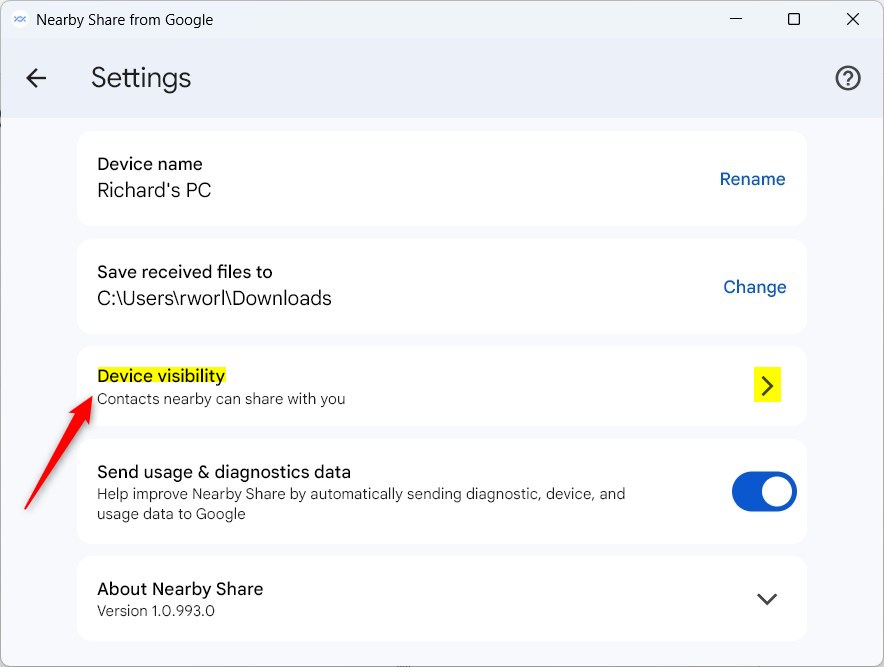
Once the app is open, click the Settings gear icon in the top right corner. The settings page should replace the main window and show a list of options.

Select the Device visibility tile to view the available options. The current setting is shown, so you can see what your PC is using right now.

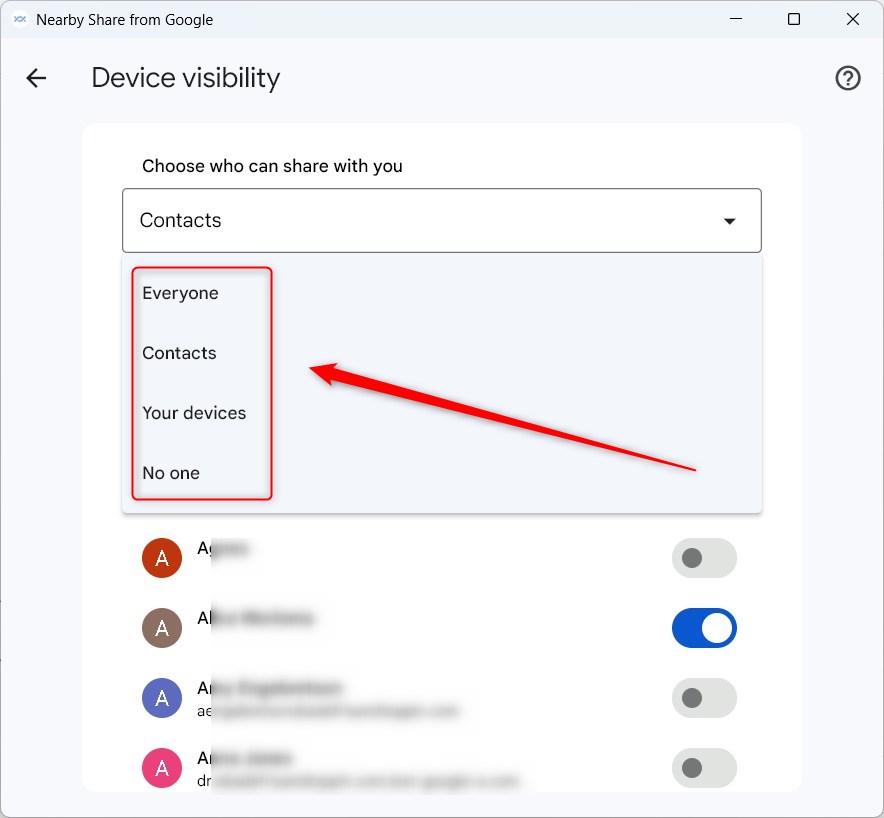
Open the drop-down menu to choose who can share files with your computer. The permissions include "Everyone," "Contacts only," or "Your devices." If "Contacts" or "Your devices" is missing or does nothing, check that you are signed in to the app with your Google account, because both options depend on that account.
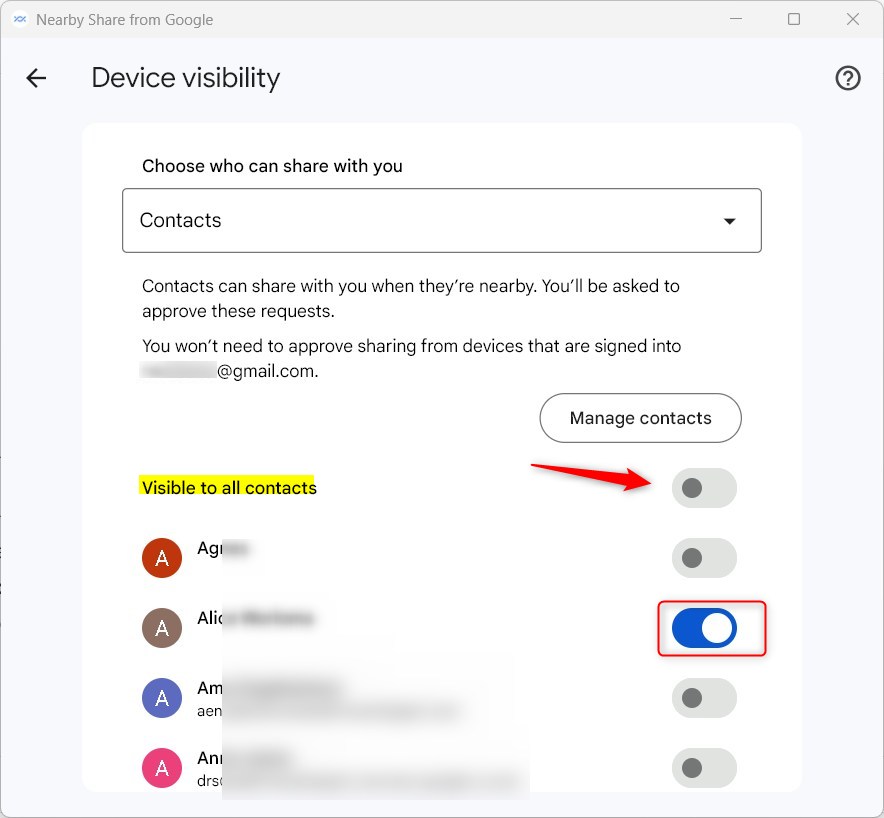
To pick specific people, turn on the "Visible to all contacts" toggle and select the trusted users you want. Only the people you choose will be able to see your PC. Turn the toggle off again to undo this.
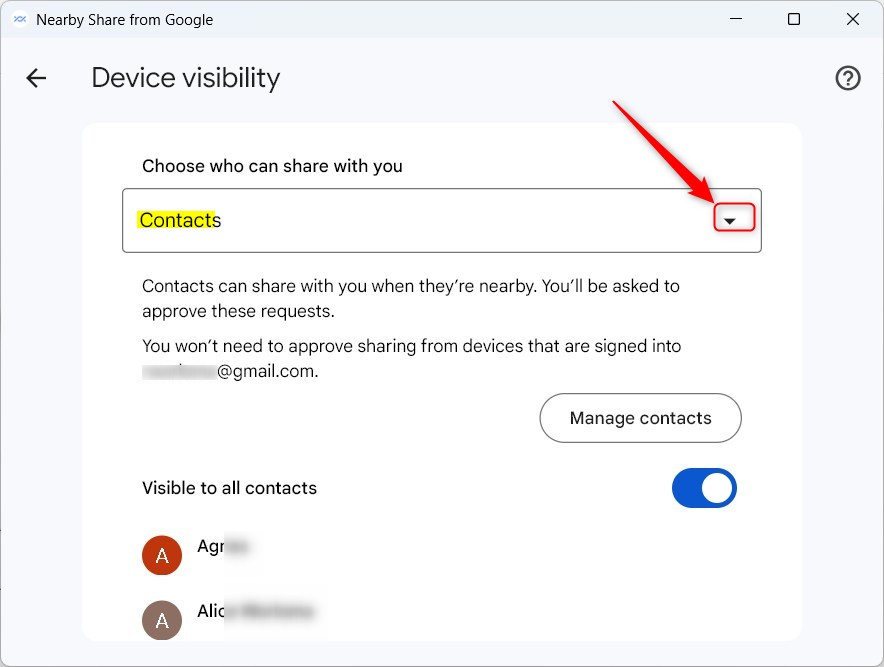
Choose one of these levels for visibility. If you aren't sure which to pick, "Contacts" or "Your devices" is a safe everyday choice:
Here is what each level means in practice:
- Everyone: Anyone nearby can see your computer. Use this only for a short time, for example to receive a file from someone who isn't in your contacts, and switch back afterwards. This mode stays on for about 10 minutes.
- Contacts: Only people in your Gmail contacts can see your computer.
- Your devices: Only other computers or phones you own (logged into your account) can see your computer. This is the best choice when you mainly move files between your own phone and PC.
- No one: Your computer is completely hidden. Nobody can send you files until you change the setting again.
Troubleshooting Quick Share Visibility
If a device doesn't show up when you expect it to, first check that the visibility level matches the sender. A PC set to "Your devices" won't appear to a friend's phone, for example. Then work through these checks:
- Bluetooth and Wi-Fi: Quick Share requires both to be turned on, on the PC and on the phone. Bluetooth finds the device and Wi-Fi carries the file.
- Google Play Services: Ensure your Android device is updated. An outdated version can stop the phone from showing up.
- Proximity: Move your devices closer together. A few feet apart is a good test distance.
- Network Type: Ensure your PC is not on a Public network profile. You can change it in Settings Network & internet, by opening the properties of your connection and choosing Private under network profile type.
Cross-Platform Sharing
Quick Share works smoothly between Android phones and Windows PCs. It uses Bluetooth to find devices and then Wi-Fi Direct (a direct connection between devices) for quick file transfers. Large files move fast between devices without needing any cloud service.
Summary
Managing visibility settings in Quick Share controls incoming file transfers and keeps your computer secure. Check the setting after you use "Everyone" so your PC doesn't stay open longer than you meant it to.
Was this guide helpful?

About the Author
Richard
Tech Writer, IT Professional
Richard is a writer at Geek Rewind who turns complex IT tasks into clear, step-by-step guides. He draws on years of hands-on experience in system administration and enterprise IT operations, focusing on Windows, Linux and WordPress: the problems people actually run into, and the fixes that work. His server and WordPress guides come from systems he runs himself. Richard builds and maintains the platform behind Geek Rewind, from its Ubuntu servers and Nginx configuration to its custom WordPress plugins. Many new tutorials start with readers' questions, and he's always glad to answer them in the comments.

No comments yet — be the first to share your thoughts!