How to Turn On Administrator Protection Using Windows Security in Windows 11

Administrator Protection in Windows 11 is a built-in security setting that blocks apps from making major changes to your computer without your direct permission. Turning on this feature stops malicious software from messing with core system files behind your back.
You can enable this extra safety layer directly inside the Windows Security app. Keeping it active requires Windows 11 Build 26100 or later to protect your system from unauthorized modifications.
Open Windows Security, navigate to Account Protection, click Account protection settings, and toggle Administrator Protection to On. This feature enhances security by providing clear, color-coded prompts for actions requiring elevated privileges.
What is Administrator Protection?
Administrator protection windows 11 is a built-in security feature that requires you to explicitly approve apps trying to make major changes to your computer. When an app requests system-level access, this feature steps in to review its intent and blocks unauthorized modifications, keeping your PC safe from hidden risks and unwanted software changes.
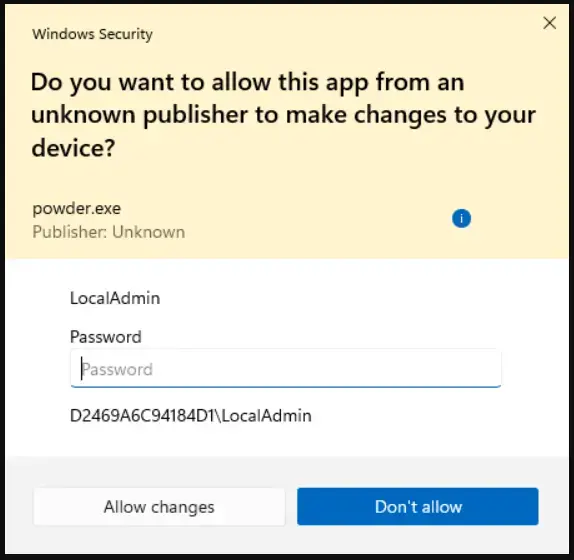
What happens when enabled? Active Administrator Protection triggers distinct, informative prompts whenever software attempts deep modifications to the operating system.
The feature can be toggled on or off at any time directly through the Windows Security app without needing advanced technical assistance.
Steps to Enable Administrator Protection
Step 1Open Windows Security
Opening Windows Security on your Windows 11 PC lets you manage your device settings and turn on administrator protection windows 11. To get started, press the Start key on your keyboard, type Windows Security into the search bar, and click the app icon from the search results to open the main security dashboard.
- Click the Start button, then Settings.
- Select Privacy & Security (or Update & Security in some versions).
- Click Windows Security.
- Click Open Windows Security.
Windows Security, a built-in defense console, opens when typing "Windows Security" into the Start menu search bar and selecting the application. This method provides direct access to PC protection parameters.
Step 2Go to Account Protection
Inside the Windows Security app, click Account protection from the left sidebar or the main dashboard.
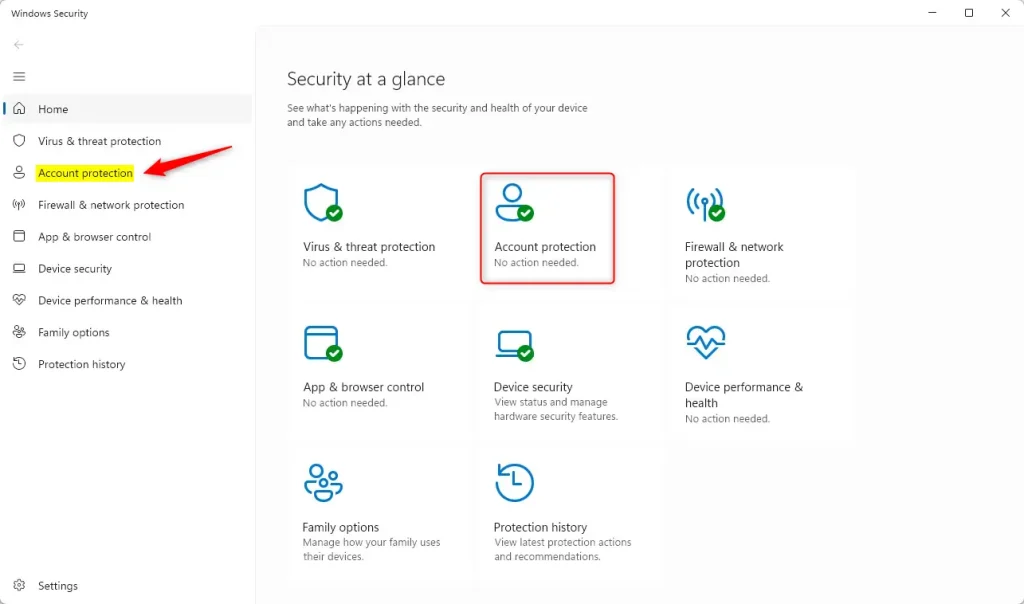
Step 3Open Account Protection Settings
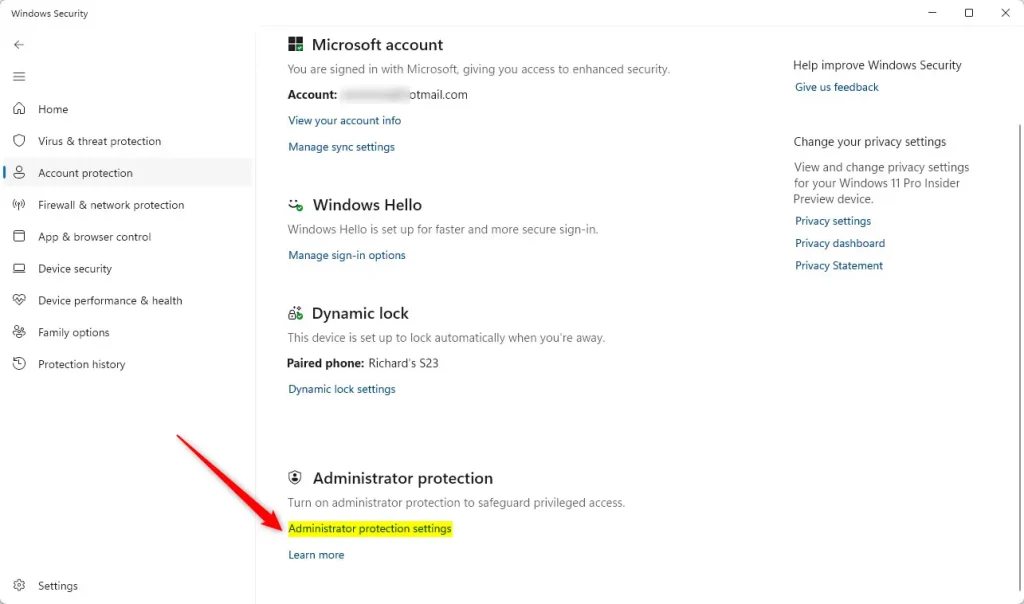
Select the Account protection settings link located beneath the primary Account Protection section.
Step 4Turn Administrator Protection On or Off
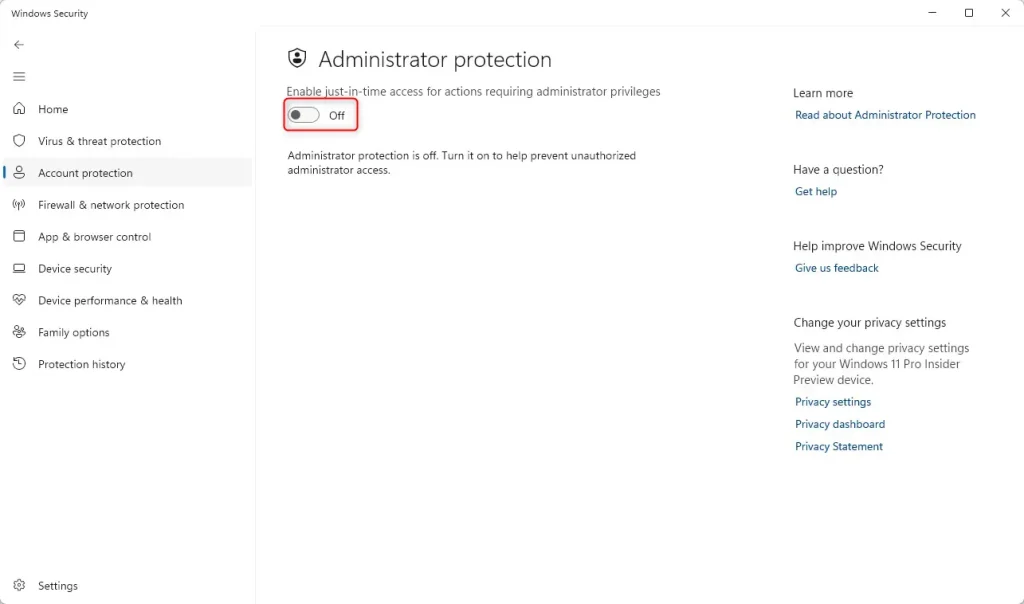
Locate the toggle switch for Administrator Protection. Click the switch to On to activate the function, or toggle it to Off to deactivate it.
What Does It Look Like When Enabled?
Active Administrator Protection presents clear, color-coded prompts whenever software attempts significant modifications to the operating system. Recognizing these details clarifies what permissions are granted, maintaining higher security levels.
Why Use Administrator Protection?
- Better Security: It helps protect your PC from risky applications.
- Easy to Use: You can turn it on or off yourself anytime.
- Clear Warnings: Color-coded prompts make it easier to decide what to allow.
- Simple Access: Manage it all from the Windows Security app.
- Future-Ready: This is part of Microsoft's plan to make Windows safer and smarter.
Administrator protection windows 11 gives your computer an extra layer of defense by stopping malicious apps from making unauthorized changes behind your scenes. Using this feature helps you catch risky software early, gives you clear warnings before granting system permissions, and keeps your files safe without slowing down your day-to-day work.
Learn More
For additional details, visit the official Microsoft blog.
Review the original guide at Geek Rewind.
Summary
Administrator Protection in Windows 11 serves as a functional security utility displaying distinct warnings when applications attempt substantial modifications, helping maintain hardware integrity.
How do I turn on administrator protection?
Group Policy offers an advanced alternative method for managing this setting, though most users will prefer the Windows Security app interface.
Was this guide helpful?

About the Author
Richard
Tech Writer, IT Professional
Richard, a writer for Geek Rewind, is a tech enthusiast who loves breaking down complex IT topics into simple, easy-to-understand ideas. With years of hands-on experience in system administration and enterprise IT operations, he’s developed a knack for offering practical tips and solutions. Richard aims to make technology more accessible and actionable. He's deeply committed to the Geek Rewind community, always ready to answer questions and engage in discussions.


No comments yet — be the first to share your thoughts!