Clear Custom Dictionary Words in Settings Privacy and Security Inking and Typing Personalization

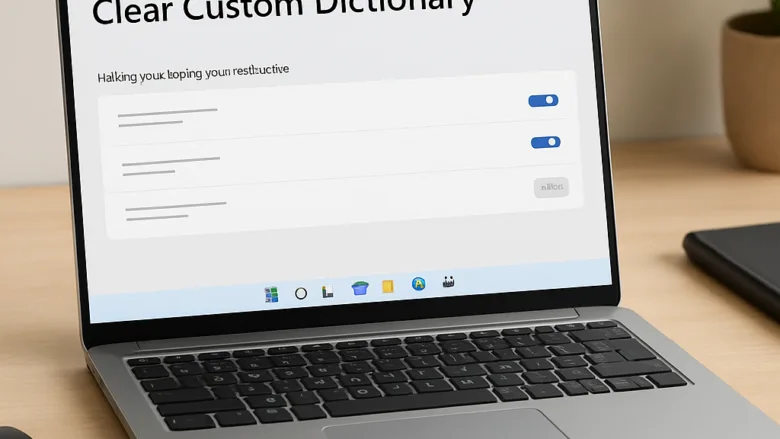
Clearing your custom dictionary in Windows 11 deletes the personal word list your PC builds as you type, write with a digital pen, or use the touch keyboard. Windows stores these words locally and uses them to improve spell check, auto-correct and text suggestions over time.
Deleting this typing history removes the specific words and phrases you taught your PC. That matters most when other people share your user account and you don’t want them to see your personal vocabulary. You can reset the data at any time from the Privacy & security settings and start with a clean slate.
To clear custom dictionary words in Windows 11, open Settings , go to Privacy & security, click Inking & typing personalization, and select Clear custom dictionary. Windows then forgets all words it learned from your typing and handwriting history.
How to Clear Custom Dictionary Words Using Windows Settings
The custom dictionary is cleared from the Settings app. Go to Privacy & security, open Inking & typing personalization, and use the option to clear your custom dictionary. Windows then forgets every word it learned from your typing, so your spelling suggestions start over. The steps below apply to Windows 11 Home and Pro alike. No restart is needed.
- Click the Start button on your taskbar .
- Select the Settings app, the small gear icon. You can also press the Win plus I to open Settings directly. The Settings window should now be open.
- In the menu on the left, click Privacy & security. The privacy options appear in the main panel on the right.
- Scroll down the right panel to the section labeled Windows permissions.
- Click Inking & typing personalization. A page opens with the settings for your typing and handwriting data.
- Look for the setting named Custom dictionary.
- Click Clear custom dictionary.
It will no longer suggest those custom words, and your typing profile starts from scratch. This cannot be undone. Windows will simply begin learning new words again as you type, as long as personalization is still turned on.
The exact wording on this page can differ slightly between Windows 11 builds. If you don’t see a clear button, check that the personalization switch at the top of the page is on. A greyed-out or missing option can also mean your PC is managed by an organization that controls this setting. This only clears the dictionary Windows keeps. Apps with their own word lists, such as Microsoft Word or your web browser, keep those separately.
Managing General Typing Privacy and Data Sharing
To stop Windows from learning new words, turn off the main personalization switch. Your PC then stops saving your typing habits and stops building a custom dictionary in the background.
To turn off typing data collection:
- Press the Windows key plus I to open the Settings app.
- Click Privacy & security in the left-hand menu.
- Scroll down to Windows permissions and select Inking & typing personalization.
- At the top of the page, find the main toggle switch under the heading Inking & typing personalization. On some builds this switch is labeled Personalization or something close to it.
- Click the switch to change it from On to Off. The switch should now show Off.
With the switch off, Windows stops learning from your typing. Your touch keyboard and text suggestions rely on the standard built-in dictionary that ships with Windows. This is a sensible choice if you value privacy over predictive text. To undo it, return to the same page and switch it back on. Words you cleared earlier won't come back, but Windows will start learning again.
How to Clear Diagnostic Data and Personalization History (Unique Angle)
Your local PC isn't the only place this kind of data can live. If you sign in to Windows with a Microsoft account, some personalization and diagnostic data may also be stored online. You can review and delete it from your Microsoft account privacy dashboard. You will need an internet connection and your account sign-in details.
The dashboard layout changes from time to time, so the section names below may not match exactly. Follow these steps to look for and delete stored data:
- Open your web browser and go to the Microsoft privacy dashboard at account.microsoft.com/privacy.
- Sign in with your Microsoft account credentials (for example, user@example.com).
- Look for the section dedicated to Search history or Other privacy settings.
- Find any option related to Cortana data or Inking and typing data. Not every account shows both, and Microsoft has moved or renamed these entries over the years.
- Click the button to clear or delete the stored data, and confirm if asked.
You can also remove diagnostic data on the PC itself. In Settings, go to Privacy & security, open Diagnostics & feedback, and use the Delete diagnostic data option.
Clearing the local dictionary, turning off personalization and deleting your online data together leaves very little of your typing history behind. If you use several PCs with the same Microsoft account, repeat the local steps on each one.
Summary
- Windows saves words you type to build a custom dictionary for better text suggestions.
- You can clear this dictionary in Windows Settings under Privacy & security and Inking & typing personalization.
- Turning off the main personalization switch stops Windows from learning new words in the future.
- Cloud-synced accounts may require clearing data through your online Microsoft account dashboard as well.
Windows saves words you type to build a custom dictionary for better text suggestions, but you can delete this data at any time. Clear the dictionary in Settings under Privacy & security and Inking & typing personalization. Turning off the main personalization switch stops Windows from learning new words in the future.
Was this guide helpful?

About the Author
Richard
Tech Writer, IT Professional
Richard is a writer at Geek Rewind who turns complex IT tasks into clear, step-by-step guides. He draws on years of hands-on experience in system administration and enterprise IT operations, focusing on Windows, Linux and WordPress: the problems people actually run into, and the fixes that work. His server and WordPress guides come from systems he runs himself. Richard builds and maintains the platform behind Geek Rewind, from its Ubuntu servers and Nginx configuration to its custom WordPress plugins. Many new tutorials start with readers' questions, and he's always glad to answer them in the comments.

No comments yet — be the first to share your thoughts!