How to Customize Windows 11 Taskbar Settings

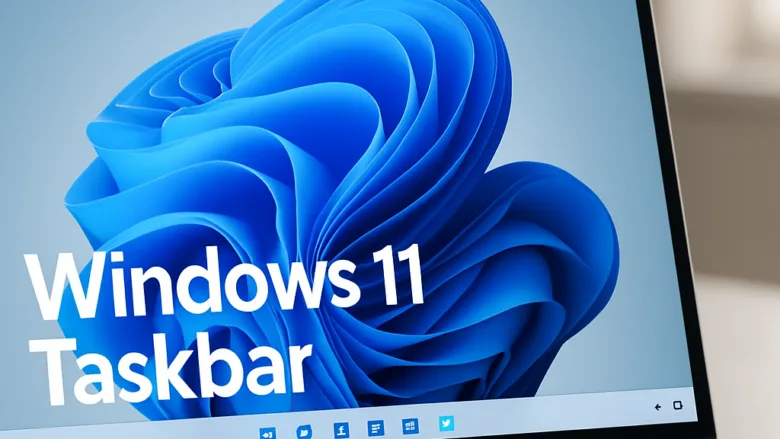
Taskbar settings in Windows 11 let you move app icons to the left, hide the search bar, and clear out clutter so your desktop fits the way you work. Every edition, Home and Pro alike, has these options under Settings Personalization Taskbar
Most changes take effect the moment you flip a switch, so you do not need to restart. To undo a change, return to the same setting and switch it back. The same page opens if you right-click an empty spot on the taskbar and choose Taskbar settings. If a setting is greyed out on a work or school PC, an administrator policy probably controls it. Only your organization can change that.
You can customize your Windows 11 taskbar by adjusting settings like icon size, showing app labels, hiding system tray icons, and enabling hover search. Access these options within the Taskbar Behaviors and Taskbar corner overflow settings to tailor the taskbar to your workflow and preferences.
Getting Your Taskbar Set Up
Start with the basic controls. They cover most of what people want to change and are easy to reverse.
- Open Settings Personalization Taskbar The page lists Taskbar items, System tray icons or Taskbar corner icons (the name depends on your build), and Taskbar behaviors.
- Under Taskbar items, switch each button on or off as you like: search, Task view, Widgets. The button appears or disappears from the taskbar right away.
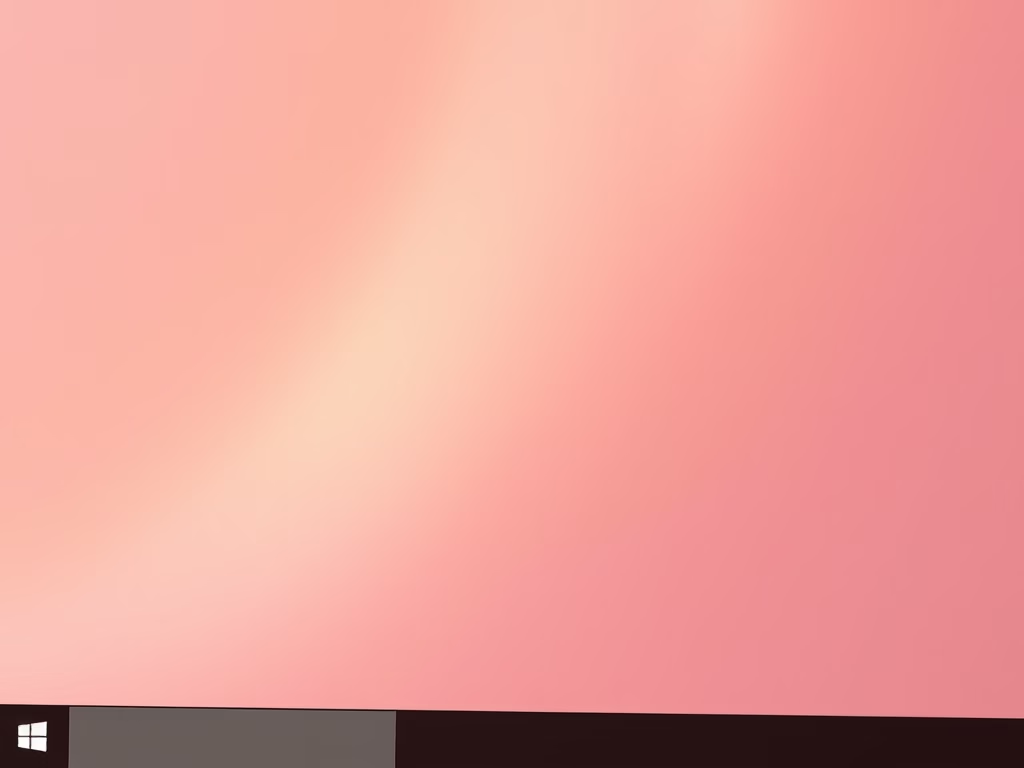
- Expand Taskbar behaviors and open the Taskbar alignment list. Choose Left to move the Start button and app icons to the left edge, or Center to go back to the default.
Making Your Taskbar Work for You
Next, tailor the interface elements to match your daily workflow. Remove what you never use and keep what you reach for often.
- Open Settings Personalization Taskbar and look at Taskbar items.
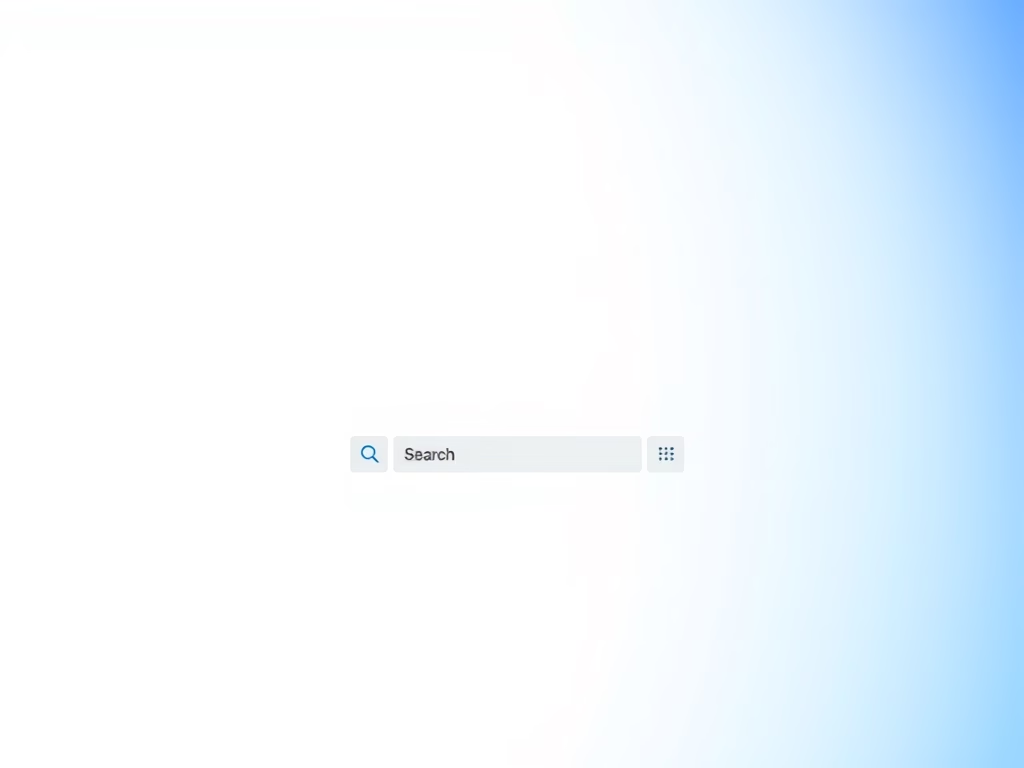
- Choose how search appears. The options are hidden, an icon only, an icon with a label, or a full search box . The full box takes the most room, so pick the icon if your taskbar fills up.
- Turn off Widgets if you never open the panel. It also stops the weather and news from showing on the taskbar .
- To pin an app, find it in the Start menu , right-click it, and choose Pin to taskbar . For an app that is already running, right-click its taskbar icon and choose Pin to taskbar .
- Drag pinned icons left or right to put your most-used apps in the order you want.
To remove a pinned app, right-click it and choose Unpin from taskbar. The app itself stays installed.

Advanced Taskbar Tips and Shortcuts
Advanced configurations add shortcuts and open deeper system functions straight from the taskbar. They take a little more care than the basic toggles, so change one thing at a time and check the result before you move on.
Some of these options depend on your Windows 11 version. If a setting described below is missing, install the latest updates through Settings Windows Update and look again.

Troubleshooting Taskbar Issues
Unexpected taskbar glitches call for troubleshooting. Work from the simplest fix to the most involved, so you do not change more than you need to.
- Check Settings Personalization Taskbar first A switch you changed earlier is often the cause.
- Restart your PC. This clears many frozen or blank taskbars.
- Install pending updates from Settings Windows Update, because some taskbar bugs are fixed in cumulative updates.
- If an option is greyed out or missing, check whether the PC is managed by an organization, and compare it with your Windows version.
Resolving the common problems this way keeps the taskbar working and useful.
Common questions
How do I change the size of the icons on my 🪟 Windows 11 taskbar?
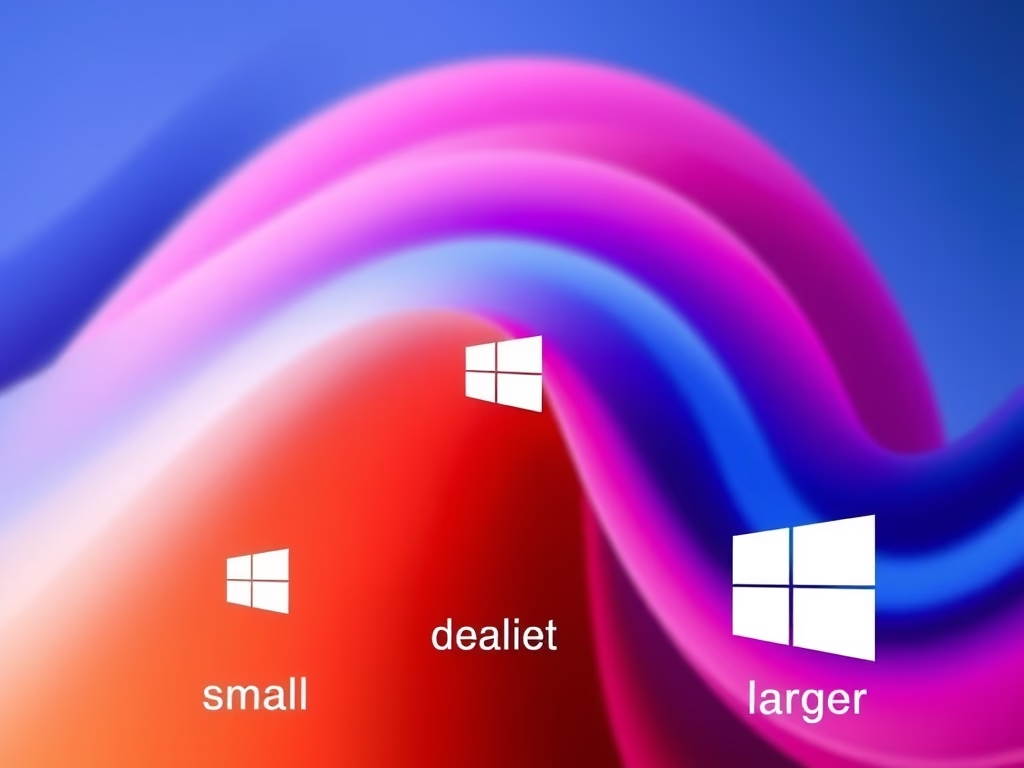
Taskbar icon size is set in the Taskbar behaviors section. Changing it scales the icons larger or smaller.
- Open Settings Personalization Taskbar and expand Taskbar behaviors.
- Look for the option that makes taskbar buttons smaller and switch it on. The icons shrink right away, which leaves room for more apps.
This option only exists on recent Windows 11 builds. Older builds have no icon size setting in Settings at all. If you do not see it, update Windows and check again. To go back, switch the option off.
Can I show labels next to pinned apps on the 🪟 Windows 11 taskbar?
Pinned and running apps can show text labels next to their icons. Labels make programs easier to tell apart when several windows are open.
- Open Settings Personalization Taskbar and expand Taskbar behaviors.
- Find the setting that combines taskbar buttons and hides labels. Choose the option that never combines them.
- Check the taskbar. Each window should now show its own button with the app name beside the icon.
Labels take up more width, so the taskbar fills sooner. If it gets crowded, set the option back to always combine.
How do I hide icons I don't use from the system tray?
The taskbar corner overflow keeps the notification area clean. Icons you switch off move into a small pop-up, so the corner shows only the tools you want to see.
- Open Settings Personalization Taskbar
- Expand the corner overflow section, which may be named Other system tray icons on your build.
- Switch on the apps you want visible in the corner, and switch off the rest. Icons turned off appear when you click the small arrow near the clock.
If a program is missing from the list, it has not run yet. Start the app once and it will show up.
What is hover search in 🪟 Windows 11?
Hover search opens the search bar as soon as the mouse cursor passes over it, which saves a click. You switch it on or off in the taskbar search settings.
- Open Settings Personalization Taskbar and look under Taskbar items at the search options.
- Find the hover option for search and turn it on.
- Move the pointer over the search bar. It should open without a click.
This setting is not on every build. If it is missing, your version does not include it yet. Turn it off if the bar opens when you do not want it to.
How do I add shortcuts to folders like Documents or Downloads on my taskbar?
Shell commands create shortcuts that point to special Windows folders. Aiming a shortcut at a specific system location gives you quick access to places that are otherwise buried in menus.
Follow the command shown above exactly. Special folder shortcuts depend on the exact text, and a typo creates a shortcut that does nothing. To remove a shortcut, delete it like any other file.
Have a question about this guide?
Answered by AI from this guide. Good questions may be added to this page — please don't include personal details.
Did this guide fix your problem?

About the Author
Richard
Tech Writer, IT Professional
Richard is a writer at Geek Rewind who turns complex IT tasks into clear, step-by-step guides. He draws on years of hands-on experience in system administration and enterprise IT operations, focusing on Windows, Linux and WordPress: the problems people actually run into, and the fixes that work. His server and WordPress guides come from systems he runs himself. Richard builds and maintains the platform behind Geek Rewind, from its Ubuntu servers and Nginx configuration to its custom WordPress plugins. Many new tutorials start with readers' questions, and he's always glad to answer them in the comments.
No comments yet — be the first to share your thoughts!