What Breaks When You Disable the Windows 11 Virtual Memory Paging File


Disabling the Windows 11 virtual memory paging file stops your computer from managing memory overflow, which causes apps to crash without warning and triggers sudden out-of-memory errors even if you have 16GB or 32GB of RAM installed. The paging file is a hidden file named pagefile.sys on your drive that acts as backup space when your physical RAM fills up.
Physical RAM handles the apps and games you have open right now, but it runs out fast when you open too many programs at once. Windows steps in during heavy system loads by moving idle data from your physical memory into this storage backup file.
Disabling the Windows 11 virtual memory paging file causes random application crashes when your physical RAM fills up, prevents Windows from saving memory dump files during system errors, and triggers sudden out of memory errors that force your open programs to close without warning.
What Happens Immediately When You Turn Off the Paging File?
Turning off the paging file immediately stops your computer from using storage space as a backup for your physical RAM. This means Windows must fit every single active task entirely into your memory sticks, losing the safety net that prevents memory shortages.
- System Limits: Your computer can no longer use storage space as a backup for RAM.
- Memory Management: Windows must fit every single active task entirely into your physical RAM sticks.
- Crash Vulnerability: The system loses its primary workspace for handling severe memory crunches.
While your computer might boot up normally if you have plenty of RAM, you are walking on a tightrope. The very first time a demanding application or game tries to use more memory than you physically own, things will start to break.
Core Issues and Failures Caused by Disabling Virtual Memory
Turning off virtual memory causes a domino effect of errors and system failures. Let us break down the exact problems you will face.
1Applications Crash Without Warning
When your physical RAM fills up and a program asks for more space, Windows cannot use storage as backup and must shut the app down to prevent system failure.
Without a paging file, Windows has to say no. It cannot give the program the memory it requested. Because the program cannot run without that memory, Windows immediately forces the app to close. You will often see error messages saying your system is out of memory, followed by the app closing to the desktop without saving your work.
2The Blue Screen of Death and Loss of Crash Data
Windows relies on this virtual memory space to write memory dump files, which means you lose the ability to figure out why your computer crashed.
Windows relies on the paging file to write this diagnostic data when a crash happens. If you disable the paging file, Windows cannot create a complete memory dump. This makes troubleshooting future computer problems much harder.
Furthermore, without a paging file to help cushion unexpected memory spikes, your system is much more likely to experience a Blue Screen of Death in the first place when heavy workloads push your hardware to the limit.
3Reduced Overall System Performance
Reduced overall system performance happens because Windows cannot move idle background data out of your fast RAM. Without the paging file to handle these waiting tasks, your active programs must share limited memory space, which slows down your computer instead of speeding it up.
Windows moves idle data into the paging file to keep your fast RAM open for active tasks. Without this smart moving of background data, active tasks must share space with idle data. This leads to inefficient memory use and can actually slow down your computer when you multitask.
Unique Angles: What Most Guides Miss About Disabling Paging Files
Most technology articles tell you that your apps will crash. But they miss some deeper, less obvious technical consequences of removing the Windows 11 paging file.
Memory Allocation Overhead and Developer Tools
Memory allocation overhead causes immediate failures for programmers and developers who turn off the paging file. Development tools and virtual machines often request massive chunks of virtual memory space, and they will crash instantly if Windows cannot promise that extra room.
The Windows 11 paging file handles memory overcommit by backing up virtual memory space so your computer avoids running out of memory. When you disable the Windows 11 paging file, software development suites, database servers, and local container environments will throw out-of-memory exceptions and refuse to start.
Background Windows Maintenance and Update Failures
Background Windows maintenance and update failures occur because system updates and virus scans lean heavily on virtual memory. When Windows tries to stage large installation packages during heavy updates, lacking a paging file often stops the process completely.
During heavy system updates, Windows often stages large installation packages inside temporary memory spaces that lean heavily on virtual memory. If you lack a paging file, major Windows feature updates can fail mid-installation with confusing error codes, leaving your operating system in an unstable state.
Step-by-Step Guide: How to Check and Manage Your Paging File Safely
Checking and managing your Windows 11 paging file safely takes just a few clicks through the main system settings menu. You can easily verify your virtual memory status and make sure your computer has the right backup space enabled with administrator permissions.
- Click the Start button on your taskbar and type Settings, then press Enter.

Taskbar - In the Settings window, click on System in the left sidebar.
- Scroll down the right side and click on About.
- Click on the Advanced system settings link. This opens a small properties window.
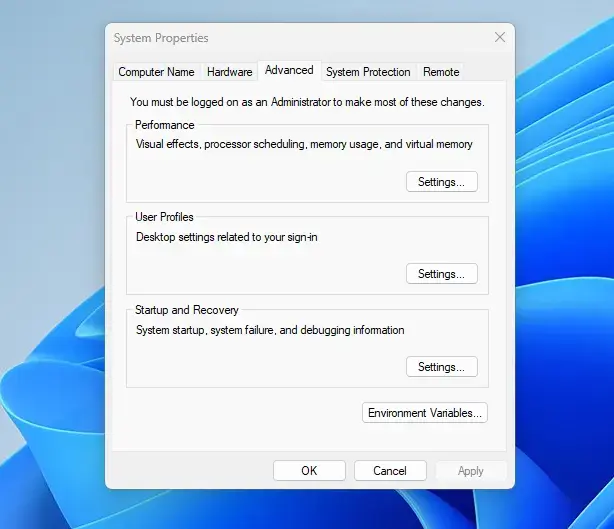
System Properties - Under the Advanced tab, look at the Performance section and click the Settings button.
- In the Performance Options window, click on the Advanced tab at the top.
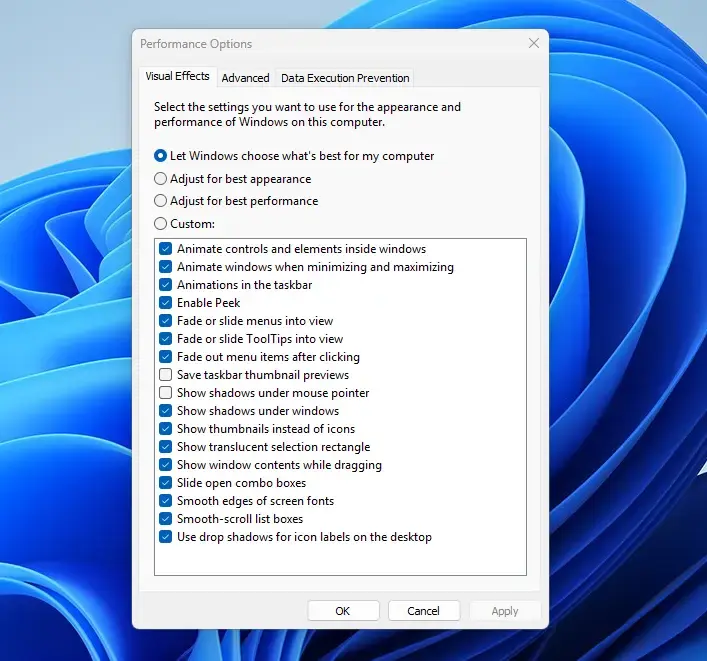
Performance Options - Look for the Virtual memory section and click the Change button.
- Uncheck the box at the top that says Automatically manage paging file size for all drives if it is checked and you need to make changes.
- To let Windows manage it properly, which is the recommended best practice, check the box for Automatically manage paging file size for all drives and click OK.
- Restart your computer to apply the changes.
Summary
The Windows 11 virtual memory paging file must remain turned on to keep your computer stable and prevent random app crashes. Disabling this backup system leads to lower overall performance, lost crash diagnostic data, and failed system updates.
Was this guide helpful?

About the Author
Richard
Tech Writer, IT Professional
Richard is a writer at Geek Rewind who turns complex IT tasks into clear, step-by-step guides. He draws on years of hands-on experience in system administration and enterprise IT operations, focusing on Windows, Linux and WordPress: the problems people actually run into, and the fixes that work. His server and WordPress guides come from systems he runs himself. Richard builds and maintains the platform behind Geek Rewind, from its Ubuntu servers and Nginx configuration to its custom WordPress plugins. Many new tutorials start with readers' questions, and he's always glad to answer them in the comments.



No comments yet — be the first to share your thoughts!