Should You Enable Enhanced Pointer Precision in Windows 11 Mouse Properties

Enhanced pointer precision is the setting that controls mouse acceleration in Windows 11. With it on, the cursor speed depends on how fast you move the mouse, not only on how far. Move the mouse quickly and the cursor jumps farther across the screen. Move it slowly and the cursor travels a shorter distance, which suits fine work.
Windows 11 turns this setting on by default. Most everyday and office users never notice it, and it can help you reach the far corners of a 1080p or 4K monitor with a small sweep of the mouse. PC gamers usually turn it off. When cursor speed changes with hand speed, muscle memory is harder to build, and accurate aiming in shooter games depends on that muscle memory.
No. For most users, leave enhanced pointer precision off in Windows 11 mouse properties. This setting enables mouse acceleration, which makes cursor speed depend on how fast you move your mouse rather than how far. Disabling it keeps cursor movement consistent, which helps build muscle memory for everyday tasks, gaming, and design work.
What Is Enhance Pointer Precision?
Enhance pointer precision is a built-in Windows 11 mouse acceleration feature. It changes your cursor speed based on how fast you move your hand. A quick flick sends the cursor a long way. A slow move sends it a short way. This helps you cover a large screen with a small mouse pad, but it makes cursor movement less predictable.
Without acceleration, Windows uses a simple rule: the same hand movement always moves the cursor the same distance. Enhance pointer precision changes that rule. Windows now looks at how fast you move your hand, as well as how far.
- Slow movements: If you move your mouse slowly, Windows decreases your cursor speed. This gives you high precision when you need to click on tiny buttons, select a single word in a document, or edit a photo.
- Fast movements: If you move your mouse quickly, Windows increases your cursor speed. This lets you zip your cursor from one corner of a large monitor to the other without running out of desk space or having to pick up your mouse.
The idea sounds helpful, but it changes how your hand relates to the screen. The same two-inch movement can produce different cursor distances depending on how fast you make it. That makes consistent muscle memory very hard to build while the setting is on.
Should You Enable Enhance Pointer Precision?
For most people who care about accuracy, leave it off. The exception is a cramped desk or a small laptop trackpad, where acceleration saves you from running out of room. With it disabled, your cursor speed stays consistent. That helps with everyday tasks, web browsing, graphic design, and PC gaming. Turn it on only if you need to move the pointer across a large screen without moving your hand very far.
Here is why most people prefer it disabled:
- Muscle Memory: When you turn off this feature, your mouse movements stay predictable. If you move your hand two inches, the cursor always travels the exact same distance. Your brain quickly learns this pattern, allowing you to move your mouse without looking directly at the cursor.
- Gaming: If you play video games, especially first-person shooters or strategy games, mouse acceleration works against you. If you flick your wrist to aim at an enemy, the acceleration kicks in and throws off your aim. Gamers almost always turn this setting off to keep their aim accurate and reliable. Some games have their own raw input option that bypasses it, but you can't count on that in every title.
- Design and Editing: Graphic designers, video editors, and digital artists rely on precise hand-eye coordination. Mouse acceleration makes it hard to draw smooth lines or place anchor points accurately because the cursor speeds up unexpectedly.
There are a few situations where some users like it:
- Laptop Trackpads: If you use a small laptop trackpad, acceleration can help you drag your finger a short distance to cross a large screen. Note that the trackpad has its own settings under Bluetooth & devices Touchpad, separate from the mouse settings below.
- Office Work: If you use a very basic, cheap office mouse on a tiny mouse pad, acceleration helps you navigate large web pages without constantly lifting your mouse.
The choice is easy to test. Switch it off, use the PC for a day or two, and switch it back on if you miss it. Your muscle memory needs a little time to adjust, so don't judge it after five minutes.
How to Turn Off Enhance Pointer Precision in 🪟 Windows 11
If you want your mouse to feel more predictable and accurate, you can turn this feature off in the built-in Windows settings. There are two ways to reach the same checkbox: the Settings app and the classic Control Panel. Both lead to the same Mouse Properties window, and the change applies to your user account.
Method 1Using the 🪟 Windows 11 Settings App
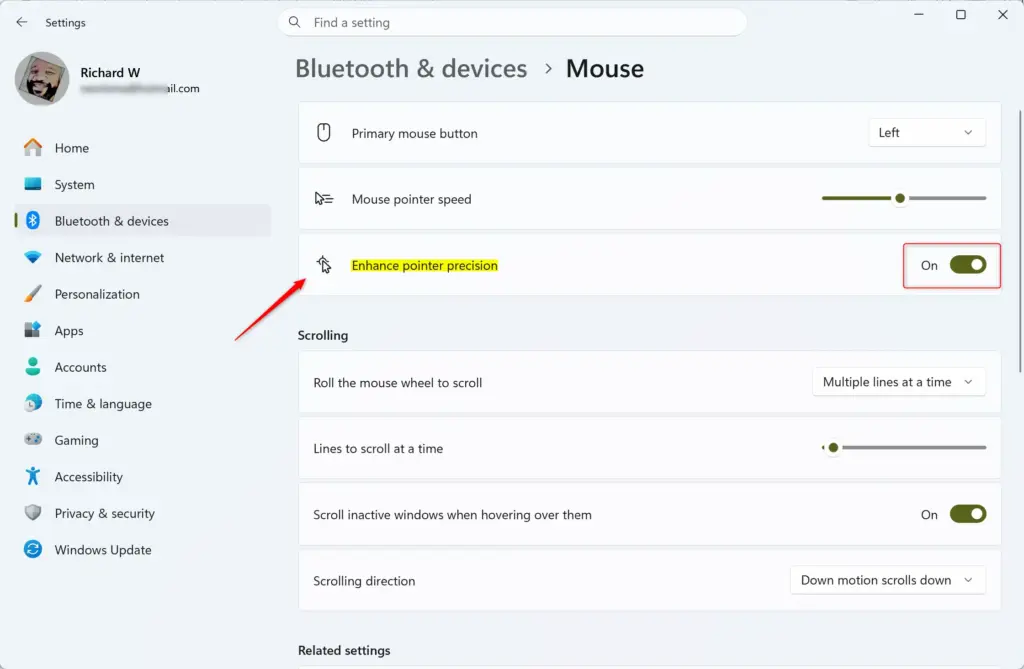
The Settings app is the quickest route. Press Windows Key + I, go to Bluetooth & devices, click Mouse, and open Additional mouse settings. This opens the classic Mouse Properties window, where the checkbox lives. Some recent Windows 11 builds also show an Enhance pointer precision toggle directly on the Mouse page. If yours has one, it does the same thing as the checkbox below.
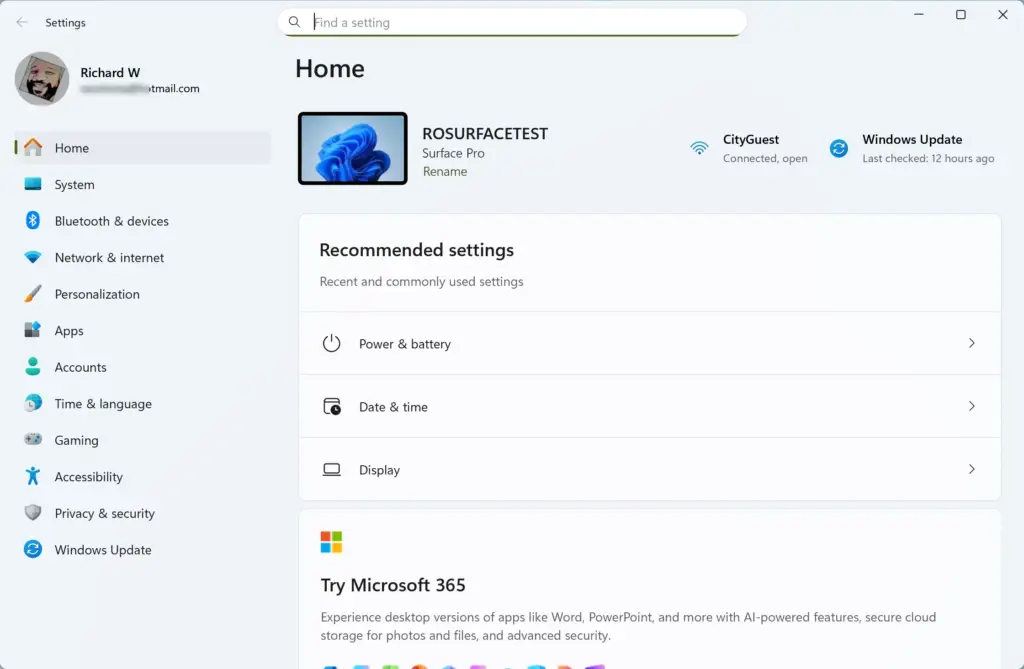
- Click the Start button on your taskbar and select Settings (the gear icon). Alternatively, press Windows Key + I on your keyboard. The Settings window opens.

Taskbar - In the Settings window, click Bluetooth & devices in the left-hand menu.
- Scroll down on the right side and click Mouse. You should now see the mouse options, such as the primary button and pointer speed.
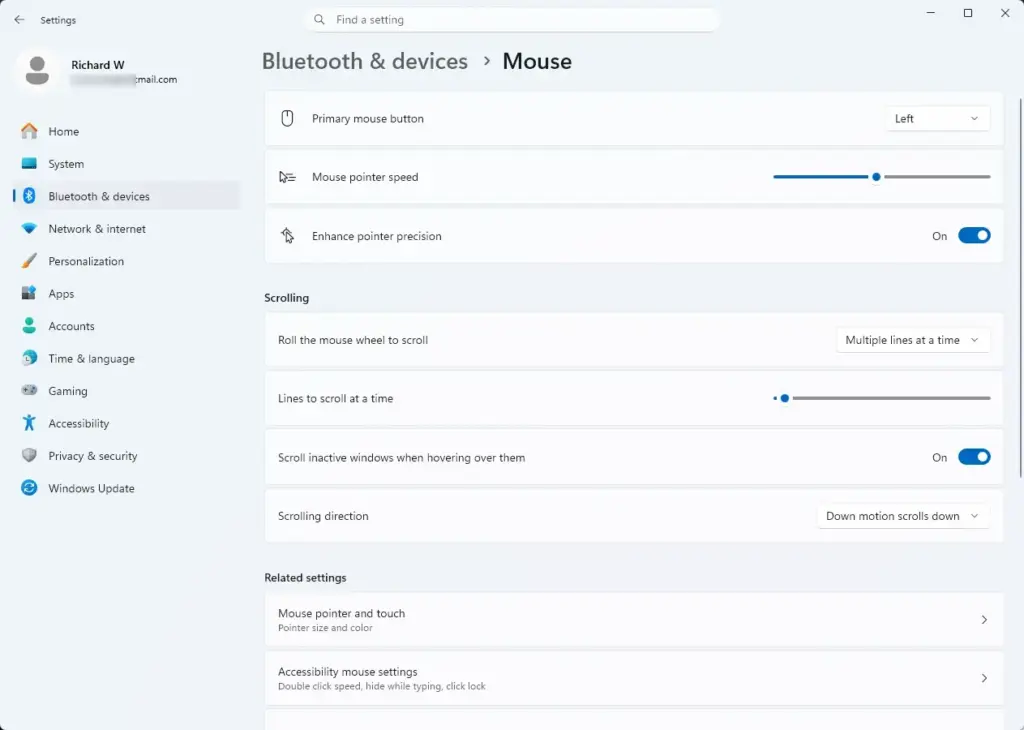
Settings › Bluetooth › Mouse - Click Additional mouse settings. This opens a classic window titled Mouse Properties. On some builds the link sits under a Related settings heading near the bottom of the page.
- At the top of the Mouse Properties window, click the Pointer Options tab.
- Look for the section labeled Motion. It holds the pointer speed slider and the Enhance pointer precision checkbox.
- Uncheck the box next to Enhance pointer precision.
- Click the Apply button at the bottom of the window, then click OK to save your changes. The change takes effect straight away and you do not need to restart. Move the mouse and you should notice the cursor speed is now steady.
To undo the change, repeat the steps and tick the box again. If the cursor feels too fast or too slow after you turn acceleration off, adjust the pointer speed slider in the same Motion section. The middle setting is a good place to start.
Method 2Using the Classic Control Panel
You can reach the same Mouse Properties window through the Control Panel. This route is useful if the Settings app is slow to open, the Additional mouse settings link is missing, or you simply prefer the traditional menus. It works on both Windows 11 Home and Pro.
- Click the Start button, type Control Panel into the search bar, and press Enter. The Control Panel window opens.
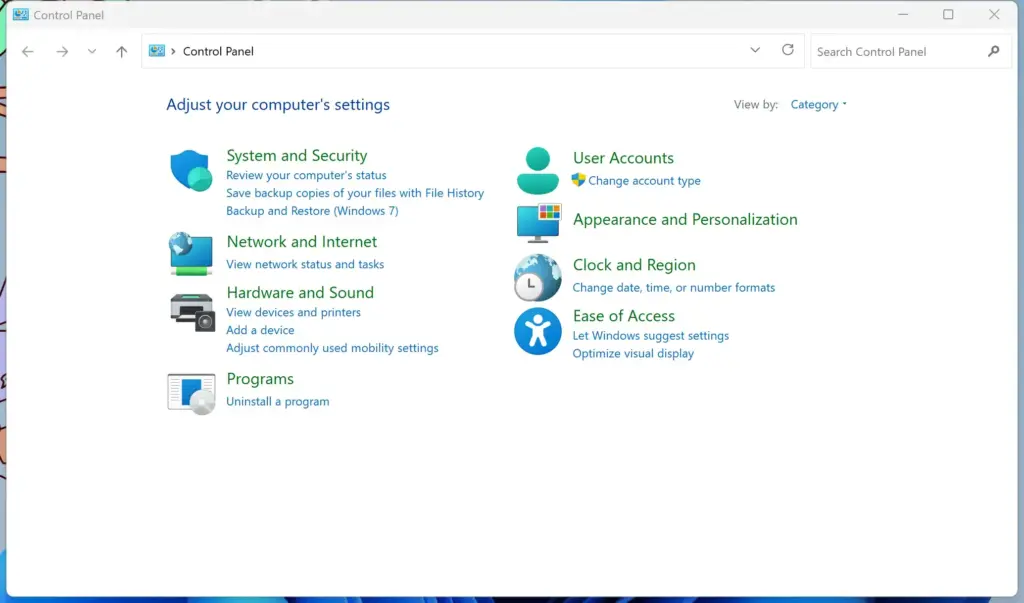
Control Panel - In the top right corner of the Control Panel window, set the View by option to Large icons or Small icons. The category view hides the Mouse icon, so this step matters.
- Click Mouse. The Mouse Properties window opens.
- Click the Pointer Options tab at the top.
- Under the Motion section, uncheck the box next to Enhance pointer precision.
- Click Apply, then click OK. The change applies immediately.
Advanced Troubleshooting: When Windows Keeps Turning It Back On
The usual causes are user profile syncing, background software, and system updates. Work through these checks in order:
- Check your cloud sync settings. If your account syncs settings between devices, another PC may be pushing its own mouse preference to this one.
- Update your mouse driver software. Install the latest driver or utility from the mouse maker's website.
- Check third-party gaming or mouse software. Open its settings and make sure it is not resetting your custom cursor settings every time your computer restarts.
- Turn the setting off again and restart the PC. If it stays off after the restart, one of the items above was the cause.
If the setting still reverts, the next step is to check the underlying values in the registry. Windows stores your mouse acceleration choice there, and you can set the values by hand to enforce your choice.
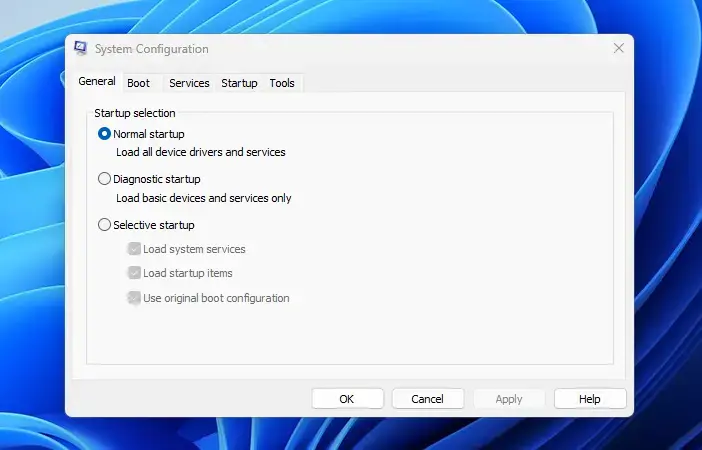
Before you start, you can back up the key: in Registry Editor, select it, then use File Export to save a copy. To check and change these values using the Windows Registry Editor:
- Press Windows Key + R on your keyboard to open the Run dialog box.
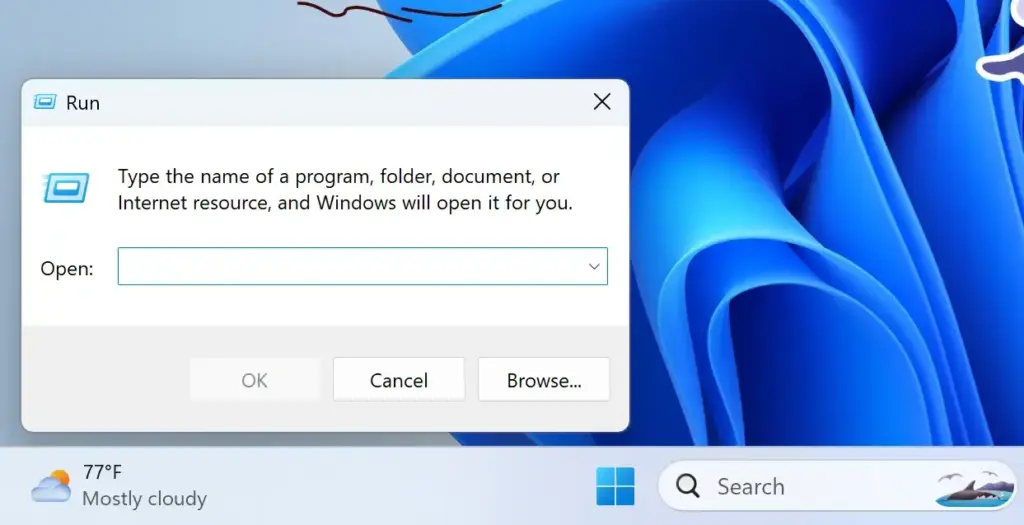
Run dialog - Type regedit into the box and press Enter. Click Yes if a security prompt asks for permission to make changes to your device. Registry Editor opens.
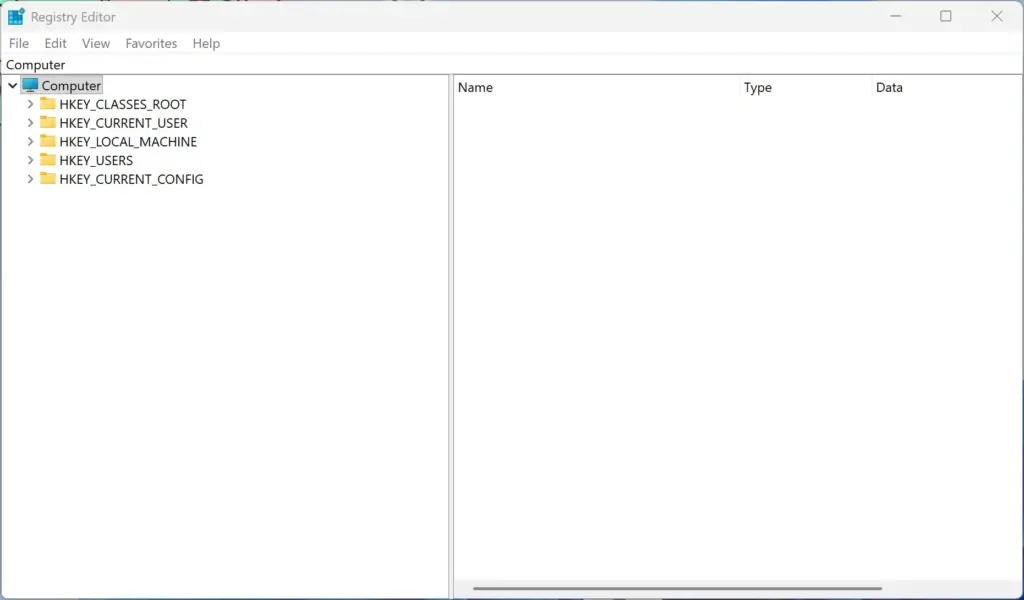
Registry Editor - In the left-hand panel, navigate to the following path: HKEY_CURRENT_USER\Control Panel\Mouse
- Look at the list of values on the right side of the screen and find the value named MouseSpeed.
- Double-click MouseSpeed, change its value data to 0 (zero), then click OK. This completely disables mouse acceleration.
- Next, find the values named MouseThreshold1 and MouseThreshold2. Double-click each one and change its value data to 0 as well.
- Close Registry Editor and restart your computer to apply the changes. After the restart, open Mouse Properties and confirm that Enhance pointer precision is unchecked.
To undo this, either import the backup you exported, or simply tick Enhance pointer precision again in Mouse Properties.
On a professional or enterprise edition of Windows 11 connected to a workplace network, your system administrator might use Group Policy settings to control your mouse behavior. If your workplace enforces specific desktop settings, local changes you make to your mouse properties might revert automatically when you log back into your network account. In that case, ask your IT department. Changing the registry yourself will not hold.
Summary
Enhance pointer precision is a Windows 11 mouse acceleration setting that speeds up your cursor when you move your hand quickly across your desk. It is on by default. Most people who want accuracy should turn it off, because it works against muscle memory, makes cursor movement unpredictable, and hurts accuracy during gaming or precise computer work. Keep it on only if you have very limited desk space or you are working on a small trackpad.
Have a question about this guide?
Answered by AI from this guide. Good questions may be added to this page — please don't include personal details.
Did this guide fix your problem?

About the Author
Richard
Tech Writer, IT Professional
Richard is a writer at Geek Rewind who turns complex IT tasks into clear, step-by-step guides. He draws on years of hands-on experience in system administration and enterprise IT operations, focusing on Windows, Linux and WordPress: the problems people actually run into, and the fixes that work. His server and WordPress guides come from systems he runs himself. Richard builds and maintains the platform behind Geek Rewind, from its Ubuntu servers and Nginx configuration to its custom WordPress plugins. Many new tutorials start with readers' questions, and he's always glad to answer them in the comments.
No comments yet — be the first to share your thoughts!