How to Restore File Explorer Windows at Logon

Restoring File Explorer windows at logon reopens all your active folders and tabs automatically the moment you sign back into Windows 10 or Windows 11. This built-in setting puts every folder right back where you left it before you shut down or restarted your PC, saving you time.
You can turn on this feature with a single checkbox inside File Explorer , without touching complicated tools or editing system files.
Access File Explorer Folder Options, go to the View tab, and check the “Restore previous folder windows at logon” box. This setting automatically reopens your File Explorer windows when you sign back into Windows.
Why Use This Feature?
Skipping manual folder cleanup saves valuable time upon sign-in by putting every window right back in place.
What Happens When You Enable It?
Windows remembers open File Explorer windows and tabs when this setting is active. They automatically reopen the next time you log in.
Method 1Use File Explorer Settings
You can restore previous folder windows automatically when you sign in by changing a setting inside File Explorer . Open any folder, click the View tab in Folder Options, and check the box that says ‘Restore previous folder windows at logon’. This makes Windows reopen all the folders you had open before you shut down your PC.
- Open File Explorer Folder Options.
- Click on the View tab at the top.
- Look for the box next to “Restore previous folder windows at logon”.
- Check the box to turn the feature on. Uncheck it to turn it off.
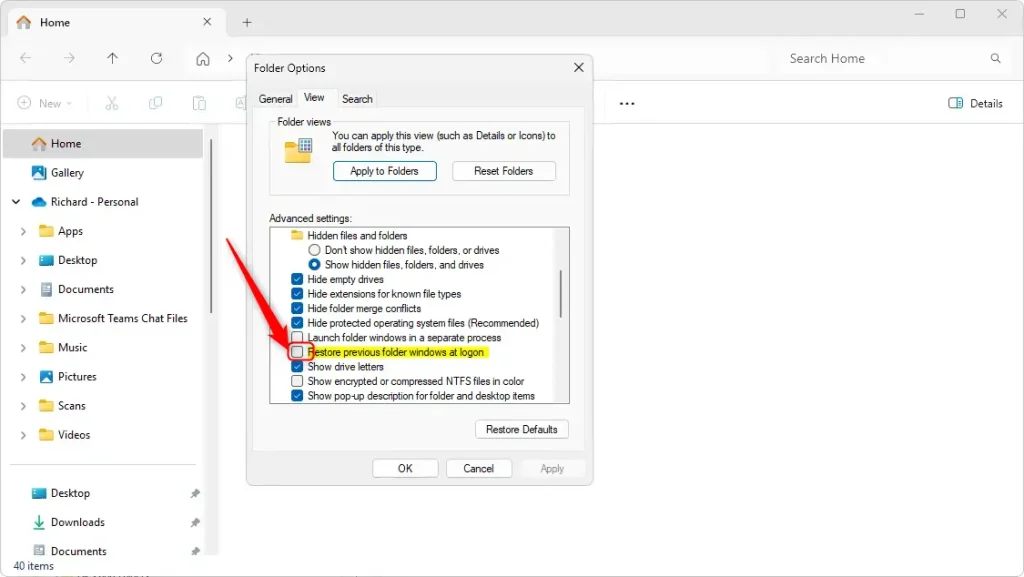
- Click OK to save your changes.
Method 2Use Windows Registry Editor
You can restore previous folder windows using the Windows Registry Editor if the settings menu does not work. This method requires admin access and involves changing a specific system value in 🗝️HKEY_CURRENT_USER\
⚠️ ADMIN PRIVILEGES REQUIRED: Administrator access is mandatory for editing the registry.
Before making any changes, back up your registry or create a System Restore point to remain secure.
- Open the Windows Registry (search for "regedit" in Windows).
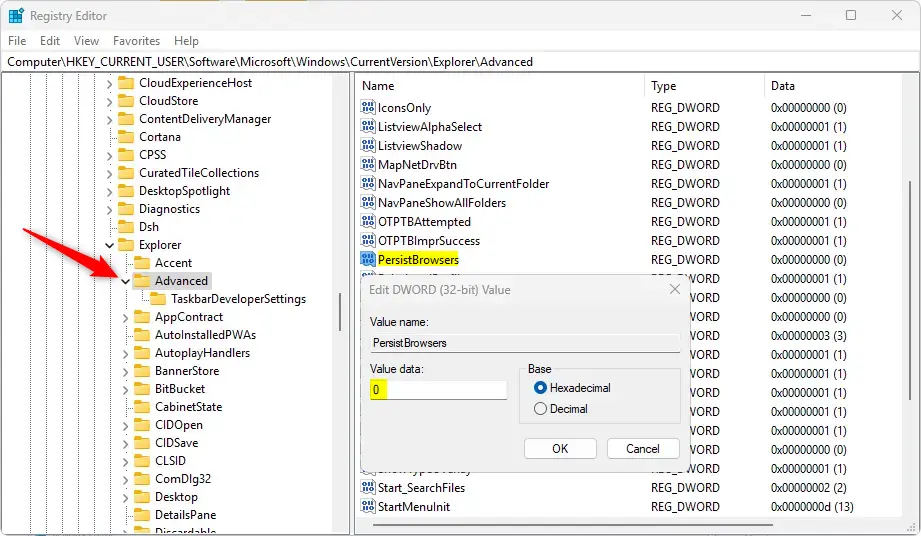
- Navigate to this folder path:
Computer\HKEY_CURRENT_USER\Software\Microsoft\Windows\CurrentVersion\Explorer\Advanced - Right-click on Advanced and choose New > DWORD (32-bit) Value.
- Name the new entry
PersistBrowsers. - Double-click
PersistBrowsersand set the value to1to turn on the feature. Use0to turn it off.
System reboots may be necessary for changes to take effect.
Summary
Restoring previous folder windows when you log on to Windows is easy using either the built-in Folder Options menu or the Windows Registry Editor. Use the Folder Options method for a quick fix, or turn to the registry if you need to enforce the setting across your system. Both approaches ensure your open folders pop right back up after a reboot.
- Easy method: Use the File Explorer Folder Options menu to enable or disable the feature in just a few clicks.
- Advanced method: Edit the Windows Registry to control this setting. Remember to back up your registry first.
- Always create a System Restore point before making registry changes for extra safety.
- Your computer may need to restart for changes to work properly.
- This feature helps you work faster by remembering where you left off.
Was this guide helpful?

About the Author
Richard
Tech Writer, IT Professional
Richard, a writer for Geek Rewind, is a tech enthusiast who loves breaking down complex IT topics into simple, easy-to-understand ideas. With years of hands-on experience in system administration and enterprise IT operations, he’s developed a knack for offering practical tips and solutions. Richard aims to make technology more accessible and actionable. He's deeply committed to the Geek Rewind community, always ready to answer questions and engage in discussions.


No comments yet — be the first to share your thoughts!