How to Enable or Disable Folder Options in Windows 11

- 2 ways to do it
- Needs administrator rights
- Group Policy needs Windows 11 Pro, Enterprise or Education
- Includes a restart or sign-out
Folder Options is the dialog that controls how File Explorer displays and opens your files. From it you can show hidden files, hide or show file name extensions, and choose whether a single click or a double click opens an item. You can turn access to it on or off to stop other people from changing your file view settings. That helps if you share a PC with kids or coworkers. These steps work on Windows 11 version 22H2 and all newer updates.
To open Folder Options in Windows 11, open File Explorer (press Win+E), click the three-dot menu (…) at the right end of the command bar, and select Options. The Folder Options dialog opens with General, View and Search tabs. If Options is missing or greyed out, a policy has restricted access, and you can re-enable it in Group Policy Editor or Registry Editor.
How to Access Folder Options in 🪟 Windows 11
Folder Options is where you change how files and folders look and behave. In Windows 11 you reach it from File Explorer’s command bar, and it opens in its own window.
To open Folder Options, follow these steps:
- Open File Explorer from your taskbar . You can also press Win+E.
- Click the three-dot menu (…) at the right end of the command bar at the top of the window. A dropdown list appears.
- Select Options from the list.
- The Folder Options dialog box appears, with the General, View and Search tabs.
If you can’t find the three-dot menu, make the File Explorer window wider. If Options is missing or greyed out, see the next section.
For more details on basic navigation, visit the official Microsoft support page.
Why is the Folder Options menu missing?
The Folder Options menu can go missing or appear grayed out in Windows 11 if a system administrator has restricted access. Work or school computers commonly use this as a security policy.
Check these things first:
- Find out whether the PC is managed by an employer or school. If it is, the restriction is probably intentional, and you will need to ask your IT department to lift it.
- On a personal PC, someone may have turned the setting off earlier with Group Policy or the registry. The sections below show where that setting lives, so you can check it and reverse it.
- Make sure you are signed in to the right account. These restrictions apply to the current user, so another account on the same PC may still see the menu.
How to fix Folder Options not opening
Before you change anything, back up your registry. In Registry Editor, choose File Export, save the file somewhere safe, and import it again if something goes wrong.
The setting to look at is the policy value described in the Registry Editor section below. If that value is set to block Folder Options, the menu will be hidden or will not open. Correct it using those steps, and check Group Policy as well if your edition has it. A policy set there can put the value back.
Method 1Disable or Enable Folder Options Using Group Policy Editor
It is included in Windows 11 Pro, Enterprise and Education. Windows 11 Home does not have it, so Home users should skip to the Registry Editor method. By default the User Configuration settings here apply to every user on the PC.
- Press Win+R, type
gpedit.msc, and press Enter. The Local Group Policy Editor opens. If Windows says it can’t find the file, you are on Home edition. - In the left pane, navigate to:
User Configuration\Administrative Templates\Windows Components\File Explorer. - In the right pane, locate Do not allow Folder Options to be opened from the Options button on the View tab of the ribbon.
- Double-click it. A settings window opens.
- Select Enabled to hide the menu or Disabled to show it. Not Configured also restores the default behavior, and it is the cleanest way to undo your change.
- Click OK.
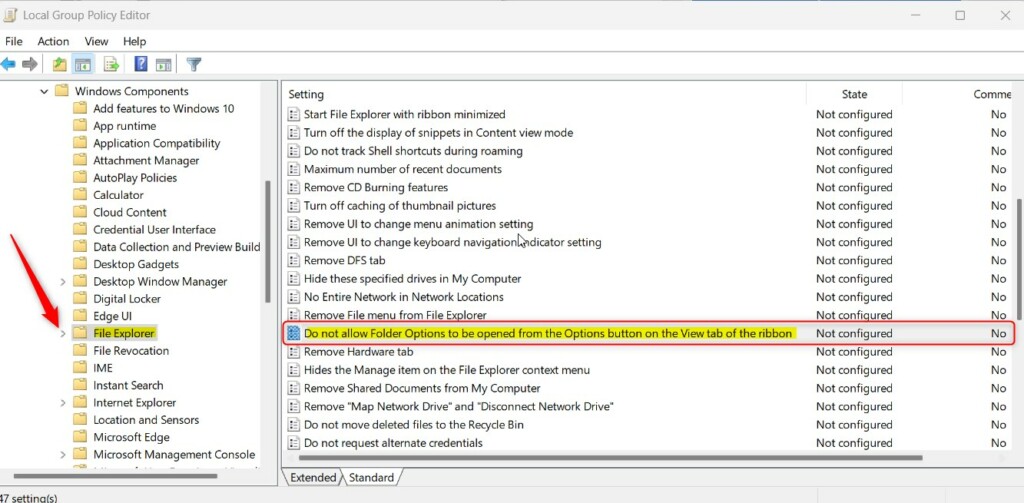
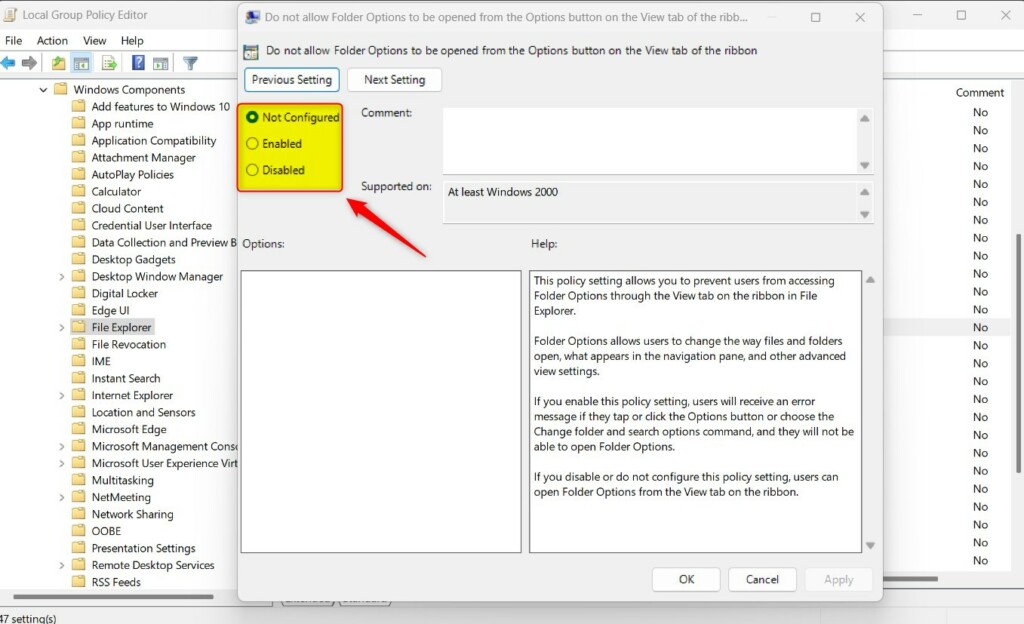
What happens when done: The Folder Options menu will either appear or vanish from the File Explorer ribbon immediately. If you still see the old behavior, close and reopen File Explorer, or sign out and back in. You don’t need to restart the PC.
Method 2Disable or Enable Folder Options Using Registry Editor
Use the Registry Editor if the Group Policy Editor is missing from your edition of Windows, such as Windows 11 Home. You need administrator rights. Back up the registry first by exporting it with File Export, because a wrong edit can cause problems.
- Press Win + R, type
regedit, and press Enter. Click Yes if User Account Control asks for permission. - In the left pane, go to:
HKEY_CURRENT_USER\Software\Microsoft\Windows\CurrentVersion\Policies\Explorer. - If the Explorer key is missing, right-click Policies, select New Key, and name it
Explorer. The new key appears under Policies. - Select the Explorer key. Right-click an empty area of the right pane, select New DWORD (32-bit) Value, and name it
NoFolderOptions. If the value already exists, skip this step. - Double-click
NoFolderOptionsand set the Value data to0to enable or1to disable. Click OK.
To undo the change, set the value to its other number, or right-click the value and select Delete to return to the default.
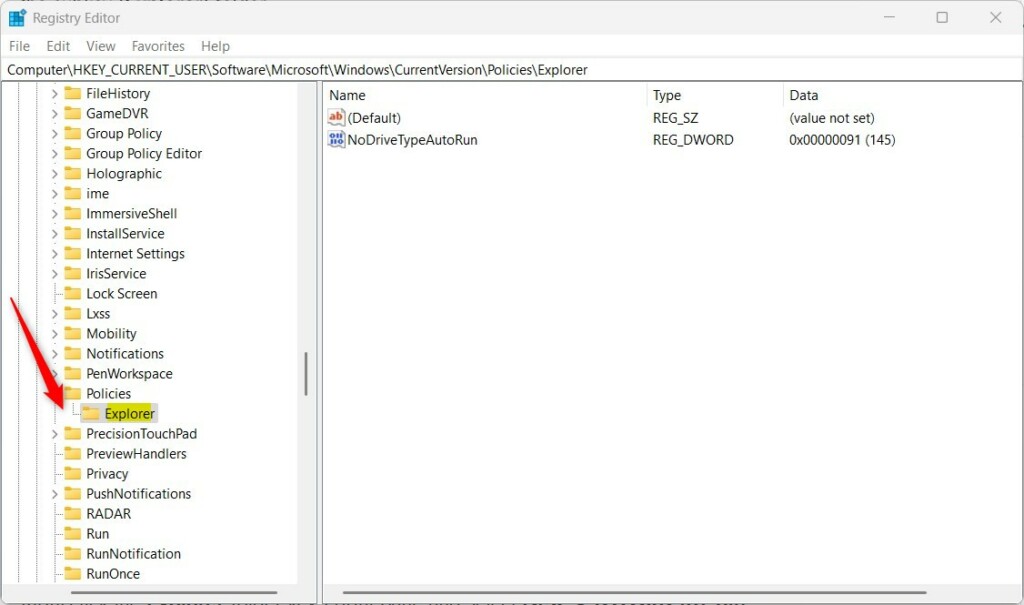
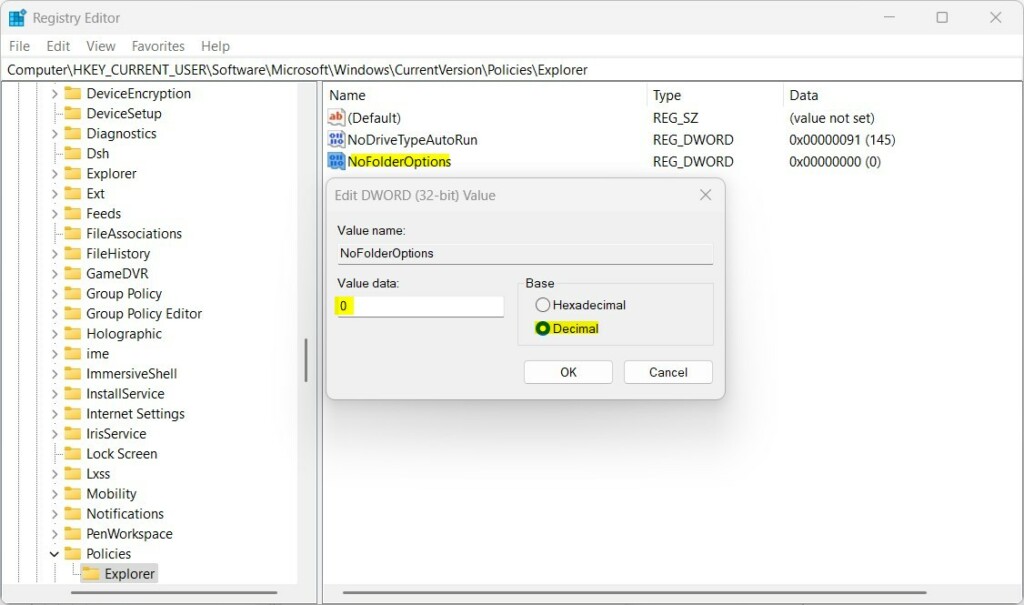
What happens when done: Your changes will apply after you restart your PC or restart the Windows Explorer process via Task Manager. To restart Explorer, press Ctrl + Shift + Esc, find Windows Explorer on the Processes tab, right-click it, and select Restart. The taskbar will flicker briefly and then return. Then open File Explorer and check the three-dot menu to confirm that Options now shows or is hidden, as you set it.
Summary
This guide showed how to turn Folder Options on or off in Windows 11 using the Group Policy Editor or the Registry Editor, so you stay in control of file view settings on a shared PC.
Have a question about this guide?
Answered by AI from this guide. Good questions may be added to this page — please don't include personal details.
Did this guide fix your problem?

About the Author
Richard
Tech Writer, IT Professional
Richard is a writer at Geek Rewind who turns complex IT tasks into clear, step-by-step guides. He draws on years of hands-on experience in system administration and enterprise IT operations, focusing on Windows, Linux and WordPress: the problems people actually run into, and the fixes that work. His server and WordPress guides come from systems he runs himself. Richard builds and maintains the platform behind Geek Rewind, from its Ubuntu servers and Nginx configuration to its custom WordPress plugins. Many new tutorials start with readers' questions, and he's always glad to answer them in the comments.
[…] can also use open the File Explorer Options to adjust these settings. Open File Explorer, select the View tab, and check or uncheck the box […]