How to Enable or Disable Pop-up Tips Description in File Explorer on Windows 11

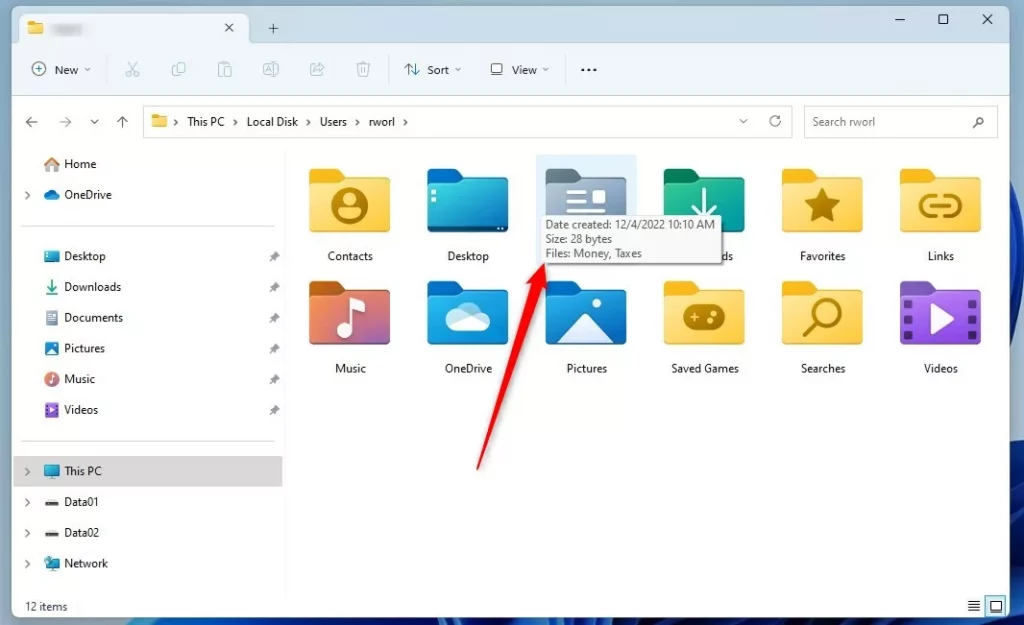
File Explorer pop-up tips are the small info boxes that appear when you hover the mouse over a file, folder or desktop icon. Depending on the item, they show details such as type, size and date modified. They let you check an item without opening it. If they get in the way as you move through folders, you can turn them off. You can turn them back on at any time. This guide covers two ways to change the setting, Folder Options and the Registry Editor. It then explains how to restart File Explorer so the change takes effect, and how to adjust the delay before a tip appears.
To enable or disable pop-up tips in File Explorer , open File Explorer, click the three dots menu, select Options, go to the View tab, and check or uncheck “Show pop-up description for folder and desktop items.” Click OK to apply.
Method 1Using Folder Options
Folder Options is the simplest way to change this setting, and it works the same on Windows 11 Home and Pro. The setting is a single checkbox, so you don’t need any advanced tools. The checkbox also covers items on the desktop, not just those in File Explorer windows. Follow the steps below to find it.
- Open File Explorer , or press Win+E on your keyboard. A File Explorer window opens, usually on Home or Quick access.
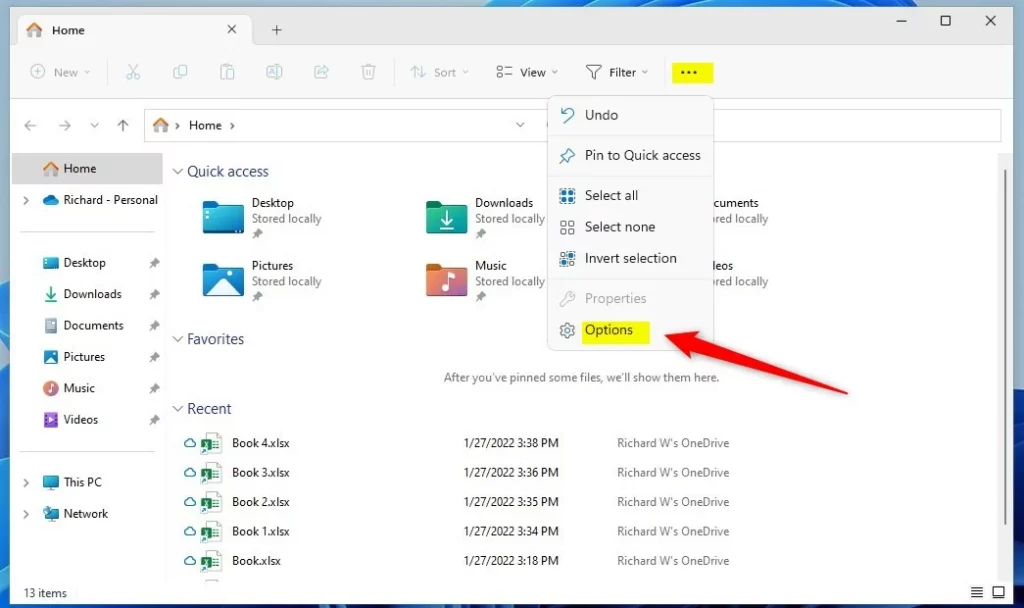
- Click the three dots icon in the top menu bar and select Options. The Folder Options window opens. If you don’t see the three dots, widen the File Explorer window. The toolbar may be cut off when the window is narrow.
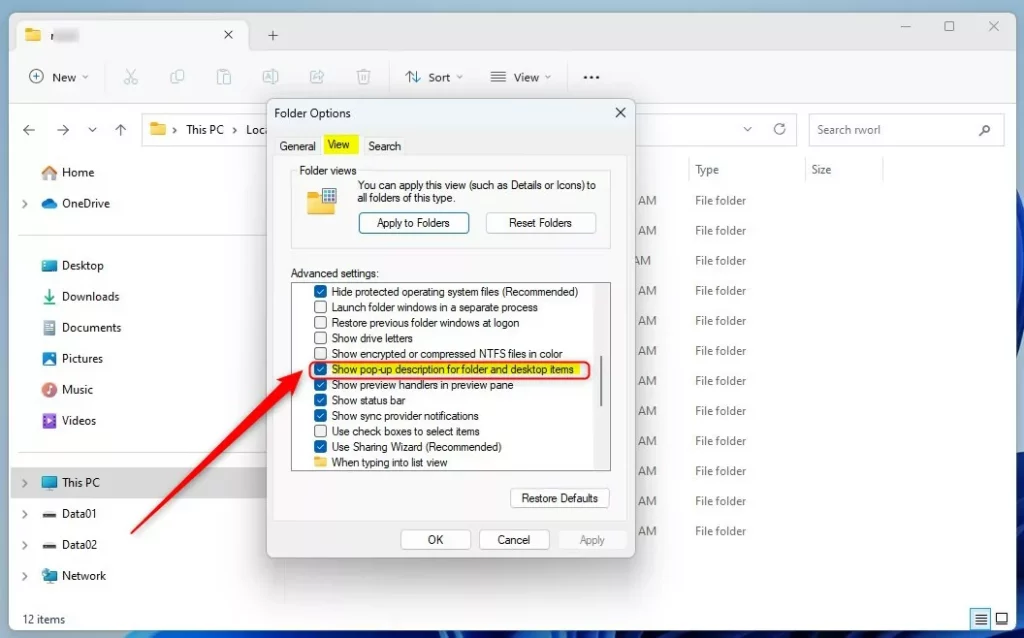
- In the window that appears, click the View tab. You will see a long Advanced settings list with many checkboxes.
- Scroll through the list and find the box labeled Show pop-up description for folder and desktop items.
- Check the box to turn the feature on, or uncheck it to turn it off.
- Click OK to save your changes. The window closes. Hover over a file to test it. If the old behavior is still there, restart File Explorer using the steps later in this guide.
To undo the change, open the same window and set the checkbox back the way it was. If a later change to the setting doesn’t seem to stick, the Registry method below may be overriding it. A work or school PC may also have the setting managed by your administrator.
Method 2Using the Registry Editor
You can also control pop-up descriptions from the Registry Editor by changing a DWORD value in your user profile keys. Use this method if the checkbox in Folder Options is missing or keeps resetting, or if you want to script the change. It works on both Home and Pro. Because it edits the system database, work carefully. Before you start, you can back up the registry from the Registry Editor menu with File Export
- Press Win+R, type
regedit, and press Enter. If a User Account Control prompt appears, click Yes. The Registry Editor opens. - Navigate to this path:
HKEY_CURRENT_USER\Software\Microsoft\Windows\CurrentVersion\Explorer\Advanced. You can click through the folders in the left pane, or paste the path into the address bar at the top of the Registry Editor and press Enter. The right pane then shows the values stored in that key.
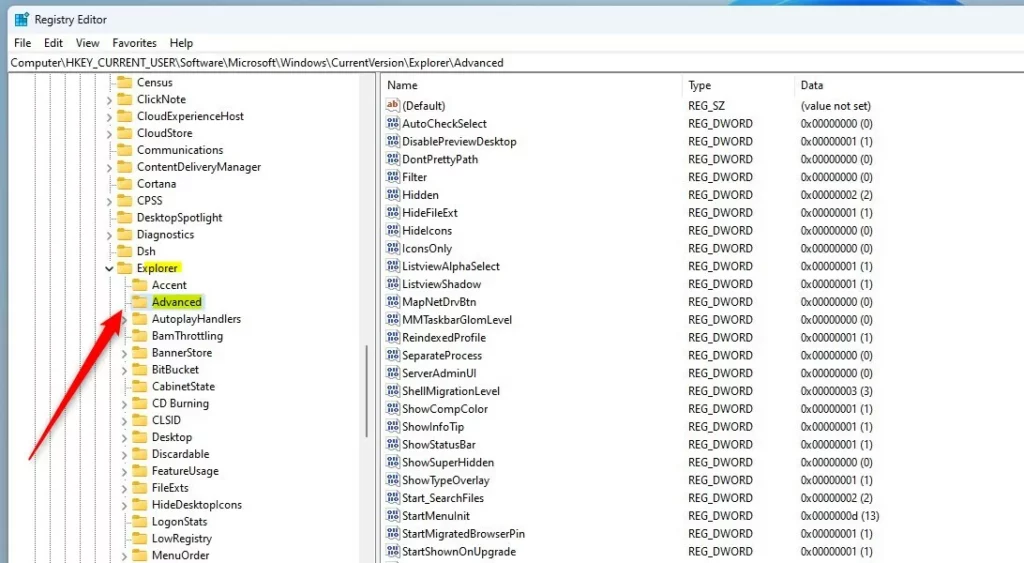
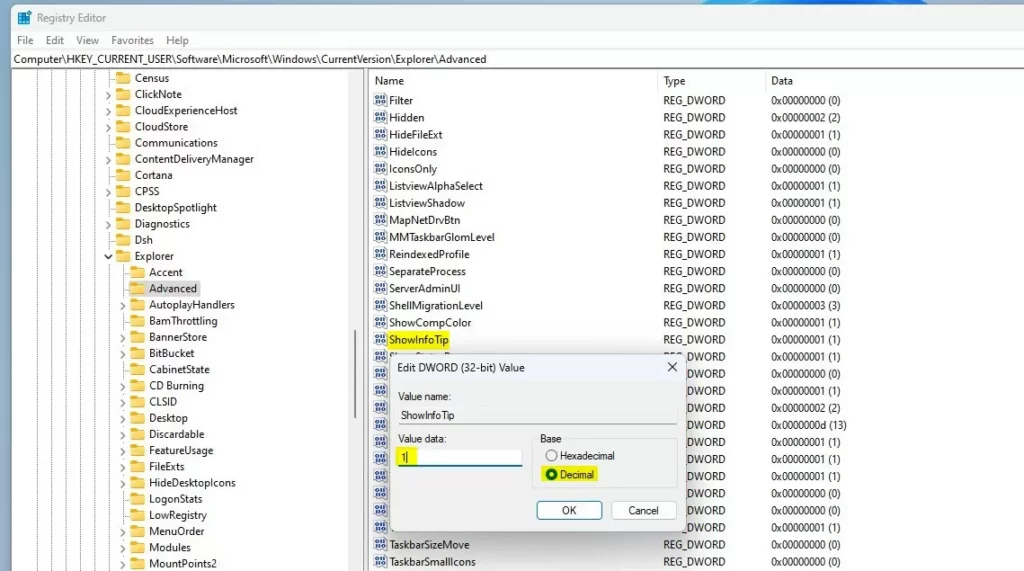
- In the right pane, right-click an empty space and select New DWORD (32-bit) Value. A new entry appears with its name highlighted, ready to be edited. If a value with that name already exists in the list, skip to step 5 and edit it instead.
- Name this value
ShowInfoTip, then press Enter. - Double-click
ShowInfoTipand set the Value data to1to turn it on, or0to turn it off. Click OK, then close the Registry Editor. The new value shows in the right pane.
The change usually doesn’t apply until File Explorer restarts, so follow the next section. To undo it, set the Value data back to the other number, or right-click the value and choose Delete to return to the default.
Applying Changes: Restarting Windows Explorer
Changes to folder options or the registry may not show up until the Windows shell reloads. The shell is the process that draws File Explorer , the taskbar and the desktop. Restarting it makes Windows reload all of that. You don’t need to reboot the whole computer. Save your work first, since open File Explorer windows will close.
- Press Ctrl + Shift + Esc to open Task Manager. If it opens in a compact view, click More details at the bottom.
- Find Windows Explorer in the list on the Processes tab.
- Right-click it and select Restart. The taskbar and desktop disappear for a moment and then come back. This is normal.
- Alternatively, run this command in Command Prompt:
taskkill /f /im explorer.exe & start explorer.exe. This does the same job from the command line.
Once the desktop is back, hover over a file or folder to confirm the tips behave the way you set them. If nothing changed, signing out and back in also reloads the shell.
Advanced Configuration: System Hover Delay
If you want to keep the tips but make them less distracting, you can change how long Windows waits before showing one. This is a registry value located at HKEY_CURRENT_USER\Control Panel\Desktop. Increasing this value makes tips appear more slowly, so quick passes of the mouse over files no longer trigger them. Open the Registry Editor the same way as in the earlier method, find the value, and change it. Then restart File Explorer or sign out and back in to test it. Note the original number before you change it so you can restore it later.
Summary
Whether Windows 11 shows extra information when you hover over files comes down to one setting. You can change it from File Explorer's Folder Options, which is the easiest route and works on every edition. You can also use the Registry Editor when you need more control. Restart File Explorer after a change if it doesn't take effect right away.
Have a question about this guide?
Answered by AI from this guide. Good questions may be added to this page — please don't include personal details.
Did this guide fix your problem?

About the Author
Richard
Tech Writer, IT Professional
Richard is a writer at Geek Rewind who turns complex IT tasks into clear, step-by-step guides. He draws on years of hands-on experience in system administration and enterprise IT operations, focusing on Windows, Linux and WordPress: the problems people actually run into, and the fixes that work. His server and WordPress guides come from systems he runs himself. Richard builds and maintains the platform behind Geek Rewind, from its Ubuntu servers and Nginx configuration to its custom WordPress plugins. Many new tutorials start with readers' questions, and he's always glad to answer them in the comments.
No comments yet — be the first to share your thoughts!