How to Hide Office.com Files in Windows 11 File Explorer

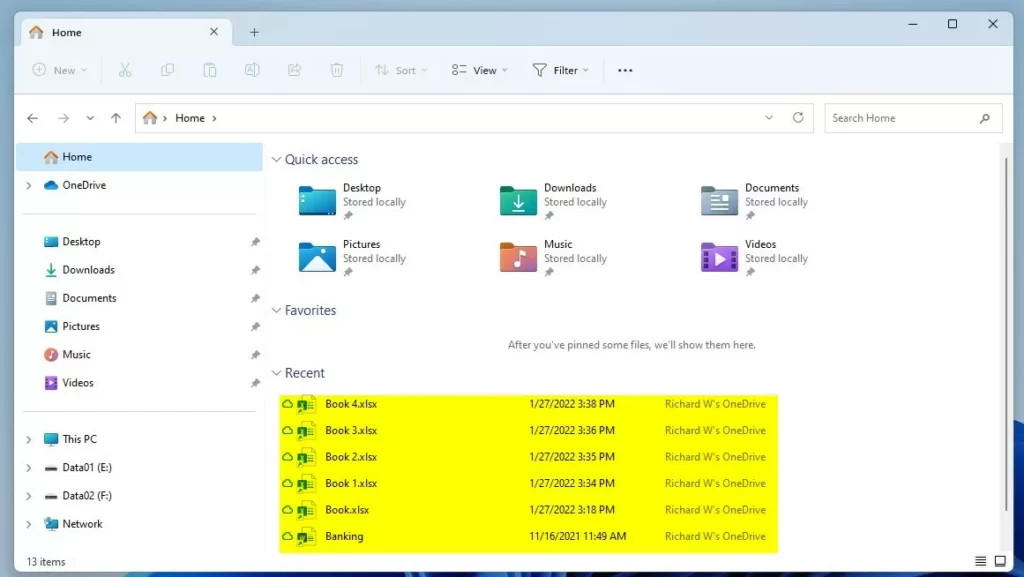
Office.com files in Windows 11 File Explorer are cloud documents from your Microsoft 365 account. They can show up in the Home view next to your local files. Windows 11 may show these online suggestions by default, which can clutter the Home view and mix work files with files stored on your PC.
Hiding them takes a few clicks in the File Explorer Folder Options window. Once the option is off, the Home view stops listing cloud documents. This guide also covers two system-wide methods, Group Policy and the Registry, for when you want the change to apply to every user or when the option is missing.
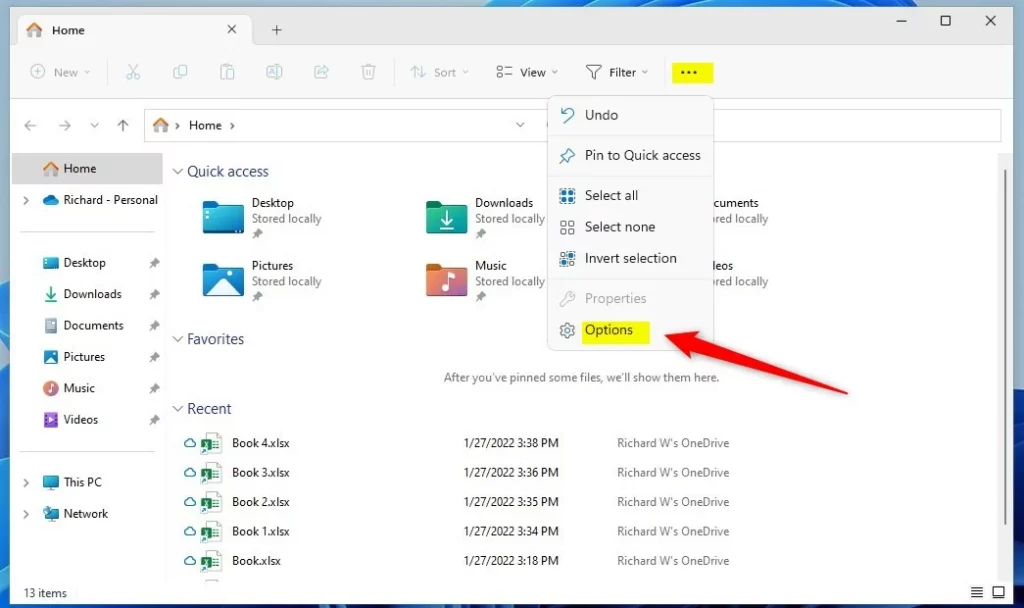
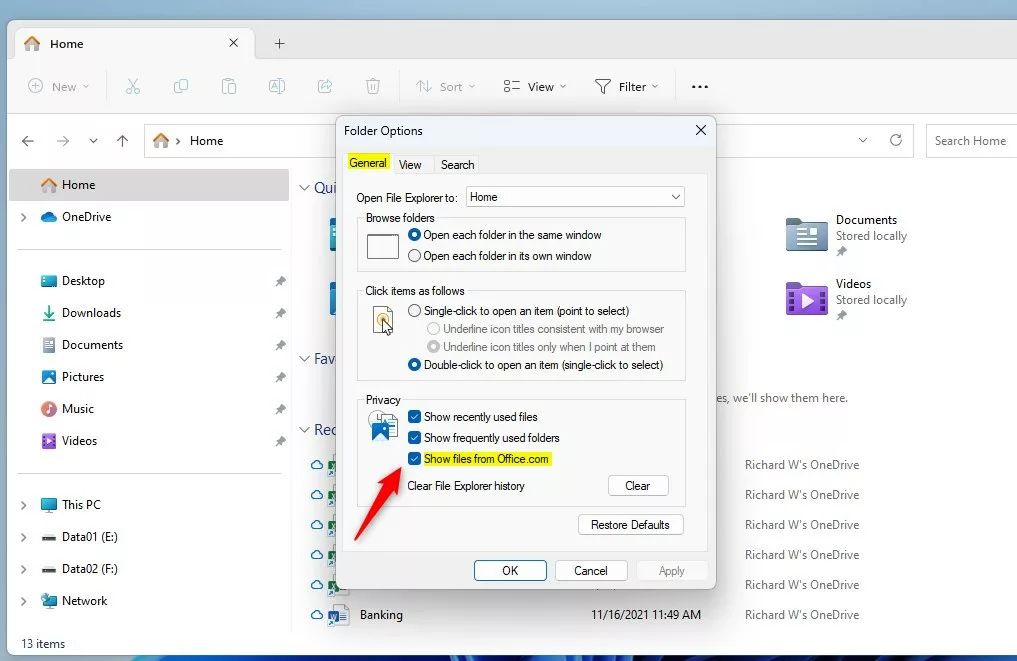
To hide Office.com files in Windows 11 File Explorer , open File Explorer, click the three dots (…), select Options, and uncheck “Show files from Office.com” under the Privacy section. Save the changes by clicking OK.
Why Manage Office.com Files?
The Home view in Windows 11 File Explorer can list file suggestions pulled from your Microsoft 365 account. Some people find this useful. Others find it distracting, or they don’t like cloud file names showing up in a window that other people may see. Changing this setting lets you clean up your workspace and keep personal and work files apart.
These suggestions mainly appear when you are signed in to Windows or Microsoft 365 with a work or school account. If you only use a local account, you may never see them, and the option in Folder Options may not be there at all.
What happens when you are done?
Turning off the Office.com file setting stops Office.com files from appearing on the File Explorer Home page. It does not delete anything from the cloud. Your documents stay in OneDrive, SharePoint or wherever they are stored, and you can still open them from Office.com or from your Office apps. Windows just stops suggesting them inside your local file manager.
The change is reversible. You can turn the setting back on at any time with the same steps you used to turn it off.
Method 1Using Folder Options
You can hide Office.com files for your own account in Folder Options. This method affects only your user profile. It does not change what other people see when they sign in to the same computer. It works on both Windows 11 Home and Pro and needs no administrator rights.
The short version: open File Explorer, click the three dots in the top menu, choose Options, find the Privacy section on the General tab, and clear the Office.com checkbox. The full steps are below.
- Open File Explorer. You can click the folder icon on the taskbar or press the Windows key + E. The window opens on Home or This PC, depending on your settings.
- Click the three dots (...) in the top menu, which Windows labels See more, and select Options. The Folder Options window opens.
- Stay on the General tab and scroll down to the Privacy section at the bottom of the window.💡If the Office.com checkbox isn't in Folder Options
The "Show files from Office.com" checkbox is not on every PC. This option is limited to some editions of Windows, and it may still be in development. It may only be available on PCs running the Windows Insider Preview version.
To check your edition, go to Settings > System > About. If you run Windows 11 Home, you probably won't see this option.
If your edition includes the Local Group Policy Editor (such as Pro or Enterprise), try Method 2. Otherwise, there is no built-in checkbox you can use yet, so you may need to leave the setting as it is.
- Clear the box labeled Show files from Office.com to hide the files. Check the box if you want them back. If you don't see this option, you are probably not signed in with a work or school account. In that case, use Method 2 or Method 3 below.
- Click OK to save. The window closes. Go back to Home in File Explorer. If the cloud files are still listed, close File Explorer and open it again.
Method 2Using Local Group Policy Editor (Admin Required)
The Local Group Policy Editor (a tool for managing system settings) lets you hide Office.com files for every user account on a PC at once. This is a system-wide change. It needs administrator access, and it keeps cloud files from Office out of File Explorer for everyone who signs in to the computer.
The Local Group Policy Editor is included in Windows 11 Pro, Enterprise and Education. It is not included in Windows 11 Home. If you run Home, the search in step 1 will find nothing, so use the Registry method that follows.
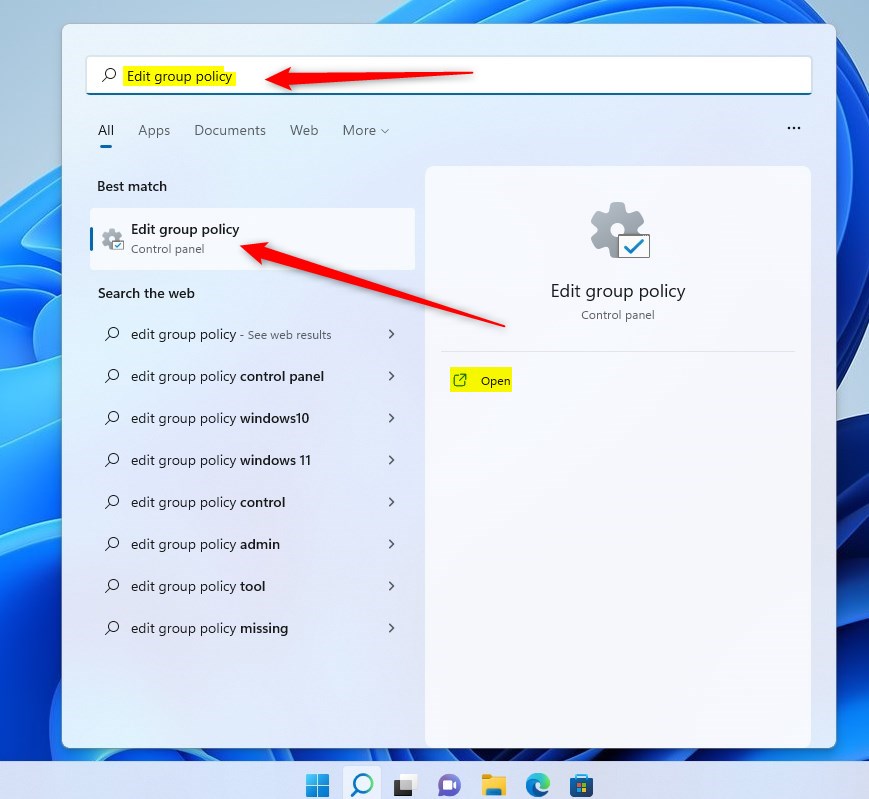
- Press the Windows key and search for Edit group policy. Select the result. The Local Group Policy Editor opens. Accept the User Account Control prompt if one appears.
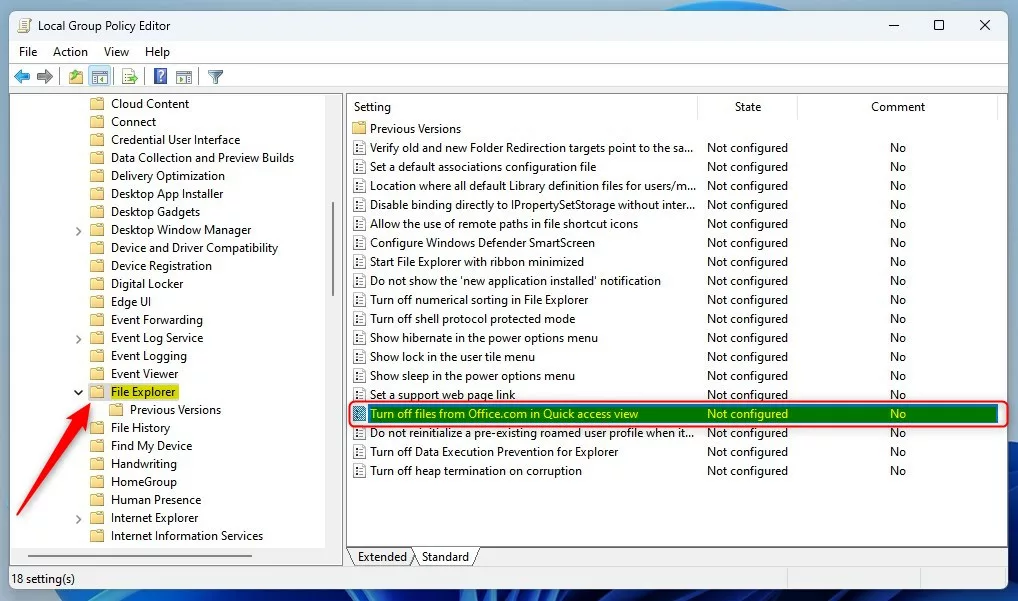
- In the left pane, go to Computer Configuration Administrative Templates Windows Components File Explorer The settings for this folder are listed in the right pane.
- Find the setting named Turn off files from Office.com in Quick access view and double-click it. A settings window for that policy opens.
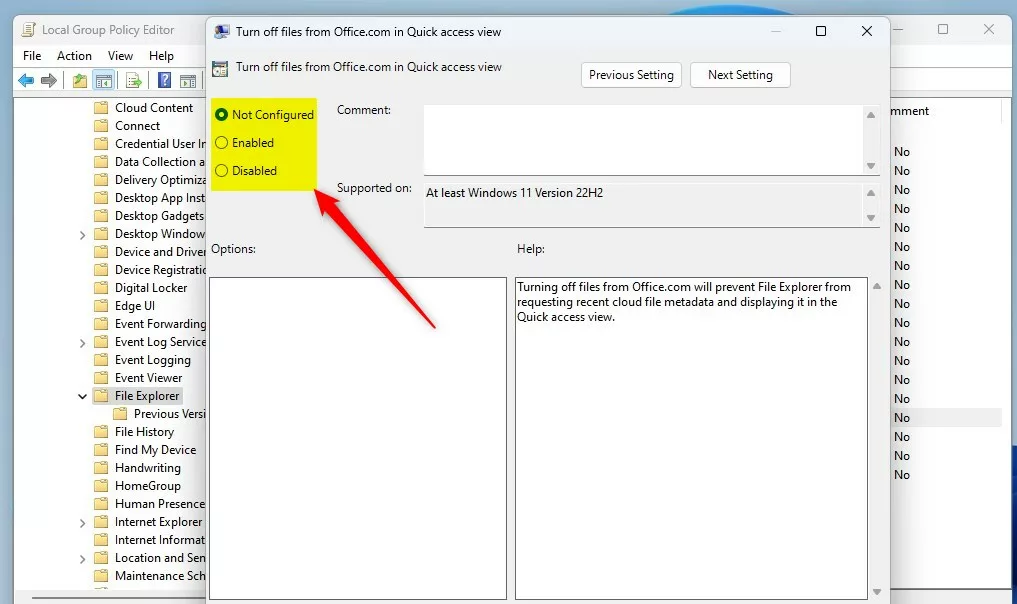
- Choose Enabled to hide the files or Disabled to show them. The name of the policy is a "turn off" setting, so Enabled means the Office.com files are turned off. Not Configured returns the setting to the Windows default, which is the way to undo this change.
- Click OK and restart your computer. After the restart, open File Explorer and check that the Home view no longer lists Office.com files.
Method 3Using the Windows Registry (Admin Required)
The Windows Registry (a database of low-level Windows settings) gives you a fallback way to hide Office.com files when the Group Policy Editor is missing from your edition of Windows, such as Windows 11 Home. This administrator-level fix edits system keys directly and turns off cloud file visibility for the whole machine.
Be careful here. A wrong edit in the Registry can cause problems. Before you start, create a restore point or export the key you are about to change (File Export in Registry Editor). That gives you a way back if something goes wrong.
- Press the Windows key, type
regedit, and press Enter to open the Windows Registry. Click Yes on the User Account Control prompt. You need to be signed in as an administrator. - Go to the following path:
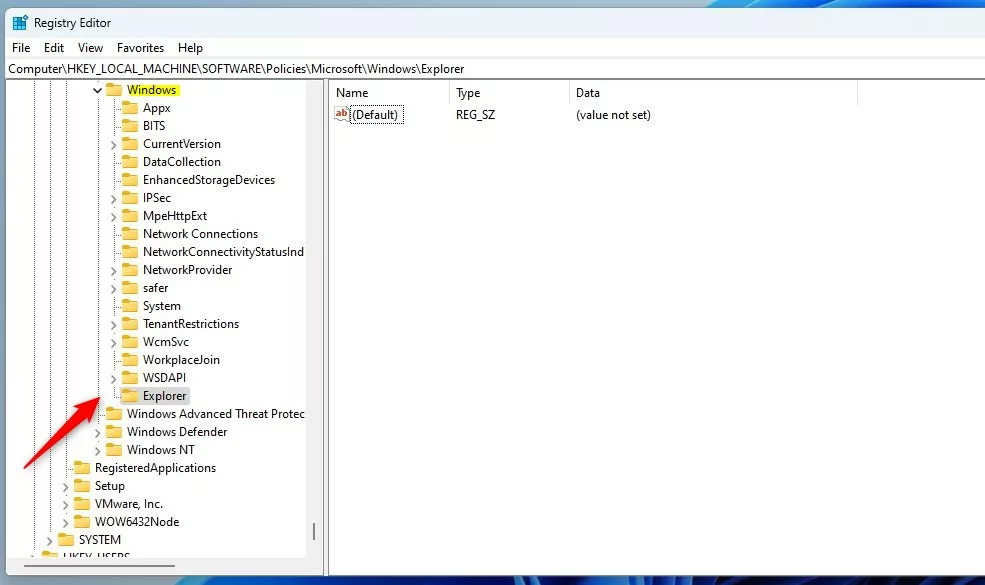
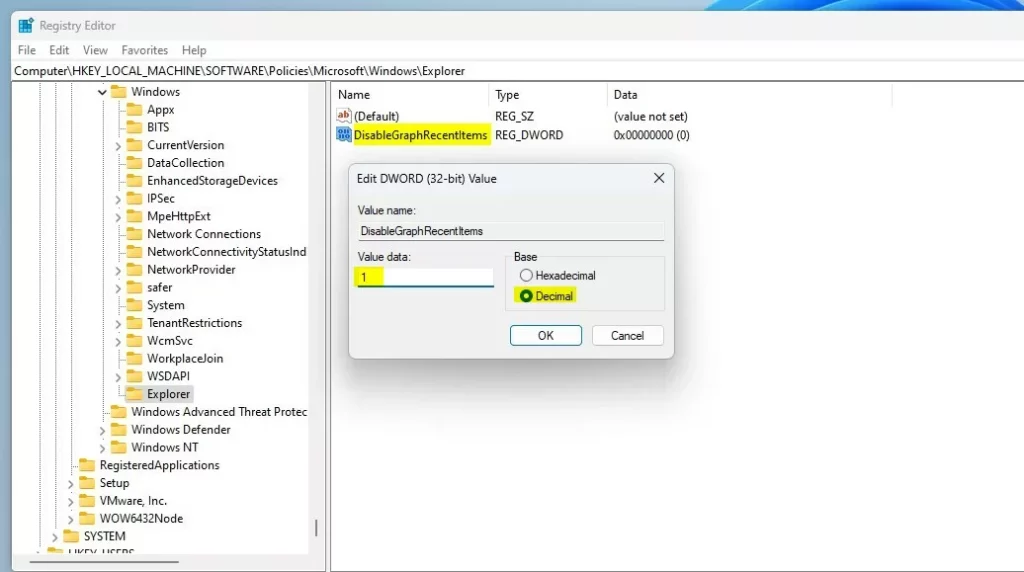
HKEY_LOCAL_MACHINE\SOFTWARE\Policies\Microsoft\Windows\Explorer. You can paste it into the address bar at the top of the Registry Editor, or expand the folders in the left pane one by one. - If the Explorer folder does not exist, right-click the Windows folder, select New Key, and name it
Explorer. The new key appears under Windows. Click it to select it. - Right-click in the empty space on the right, select New DWORD (32-bit) Value, and name it
DisableGraphRecentItems. The new value appears in the right pane. - Double-click
DisableGraphRecentItems. Set the value to1to hide the files, or0to show them. Click OK. The new number appears in the Data column. - Close the Registry Editor and restart your computer to apply the changes. To undo the change later, set the value to the "show" number again, or delete the value you created.
Troubleshooting Sync and Updates
Sometimes Office.com files reappear in File Explorer after a Windows update because your settings get reset. If that happens, open Folder Options and check whether the Show files from Office.com box is checked again. Clear it if it is. If you manage the PC with Group Policy or the Registry, check that your policy or value is still set. A policy or Registry setting is the more reliable choice because it applies to the whole machine.
Summary
You can manage Office.com files in Windows 11 File Explorer to keep your Home view clean and organised. For a single account, the Folder Options checkbox is the quickest fix. If you need the change for every user on a PC, use Group Policy on Pro, Enterprise or Education, or the Registry on Home. In every case, your files stay in the cloud and you can bring the suggestions back by reversing the setting.
Questions readers asked
Why is the Show files from Office.com checkbox missing from my Folder Options?
This checkbox is not available on every PC. It is limited to some editions of Windows, and the feature may still be in development, so it may only appear on PCs running the Windows Insider Preview version. To see your edition, open Settings, go to System, then About. If you have Windows 11 Home, you probably won't have this option. If your edition includes the Local Group Policy Editor, such as Pro or Enterprise, you can try Method 2 in this guide. If neither applies, you may have to leave the setting as it is for now.
Still have a question?
Answered by AI from this guide. Good questions may be added to this page — please don't include personal details.
Did this guide fix your problem?

About the Author
Richard
Tech Writer, IT Professional
Richard is a writer at Geek Rewind who turns complex IT tasks into clear, step-by-step guides. He draws on years of hands-on experience in system administration and enterprise IT operations, focusing on Windows, Linux and WordPress: the problems people actually run into, and the fixes that work. His server and WordPress guides come from systems he runs himself. Richard builds and maintains the platform behind Geek Rewind, from its Ubuntu servers and Nginx configuration to its custom WordPress plugins. Many new tutorials start with readers' questions, and he's always glad to answer them in the comments.
No comments yet — be the first to share your thoughts!