How to Change On-Screen Indicator Position in Windows 11

You can change the on-screen indicator position in Windows 11 to move the volume, brightness, and media control pop-ups away from the default bottom-center location.
These indicators are small visual feedback boxes that appear when you make system adjustments. Windows 11 places them by default at the bottom center of your screen.
Adjusting their position helps you declutter your view. You might want to move them to the left or right to ensure they don’t block crucial on-screen information.
You can change the on-screen indicator position in Windows 11 by first enabling the feature using ViVeTool or by editing the registry. After enabling, navigate to Settings > System > Notifications for ViVeTool, or create a DWORD value named PositionIndex in the registry editor to select your preferred location.
How to Enable Position Settings
You can change where the on-screen indicator appears in Windows 11 by enabling a hidden setting. This lets you move things like volume and brightness overlays to a spot that works better for you. You’ll need a free tool called ViVeTool to turn this feature on.
First, download ViVeTool. Then, open your terminal as an administrator and run the following command.
vivetool /enable /id:48103152
After running the command, restart your computer. Once it’s back up, navigate to Settings > System > Notifications to find the new position options. Why would you want to do this? This feature lets you move the overlay to a spot that won’t block your active windows. What happens when you make the change? Your volume and brightness bars will appear in your chosen corner instead of the bottom center.
https://geekrewind.com/how-to-enable-or-disable-hidden-features-with-vivetool-in-windows-11
Changing Position via Registry Editor
You can change the on-screen indicator position in Windows 11 without extra tools by editing the Registry Editor. This method gives you direct control over the setting. Just remember to back up your registry first, as mistakes can cause problems.
1. Press Windows Key + R, type regedit, and hit Enter. This requires administrator privileges.
2. Navigate to the following path:
HKEY_CURRENT_USER\Software\Microsoft\Windows\CurrentVersion\Explorer\Advanced
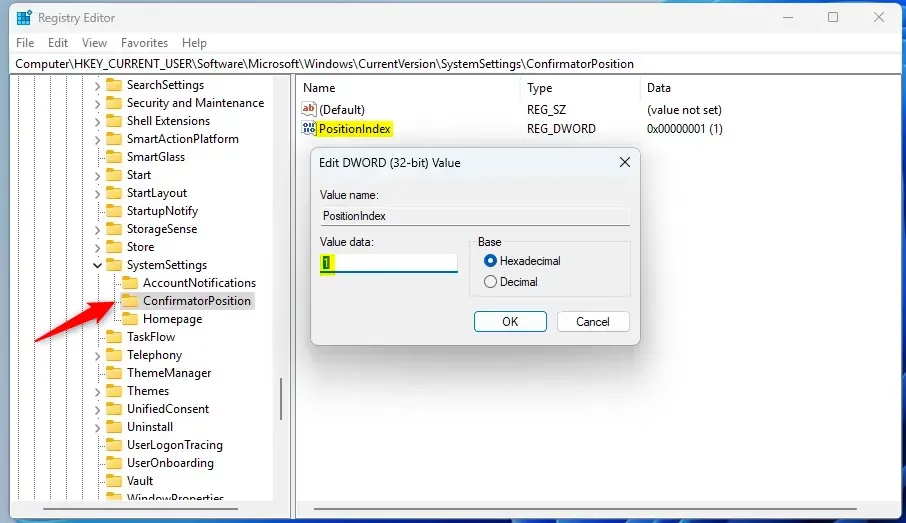
3. Right-click in the right pane, select New > DWORD (32-bit) Value, and name it PositionIndex.
4. Set the value to 1 (Bottom), 2 (Top Left), or 3 (Top Center).
Troubleshooting and Reverting Changes
If your indicators disappear or your system feels unstable, just delete the PositionIndex value you created in the registry. Restarting your computer usually fixes minor glitches. If you used ViVeTool, run vivetool /disable /id:48103152 to revert to the default Windows 11 UI behavior.
Summary
Changing the on-screen indicator position in Windows 11 lets you move overlays like volume and brightness. You can use ViVeTool to easily access the setting or edit the Registry Editor for more direct control. Both methods help you tidy up your screen.
Can I move the volume indicator to the bottom of the screen?
Yes, the bottom center is the default position for the volume flyout in Windows 11. If you have moved it to the top, you can return it to the bottom by setting the PositionIndex value to 1 in the registry or selecting the bottom option in your system settings.
Will changing the registry affect system stability?
Editing the registry carries a small risk. However, changing this specific key is generally safe. Always create a system restore point before making changes so you can easily revert your system to its previous state if you encounter any unexpected issues or performance problems.
Do I need to restart Windows after changing the indicator position?
Yes, a restart is often required for the Windows shell to recognize the new registry settings or the enabled feature flag. If the change does not appear immediately after applying the setting, save your work and reboot your computer to ensure the new UI configuration is fully loaded.
Was this guide helpful?

About the Author
Richard
Tech Writer, IT Professional
Richard, a writer for Geek Rewind, is a tech enthusiast who loves breaking down complex IT topics into simple, easy-to-understand ideas. With years of hands-on experience in system administration and enterprise IT operations, he’s developed a knack for offering practical tips and solutions. Richard aims to make technology more accessible and actionable. He's deeply committed to the Geek Rewind community, always ready to answer questions and engage in discussions.



No comments yet — be the first to share your thoughts!