How to Make Notepad++ Default in Windows 11

Notepad++ is a free text editor with tabs and syntax highlighting. Once it is your default, every .txt file opens in it instead of the built-in Windows text editor.
Windows 11 assigns the basic Notepad app to text files by default. You can change that in a few clicks. This guide covers installing Notepad++, switching the default through Settings, and an optional command-line method for stubborn file types. Switching the default does not remove Notepad, so you can go back at any time.
Open Settings Apps Default apps, search for.txt, click Notepad, then select Notepad++ from the app list. If Notepad++ doesn’t appear, click More apps and browse to 📁C:\
How to install Notepad++ on 🪟 Windows 11
To install Notepad++ on Windows 11, download the installer from the official Notepad++ website, then run it from your Downloads folder and follow the setup wizard. You end up with a fast editor that can replace the built-in Notepad for code, logs, config files and notes.
If Windows asks for administrator approval during setup, click Yes.
First, go to the link below to download Notepad++. Use the official site and avoid third-party download pages, which sometimes bundle extra software.
- Wait for the installer file to finish downloading .
- Open your Downloads folder and double-click the Notepad++ installer (an .exe file).
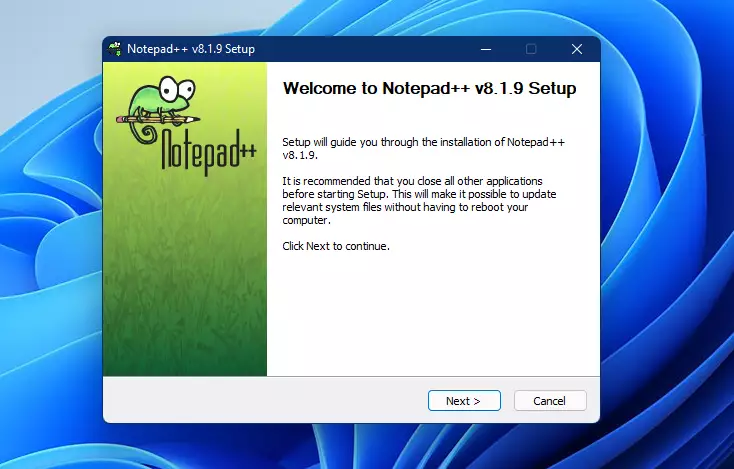
- If a User Account Control prompt appears, click Yes. The setup wizard should now open, starting with a language choice.
- Follow the wizard through each screen. The next sections cover the screens that matter.
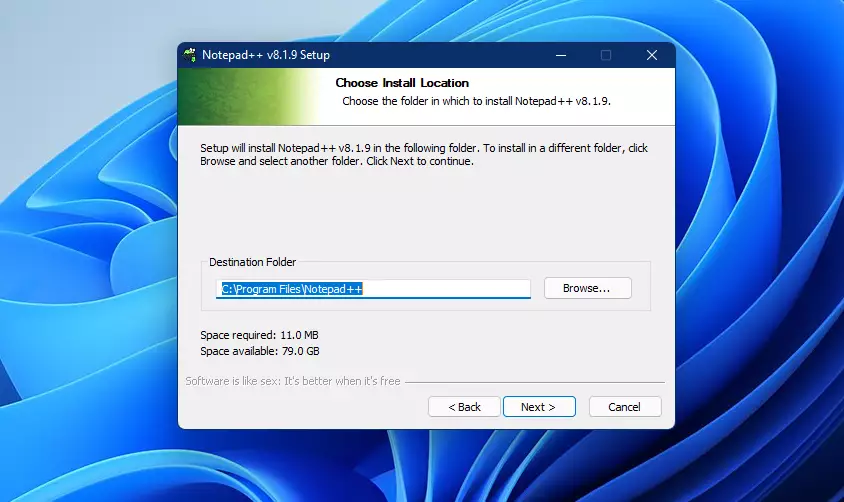
By default, Notepad++ installs in the 📁C:\
To install somewhere else, click Browse and select another folder. If you do, note the new location so you can find the program file in the default apps steps.
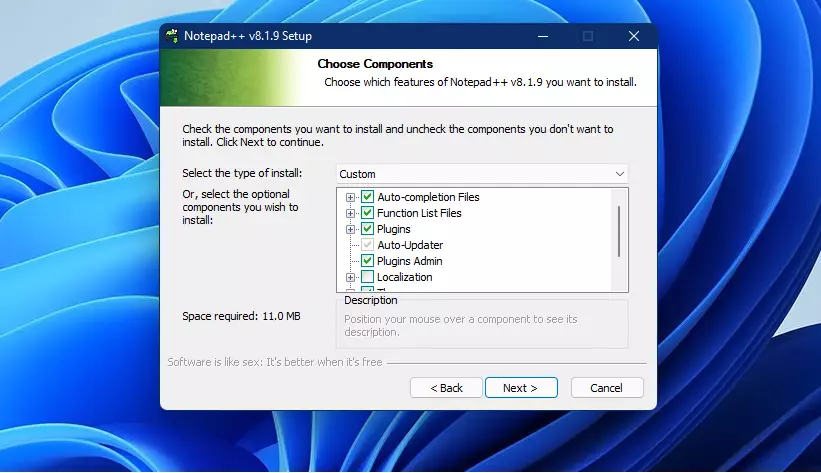
The components screen lists optional features. Tick the boxes for the features you want and untick the ones you don’t. The default choices work well for most people, so you can leave them alone if you are unsure. Click Next to move on.
Click Install to start copying files. The progress bar should fill within a minute or so. When it finishes, click Finish to close the wizard. If you leave the launch option ticked, Notepad++ opens straight away.
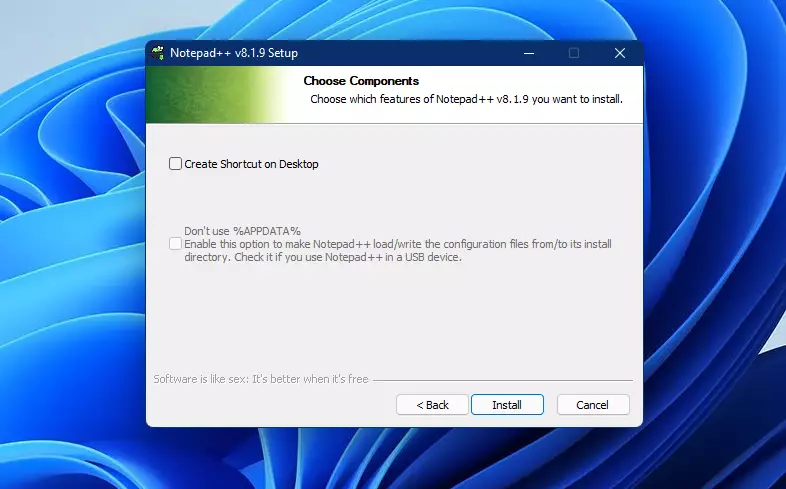
How to make Notepad++ default text editor in 🪟 Windows 11
Now that Notepad++ is installed, let’s set it as your default text editor. No restart is needed for any of the steps that follow.
Windows 11 keeps most of its settings in one place, the Settings app. From there you can manage system configuration, user accounts, Windows updates and, in our case, default apps. There are two quick ways to open it.
Press Win+I. The Settings app should open at once, showing the main configuration area for Windows 11.
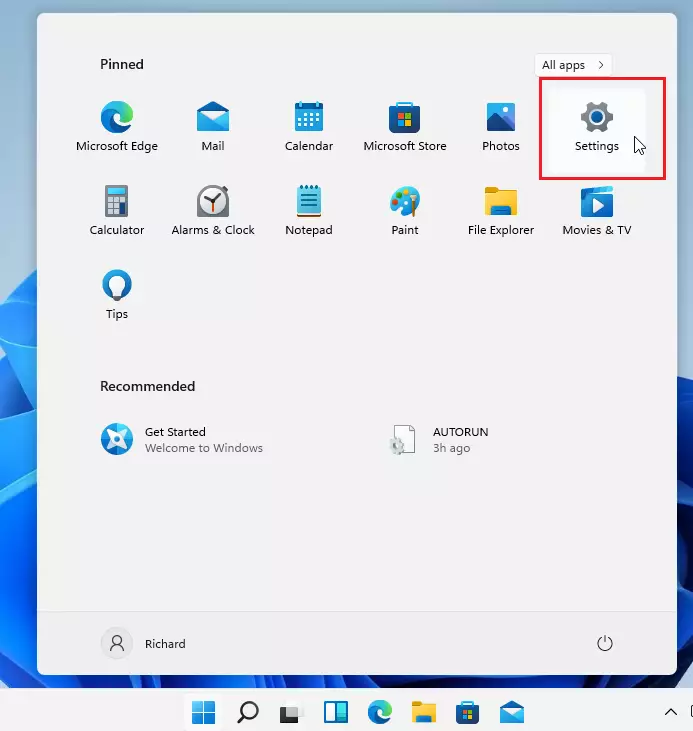
- Click the search box on the taskbar and type Settings.
- Select the Settings app in the results. The Settings window should open.
This is a quick route when the keyboard shortcut is blocked or you would rather not browse the Start menu .
Your Settings window should look similar to the image below. From here, go to the Default apps page, which is under Settings Apps Default apps
- In the left pane of Settings, click Apps,.
- On the right pane, select Default Apps. You should now see a list of installed apps and a search box for file types.
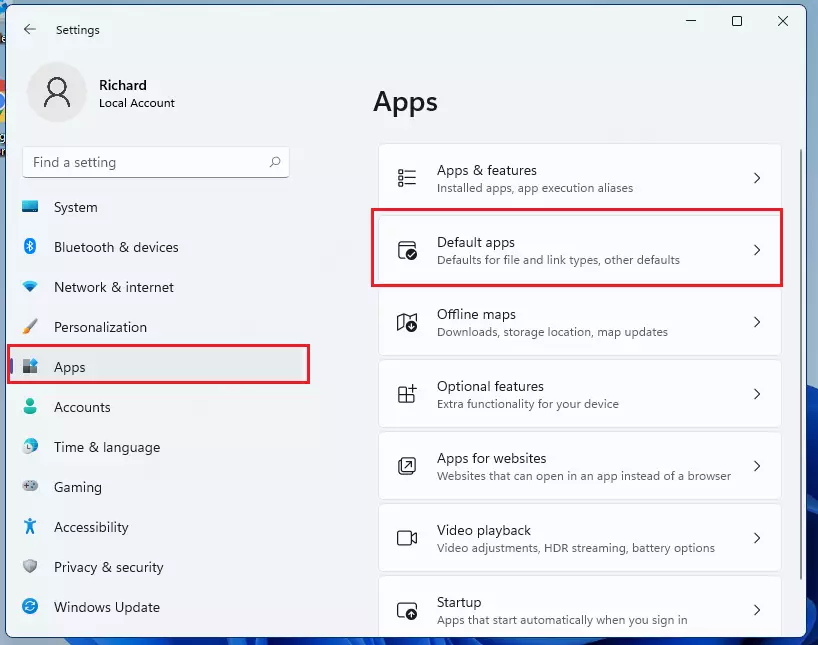
- Click the search box at the top, labelled Enter a file type or link type.
- Type .txt. The results should show the app currently assigned to .txt files, which is Notepad.
- Click Notepad in that list.
- Click Notepad. A list of file types should open.
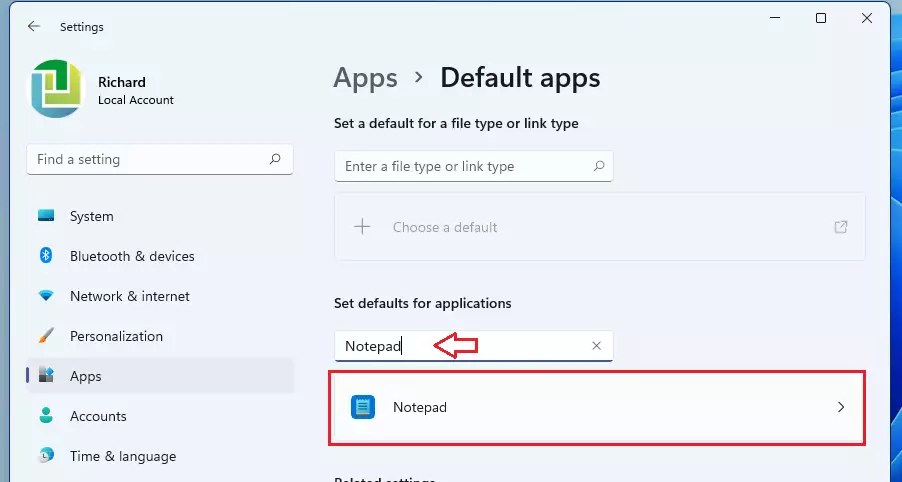
The next screen lists every file type currently opening with Notepad. Windows 11 sets the default for each file type one at a time, so you need to select each one you care about and change it to Notepad++. Start with .txt, then work through the rest.
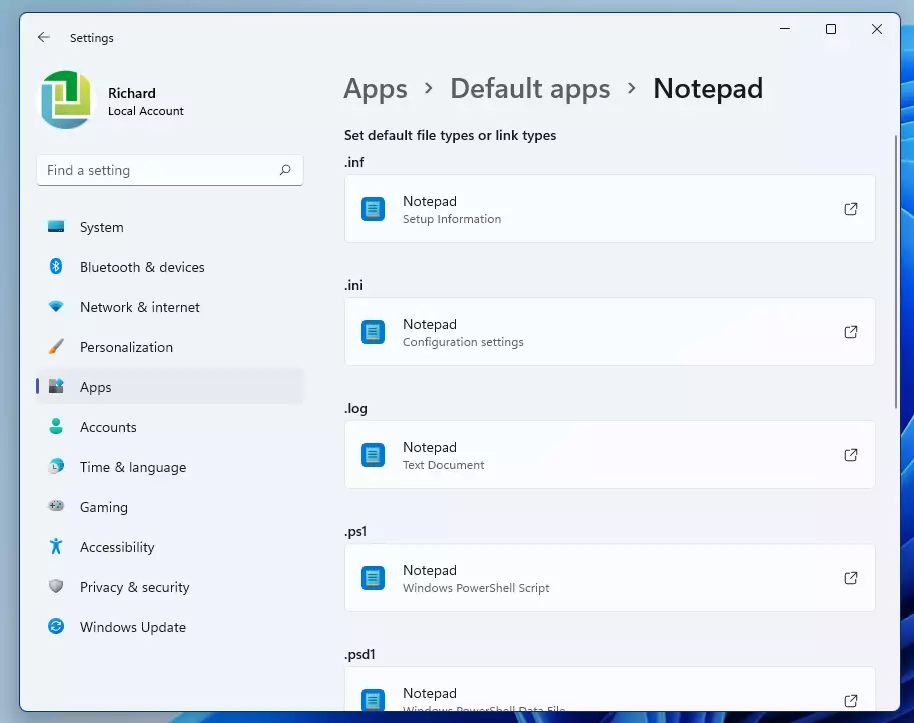
Click Notepad. A pop-out window should appear asking which app you want to always use to open this file type.
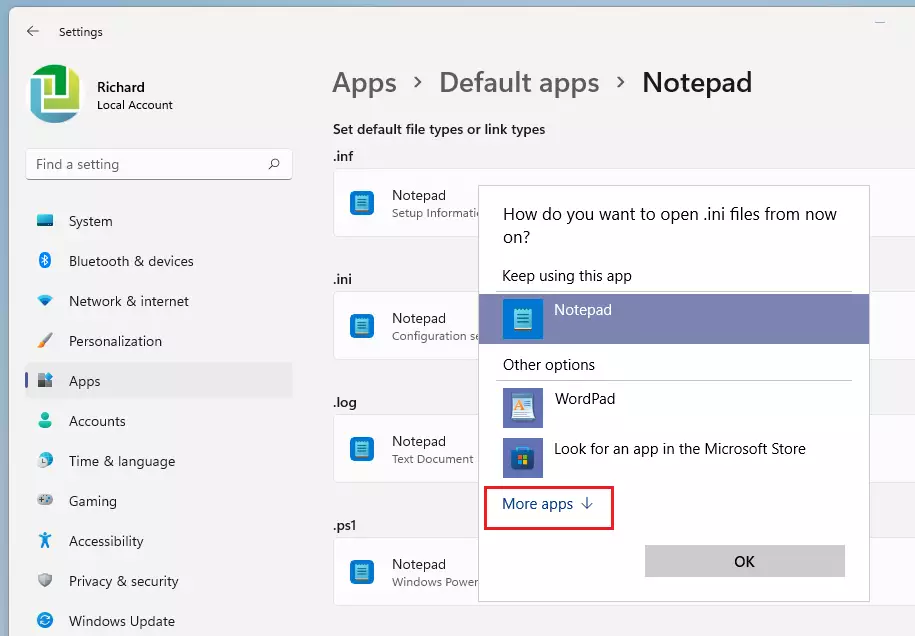
If Notepad++ is already in that list, you can select it there. If it is not, click the More apps link, highlighted below, to browse for it manually.
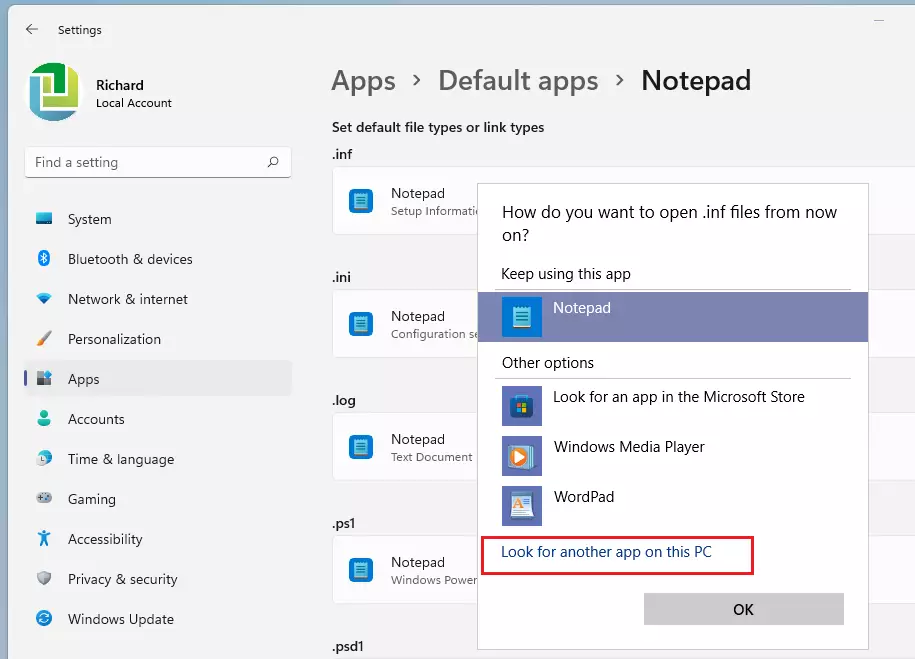
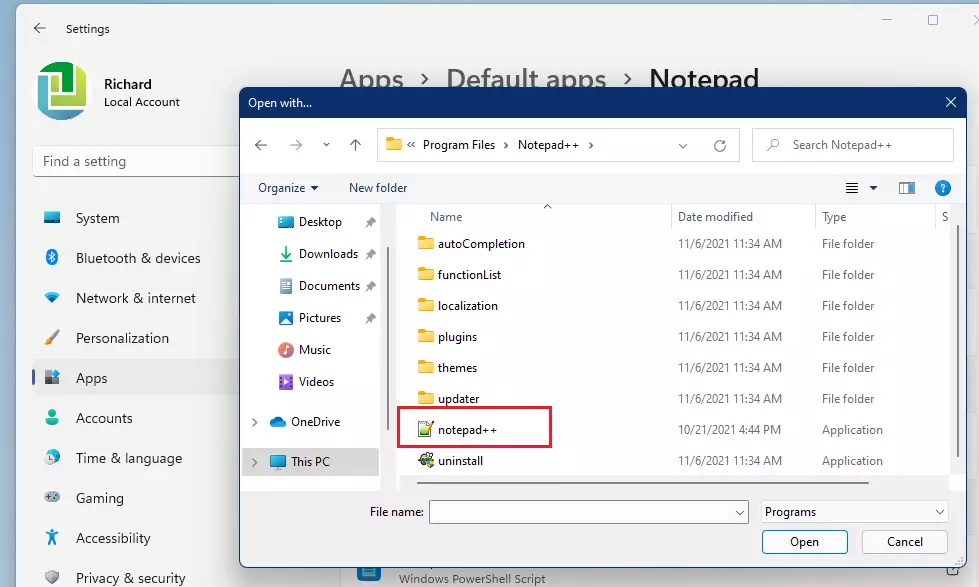
Next, select Look for another app on this PC. A File Explorer window should open so you can pick the program file yourself.
File Explorer opens in the 📁C:\
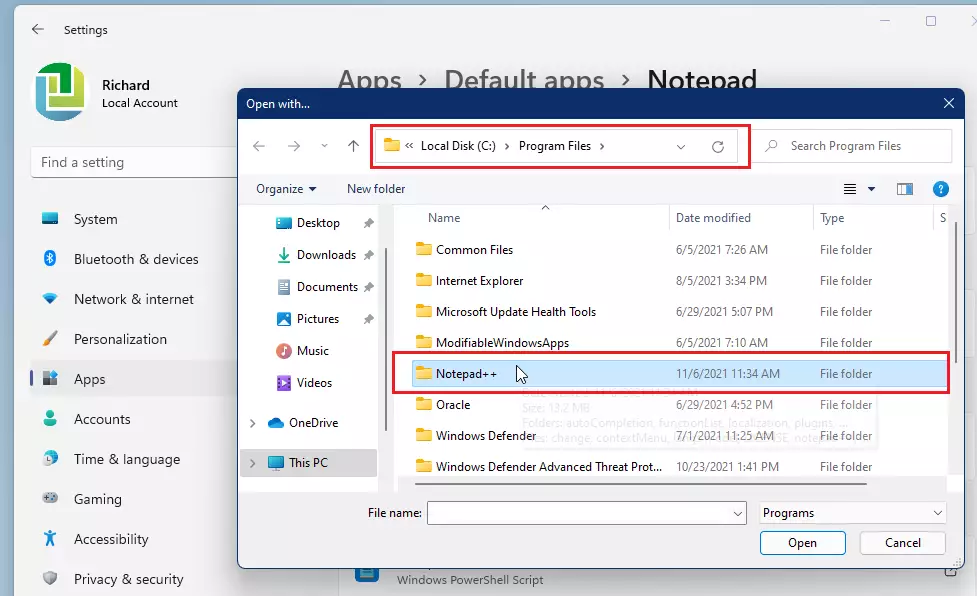
- Select the the Notepad++ app.
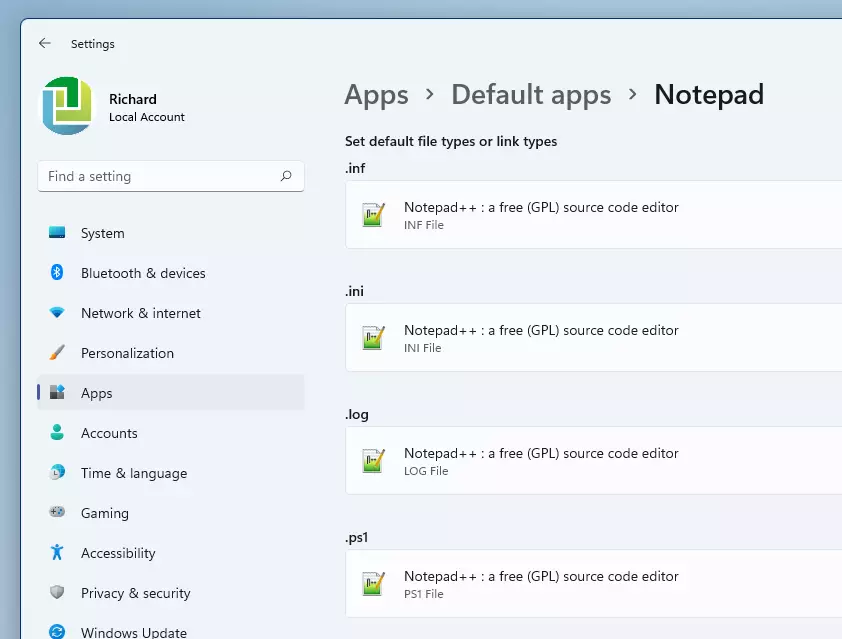
- Click Open. Notepad++ should now appear as the app assigned to that file type.
From now on, double-clicking a file of that type opens it in Notepad++.
Repeat the same process for every file type you want Notepad++ to handle, such as .txt, .log and .ini. Doing this for each type means Notepad++ consistently opens your text-based documents.
To undo the change, go back to the same list and set a file type back to Notepad. Nothing is deleted, and Notepad stays installed.
How to completely make Notepad++ default in 🪟 Windows 11
If the Settings method misses some file types, or you would rather do it in one go, you can use a command prompt with administrator rights to change how text files open. Once it is set, double-clicking a text file opens it in Notepad++ instead of the standard Windows app.
Read each command before you run it.
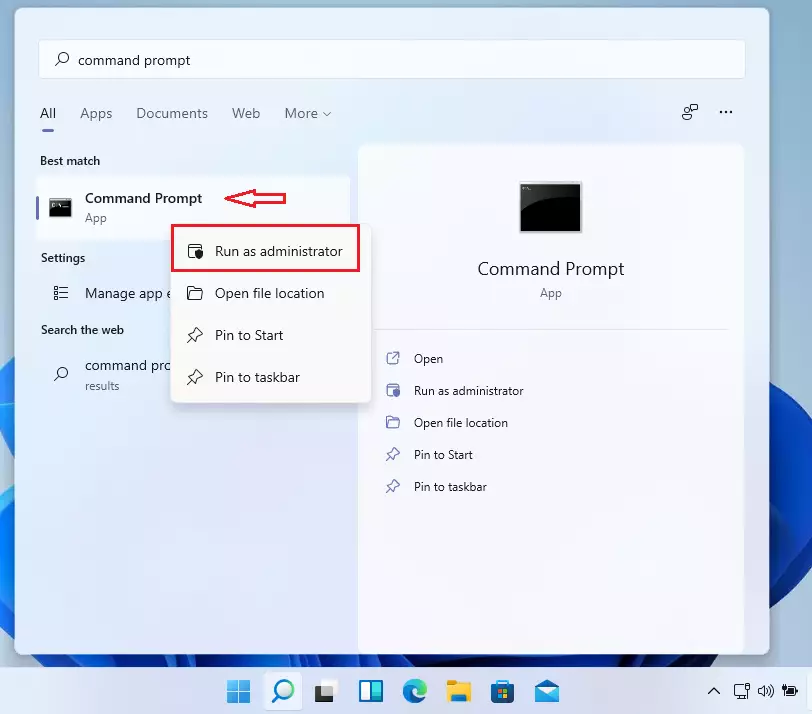
- Click the Start menu and search for Command Prompt.
- Right-click the result and select Run as administrator.
- If a User Account Control prompt appears, click Yes. A command prompt window with "Administrator" in its title bar should open.
Run the following commands in the administrative terminal to map the file extensions. If you ever need to restore the original defaults, use the reverse commands shown further down.
REG ADD “HKLM\SOFTWARE\Microsoft\Windows NT\CurrentVersion\Image File Execution Options\notepad.exe” /v “Debugger” /t REG_SZ /d “\”%ProgramFiles%\Notepad++\notepad++.exe\” -notepadStyleCmdline -z” /f
Run the following commands in the administrative terminal as the companion set, or as the reverse commands if you need to restore the original defaults. Press Enter after each command and check that it reports success before you run the next one.
REG DELETE “HKLM\SOFTWARE\Microsoft\Windows NT\CurrentVersion\Image File Execution Options\notepad.exe” /v “Debugger” /f
That should do it! To test, double-click a .txt file. It should open in Notepad++. If a file type still opens in Notepad, set it again in Settings Apps Default apps
Conclusion:
- Notepad++ offers advanced features and support for multiple programming languages, making it an excellent alternative to the default Notepad application in Windows 11.
- The installation process is straightforward, ensuring that users can quickly set up and configure Notepad++ to meet their needs.
- Changing the default text editor to Notepad++ allows for a more efficient workflow, particularly for developers and users handling various file types.
- By following the outlined steps, users can personalize their text editing experience and take full advantage of what Notepad++ has to offer.
- Remember to apply the additional command line steps if you want to ensure Notepad++ fully replaces Notepad in all scenarios.
Enjoy your enhanced text editing experience with Notepad++!
How to get classic Notepad back in 🪟 Windows 11?
Restoring the classic notepad.exe involves opening Command Prompt as an administrator. Specific commands then re-enable the traditional Notepad if another application removed or replaced it.
What is the default text editor for 🪟 Windows 11?
The built-in text editor for Windows 11 is Notepad. It's a simple program for opening and editing basic text files. For more advanced features, people often install alternative editors like Notepad++.
How do I make Notepad me default editor?
Making Notepad your default editor requires heading to Windows Settings and searching for 'Default apps'. Locating Notepad in the list and selecting it guarantees that text files open automatically with Notepad.
Have a question about this guide?
Answered by AI from this guide. Good questions may be added to this page — please don't include personal details.
Did this guide fix your problem?

About the Author
Richard
Tech Writer, IT Professional
Richard is a writer at Geek Rewind who turns complex IT tasks into clear, step-by-step guides. He draws on years of hands-on experience in system administration and enterprise IT operations, focusing on Windows, Linux and WordPress: the problems people actually run into, and the fixes that work. His server and WordPress guides come from systems he runs himself. Richard builds and maintains the platform behind Geek Rewind, from its Ubuntu servers and Nginx configuration to its custom WordPress plugins. Many new tutorials start with readers' questions, and he's always glad to answer them in the comments.
Thanks for covering this. I have one issue – that last command if I copy/paste it in a admin window and go to execute it I get “ERROR: Invalid syntax. Type “REG ADD /?” for usage.
I am running windows 11 Pro. Thanks…
The last command is missing “\”s so the correct string would be:
REG ADD “HKLM\SOFTWARE\Microsoft\Windows NT\CurrentVersion\Image File Execution Options\notepad.exe” /v “Debugger” /t REG_SZ /d “\”%ProgramFiles%\Notepad++\notepad++.exe\” -notepadStyleCmdline -z” /f