How to Enable or Disable WhatsApp Notifications on Windows 11

- 16 steps
- Needs administrator rights
WhatsApp notifications on Windows 11 show pop-up alerts on your screen for incoming messages and calls, so you can leave your phone in your pocket. Controlling these alerts stops constant interruptions on your PC. You can choose whether to get message alerts, reactions and calls, or turn alerts off completely.
You change these settings inside the WhatsApp desktop app. Windows 11 has its own notification controls on top of that, and they can override what you set in WhatsApp. This guide covers both, plus Do Not Disturb and background permissions.
Open WhatsApp on Windows 11, click the Settings gear icon in the bottom left corner, select the Notifications tab, and toggle Messages, Reactions, or Calls on or off. Changes take effect immediately. If notifications still don’t appear, check Windows Settings System Notifications and ensure WhatsApp is switched on there.
How to turn notifications on or off
WhatsApp alerts on Windows 11 are controlled inside the desktop app settings. To turn them on or off, open the app, click the gear icon in the bottom left corner, and change your alert preferences. The steps below walk through each click.
The first is the toggles inside WhatsApp. The second is the Windows notification settings for the app. Both must allow the alert, or nothing appears. If you switch a notification on in WhatsApp and still get nothing, jump to the Windows 11 sections further down.
- Open the Start menu and find WhatsApp in your All Apps list to launch it. If you use the Microsoft Store version, you can also type WhatsApp into the Start search box and press Enter.
The WhatsApp window should open with your chat list. If it asks you to link a device, scan the QR code with your phone first. Settings are only available once you are signed in.

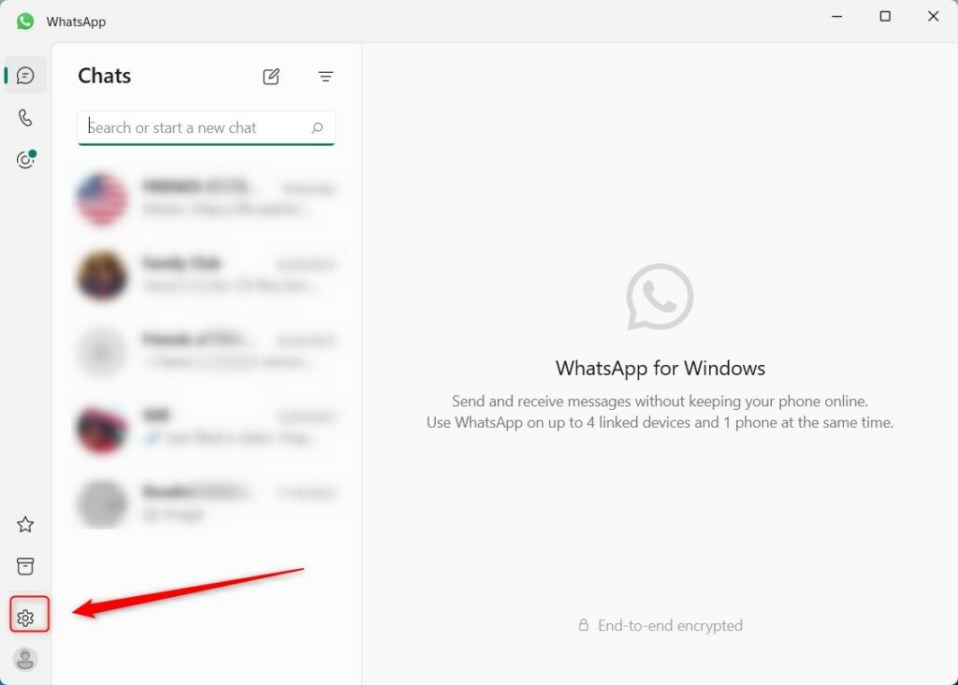
- Click the Settings (gear) icon located in the bottom left corner of the app.
The Settings screen should now open, with a list of categories down the left side. If you don’t see the gear, make the window larger. A narrow window can hide parts of the layout.
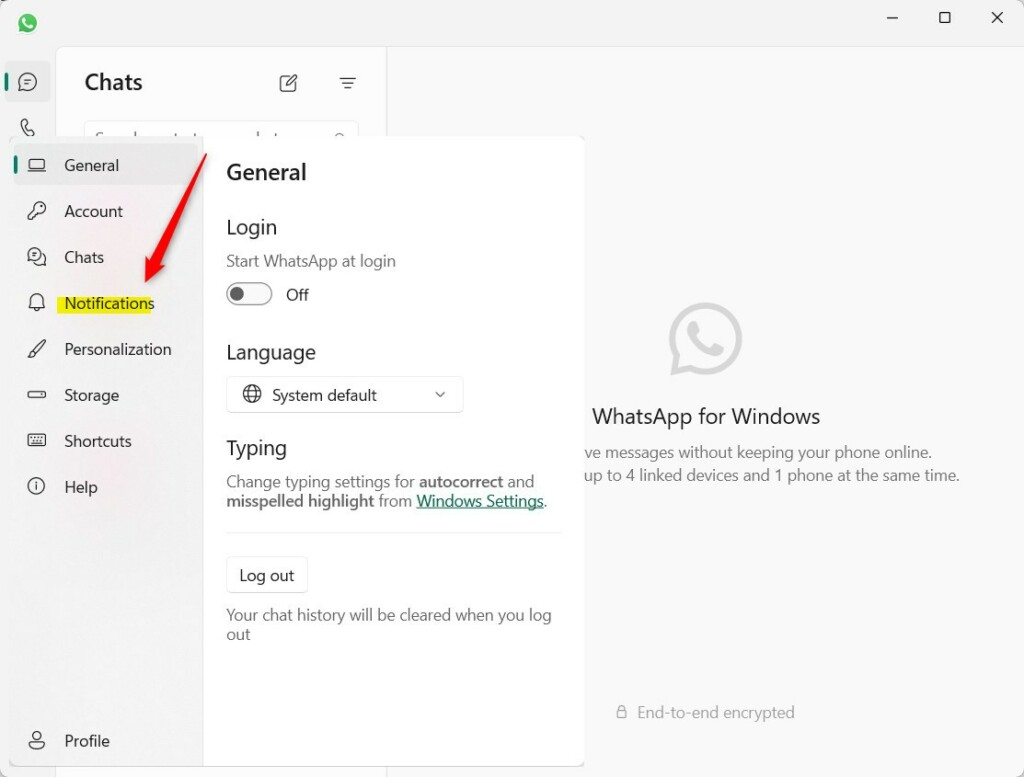
- Select the Notifications tab on the left-hand side of the screen.
The notification options for the app should now show on the right side of the window.
- On the right side, you will see toggles for Messages, Reactions, and Calls. Click these to turn them on or off.
The change takes effect straight away. You don’t need to save anything or restart the app. To undo it, come back to the same tab and click the toggle again.
Some people only want to silence chat alerts but still hear calls. In that case, turn off Messages and Reactions and leave Calls on. The exact toggles can vary a little between app versions, so use the names shown in your copy of the app.
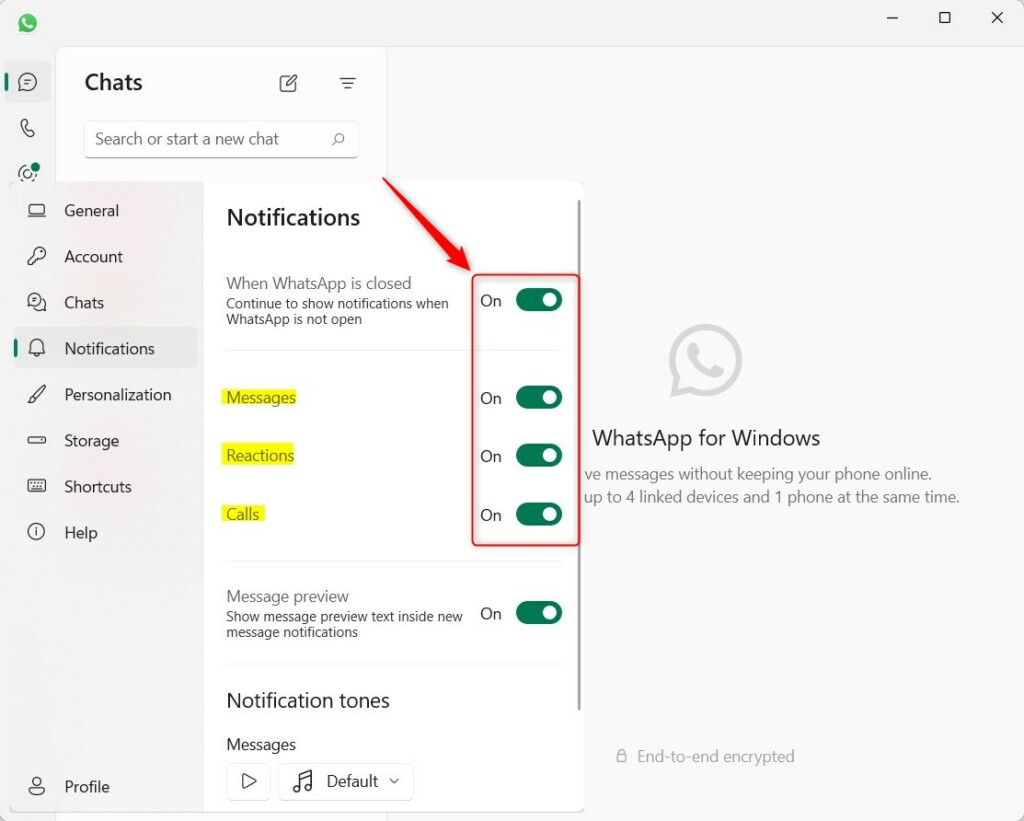
Receiving notifications even when the app is closed remains an optional toggle. No special administrator privileges are required for these settings. A standard user account can change them, and they apply only to your own Windows profile.
If you want alerts while the window is closed, the app has to keep running in the background. That is controlled partly by Windows, which is covered in the background permissions section below.
Troubleshooting WhatsApp Notification Failures
Missing alerts often point to restrictions within the Windows 11 notification settings. WhatsApp can have every toggle on and still stay silent if Windows blocks it. Check that WhatsApp has permission to show banners and play sounds.
- Open Settings System Notifications
- Make sure the main Notifications switch at the top is on.
- Scroll to Notifications from apps and other senders and find WhatsApp in the list.
- Turn the WhatsApp switch on. To turn alerts off from the Windows side instead, switch it off here.
- Click the WhatsApp entry to expand its options. Check that Show notification banners and Play a sound when a notification arrives are ticked if you want them.
If WhatsApp is not in the list, open the app and let a message arrive. Windows adds an app to this list only after the app has tried to send a notification.
Check Focus Assist and Do Not Disturb
Windows 11 Do Not Disturb mode, formerly Focus Assist, silences all app alerts, including WhatsApp. On Windows 11 version 22H2 and later it is called Do Not Disturb. Earlier builds still use the Focus Assist name. It can also switch on by itself, for example during scheduled hours, when you duplicate your display, or when you play a game full screen.
- Open Settings System Notifications
- Look at the Do not disturb switch near the top. If it is on, turn it off.
- Check the automatic rules under it, which let Windows turn Do Not Disturb on at certain times or during certain activities. Switch off any rule that is hiding your WhatsApp alerts.
If you want Do Not Disturb on but still want WhatsApp to get through, look for the priority notifications option on the same page and add WhatsApp there. Missed alerts are still kept in the notification center, so you can read them later.
Background App Permissions
WhatsApp needs permission to run in the background so you can receive incoming message alerts even when the main app window is closed. Allow the app to run in the background through your system settings. That way your messages and calls come through reliably without leaving the app open all the time.
- Open Settings Apps Installed apps
- Find WhatsApp in the list and click the three-dot menu next to it.
- Click Advanced options.
- Under Background apps permissions, open the drop-down and choose Power optimized or Always. Avoid Never, because it stops alerts when the window is closed.
This option appears only for apps installed from the Microsoft Store. If you installed WhatsApp from the website instead, you won’t see it. In that case, keep the app running, and minimized if you like, so it can still show alerts. Battery saver mode can also hold back background activity on laptops, so check it if alerts arrive late.
Outdated software versions frequently introduce notification bugs. To check, open the Store, go to Library, and click Get updates. For more details on managing alerts across the entire operating system, visit the official Microsoft support page.
Summary
Taming your WhatsApp alerts cuts down on desktop distractions. Reviewing Focus Assist or Do Not Disturb rules, background permissions, and the app toggles ensures important messages never get missed. If alerts stop working, check the same three places in order: the toggles inside WhatsApp, the WhatsApp entry in the Windows notification settings, and Do Not Disturb. Then check background permissions. Implement these practices to reclaim control over desktop alerts.
Have a question about this guide?
Answered by AI from this guide. Good questions may be added to this page — please don't include personal details.
Did this guide fix your problem?

About the Author
Richard
Tech Writer, IT Professional
Richard is a writer at Geek Rewind who turns complex IT tasks into clear, step-by-step guides. He draws on years of hands-on experience in system administration and enterprise IT operations, focusing on Windows, Linux and WordPress: the problems people actually run into, and the fixes that work. His server and WordPress guides come from systems he runs himself. Richard builds and maintains the platform behind Geek Rewind, from its Ubuntu servers and Nginx configuration to its custom WordPress plugins. Many new tutorials start with readers' questions, and he's always glad to answer them in the comments.
[…] including starting the WhatsApp app at login, turning read receipts on or off, turning notifications on or off, turning automatic downloads on or off, clearing and deleting chats, and […]
[…] including starting the WhatsApp app at login, turning read receipts on or off, turning notifications on or off, turning automatic downloads on or off, clearing and deleting chats, and […]
[…] including starting the WhatsApp app at login, turning read receipts on or off, turning notifications on or off, turning automatic downloads on or off, clearing and deleting chats, and […]
[…] including starting the WhatsApp app at login, turning read receipts on or off, turning notifications on or off, turning automatic downloads on or off, clearing and deleting chats, and […]
[…] including starting the WhatsApp app at login, turning read receipts on or off, turning notifications on or off, turning automatic downloads on or off, clearing and deleting chats, and […]
[…] app in Windows, including starting the WhatsApp app at login, turning read receipts on or off, turning notifications on or off, turning automatic downloads on or off, clearing and deleting chats, and […]
[…] app in Windows, including starting the WhatsApp app at login, turning read receipts on or off, turning notifications on or off, turning automatic downloads on or off, clearing and deleting chats, and […]
[…] app in Windows, including starting the WhatsApp app at login, turning read receipts on or off, turning notifications on or off, turning automatic downloads on or off, clearing and deleting chats, and […]
[…] including starting the WhatsApp app at login, turning read receipts on or off, turning notifications on or off, turning automatic downloads on or off, clearing and deleting chats, and […]