How to Enable WhatsApp Auto-Start on Windows 11


WhatsApp auto-start on Windows 11 launches the messaging app the moment you sign in to your PC, so your chats are already loaded when you sit down. The feature is turned off by default after you install the app on Windows 11. You can change that in less than 30 seconds.
The switch is in the WhatsApp settings menu. This guide covers that switch first. It then covers the Windows Settings app, Task Manager and the Registry Editor, which you can use if the in-app switch is missing or does not behave. None of these changes need a restart. They take effect the next time you sign in.
Open WhatsApp, click the gear icon for Settings, select the General tab, and toggle “Start WhatsApp at login” to On. You can also manage startup apps in Windows Settings under Apps Startup, or use Task Manager .
How to change WhatsApp auto-start settings
WhatsApp auto-start settings for Windows 11 let the messaging app open on its own as soon as you sign in. You change this inside the app, in the General tab of its settings, and it saves you from opening WhatsApp by hand every morning. You need the WhatsApp desktop app installed and signed in to your account. If you have not linked your phone yet, do that first, or the settings window may not be reachable.
- Open the Start menu . You should see the Start panel with your pinned apps.
- Find WhatsApp in your All Apps list and click it to open the program. The WhatsApp window should open with your chat list. You can also type “WhatsApp” in the Start search box if the list is long.

- Once the app is open, look for the Settings button (the gear icon) in the bottom left corner and click it. The settings window should open with a list of tabs on the left.
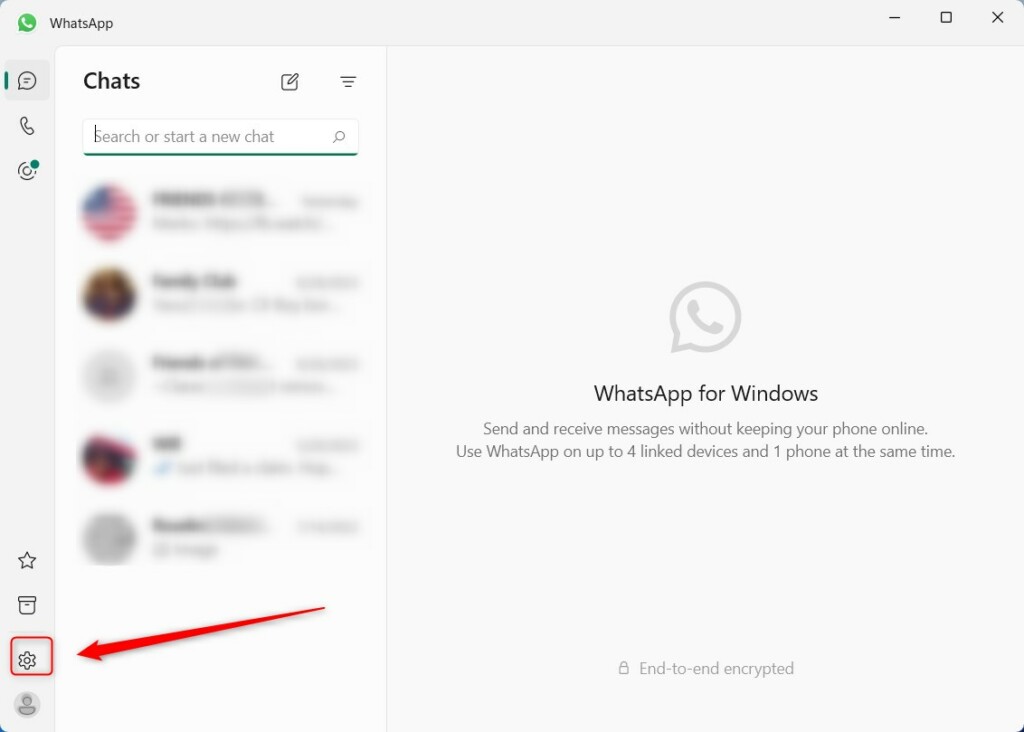
- Click the General tab on the left side of the window. The options for the app appear on the right.
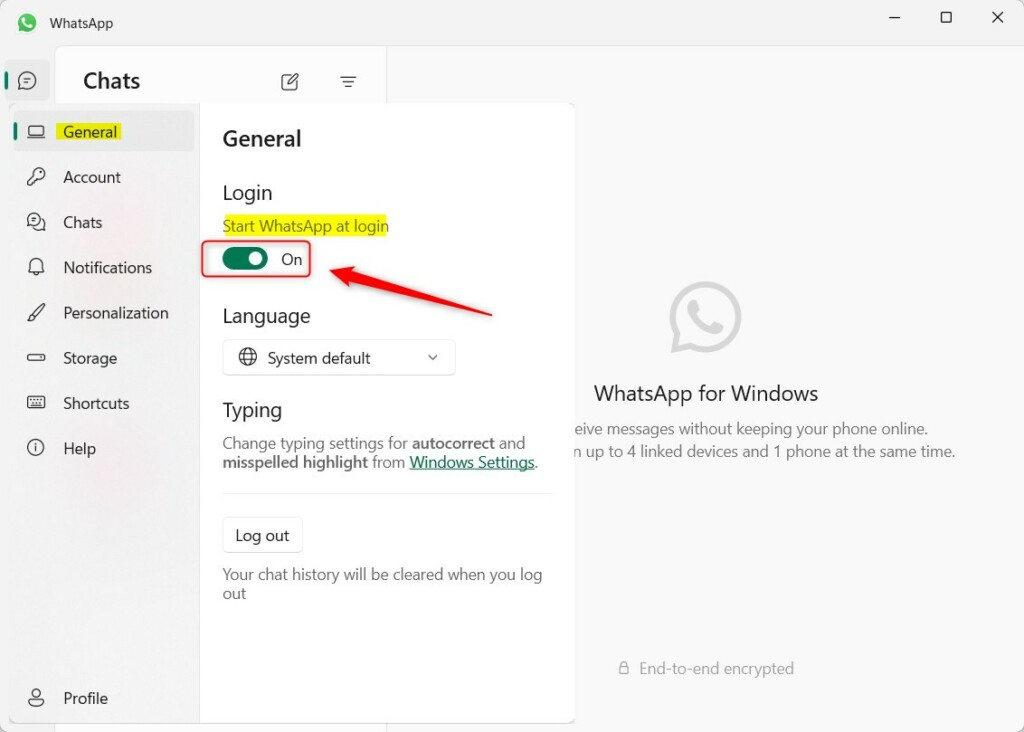
- Find the Login section on the right. If you do not see it, update WhatsApp from the Microsoft Store, because older versions may not have this option.
- Click the toggle switch to turn Start WhatsApp at login to On or Off based on your preference. The switch should change colour to show its new state. To test it, sign out of Windows and sign back in. WhatsApp should open on its own if the switch is On.
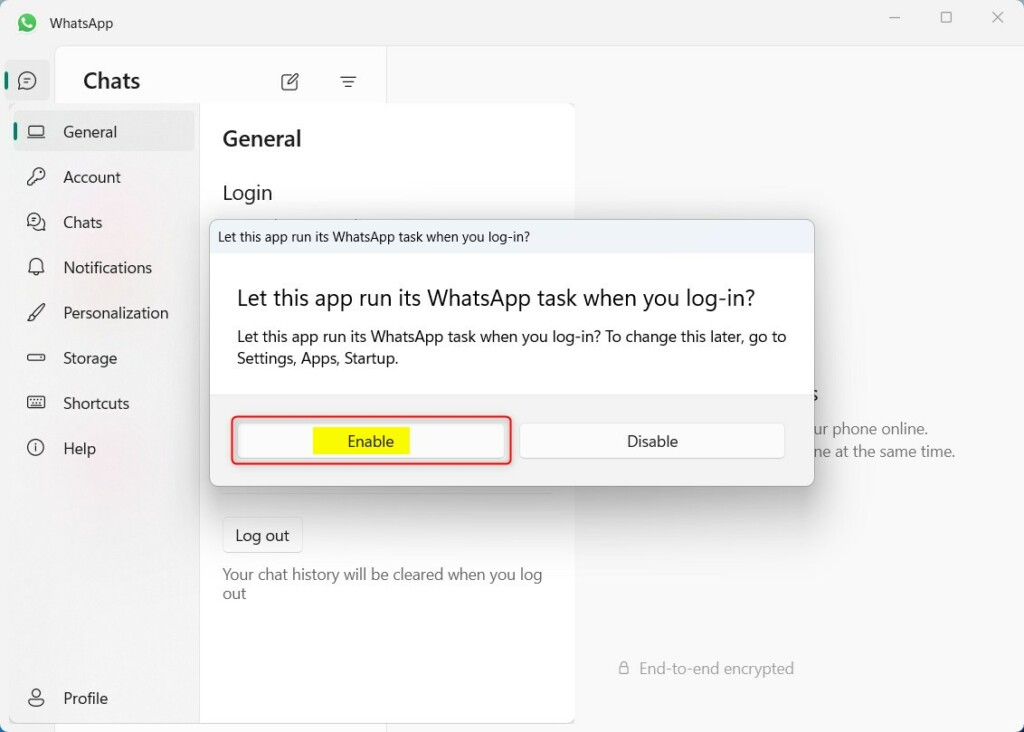
Turning this feature on prompts Windows to request background permissions at account login. If Windows shows a notification or prompt about a new startup app, allow it. If you block it, WhatsApp may not launch at sign-in even though the switch in the app is On. If that happens, check the Windows startup settings in the next section.
Managing Startup Apps in 🪟 Windows 11 Settings
Windows has its own controls for startup items. They often override what the app itself is set to. If WhatsApp ignores the switch in its own settings, this is the first place to check. It works the same on Home and Pro.
- Press Win+I to open Settings. The Settings app should open with the category list on the left.
- Navigate to Settings Apps Startup You should see a list of apps that can start with Windows, each with a toggle.
- Find WhatsApp in the list. The list is sorted by name by default, and you can change the sorting if you want to find it faster. If WhatsApp is not listed, the app has not registered itself for startup yet. Turn on the in-app switch from the first method, then check this list again.
- Toggle the switch to On or Off. The change applies at your next sign-in. To undo it, flip the same switch back.
Using Task Manager to Control Startup
Task Manager shows every app that runs when your PC starts up. Reviewing it also exposes apps that ignore their normal preferences, and it shows the startup impact of each one. That helps you decide whether WhatsApp is worth keeping at boot. This tab is in Task Manager on current Windows 11 builds.
- Press Ctrl + Shift + Esc to open Task Manager. If you see a small window with no tabs, click More details at the bottom first.
- Click the Startup apps tab on the left sidebar. If the sidebar shows only icons, click the menu icon at the top to expand it. You should see a list with a Status column that reads Enabled or Disabled.
- Right-click WhatsApp and select Disable or Enable. The Status column should update right away. The menu shows the opposite of the current state, so if you see Enable, WhatsApp is currently disabled. The change applies at your next sign-in.
Troubleshooting Persistent Auto-Start
Persistent WhatsApp auto-start problems happen when leftover system entries ignore your app preferences. You can fix this stubborn behavior by deleting leftover registry keys (system database records that track software settings) in the Windows Registry Editor, which stops the app from launching at boot. Use this method only if the three methods above did not work. A wrong change in the registry can cause problems, so take your time and delete only the WhatsApp entry.
- Press Windows Key + R, type regedit, and hit Enter. Click Yes if User Account Control asks for permission. The Registry Editor should open with a folder tree on the left.
- Navigate to:
HKEY_CURRENT_USER\Software\Microsoft\Windows\CurrentVersion\Run. You can paste the path into the address bar at the top of the Registry Editor. The values stored in that key appear in the right pane. - If you see a WhatsApp entry here, you can right-click and Delete it to force it to stop. Before deleting, you can use File Export to save a backup of the key, so you can restore it later by double-clicking the saved file. If you turn on Start WhatsApp at login in the app again, the app may add the entry back. Close the Registry Editor when you are done.
Summary
Every app you add at startup makes the PC take longer to be usable after sign-in. If you rely on WhatsApp all day, keep auto-start On so your messages are there right away. If your PC feels slow after sign-in, turn it Off and open WhatsApp when you need it. You can change this at any time with any of the methods above.
Have a question about this guide?
Answered by AI from this guide. Good questions may be added to this page — please don't include personal details.
Did this guide fix your problem?

About the Author
Richard
Tech Writer, IT Professional
Richard is a writer at Geek Rewind who turns complex IT tasks into clear, step-by-step guides. He draws on years of hands-on experience in system administration and enterprise IT operations, focusing on Windows, Linux and WordPress: the problems people actually run into, and the fixes that work. His server and WordPress guides come from systems he runs himself. Richard builds and maintains the platform behind Geek Rewind, from its Ubuntu servers and Nginx configuration to its custom WordPress plugins. Many new tutorials start with readers' questions, and he's always glad to answer them in the comments.
[…] can configure many settings with the WhatsApp app in Windows, including starting the WhatsApp app at login, turning read receipts on or off, turning notifications on or off, turning automatic […]
[…] can configure many settings with the WhatsApp app in Windows, including starting the WhatsApp app at login, turning read receipts on or off, turning notifications on or off, turning automatic downloads […]
[…] can configure many settings with the WhatsApp app in Windows, including starting the WhatsApp app at login, turning read receipts on or off, turning notifications on or off, turning automatic […]
[…] can configure many settings with the WhatsApp app in Windows, including starting the WhatsApp app at login, turning read receipts on or off, turning notifications on or off, turning automatic […]
[…] can configure many settings with the WhatsApp app in Windows, including starting the WhatsApp app at login, turning read receipts on or off, turning notifications on or off, turning automatic […]
[…] can configure many settings with the WhatsApp app in Windows, including starting the WhatsApp app at login, turning read receipts on or off, turning notifications on or off, turning automatic […]
[…] can configure many settings with the WhatsApp app in Windows, including starting the WhatsApp app at login, turning read receipts on or off, turning notifications on or off, turning automatic […]
[…] can configure many settings with the WhatsApp app in Windows, including starting the WhatsApp app at login, turning read receipts on or off, turning notifications on or off, turning automatic […]
[…] app in Windows allows users to configure many settings, including installing it, starting the app at login, turning read receipts on or off, turning notifications on or off, turning automatic downloads […]
[…] can configure many settings with the WhatsApp app in Windows, including starting the WhatsApp app at login, turning read receipts on or off, turning notifications on or off, turning automatic […]
[…] many settings with the WhatsApp app in Windows, including installing WhatsApp on Windows, starting the WhatsApp app at login, turning read receipts on or off, turning notifications on or off, turning automatic […]
[…] can configure many settings with the WhatsApp app in Windows, including starting the WhatsApp app at login, turning read receipts on or off, turning notifications on or off, turning automatic downloads […]
[…] calling, and sharing files on your computer. You can change many settings in the app, such as starting the WhatsApp app at login and turning read receipts on or […]