How to Show Windows 11 Taskbar on All Monitors

Showing the Windows 11 taskbar on all monitors puts the Start button and your open apps on every screen connected to your PC, not just the main display. The system tray stays on the main taskbar, and the secondary taskbars show a clock. This is useful when you work across two or three screens and want to reach any app without dragging the mouse back to the main display.
The setting lives in the Settings app . Once it is on, you can see open windows and switch between tasks from whichever screen you are working on.
Go to Settings Personalization Taskbar Taskbar behaviors. Check the box for “Show my taskbar on all displays.” This setting makes your taskbar visible on every connected monitor.
Latest Update
Windows 11 also lets you control which taskbar shows which app icons. You can show every open app on every taskbar, or show an app’s icon only on the screen where its window is running. The second choice keeps each taskbar short and tidy, and it makes it obvious which monitor holds which program.
Updated Setting Location in 🪟 Windows 11 (22H2 and later)
In Windows 11, version 22H2 and later, you can reach the settings straight from the desktop. This is the quickest route when you do not want to click through the full Settings app.
Right-click an empty spot on the taskbar and select Taskbar settings. The Settings app opens on the taskbar page. Scroll down and expand the section called Taskbar behaviors.
Updated wording in 🪟 Windows 11 22H2 and later
Inside Taskbar behaviors you will find two options that matter here. The first is Show my taskbar on all displays. It is a checkbox, and it switches the extra taskbars on or off. The second is When using multiple displays, show my taskbar apps on, a drop-down menu that appears under it once the first box is ticked. It controls which app icons appear on each taskbar.
The labels can differ slightly between Windows 11 builds, but the two options are always in this section. If you only see the first one, tick it and the second will appear.
Updated location in 🪟 Windows 11 22H2 and later
Both options are in the Taskbar behaviors section of the Personalization settings. When you turn them on, you can see your running apps and quick access icons on any display.
The drop-down for app icons has three choices:
- All taskbars shows every open app on every taskbar.
- Main taskbar and taskbar where window is open shows every app on the main taskbar. A secondary taskbar shows only the apps open on that screen.
- Taskbar where window is open shows each app only on the screen where its window sits.
What happens when done?
With multiple-monitor taskbars on, every connected display gets its own working taskbar. You can pin apps and see open programs on any monitor. The Start button is on each screen, and the secondary taskbars show the date and time. That makes a multi-monitor desk much easier to manage.
The change applies straight away. You do not need to restart or sign out. To undo it, clear the checkbox and the extra taskbars disappear at once.
There are two ways to turn this on. One is the Settings app. The other is the Windows Registry, which is a database that stores system and user settings.
The Settings app is the better choice for most people. It is safer and needs no special knowledge. The Registry is the fallback for older versions of Windows 11, or for when the Settings option is missing or does not work. Use it with care, because a wrong edit in the Registry can cause problems.
Using the Registry Editor (for older versions or when Settings is unavailable)
On older versions of Windows 11 you can force the feature on from the Registry Editor. You create a custom DWORD value, which is a small number setting stored in the Registry. This bypasses the Settings app, so it helps when the usual toggle is missing or does nothing.
The change only affects your own user account, so you do not need administrator rights to make it. Windows may still show a User Account Control prompt when Registry Editor opens. Click Yes if it does.
Press Windows key + R to open the Run box. Type regedit and press Enter. Click Yes if User Account Control asks for permission. The Registry Editor window opens.
In the left pane, go to the key below. You can expand the folders one by one, or paste the path into the address bar at the top of the window and press Enter.
HKEY_CURRENT_USER\Software\Microsoft\Windows\CurrentVersion\Explorer\Advanced
With the Advanced key selected, right-click an empty area in the right-hand pane. Select New DWORD (32-bit) Value. A new entry appears with its name in edit mode. Type MMTaskbarEnabled and press Enter.
Double-click the new value. In the Value data box, enter 1, then click OK. If the value already exists, do not create a second one. Just double-click it and change the data to 1.
The change does not take effect until Windows Explorer restarts. Restarting it reloads the taskbar and desktop without signing you out. Your screen will go blank for a moment, which is normal.
- Press Ctrl + Shift + Esc to open Task Manager.
- On the Processes tab, find Windows Explorer.
- Right-click it and select Restart.
The taskbar disappears and comes back within a few seconds. Check your other monitors. If the taskbar still does not show, sign out and back in, or restart the PC.
Steps to enable the taskbar on all monitors
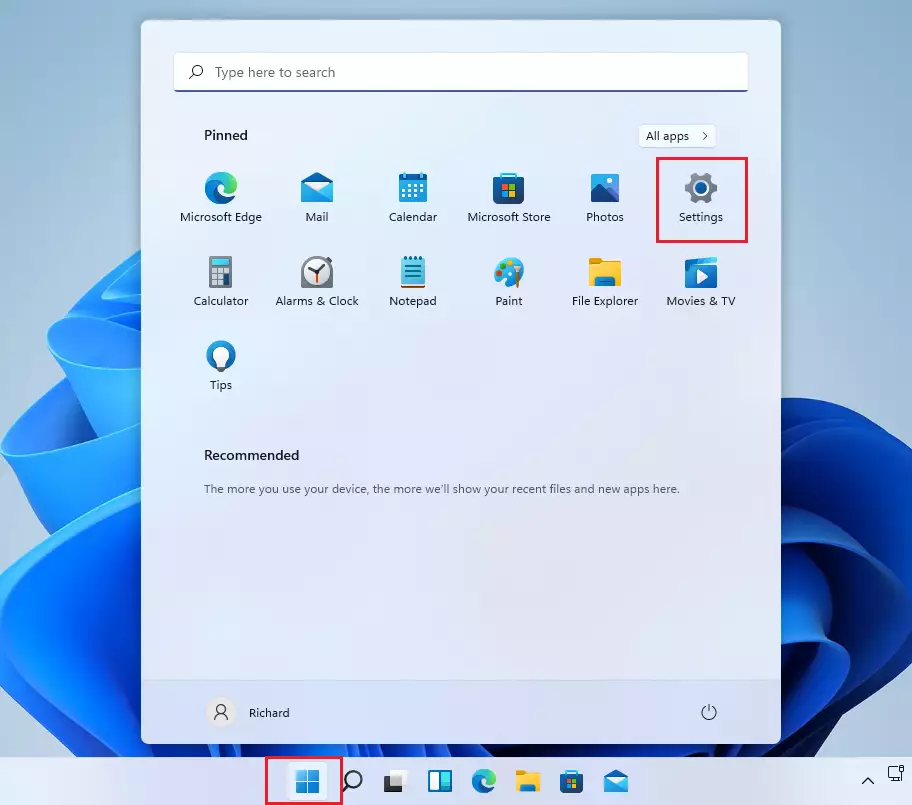
This method uses the built-in Settings app. It is the simplest and safest way to show the Windows 11 taskbar on all your monitors, and it works on every edition, Home and Pro included. Make sure all your monitors are connected and switched on first. Windows only offers the option when it detects more than one display.
- Open Settings by pressing Windows key + I. The Settings window opens with the list of categories on the left.
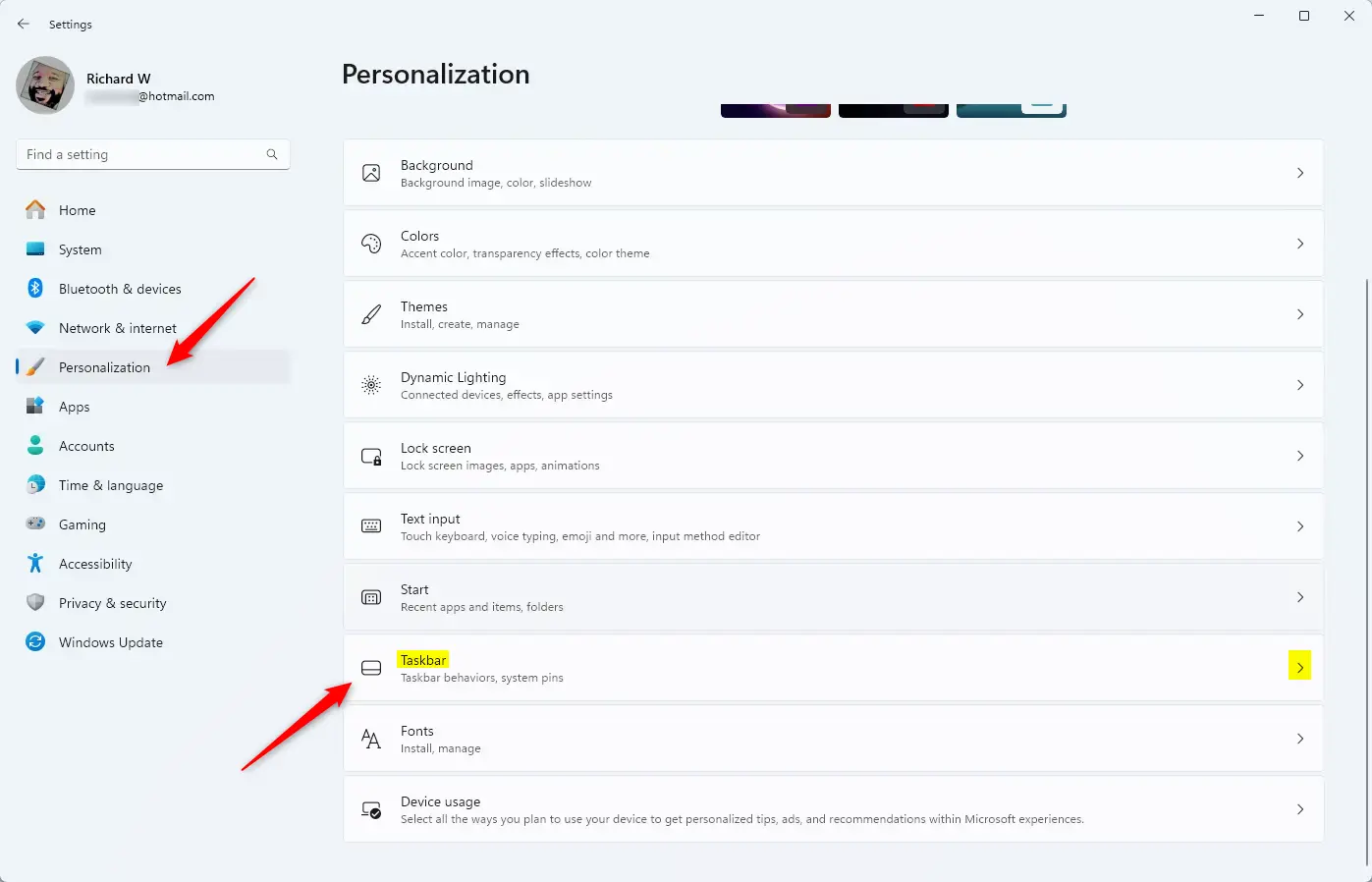
- Click Personalization on the left menu. The personalization options appear on the right.
- Select Taskbar from the list. The page shows taskbar items and several collapsed sections.
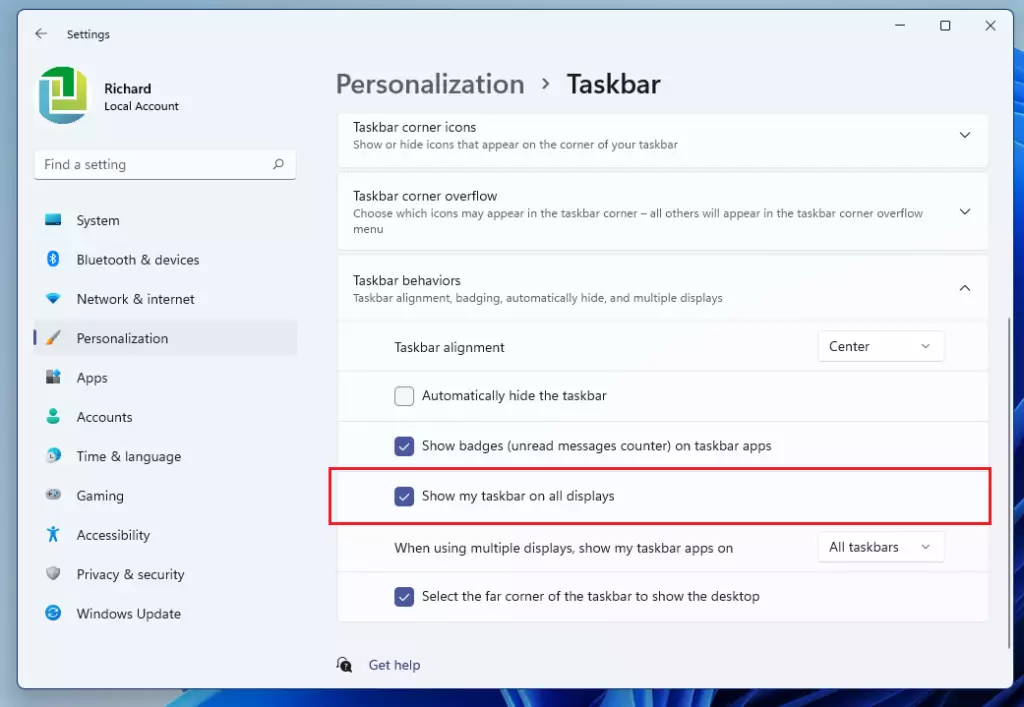
- Click Taskbar behaviors to open the menu. The section expands and shows a list of options and checkboxes.
- Check the box for Show my taskbar on all displays. The taskbar appears on your other monitors right away. Then use the When using multiple displays, show my taskbar apps on drop-down to choose which icons each taskbar shows.
Advanced Configuration: Registry Editor
If the standard options fail, you can force the setting through the Registry. The fix adds or changes one value in the system database so the taskbar appears on secondary screens.
Back up first. Registry mistakes can cause real problems, in the worst case boot issues. In Registry Editor, choose File Export and save a copy of the Registry. For extra safety, create a restore point before you start. If something goes wrong, you can double-click the exported file to restore it.
This method uses the Registry Editor to make the taskbar appear on every screen connected to your computer. It is the same MMTaskbarEnabled value described earlier. Follow the steps in order and read each value carefully before you change it.
- Press Windows key + R, type regedit, and hit Enter. Click Yes if User Account Control asks. Registry Editor opens.
- Navigate to: HKEY_CURRENT_USER\Software\Microsoft\Windows\CurrentVersion\Explorer\Advanced. You can paste the path into the address bar at the top. The values for this key then appear in the right-hand pane.
- Look for the value named MMTaskbarEnabled. If it is not in the list, right-click an empty area in the right-hand pane, select New DWORD (32-bit) Value, and name it MMTaskbarEnabled.
- Double-click it and set the value to 1 to enable it. Click OK, then restart Windows Explorer from Task Manager or sign out and back in. To undo the change later, set the value back to 0.
Troubleshooting: Why is the option greyed out?
If Show my taskbar on all displays is greyed out, Windows usually does not recognize your second monitor correctly. It may be connected but not detected, or it may be set to duplicate the main screen. The option is also unavailable when only one display is active.
Work through these checks in order:
- Confirm the monitor is powered on and the cable is firmly connected at both ends.
- Open Settings System Display and check that every monitor is listed. If one is missing, click Detect under Multiple displays.
- Press Windows key + P and choose Extend. Duplicate mode can leave the option unavailable.
- Update your graphics drivers, then restart the PC.
- Check whether third-party taskbar customization software is interfering. Close it or uninstall it, then look at the setting again.
Summary
Showing the taskbar on every monitor improves productivity. You can reach your apps from any screen and keep an eye on open windows without moving the mouse back to the main display. If you want a cleaner look, use the app icon drop-down to keep each taskbar limited to the apps on its own screen.
Have a question about this guide?
Answered by AI from this guide. Good questions may be added to this page — please don't include personal details.
Did this guide fix your problem?

About the Author
Richard
Tech Writer, IT Professional
Richard is a writer at Geek Rewind who turns complex IT tasks into clear, step-by-step guides. He draws on years of hands-on experience in system administration and enterprise IT operations, focusing on Windows, Linux and WordPress: the problems people actually run into, and the fixes that work. His server and WordPress guides come from systems he runs himself. Richard builds and maintains the platform behind Geek Rewind, from its Ubuntu servers and Nginx configuration to its custom WordPress plugins. Many new tutorials start with readers' questions, and he's always glad to answer them in the comments.
Hello,
This does not work if you have selected “Automatically hide the taskbar”. I prefer to have the task bar hidden whilst I work, but with my extended display, I cannot “unhide” my taskbar now, I have to return to the Main display to access the task bar.
Thank you,
Zaira
Same. this method did not work on my end so I decided to leave the auto hide task bar option unchecked
i can’t choose this option on my pc.
How do we have the System tray on both monitors or move it to a secondary monitor
I had that option on, and the past few days the bottom of my documents hide under the task bar only on my second display. I loose the function then to scroll etc. So I had to turn it off. It worked fine for the past few months my computer upgraded to 11, but now it’s been a huge issue.
Any tips or fixes?
Thank you,
This. Windows 11 is just broken here. Do you also have the issue when you maximize the window on the second display, the whole taskbar disappears? I’ve been trying to find a solution for days now. Win10 didn’t have this issue.