Hide or Unhide Trash Icon in Ubuntu Dock

Ubuntu 22.04 LTS and newer versions put a Trash icon on the dock by default. It gives you one click access to deleted files, and you can empty it from the icon’s right-click menu . You can hide or show this icon at any time from the Settings app.
The dock is the vertical bar at the left edge of the screen that holds your favorite apps and any apps that are running. If you rarely use the Trash from the dock, hiding the icon gives you a cleaner look. Hiding the icon does not delete anything. Your deleted files stay in the Trash folder, which you can still open from the Files app.
To hide or unhide the Trash icon in Ubuntu Dock, open Settings from the System menu in the top-right corner, then click Appearance and Configure dock behavior. In the Dock window, turn the Trash switch Off to hide the icon or On to show it. The change applies immediately, and your deleted files stay in the Trash folder in Files.
How to hide or unhide the Tash icon on the Dock in Ubuntu Linux
You turn the Trash icon on or off with a switch in the dock settings, which you reach from Settings Appearance The change applies immediately. You do not need to log out or restart. To undo it, flip the same switch back.
The exact wording and layout of the dock options can vary a little between Ubuntu releases. The steps below follow the Settings app in current releases, such as Ubuntu 24.04 LTS.
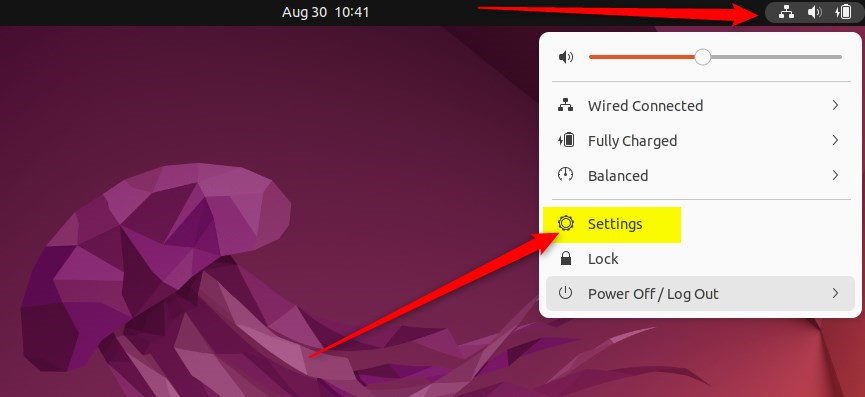
- Click the System menu in the top-right corner of the screen. This is the group of status icons (network, sound, power) at the right end of the top bar.
A panel opens with quick settings, such as volume, network and a power button.
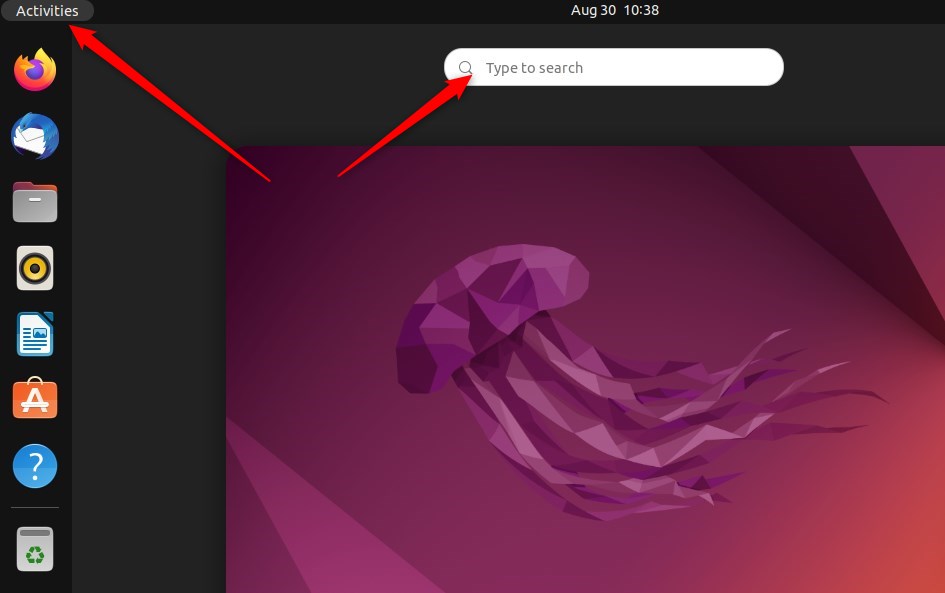
It is the same System menu in the top-right corner. You can also press the Super (Windows) key, type Settings, and press Enter.
- Select Settings in the panel, as shown below.
The Settings app opens in a new window, with a list of categories down the left side.
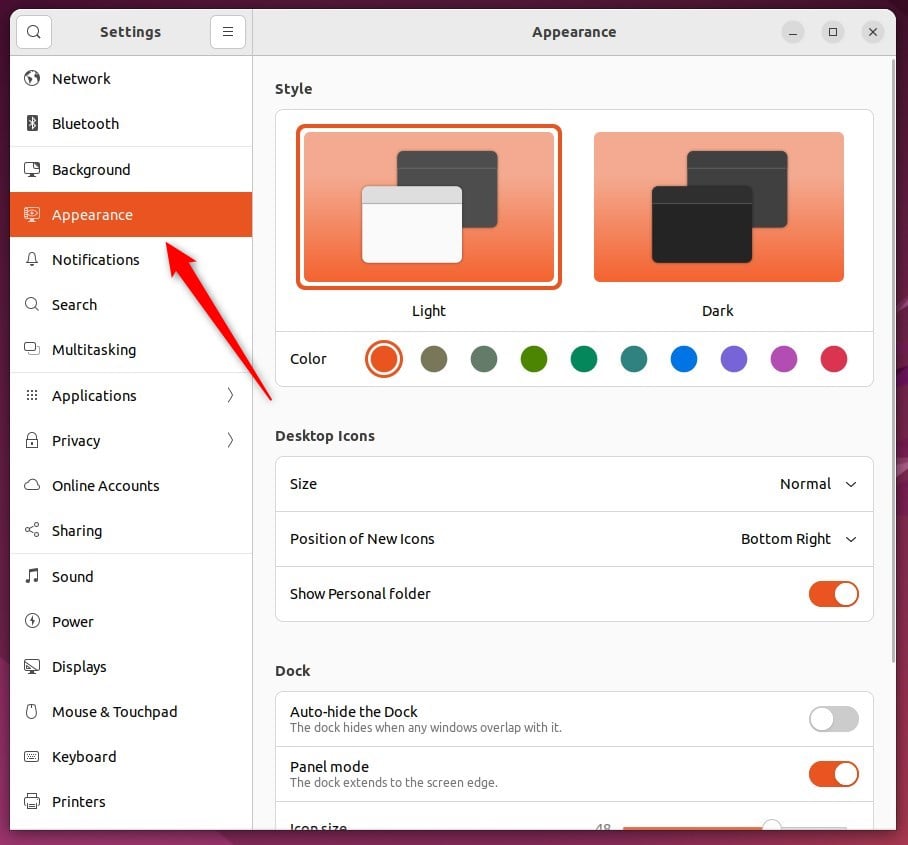
- In the Settings window, click Appearance to open that section.
You should now see the theme and color options at the top, and a Dock section further down the page. If you cannot see Appearance, scroll the list on the left. On a small window it can sit below the visible area.
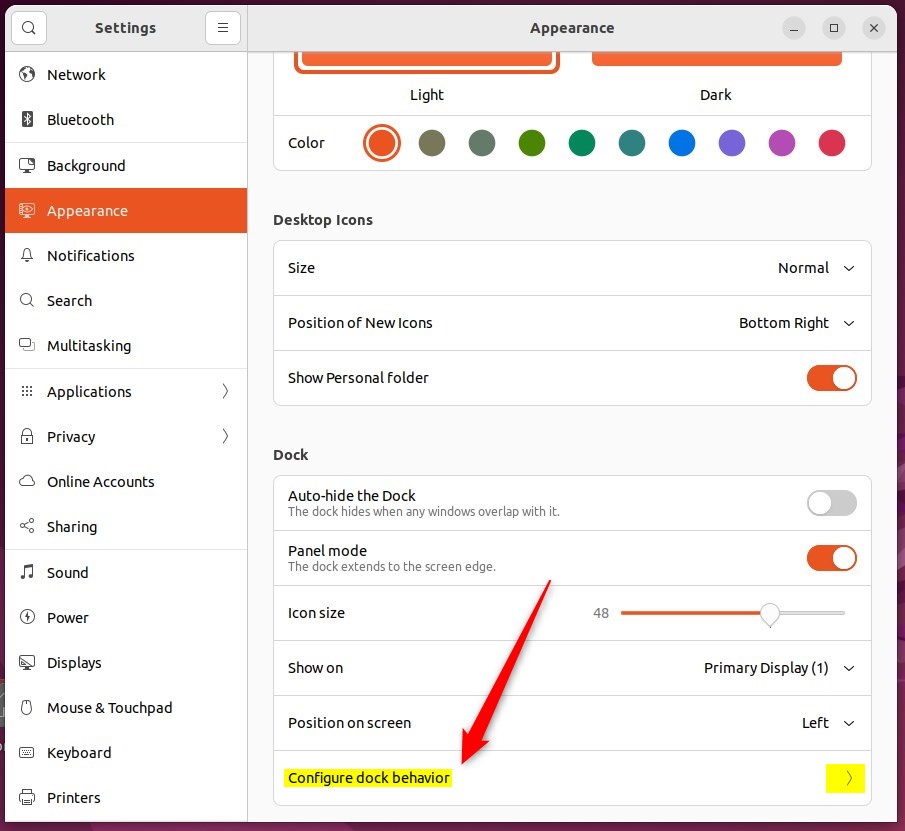
- In the Dock section of the Appearance panel, click Configure dock behavior.
A separate Dock window opens with more dock options. The Trash switch is in this window, not on the main Appearance page.
Check that your version is Ubuntu 22.04 LTS or newer. Also check that you have not replaced the Ubuntu Dock with another dock or a different desktop environment.
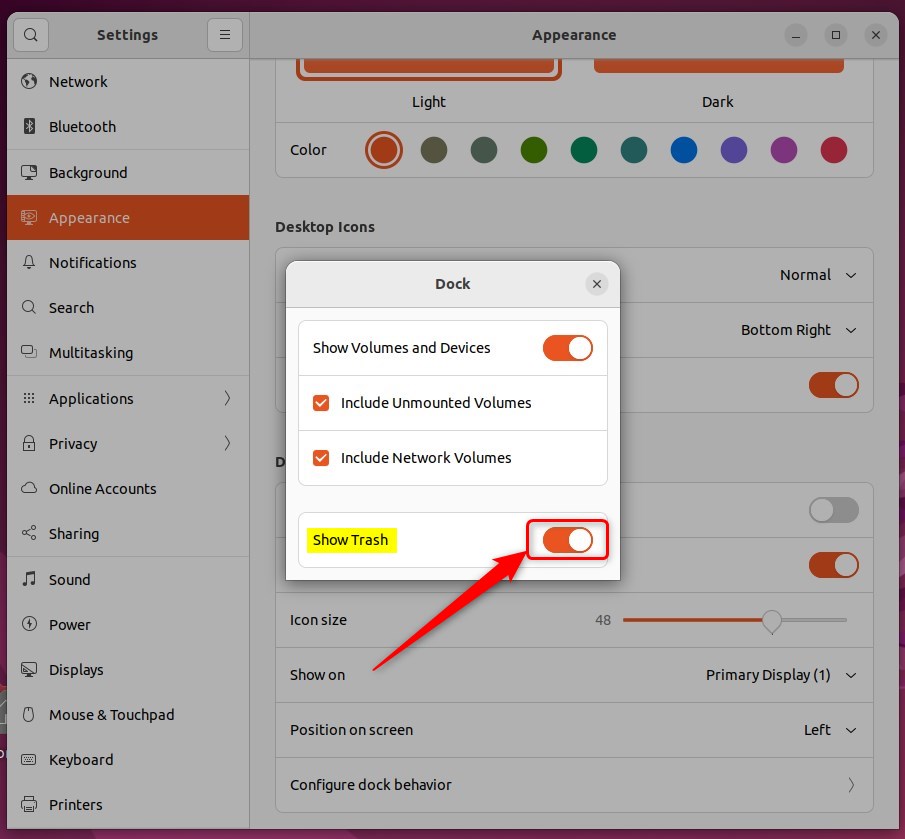
- In the Dock window, find the Trash switch and flip it to the On position to show the Trash icon.
The Trash icon should appear on the dock straight away, usually at the bottom, next to the Show Apps button or any mounted drives. If it does not appear at once, wait a second or two. The dock redraws itself after the change.
- To hide the Trash icon, move the same switch to the Off position.
The icon disappears from the dock. Your deleted files are still in the Trash folder. You can open it from the Files app, where Trash is listed in the left sidebar.
That completes the process. Close the Dock window and the Settings app when you are done. The setting is saved automatically and stays in place after you log out or reboot.
Conclusion:
You can keep the Dock clutter-free or keep quick access to deleted items. Either way, it takes one switch to change, and one switch to change back.
- The steps above are an easy way to manage whether the Trash icon shows on the Dock in Ubuntu Linux.
- You can reach the Trash switch through the Settings app. Open Settings from the System menu in the top-right corner, then go to Appearance and Configure dock behavior.
- This setting lets you personalize your desktop. You can keep the Dock clutter-free, or keep the Trash icon for convenient access to deleted items.
Have a question about this guide?
Answered by AI from this guide. Good questions may be added to this page — please don't include personal details.
Did this guide fix your problem?

About the Author
Richard
Tech Writer, IT Professional
Richard is a writer at Geek Rewind who turns complex IT tasks into clear, step-by-step guides. He draws on years of hands-on experience in system administration and enterprise IT operations, focusing on Windows, Linux and WordPress: the problems people actually run into, and the fixes that work. His server and WordPress guides come from systems he runs himself. Richard builds and maintains the platform behind Geek Rewind, from its Ubuntu servers and Nginx configuration to its custom WordPress plugins. Many new tutorials start with readers' questions, and he's always glad to answer them in the comments.
No comments yet — be the first to share your thoughts!