How to Restore File Explorer Windows When You Log In

Restoring previous File Explorer windows reopens every folder you had open as soon as you sign into Windows 11 or Windows 10. Windows brings back your workspace, so you do not have to browse to the same drives and directories each morning.
The setting is a single checkbox in the folder options menu. It takes about three clicks and needs no extra software. It is available in both Home and Pro editions. A registry method is also covered below for cases where the checkbox is not enough.
Open File Explorer , click the View tab, then Options. In File Explorer Options, click the View tab, scroll down to Restore previous folder windows at logon, check the box, and click OK. Your File Explorer windows reopen automatically when you next sign in.
What is File Explorer?
File Explorer is the application you use to find, open, copy, move, and organize your files and folders. It is the window that opens when you click the folder icon on the taskbar or press the Win+E. Everything in this tutorial applies to those windows.
Why Use “Restore previous folder windows at logon”?
The next time you sign in, those same folders open again automatically. It saves the most time if you keep the same project folders, download folders, or network shares open every day.
One thing to know: Windows restores the windows that were open when you signed out, restarted, or shut down. Folders you closed yourself beforehand will not come back. The setting is also per user account, so each person on the PC has to turn it on for their own account.
How to Turn On or Off “Restore previous folder windows at logon”
This is the easiest method and the one most people should use. It has two parts. First you open File Explorer Options, then you change the setting. Follow these steps:
Open File Explorer Options:
- Click the Start button (Windows icon) or press the Windows key. The Start menu opens with the search box ready for typing.
- Type File Explorer Options and press Enter. A small window titled File Explorer Options appears. In some older Windows 10 builds the same window is called Folder Options.
- Or, open File Explorer (folder icon on your taskbar). In Windows 11, click the three dots (See more) in the top toolbar, then choose Options. In Windows 10, click the View tab on the ribbon and then Options at the far right. Either way, the same options window opens.
Change the Setting:
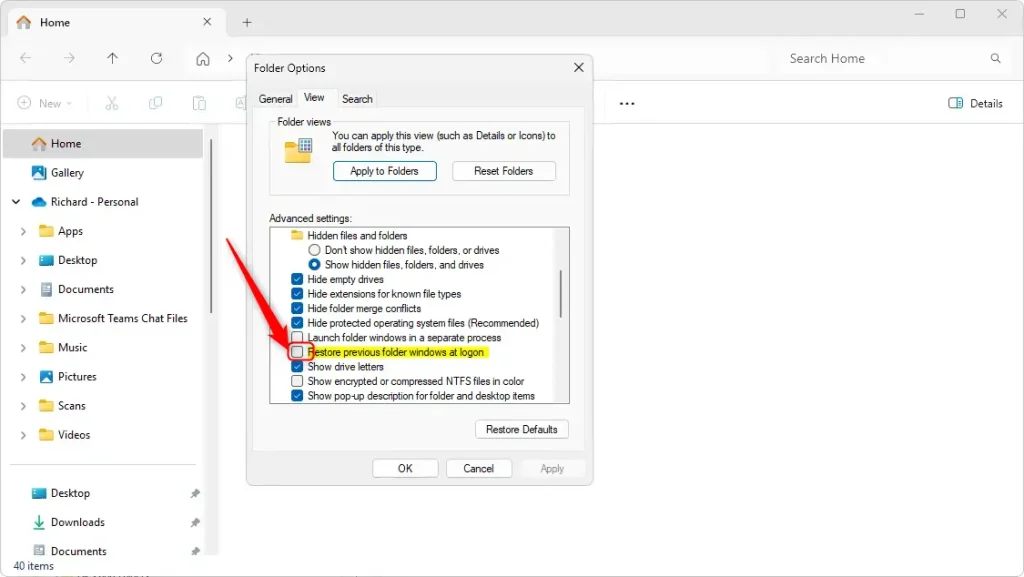
- In the new window, click the View tab at the top. You will see a long scrolling list under Advanced settings.
- Scroll down the list until you find the checkbox labeled Restore previous folder windows at logon. The list is alphabetical-ish, so it sits fairly far down, near the entries that start with "Restore" and "Show".
- Check the box to turn it ON. Uncheck it to turn it OFF. This is also how you undo the change later.
- Click OK to save your changes. The window closes. Use Apply first if you want to keep the window open.
How to Use the Registry Editor to Change This Setting (Advanced)
Registry Editor (a tool for changing low-level system settings) lets you restore File Explorer windows by editing specific system keys. It is the same setting the checkbox controls, so use it if you manage several PCs, need to script the change, or cannot reach the checkbox. This advanced method requires administrator rights and careful steps to avoid system errors. Open the Registry Editor by typing regedit into the Start menu search bar and pressing Enter. Windows may ask you to confirm in a User Account Control prompt. Click Yes to continue.
In Registry Editor, click File, then Export, choose All as the export range, and save the file somewhere safe. You can also create a system restore point first.
⚠️ Admin Privileges Required
Sign in with an administrator account before you start. A wrong edit in the registry can cause errors, so change only the value described below.
Here's how:
- Open the Registry Editor by typing
regeditin the Start menu search and pressing Enter. Approve the User Account Control prompt if it appears. - Navigate to this folder in the left panel:
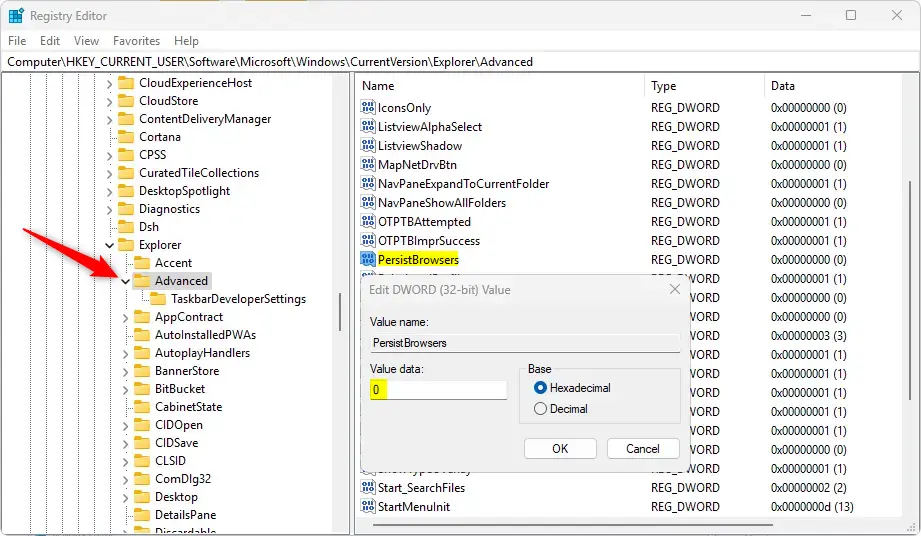
Computer\HKEY_CURRENT_USER\Software\Microsoft\Windows\CurrentVersion\Explorer\AdvancedYou can click the small arrows to expand each key. When you select the last key, its values appear in the right panel. - Right-click on Advanced, then choose New DWORD (32-bit) Value. A new entry named "New Value #1" appears in the right panel, with its name ready to edit. If a value called PersistBrowsers already exists in the right panel, skip this step and the next one and just edit that value.
- Name this new DWORD value:
PersistBrowsersType the name exactly as shown, then press Enter. - Double-click PersistBrowsers. The Edit DWORD (32-bit) Value box opens. Set the value to:
1to turn ON the folder restore feature0to turn OFF the feature
- Click OK and close the Registry Editor. The new value now shows in the right panel with the number you set.
- Restart your computer to apply the changes. After you sign back in, open a folder or two, then sign out and in again to confirm they reopen. To undo the change, go back to the same value and enter the OFF value, or import the backup file you exported earlier.
Summary
- You can easily turn on or off "Restore previous folder windows at logon" from File Explorer Options. Look for it on the View tab under Advanced settings.
- The Registry Editor method is for advanced users who want more control, such as when setting up more than one PC.
- Always back up your registry or create a restore point before making changes.
- Restart your PC after changing the settings to make sure they take effect. To test, leave a few folders open, then sign out and back in.
- Enjoy having your folders open automatically just like you left them!
To restore File Explorer windows automatically when you log in, use either the File Explorer Options menu or the Registry Editor. Both methods make sure your open folders pop back up right where you left them after a restart. Pick the method that fits your comfort level, back up your system before editing the registry, and restart your computer to apply the changes. If you ever want a clean desktop at sign-in again, uncheck the box or switch the registry value to its OFF setting.
How to Use File Explorer in Windows 11
Have a question about this guide?
Answered by AI from this guide. Good questions may be added to this page — please don't include personal details.
Did this guide fix your problem?

About the Author
Richard
Tech Writer, IT Professional
Richard is a writer at Geek Rewind who turns complex IT tasks into clear, step-by-step guides. He draws on years of hands-on experience in system administration and enterprise IT operations, focusing on Windows, Linux and WordPress: the problems people actually run into, and the fixes that work. His server and WordPress guides come from systems he runs himself. Richard builds and maintains the platform behind Geek Rewind, from its Ubuntu servers and Nginx configuration to its custom WordPress plugins. Many new tutorials start with readers' questions, and he's always glad to answer them in the comments.
No comments yet — be the first to share your thoughts!