How to Enable Game Capture on Windows 11

- 7 steps
- Needs administrator rights
- Includes a restart or sign-out
Game capture on Windows 11 records your PC gameplay using the built-in Xbox Game Bar tool, so you don’t need extra software. Pressing the Win+G opens the overlay, and from there you can save video clips of your games straight away.
You need a Windows 11 system with a graphics card that supports hardware encoding. That means an NVIDIA GeForce 400 series or later, an AMD Radeon HD 7000 series or later, or Intel HD Graphics 4000 or later. Most PCs from the last decade meet this. If you run a Windows N edition, you may also need to install the Media Feature Pack from Microsoft before recording works.
To enable game capture on Windows 11, open Settings, click Gaming, select Captures, and turn on the Record what happened switch. Windows then keeps a rolling recording of your gameplay, and you press Win+Alt+G to save the last stretch as a clip. No restart is needed.
Why use this feature?
Gaming is better when you can share your best moments with friends. This feature works like a replay button for your computer. It keeps the last stretch of action in the background, so you can save it after something good happens instead of having to start recording in advance. It’s handy for catching a high score, a clutch win or a funny glitch.
What happens when you are done?
Once you turn this on, you can save a clip at any time with a keyboard shortcut. The default shortcut for saving the recent gameplay is Win+Alt+G. Windows stores the clips as video files in the Captures folder inside your Videos folder, under your user profile. That makes them easy to find, edit or share online.
How to enable game recording
Game capture turns on in the main Settings app under the Gaming menu. Open Settings, click Gaming, select Captures, and turn on the Record what happened switch. Windows will then keep a rolling recording of your gameplay while you play, and you save it as a clip when you choose.
- Open the Windows Settings app. You can find it in your Start menu, or press the Win+I on your keyboard. The Settings window opens with a list of categories on the left.
- Click the Gaming button on the left sidebar. The Gaming page opens on the right, with tiles for Game Bar, Captures and Game Mode.
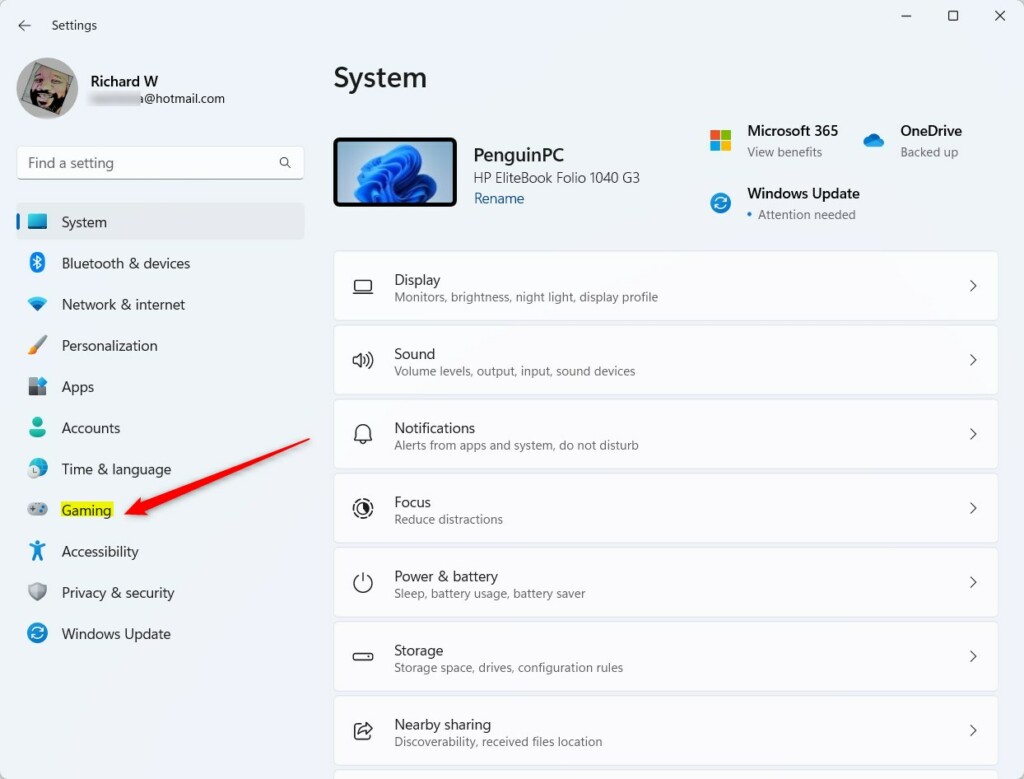
Turn on or off gameplay video captures in Windows 11 - Select the Captures tile on the right side of the screen. The capture settings page opens.
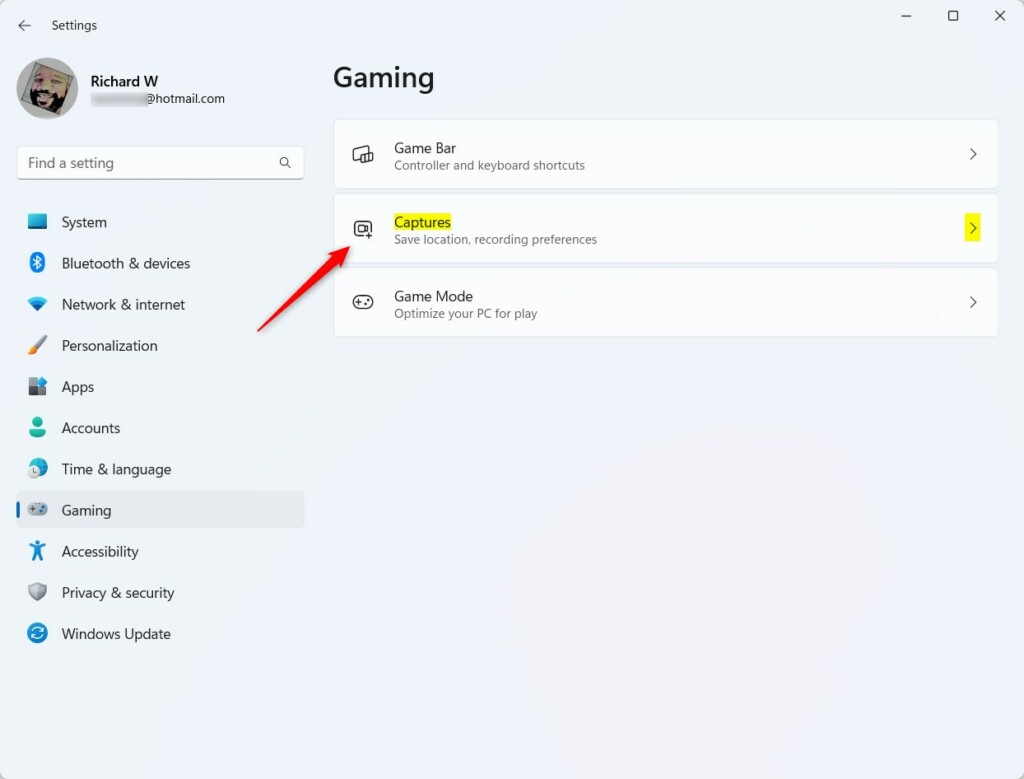
Turn on or off gameplay video captures in Windows 11 - Find the option labeled Record what happened. If you don’t see it, check that Windows is up to date in Settings Windows Update. Older builds of Windows 11 may place this option elsewhere or label it differently.
- Toggle the switch to the On position. The switch should show as On. To undo the change later, come back to this page and switch it to Off. You don’t need to restart your PC either way.
Office or school computers often require administrator privileges to change certain system settings. Most users can change these settings without administrator rights. If the switch is greyed out, or the Captures page is missing options, your organization probably manages the setting with a policy, and you’ll need to ask your IT department. Windows Home and Windows Pro behave the same way here.
If pressing Win+G does nothing, make sure Game Bar hasn’t been turned off. Check Settings Gaming Game Bar, and make sure the game or app you want to record is in focus.
Advanced Capture Settings
You can customize your game capture settings in Windows 11 from the Captures page. There you can adjust the frame rate, the video quality and the audio recording options. Higher frame rates and quality look better, but they make bigger files and ask more of your PC. If your game stutters while recording, try a lower frame rate or standard quality first.
Changes apply to your next recording. They don’t alter clips you have already saved.
Managing Your Storage
You can manage your game capture storage in Windows 11 by changing the default save location from the Videos folder to another drive if you need more space. Video clips add up quickly, especially at high quality. Moving the Captures folder to a larger drive keeps your system drive from filling up. Delete old clips you no longer need to free up space.
To move the folder, open it in File Explorer, right-click the Captures folder, choose Properties, and use the Location tab to pick the new place. Windows asks whether to move your existing clips too.
Accessibility and Screen Readers
Windows 11’s Xbox Game Bar works with screen readers like Narrator. If you have trouble seeing the screen, you can use keyboard shortcuts to move through its features. Press Win+G to open the overlay, then use the Tab and arrow keys to move between widgets and buttons. Press Esc to close it.
Summary
Windows 11 lets you record your games without extra apps. Turn on the Record what happened feature in Settings Gaming Captures, and you can save highlights with a shortcut whenever something worth keeping happens. If it ever slows your games down or fills your drive, switch it off the same way you turned it on.
Have a question about this guide?
Answered by AI from this guide. Good questions may be added to this page — please don't include personal details.
Did this guide fix your problem?

About the Author
Richard
Tech Writer, IT Professional
Richard is a writer at Geek Rewind who turns complex IT tasks into clear, step-by-step guides. He draws on years of hands-on experience in system administration and enterprise IT operations, focusing on Windows, Linux and WordPress: the problems people actually run into, and the fixes that work. His server and WordPress guides come from systems he runs himself. Richard builds and maintains the platform behind Geek Rewind, from its Ubuntu servers and Nginx configuration to its custom WordPress plugins. Many new tutorials start with readers' questions, and he's always glad to answer them in the comments.
[…] playing your favorite games on Windows, you can capture important and cool moments by pressing the Windows logo key + ALT + G keyboard […]