How to Change Windows Terminal Themes


Windows Terminal themes change the colors and background style of your command line window. Windows Terminal version 1.10 and later includes several built-in color schemes and lets you build custom looks.
Switching to a dark color scheme cuts down eye strain when you work late at night. You can change these visual styles directly inside the application preferences, so you don’t need to edit any files or install anything.
Open Windows Terminal, click the down arrow, select Settings, go to Appearance, and choose your preferred theme from the Application Theme menu. Save your changes to apply the new look.
How to change your Terminal theme
To change the Windows Terminal theme, open the settings menu through the drop-down arrow at the top of the window. Then go to the appearance tab and select from the available colour schemes, or create a custom look.
Two settings are easy to mix up. The Application Theme setting controls the window frame, tab bar and menus, and it is the one this tutorial walks through. The color scheme controls the text and background colors inside the console. It is set separately, so a dark app theme with a light color scheme is possible.
- Open the Windows Terminal app. You can do this by clicking the Start menu , typing “Terminal,” and selecting the app. A Terminal window opens with a tab for your default shell, usually PowerShell. On current Windows 11 builds Terminal is installed by default. If it doesn’t show up in search, install it from the Microsoft Store first.

- Click the down arrow in the top bar of the Terminal window. Select Settings (or press Ctrl + , on your keyboard). A new Settings tab opens, with a list of pages down the left side.

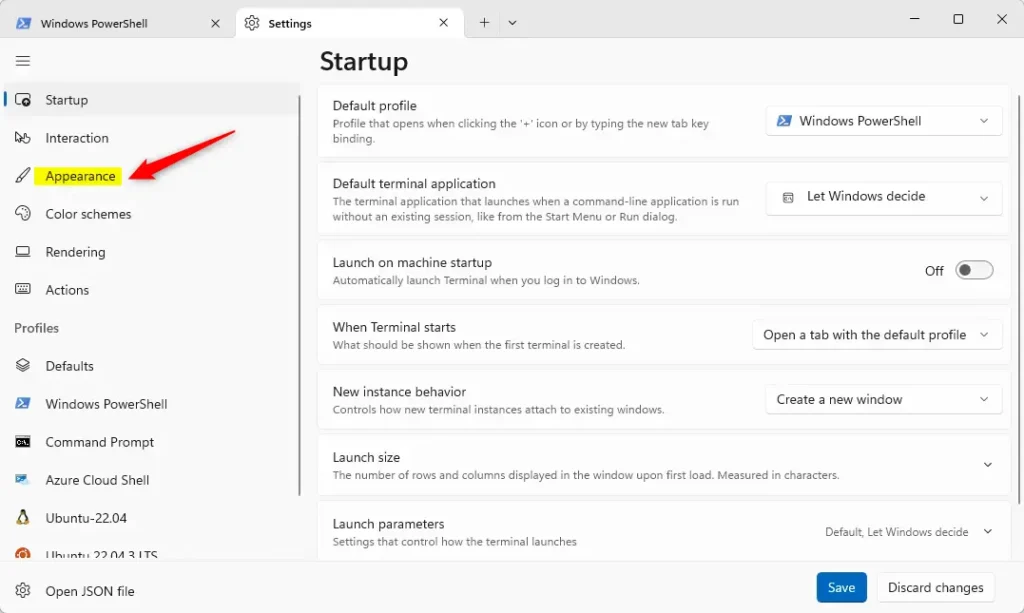
- On the left side of the screen, click the Appearance tab. The right side now shows the app-wide display options, including the theme setting. If your build is older and the page looks different, update Terminal from the Microsoft Store.
- On the right side, find the Application Theme box. Use the menu to pick Dark, Light, or Use Windows theme. In some newer builds this box is labeled Theme. The window frame and tab bar change as soon as you pick an option. Use Windows theme follows your Windows light or dark mode, so Terminal switches when Windows does.
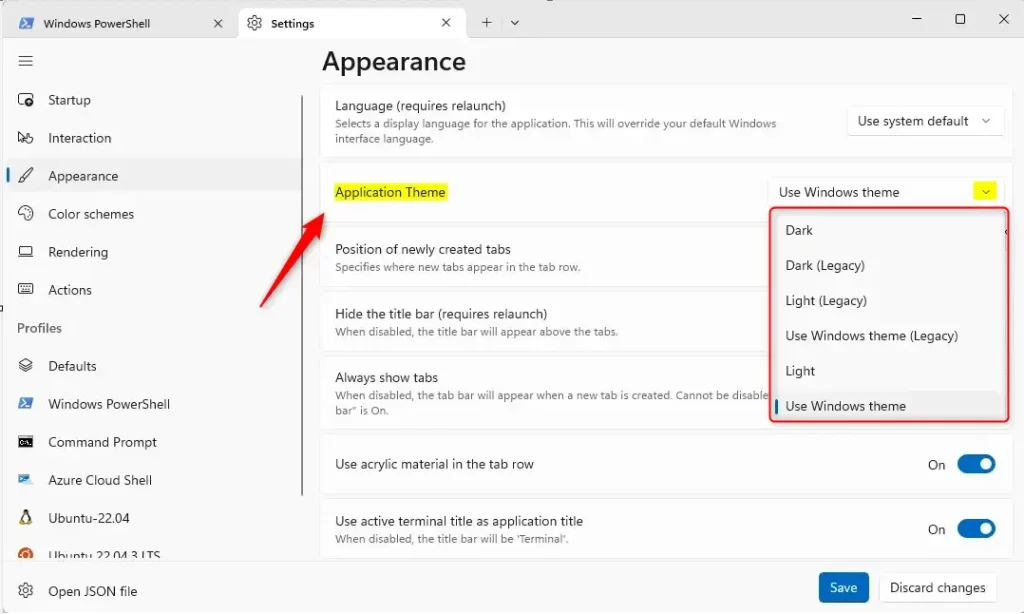
- Click the Save button at the bottom to finish. The change applies straight away and you don’t need to restart Terminal. To undo it, return to the same box, pick your previous option and click Save again.
You do not need administrator privileges to make these changes. Other user accounts on the same PC keep their own theme.
Summary
- Terminal themes allow you to switch between Light and Dark modes. Choose the one that suits the room you work in.
- Using a dark theme can help reduce eye strain in low-light rooms.
- Custom themes make it easier to manage multiple open tabs or windows, because you can tell them apart at a glance.
- The “Use Windows theme” setting keeps your app consistent with your system settings. It is a good choice if you switch Windows between light and dark mode during the day.
Have a question about this guide?
Answered by AI from this guide. Good questions may be added to this page — please don't include personal details.
Did this guide fix your problem?

About the Author
Richard
Tech Writer, IT Professional
Richard is a writer at Geek Rewind who turns complex IT tasks into clear, step-by-step guides. He draws on years of hands-on experience in system administration and enterprise IT operations, focusing on Windows, Linux and WordPress: the problems people actually run into, and the fixes that work. His server and WordPress guides come from systems he runs himself. Richard builds and maintains the platform behind Geek Rewind, from its Ubuntu servers and Nginx configuration to its custom WordPress plugins. Many new tutorials start with readers' questions, and he's always glad to answer them in the comments.
No comments yet — be the first to share your thoughts!