Enable or Disable Text Prediction in Microsoft Edge

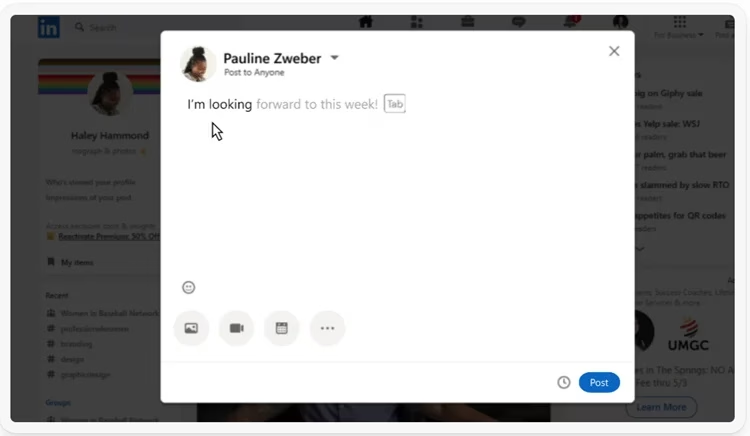
Text prediction in Microsoft Edge shows light gray words ahead of your cursor as you type, offering to finish the sentence for you. To accept a suggestion, press the Tab key or the Right Arrow key. To ignore it, keep typing and the suggestion goes away.
The feature works in website forms and text boxes in Windows 10 and Windows 11. You can turn it on or off at any time in the Microsoft Edge settings. Administrators can also control it with a registry policy, which is covered further down.
Text prediction in Microsoft Edge is turned on or off from Settings: select Languages, then Writing assistance, and toggle “Use text prediction” to On or Off. The change saves immediately. Administrators can instead set the TextPredictionEnabled DWORD under 🗝️HKEY_LOCAL_MACHINE\
Turn on or off Text Prediction in Edge
The Edge settings page is the quickest way to turn text prediction on or off on a personal PC. You do not need an extension or any third-party add-on. The option sits under the writing tools in the language settings, and the change applies to your Edge profile.
If you only want to change this for yourself, use this method. The registry method later in this guide is for locking the setting across several computers.
Its preferences are managed in the Writing assistance section, so that is where you will look in the steps below.
Here is how to do it. First, open the Edge settings:
- Open the Microsoft Edge browser. An Edge window should appear.
- Click the three horizontal dots in the top right corner. The Edge menu opens.
- Select Settings. The settings page opens in a new tab.

Next, go to the writing options:
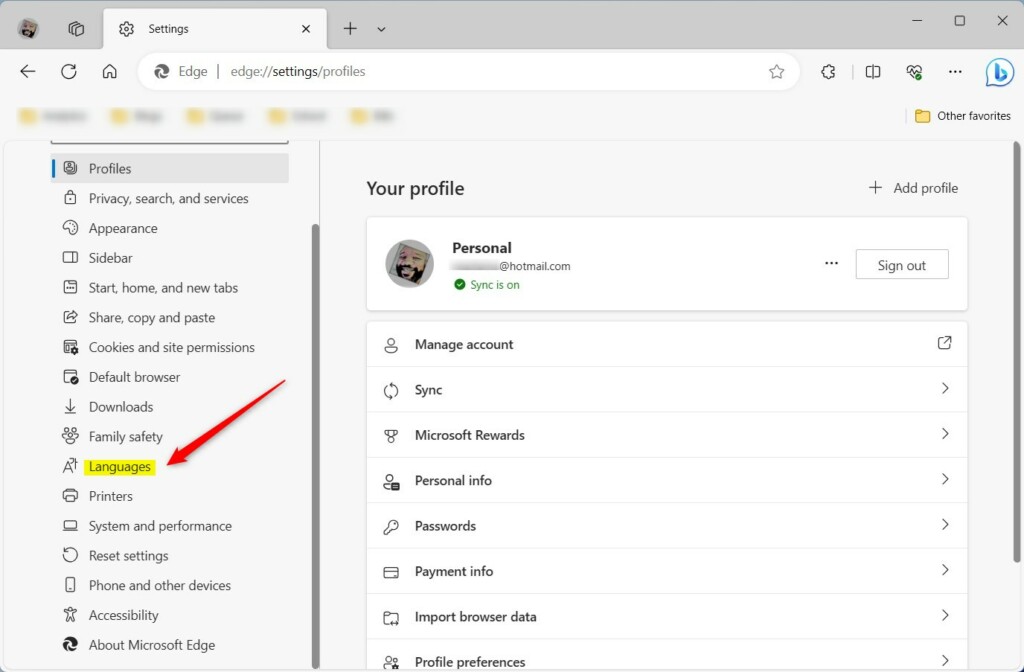
- Select Languages on the left side of the screen. The language settings appear on the right.
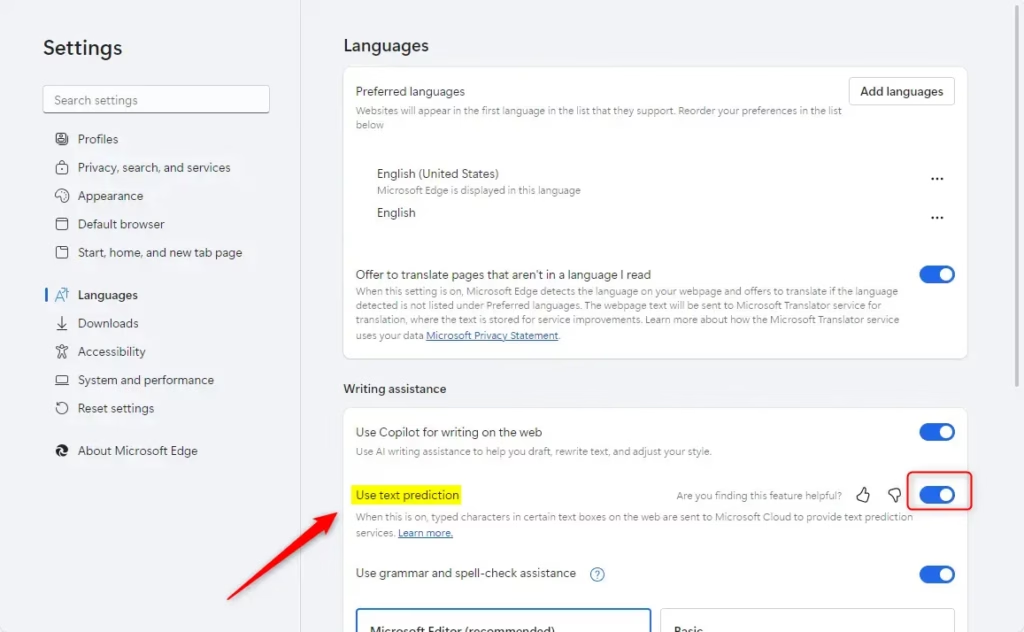
- Click on Writing assistance. The writing tools list opens, including the text prediction option.
If the left pane is hidden, your Edge window may be too narrow. Widen it, or click the menu icon at the top of the settings page to show the list again.
- Find the "Use text prediction" option.
- Toggle the switch to On to enable it, or Off to disable it. The change saves right away, so there is no Save button.
If you cannot find the option, update Edge first, since older versions may not have it. If the switch is greyed out or the page says your browser is managed by your organization, an administrator policy is controlling it. In that case your change will not stick unless the policy is removed.
Close the settings tab when you are finished. To test the change, click into any text box on a website and start typing. With prediction on, gray suggestions should appear after a few words. With it off, they should not. To undo the change, return to the same switch and set it back.
Enable / Disable text prediction in Edge (Registry Editor)
Registry Editor lets administrators set the text prediction policy for Edge on a work computer. Because it is a policy, it locks the setting so regular users cannot change it from the Edge settings page. You need an administrator account to make these changes.
This method works on both Home and Pro editions of Windows, since it edits the registry directly.
First, open the Windows Registry and navigate to:
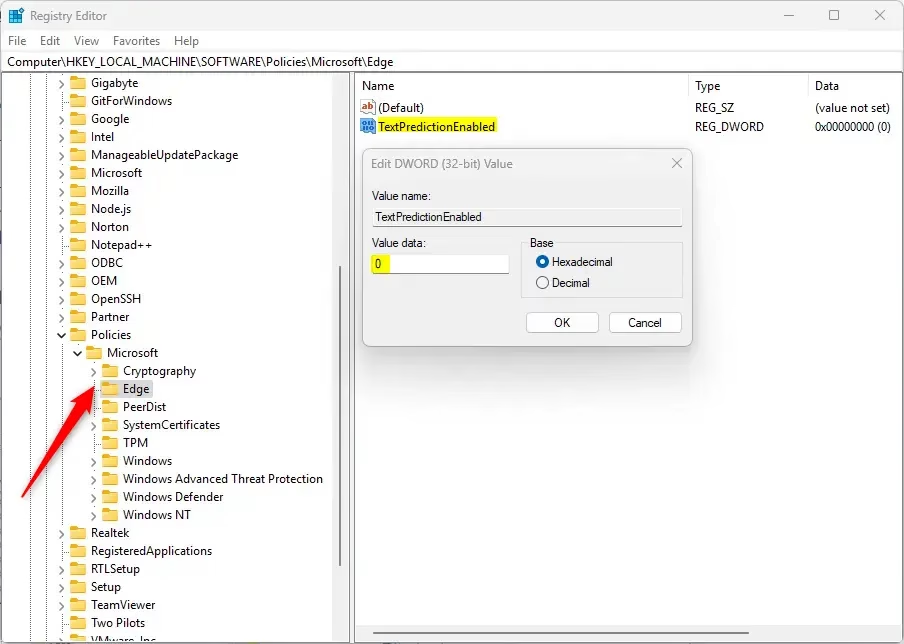
Computer\HKEY_LOCAL_MACHINE\SOFTWARE\Policies\Microsoft\Edge
Create a System Restore point beforehand as an added safety precaution. If the Edge key does not exist under Microsoft, right-click Microsoft, select New Key, and name it Edge. Then select that new key.
- Right-click in the empty space in the right pane, select New, then select DWORD (32-bit) Value. A new value appears with its name highlighted.
- Name it TextPredictionEnabled.
- Double-click the name and set the value to 1 to enable it.
- Set the value to 0 to disable it.
- Click OK to save the value.
Use only one value, either 1 or 0, depending on what you want. Close and reopen Edge afterward so it reads the policy. The setting on the Edge settings page should now show as managed.
To undo the policy, delete the “TextPredictionEnabled” entry. This restores the default browser behavior and lets users change the setting themselves again. To delete it, right-click the entry in the right pane, select Delete, and confirm.
Restarting the system may prove necessary for these modifications to apply. If Edge still behaves the old way after you close and reopen it, restart the computer.
You can now use text prediction or enforce it via group policy depending on your setup. For a single PC, the Edge settings page is enough. For several office machines, the policy method keeps everyone on the same setting.
Reference:
Conclusion
There are two main ways to control text prediction in Edge. Use the standard browser settings on your personal computer, or apply the registry policy if you manage several office devices. Both change how writing assistance behaves inside the browser.
- Writing Flow: Text prediction helps you finish sentences quickly. Press Tab or Right Arrow to accept a suggestion.
- Settings Menu: You can toggle this feature under Settings Languages Writing assistance If the switch is greyed out, a policy is managing it.
- Registry Editor: This is for enterprise policy enforcement. Always back up your registry before making changes. Delete the TextPredictionEnabled value to undo it.
- Restart: You may need to reboot your computer for changes to take effect.
Have a question about this guide?
Answered by AI from this guide. Good questions may be added to this page — please don't include personal details.
Did this guide fix your problem?

About the Author
Richard
Tech Writer, IT Professional
Richard is a writer at Geek Rewind who turns complex IT tasks into clear, step-by-step guides. He draws on years of hands-on experience in system administration and enterprise IT operations, focusing on Windows, Linux and WordPress: the problems people actually run into, and the fixes that work. His server and WordPress guides come from systems he runs himself. Richard builds and maintains the platform behind Geek Rewind, from its Ubuntu servers and Nginx configuration to its custom WordPress plugins. Many new tutorials start with readers' questions, and he's always glad to answer them in the comments.
No comments yet — be the first to share your thoughts!