How to Enable Location Override in Windows 11


You enable location override in Windows 11 to manually set your PC’s apparent geographical position, bypassing the automatic detection methods like Wi-Fi or GPS.
This manual setting is crucial when you need applications to recognize your actual physical location, especially when using virtual machines or remote desktop sessions. It ensures that software operating in these environments accurately reflects where you are, not where the server is located.
For example, if your virtual machine runs on a server in New York but you’re physically in London, enabling location override makes that VM believe your location is London. This feature directly improves the accuracy of location-dependent apps, like weather forecasts, navigation tools, and region-specific content, especially useful for remote work or software testing scenarios.
Open Settings, then Privacy & security, and click Location. Find “Allow location override” and toggle the switch to On. This lets you manually set your PC’s location for apps.
How to Enable or Disable via Settings
You can turn location override on or off in Windows 11 using the Settings app. Just go to Privacy & security, then Location, and find the ‘Allow location override’ setting to switch it.
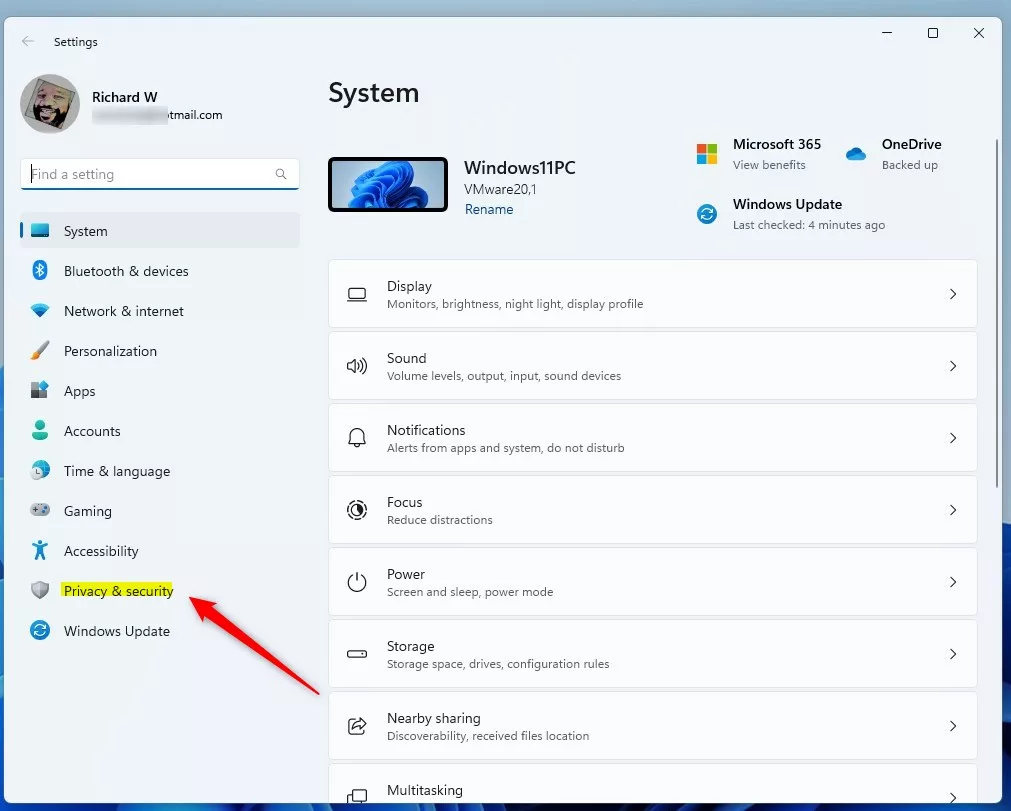
2. Select Privacy & security on the left sidebar.
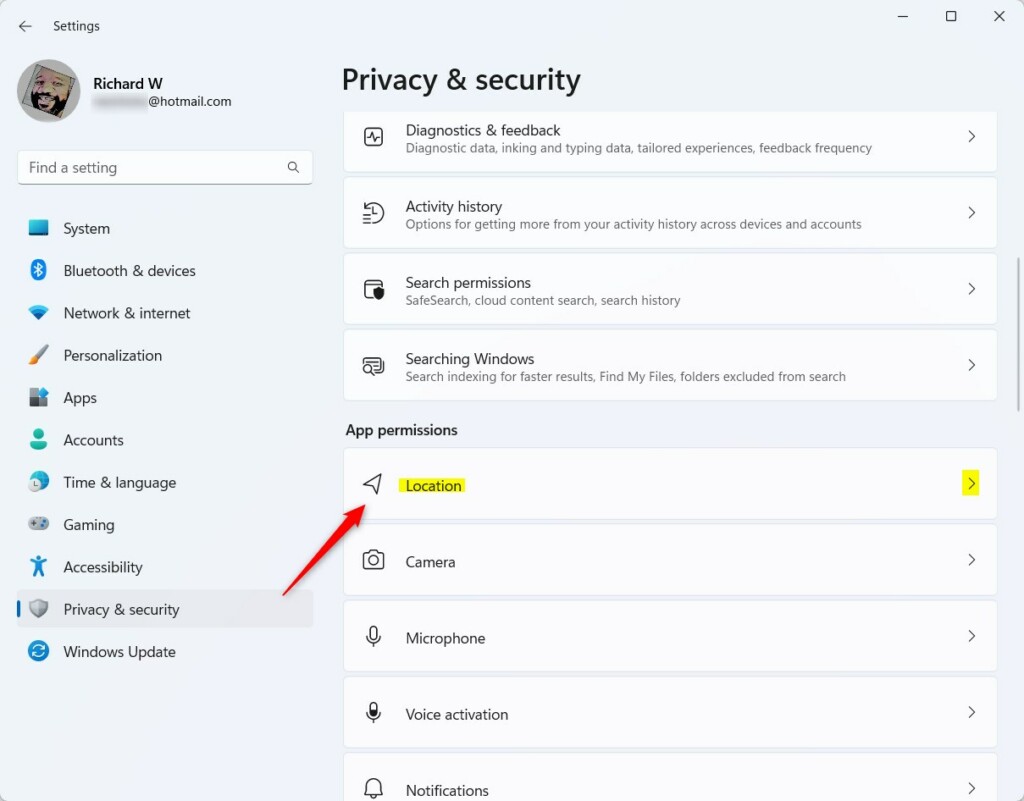
3. Click the Location tile on the right to see more options.
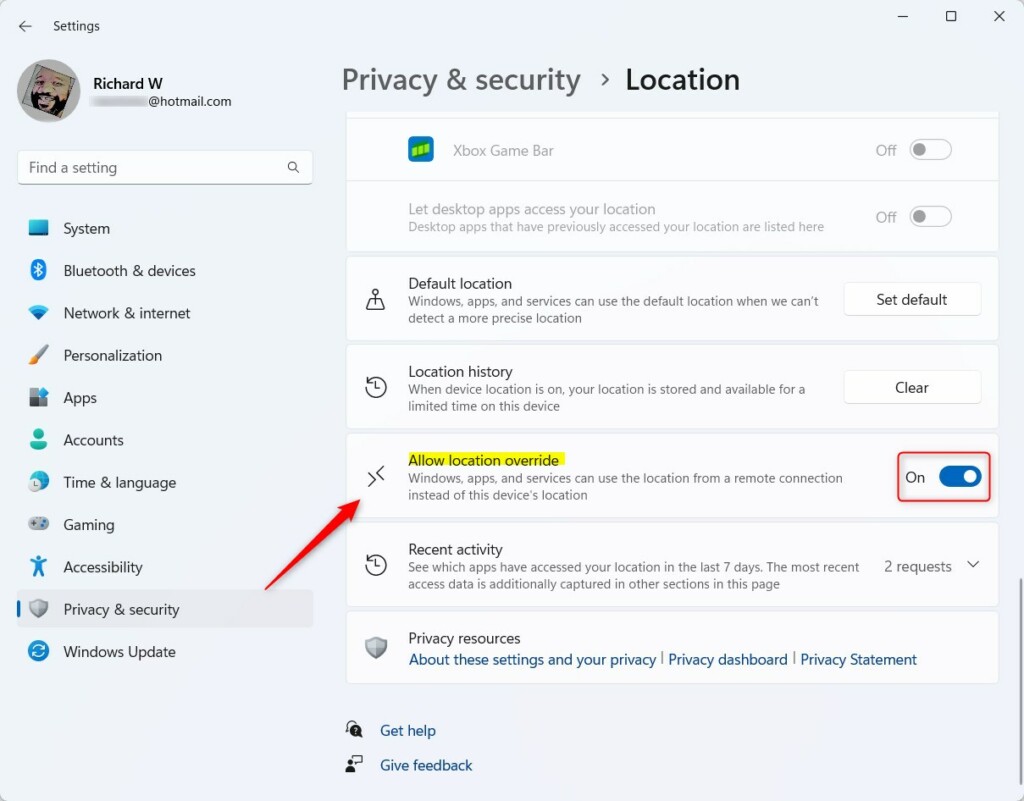
4. Find the Allow location override section. Toggle the switch to On to enable it, or Off to disable it.
5. Close the Settings app when finished.
Advanced Configuration: Registry Editor
For advanced users, you can change the location override setting in Windows 11 with the Registry Editor. This method requires administrator rights, and it’s important to back up your registry first, as mistakes can cause system issues.
Before we dive in, a heads-up: this step needs administrator privileges. Modifying the registry incorrectly can cause system instability. Always back up your registry before making changes.
- Navigate to this location in the Registry Editor:
HKEY_CURRENT_USER\Software\Microsoft\Windows\CurrentVersion\CPSS\Store\UserLocationOverridePrivacySetting - If you do not see the UserLocationOverridePrivacySetting folder, right-click the Store folder, select New > Key, and name it
UserLocationOverridePrivacySetting.
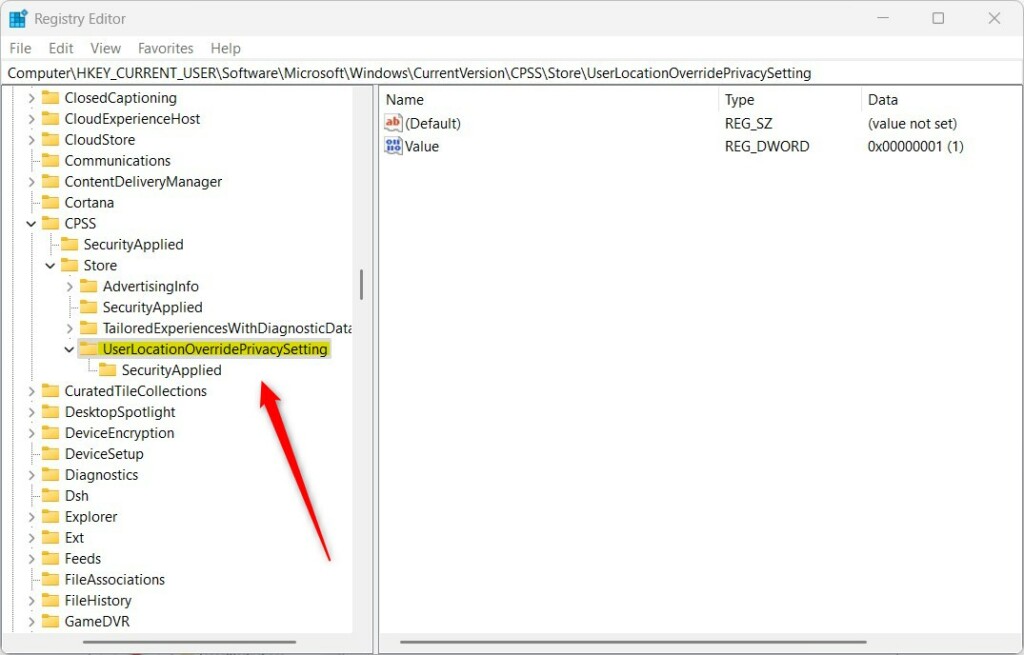
4. Right-click in the empty space on the right side, select New > String Value, and name it Value.
5. Double-click Value and change the data to 1 to enable or 0 to disable.
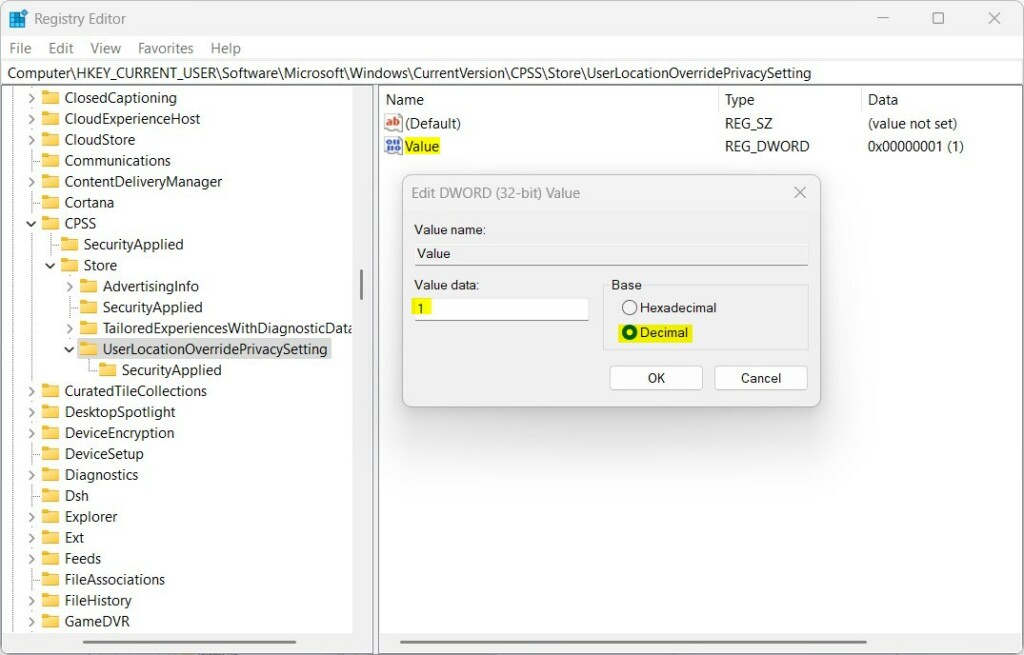
6. Restart your computer to apply the changes.
Managing Location via Group Policy (GPO)
If you’re in a work or school setting, your IT administrator can control the location override feature in Windows 11 using the Group Policy Editor.
Troubleshooting: Why is the button greyed out?
If the location override button in Windows 11 is greyed out, it usually means your computer’s settings are controlled by your workplace or school through a policy.
Summary
The “Allow location override” feature in Windows 11 helps apps get your location, especially useful for remote work, and you can manage it through Settings or the Registry.
Is location override a security risk?
Turning on location override in Windows 11 is generally safe, but it does let apps see your location, so it’s smart to check which apps have permission.
Does enabling location override affect Find My Device?
No, enabling location override does not interfere with the Find My Device feature. Find My Device operates independently through your Microsoft account to track your hardware’s last known location. Location override is specifically designed to assist apps in determining your current position for functional purposes during remote sessions.
Was this guide helpful?

About the Author
Richard
Tech Writer, IT Professional
Richard, a writer for Geek Rewind, is a tech enthusiast who loves breaking down complex IT topics into simple, easy-to-understand ideas. With years of hands-on experience in system administration and enterprise IT operations, he’s developed a knack for offering practical tips and solutions. Richard aims to make technology more accessible and actionable. He's deeply committed to the Geek Rewind community, always ready to answer questions and engage in discussions.



No comments yet — be the first to share your thoughts!