Which Speech Recognition Engine Should You Use in Windows 11 Accessibility Speech Settings

Windows 11 has built-in tools that let you control your PC, type text and open apps with your voice. There are three you will run into: Voice access for full system navigation, Voice typing for dictating text, and the legacy Windows Speech Recognition for older workflows.
Which one you choose depends on whether you want deep system control or simple dictation. Voice access works best for modern Windows 11 tasks. The older tools remain for specific legacy workflows.
Voice Access is the modern speech recognition engine for Windows 11 and works best for full system control—navigating the desktop, opening apps, and controlling your computer hands-free. Voice Typing dictates text into active fields using Win plus H. Windows Speech Recognition is the legacy option, now deprecated. Use Voice Access for complete control or Voice Typing for text dictation only.
Understanding Speech Recognition Options in 🪟 Windows 11
The speech options in Windows 11 split into modern tools and legacy features. Knowing which is which makes it easier to choose between full system navigation and plain text dictation.
In your settings you will find options for typing, dictation and full system control. The question to ask is simple: do you want to put text into a box, or do you want to run the whole operating system hands-free?
- Voice access: the modern, full-control option. It is the one Microsoft is actively developing.
- Voice typing: dictation into any text field, started with a keyboard shortcut.
- Windows Speech Recognition: the classic tool from the Control Panel . Microsoft has deprecated it in favor of Voice access, so it may be missing on newer Windows 11 builds.
What Is Voice Access and How Does It Work?
Voice access is a built-in feature that lets you control your whole computer, open apps and browse the web with your voice. It becomes clear how it works once you use it to click buttons, move through menus and type text without touching the keyboard.
Unlike older dictation tools that only type what you say, Voice access understands commands. You can click a button by saying its name. You can overlay a numbered grid on the screen to click an exact spot, and you can move windows around. Voice access runs locally on your PC using modern speech-recognition technology, so it responds quickly and keeps your data private.
Voice access needs Windows 11 version 22H2 or later, and it is available in both Home and Pro. If you cannot find it in Settings, run Windows Update first. It also supports a limited set of languages, so check that yours is covered if the option behaves oddly.
Comparing Voice Access and Older Dictation Tools
The two tools overlap, but they do different jobs. Voice access handles full computer control. Voice typing is designed strictly for writing text. Picking the right one saves a lot of frustration, whether you are writing an email or navigating your desktop.
- Voice Access: Best for complete hands-free control of your computer. It allows you to navigate the desktop, manage files, and control apps completely by voice.
- Voice Typing: Best for quickly writing text. If you are inside a document, email, or search box, you can press the Windows logo key plus H to start typing with your voice instantly. It only works while a text field is active, and it generally needs an internet connection, unlike Voice access.
If you need to control the mouse and open menus, use Voice access. If you need to dictate a long letter or message, Voice typing is faster and works better.
How to Set Up Your Microphone for 🪟 Windows 11 Speech Tools
Both tools depend on a good microphone signal. Setting it up means plugging in your hardware and choosing the right input device in your sound settings. Doing this first prevents most recognition errors and makes sure your computer hears every word.
A headset microphone usually beats a laptop's built-in one, because it stays at a steady distance from your mouth and picks up less room noise.
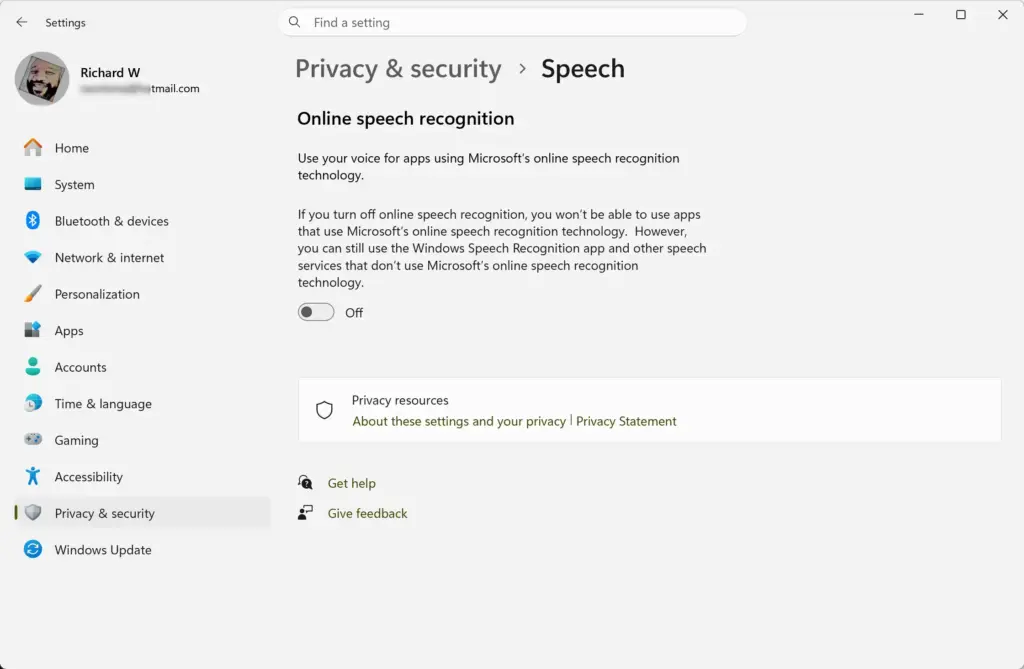
- Plug your microphone or headset into your computer. Wait a moment for Windows to detect it.
- Click the Start button and open the Settings app.
- Go to System and select Sound. The list of sound devices and options appears.
- Under the Input section, choose the microphone you want to use. If your headset is not listed, unplug it, plug it back in, and check that it is not disabled.
- Speak into your microphone and watch the volume meter. It should move as you talk. If it stays flat, you have the wrong device selected or the microphone is muted.
How to Turn On Voice Access in 🪟 Windows 11
Turning on Voice access takes a few clicks in the Settings app. You open Accessibility, go to Speech, and switch the feature on. Windows downloads the files it needs the first time.
- Click the Start button and open the Settings app.
- Select Accessibility from the menu on the left side.
- Scroll down and click on Speech.
- Find the switch for Voice access and turn it on. A control bar appears at the top of the screen once Voice access is running.
If this is your first time using it, Windows will prompt you to download speech files and guide you through a quick tutorial. Keep the PC online until the download finishes. To stop using Voice access, return to the same page and turn the switch off. No restart is needed either way.
Alternative Setup Methods via Control Panel
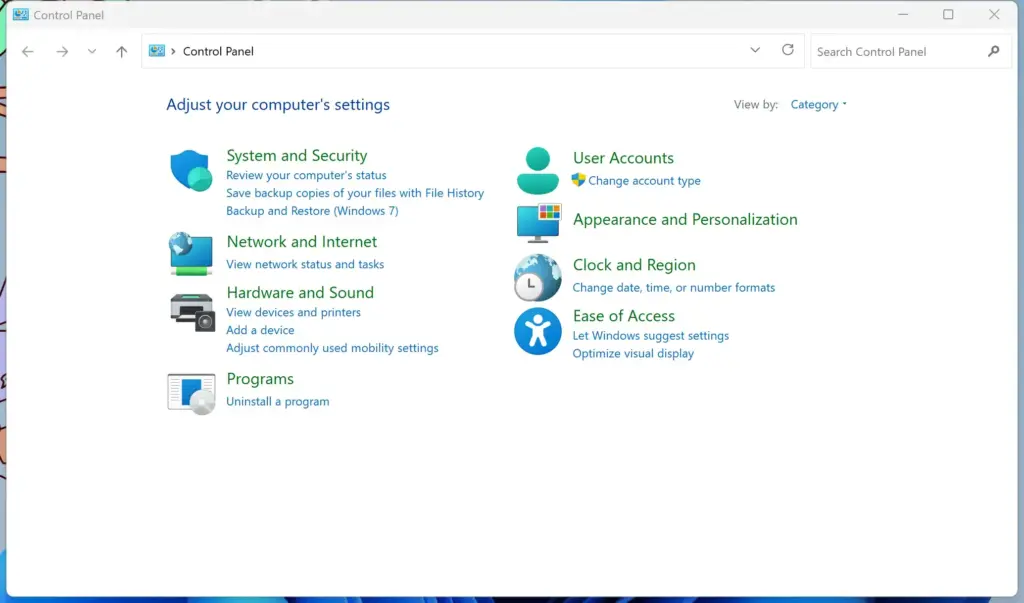
The Control Panel gives you access to the classic speech recognition tools that have been part of Windows for years. You open the classic Control Panel, go to Ease of Access, and launch the traditional setup wizard. This is the legacy engine, so use it only if you have a specific reason to. If the option is missing, your Windows 11 build has probably removed it, and Voice access is the replacement.
- Click the Start button, type Control Panel, and select it from the search results.
- Click on Ease of Access.
- Select Speech Recognition.
- Choose options like Start Speech Recognition or Train your computer to be better at understanding you to improve accuracy. The first launch runs a setup wizard that walks you through microphone setup.
Note: Administrative privileges are required to change system-wide accessibility features in the classic Control Panel.
Unique Angle: Training Your PC to Understand Your Unique Accent and Voice
Training your PC to understand your accent and voice can improve how accurately Windows recognizes what you say. In the classic tool, this means reading sample text aloud so the system learns your pitch and speaking speed.
Modern engines use advanced artificial intelligence to understand speech without long training sessions, but you can still improve results:
- Spend a few minutes reading sample text aloud when prompted during setup.
- Speak clearly at a normal, steady pace.
- If your computer keeps misunderstanding a specific word, check your microphone placement.
- Work in a quiet room, away from background noise like fans, television, or traffic.
Conclusion
Choosing the right speech recognition engine in Windows 11 depends on whether you need full system control or just quick text typing. Pick Voice access for hands-free navigation, and Voice typing (Windows logo key plus H) for fast document creation. Use the legacy Windows Speech Recognition only if an older workflow still depends on it.
Have a question about this guide?
Answered by AI from this guide. Good questions may be added to this page — please don't include personal details.
Did this guide fix your problem?

About the Author
Richard
Tech Writer, IT Professional
Richard is a writer at Geek Rewind who turns complex IT tasks into clear, step-by-step guides. He draws on years of hands-on experience in system administration and enterprise IT operations, focusing on Windows, Linux and WordPress: the problems people actually run into, and the fixes that work. His server and WordPress guides come from systems he runs himself. Richard builds and maintains the platform behind Geek Rewind, from its Ubuntu servers and Nginx configuration to its custom WordPress plugins. Many new tutorials start with readers' questions, and he's always glad to answer them in the comments.
No comments yet — be the first to share your thoughts!