Should You Disable Windows 11 Animations to Speed Up an Older PC

Disabling Windows 11 animations turns off the built-in fade, slide, and zoom effects that play when you open apps or move windows. Turning off these visual extras on an older PC makes everyday tasks feel much snappier and helps the system respond faster.
Windows 11 relies heavily on these modern graphics, but they place an extra workload on your processor and graphics chip. You can switch off all transparency and motion effects in the main system settings within a few clicks.
Yes, you should disable Windows 11 animations to speed up an older PC because turning off these extra visual effects frees up system memory and processor resources, helping your older computer respond much quicker and run your everyday programs more smoothly.
Understanding 🪟 Windows 11 Visual Effects and Animations
Windows 11 visual effects and animations are the sliding, fading, and transparency details that make menus and windows move across your screen. Microsoft added these graphic touches to give the operating system a modern look, but they require your computer to do extra work every time you open or close a window.
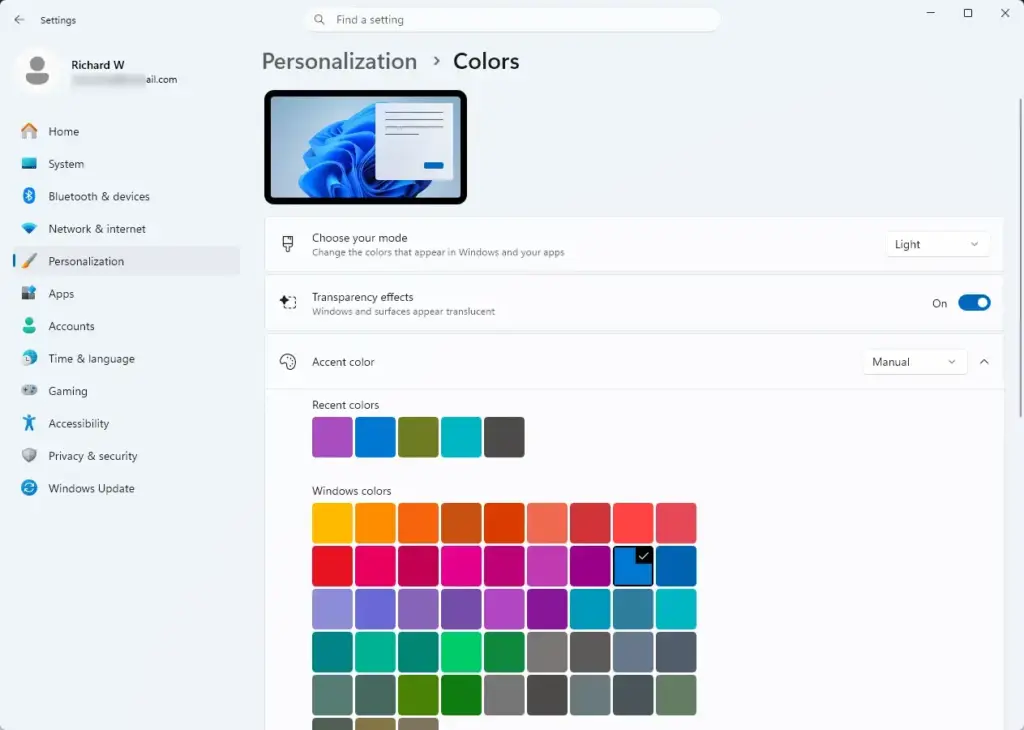
Apart from animations, Windows 11 also uses transparency effects on menus and taskbars. Transparency effects and window shadows make menus and taskbars look pleasant, but transparency effects and window shadows require computer resources. Your computer's processor and graphics chip must do extra work to draw transparency effects and window shadows every single time you move your mouse or click a button.
If you own a brand-new computer with high-end parts, your system handles Windows 11 animations easily without breaking a sweat. However, if your computer is an average machine or an older model, those extra graphic tasks take up valuable system power. Running Windows 11 animations leaves less processing power for the apps and web browsers you actually want to use.
How Visual Effects Impact System Performance
Visual effects impact system performance by using up valuable memory and graphics processor resources just to make menus fade and glide. On older computers, this constant graphic work slows down everyday tasks like opening folders and switching between programs because the hardware has less power left for your actual work.
When your computer uses up its memory and graphics power just to show you smooth window fades, the computer has less energy left to open your web browser or load your documents. Window animation effects cause stuttering, lagging, and frustrating delays on older systems. By turning off window animations, you free up system resources. Your computer can then direct all its energy toward running your actual programs, resulting in a much faster and snappier experience.
How to Turn Off Animations and Visual Effects in 🪟 Windows 11
You do not need to be a computer expert to turn off these resource-heavy animations. Windows gives you a few different ways to adjust these settings. Below are the easiest methods to streamline your system.
Method 1Using the Settings App for Basic Animation Control
Turning off animations in the Windows 11 Settings app takes just a few clicks and gives your computer an immediate speed boost. You can disable both animation effects and see-through menus through the accessibility menu, which stops your PC from wasting graphic power on fancy window movements.
- Click the Start button and open the Settings app (the gear icon).
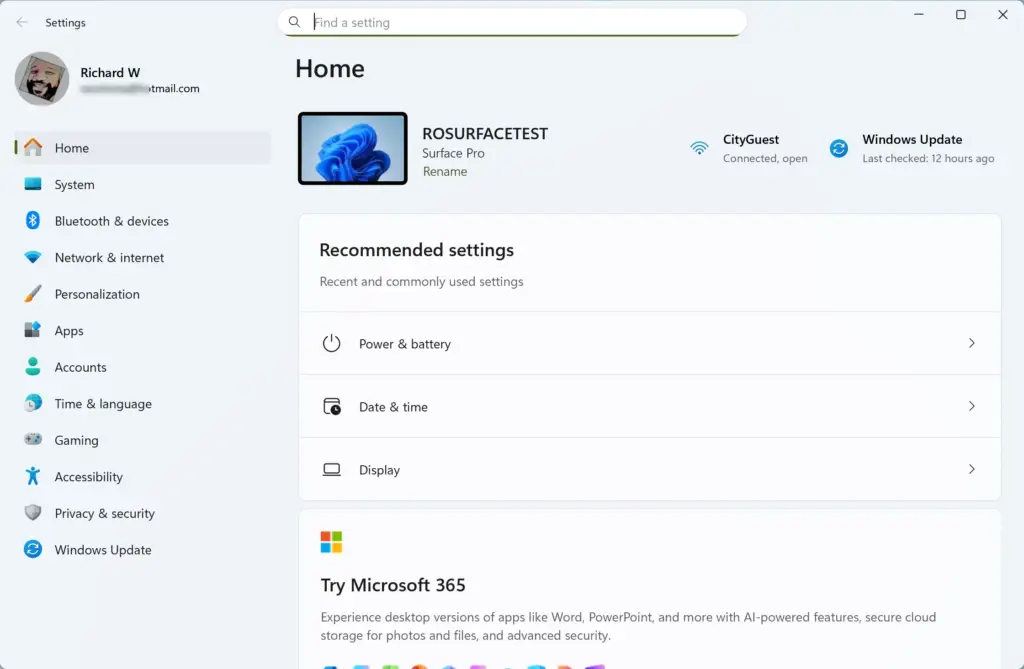
Settings - Click on Accessibility in the left-hand menu.
- Select Visual effects from the options on the right.
- Find the switch labeled Animation effects and turn it off.
- If you also want to remove see-through menus, turn off the switch labeled Transparency effects.
Method 2Using the Advanced System Settings for Maximum Performance
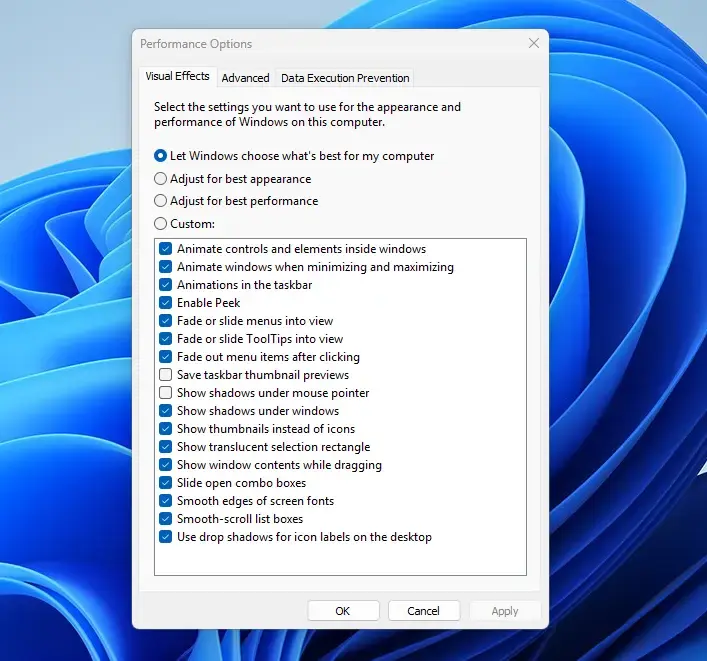
Using the advanced system settings panel lets you turn off all heavy visual details at once for the biggest speed boost on an older computer. This classic performance menu gives you total control to strip away unnecessary graphics and make your Windows 11 PC run much faster.
- Click the Start button, type View advanced system settings into the search bar, and click the matching result.
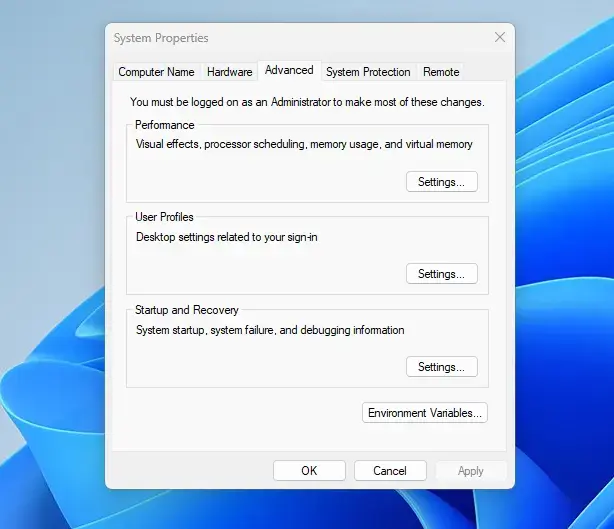
System Properties - In the window that opens, make sure you are on the Advanced tab.
- Under the Performance section, click the Settings button.
- You will see a list of visual options. Select the radio button that says Adjust for best performance. This will uncheck all the heavy visual effects automatically.
- If you want to keep your text looking smooth and easy to read, find the option called Smooth edges of screen fonts and check that box again.
- Click Apply and then click OK to save your changes.
What to Expect After Disabling Animations
Disabling animations in Windows 11 makes your computer feel noticeably faster and more responsive right away. Windows stops spending time on slow fade-ins and slide effects, so folders and apps appear instantly on your screen the moment you click them.
Disabling Windows 11 animations on older or budget computers brings a noticeable boost in everyday speed. File Explorer folders will pop open faster, minimizing windows will happen instantly, and switching between open programs will feel much more responsive. While turning off Windows 11 animations will not magically transform an old computer into a high-end gaming machine, the adjustment removes unnecessary visual drag and makes your daily computing tasks much smoother.
Summary
Turning off Windows 11 animations and visual effects is a simple and effective way to speed up an older or budget computer. Removing these resource-heavy graphic details helps your PC open files and run programs much faster without needing any new hardware.
Was this guide helpful?

About the Author
Richard
Tech Writer, IT Professional
Richard is a writer at Geek Rewind who turns complex IT tasks into clear, step-by-step guides. He draws on years of hands-on experience in system administration and enterprise IT operations, focusing on Windows, Linux and WordPress: the problems people actually run into, and the fixes that work. His server and WordPress guides come from systems he runs himself. Richard builds and maintains the platform behind Geek Rewind, from its Ubuntu servers and Nginx configuration to its custom WordPress plugins. Many new tutorials start with readers' questions, and he's always glad to answer them in the comments.

No comments yet — be the first to share your thoughts!