How to Use Access Keys in Windows 11 File Explorer


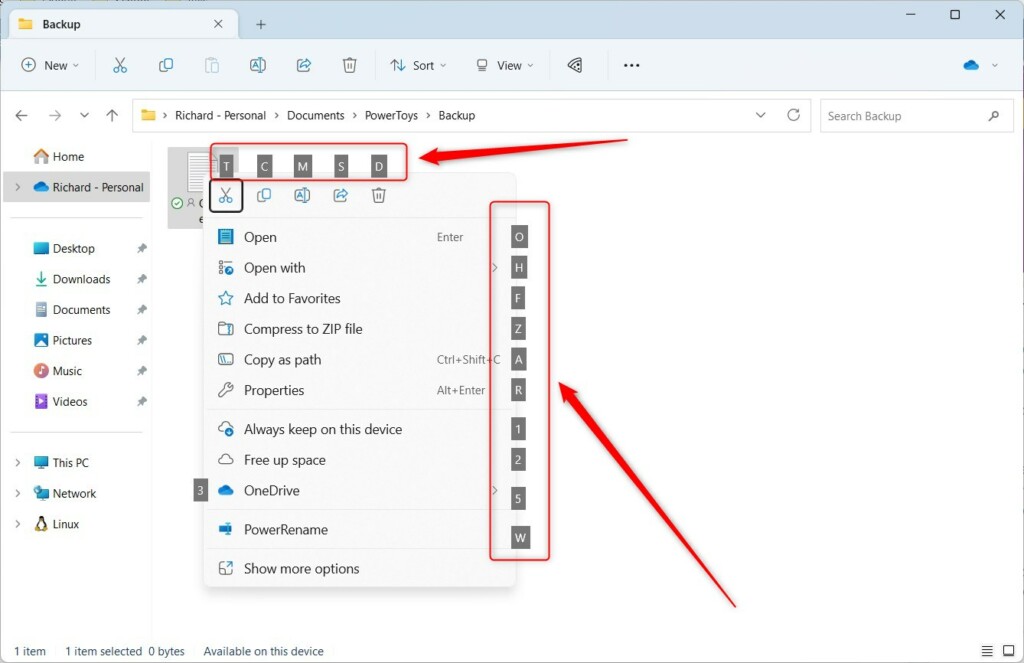
Access keys in Windows 11 File Explorer are keyboard shortcuts that let you control menus and buttons without a mouse. Pressing the Alt key reveals these shortcuts as small underlined letters on menu items and command buttons.
Pressing Alt+H jumps straight to the Home tab, while Alt+V opens the View options. These built-in shortcuts help you move through menus and manage files faster.
Press the Alt key to reveal underlined access keys in File Explorer menus. Type the underlined letter to activate the command. You can enable or disable visibility of these keys in Settings Accessibility Keyboard
Why use Access Keys?
Mousing around can feel slow sometimes. Access Keys let you use your keyboard to pick menu options instantly, saving you time and keeping your hands on the keys. They’re especially helpful if you prefer keyboard navigation or use assistive technology like Narrator.
What happens when done?
After you finish these steps, you’ll notice small letters appear next to menu items. Typing those letters will trigger the command without needing to click. You’ll navigate File Explorer faster and more efficiently.
How to Revert to the Legacy Context Menu
Access Keys Windows 11 users can revert to the legacy context menu by making a quick change in the Registry Editor. This brings back the old right-click menu style from Windows 10 so you can see underlined shortcut letters right away. Keep in mind that editing the registry can cause system issues if you make a mistake, so be careful.
[Requires administrator privileges] Modify the registry with care, as incorrect changes can cause system instability.
- Press Win+R, type regedit, and press Enter.
- Navigate to 🗝️HKEY_CURRENT_USER\
Software\ .Classes\ CLSID - Right-click CLSID, select New Key, and name it {86ca1aa0-34aa-4e8b-a509-50c905bae2a2}.
- Inside that key, create another key named InprocServer32.
- Double-click the (Default) value and leave it empty. Click OK.
- Restart Windows Explorer via Task Manager .
Accessibility and Narrator Integration
Access Keys work hand-in-hand with screen readers like Narrator, making Windows 11 easier to use for people with vision impairments.
Summary
Access Keys Windows 11 features let you jump through File Explorer menus using your keyboard instead of your mouse. You can turn on underlined letters in your settings to make these shortcut keys easier to see and use. These built-in shortcuts give you a fast way to open files and folders without clicking around.- Access Keys allow you to use your keyboard to navigate menus faster.
- Enable underlined keys in Accessibility settings for better visibility.
- Access Keys are distinct from standard Ctrl-based shortcuts.
- You can revert to the legacy context menu using a registry edit to restore classic access key behavior.
- Always use caution when editing the registry as it requires admin privileges.
Was this guide helpful?

About the Author
Richard
Tech Writer, IT Professional
Richard is a writer at Geek Rewind who turns complex IT tasks into clear, step-by-step guides. He draws on years of hands-on experience in system administration and enterprise IT operations, focusing on Windows, Linux and WordPress: the problems people actually run into, and the fixes that work. His server and WordPress guides come from systems he runs himself. Richard builds and maintains the platform behind Geek Rewind, from its Ubuntu servers and Nginx configuration to its custom WordPress plugins. Many new tutorials start with readers' questions, and he's always glad to answer them in the comments.




No comments yet — be the first to share your thoughts!