How to Reset Your Microsoft Account Password


Resetting a Microsoft account password lets you regain access to your Windows PC, Outlook, and OneDrive when you lose your login details. Your Microsoft account is the single login for all Microsoft services and for your main computer, so one reset covers all of them.
Microsoft confirms your identity by sending a verification code to your backup email address or phone number. You type this code into the recovery page and then set up a new password. The whole process usually takes a few minutes, and you don’t need to be signed in to do it. It works from any phone or computer with a browser, not just the PC you’re locked out of.
Go to the Microsoft account sign-in page, enter your email or username, select Forgot password, and choose how to receive a verification code via email or phone. Enter the code you receive, then create a new password and sign in immediately.
Step-by-Step: Resetting Your Password
You can reset your Microsoft account password by going to the main sign-in page and proving your identity. Microsoft sends a confirmation code to your backup phone number or email address. Once you type in that code, you pick a new password and can log back into your computer or online services right away.
Before you start, have these ready:
- The email address, phone number, or Skype name that is your Microsoft account login.
- Access to the backup email address or phone number linked to the account. If you can’t reach either one, skip to the online recovery form later in this guide.
- A device with internet access. Your locked PC will do if it is online, or you can use any other phone or computer.
- Go to the official Microsoft account sign-in page.
- Enter your email address or username and click Next.
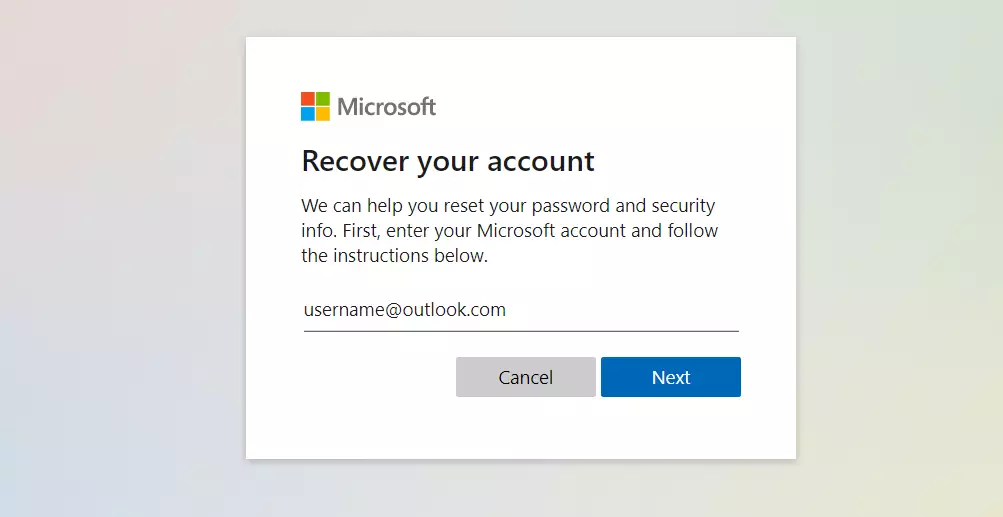
Start on the official Microsoft account sign-in page. Microsoft requires a quick identity check before it lets you change anything. It sends a verification code to a linked email address or phone number.
- Open the Microsoft account sign-in page in your browser.
- Enter your email address, phone number, or username, then select Next.
- On the password screen, select the Forgot password? link. This starts the recovery process. You should now see a screen asking where Microsoft should send your verification code.
If you are stuck at the Windows sign-in screen, you can often start from the password prompt instead. Look for an “I forgot my password” link there. It opens the same recovery process, but the PC must be connected to the internet first.
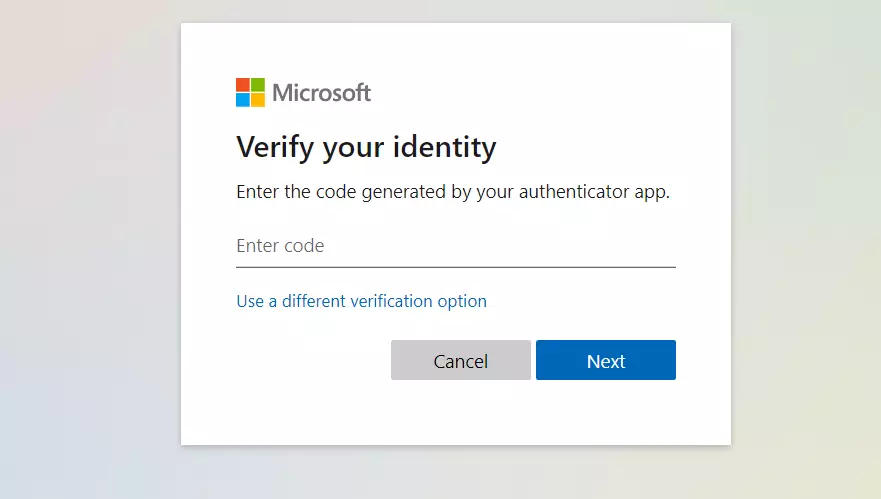
Codes normally arrive within a minute or two. If you don't get the code, check your spam or junk folder first. Then try again:
- Click "Use a different verification option."
- You should now see the other contact methods saved on your account.
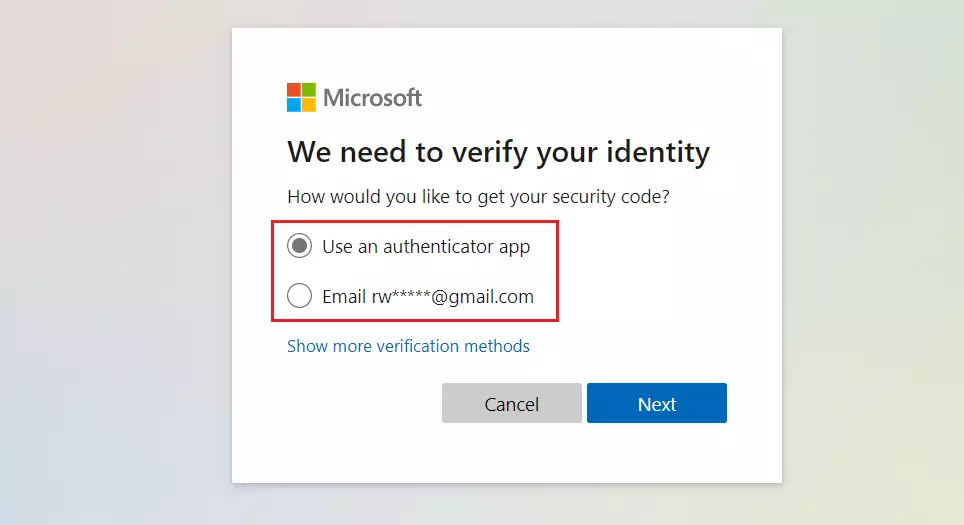
Pick the contact method that you can actually reach right now.
- Select how you'd like to be contacted.
- Click Next.
Microsoft shows only partly hidden versions of your saved addresses and numbers, such as the first letters of an email address or the last digits of a phone number. That is normal, and it stops strangers from seeing your full details.
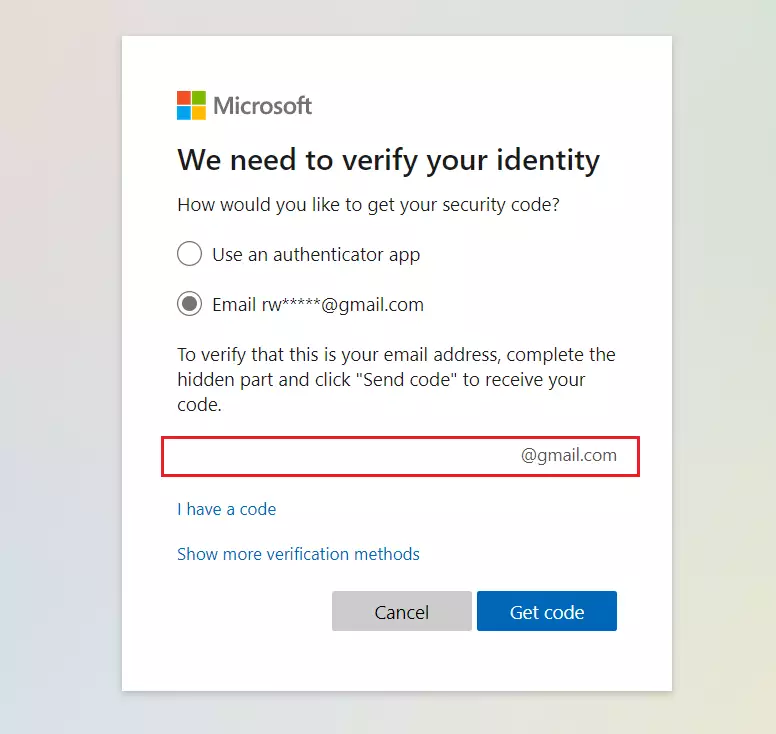
If you chose email, confirm the address and request the code.
- Enter your full email address in the provided field.
- Click the "Get code" button. Microsoft sends a code to that email address.
- Open that mailbox, find the message from Microsoft, and copy the code.
- Enter the received code to continue the password reset process.
Request a new code if the first one has expired. Only the most recent code will work.
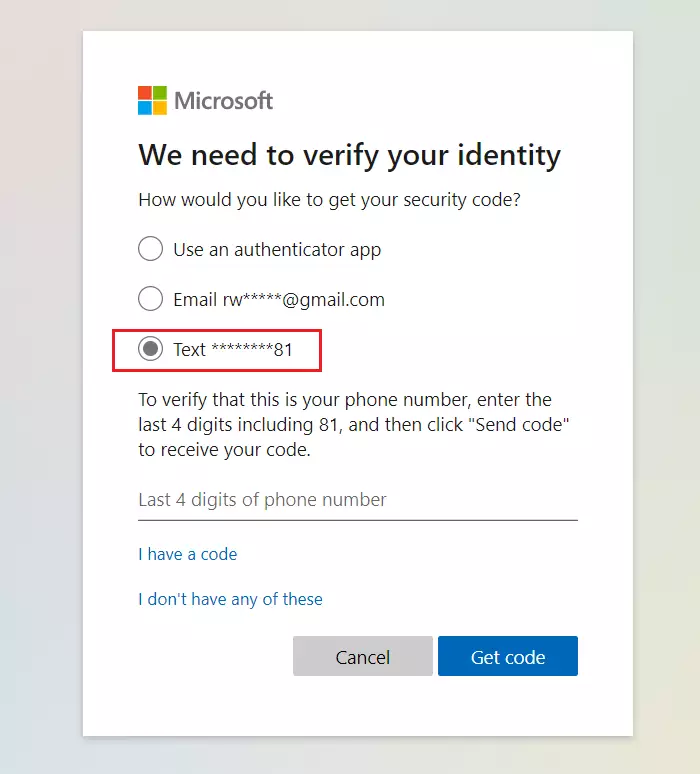
If you chose your phone number, Microsoft asks you to prove the number is yours before it sends a text.
- Enter the last 4 digits of your phone number to get a text message.
- Type the code from the text message into the recovery page.
- When the page asks for a new password, enter one and confirm it by typing it again.
Once that's confirmed, you can set up a new, strong password. Microsoft passwords are case-sensitive and must be at least 8 characters long. A long passphrase of several unrelated words is easier to remember and harder to guess than a short, complex one. Pick something you have not used before, and don't reuse a password from another site.
When the reset finishes, sign in on your PC with the new password. If the PC is offline at that point, it may still accept the old password until it connects to the internet. Connect it to Wi-Fi or Ethernet, then sign in again with the new one. A Windows Hello PIN or fingerprint that you set up earlier normally keeps working, but you will need the new password if Windows asks for it.
Account Recovery and Troubleshooting
You can recover your Microsoft account using the online recovery form if standard password reset methods fail. Use it when you no longer have access to your backup email or phone number. The form asks you to answer personal questions about past emails, Skype contacts, and old passwords to prove you own the account. Keep in mind that this form will not work if you turned on two-step verification.
Tips for filling it in:
- Use a device and location you have signed in from before, such as your home PC on your home network.
- Give a contact email address that you can check right now. Microsoft sends its decision there.
- Answer as accurately as you can. Guessing and getting answers wrong can lead to a rejection, and you will have to start again.
Microsoft reviews the form and usually replies within about 24 hours. If it approves your request, the email contains a link to set a new password.
Go to the Account Recovery Page to get started.
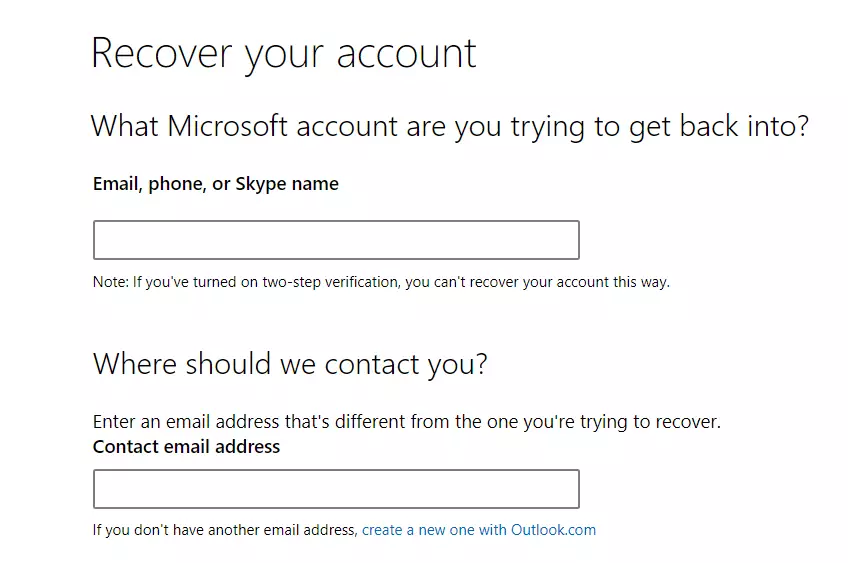
Accounts with two-step verification enabled (an extra security layer requiring a code sent to your phone or email) require registered recovery devices instead. If that is your situation, try signing in or verifying from a device or app you registered earlier, such as the phone that has your authenticator app.
Security Best Practices
Securing your Microsoft account helps stop hackers from stealing your personal files and login details. You should add extra layers of protection once you are back in:
- Set up the Microsoft Authenticator app on your phone, so a stolen password alone is not enough to sign in.
- Keep your recovery email and phone number up to date. They are what make a quick reset possible next time.
- Ignore suspicious phishing emails that ask for your password. Microsoft will not ask for your password by email.
It is also worth reviewing your account's recent sign-in activity after a reset, to check that nobody else has been using it.
Summary
- Resetting your password is the fastest way to regain access to your files.
- Always verify your identity using your linked email or phone number.
- If a standard reset fails, use the account recovery form to prove ownership.
- Keep your contact information updated to avoid future lockouts.
Was this guide helpful?
100% of readers found this helpful (1 votes)

About the Author
Richard
Tech Writer, IT Professional
Richard is a writer at Geek Rewind who turns complex IT tasks into clear, step-by-step guides. He draws on years of hands-on experience in system administration and enterprise IT operations, focusing on Windows, Linux and WordPress: the problems people actually run into, and the fixes that work. His server and WordPress guides come from systems he runs himself. Richard builds and maintains the platform behind Geek Rewind, from its Ubuntu servers and Nginx configuration to its custom WordPress plugins. Many new tutorials start with readers' questions, and he's always glad to answer them in the comments.



No comments yet — be the first to share your thoughts!