How to Remove a Kiosk from Windows 11

Assigned Access locks a Windows 11 PC down to a single app for public displays, restricting the machine so people can only use that one program. Standard Windows 11 Pro and Enterprise editions use this feature to secure public terminals.
Removing a kiosk returns the computer to normal desktop use by deleting the dedicated user account tied to the restriction. You need administrator rights on the PC to complete these steps and restore full access to the desktop.
Disable the assigned access feature via Settings Accounts Family & other users Set up a kiosk, then click Remove kiosk. Alternatively, use PowerShell commands Get-AssignedAccess and Remove-AssignedAccess.
Understanding Kiosk Modes
Windows 11 kiosk modes come in single-app and multi-app setups to restrict user accounts to specific programs. Single-app kiosks lock the screen to one application, while multi-app kiosks let people use a small group of approved apps. Both types use Assigned Access (a Windows feature that restricts a user account to running only specified apps) to control what people can do.
Warning: Data Loss
How to Remove a Kiosk via Settings
Remove a kiosk in Windows 11 through the Settings app by using an administrator account. Open Settings , go to accounts, and find the kiosk setup area to turn off the restriction. You need to sign in with an administrator account to make this change work.
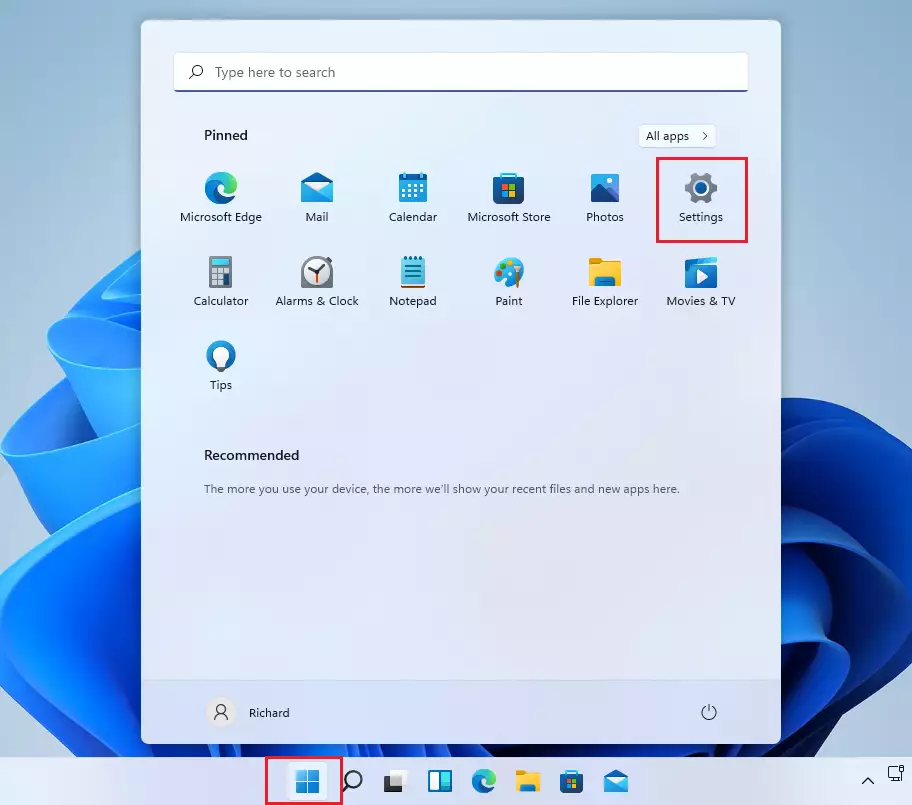
1. Press the Win+I to open Settings , or click Start and select the gear icon.
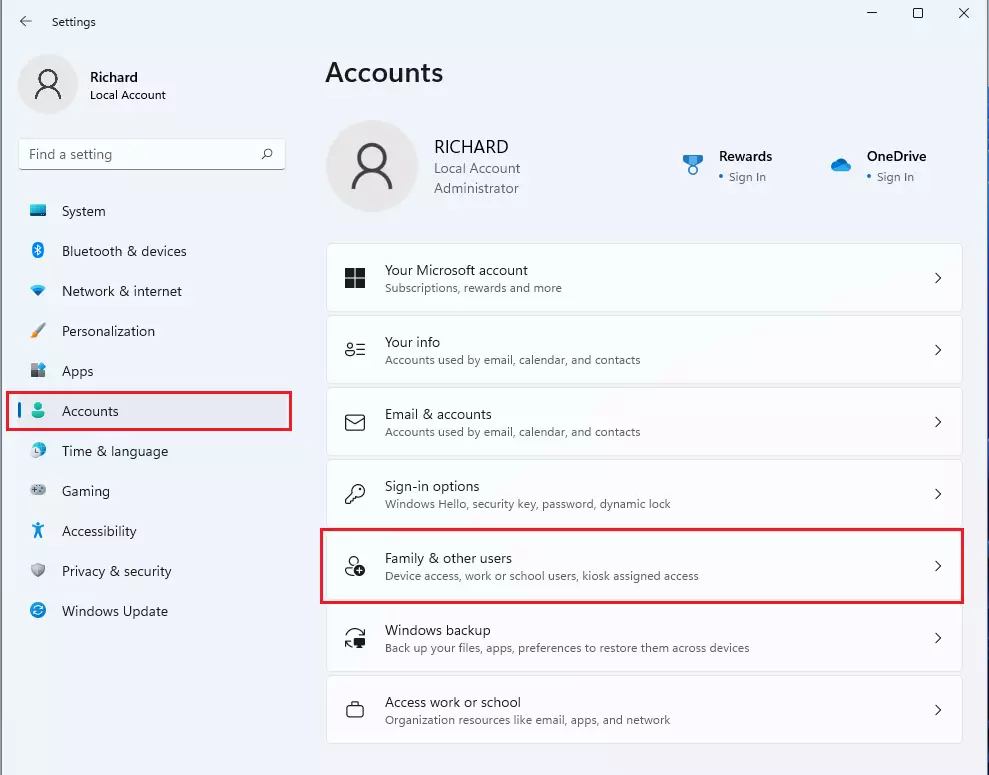
2. In the Settings window, click on Accounts. Then, select Family & other users.
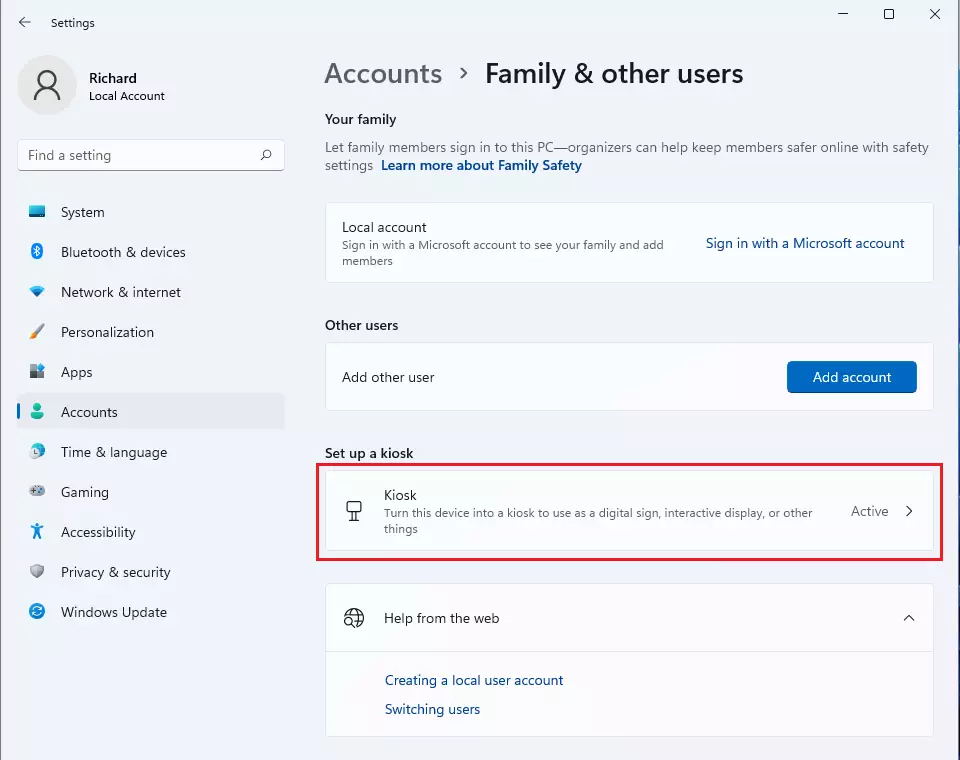
3. Find the section labeled 'Set up a kiosk' and click the 'Active' tile for more options.
The app currently set to run in kiosk mode appears on screen. Click its name to expand the menu and find options for changing kiosk status.
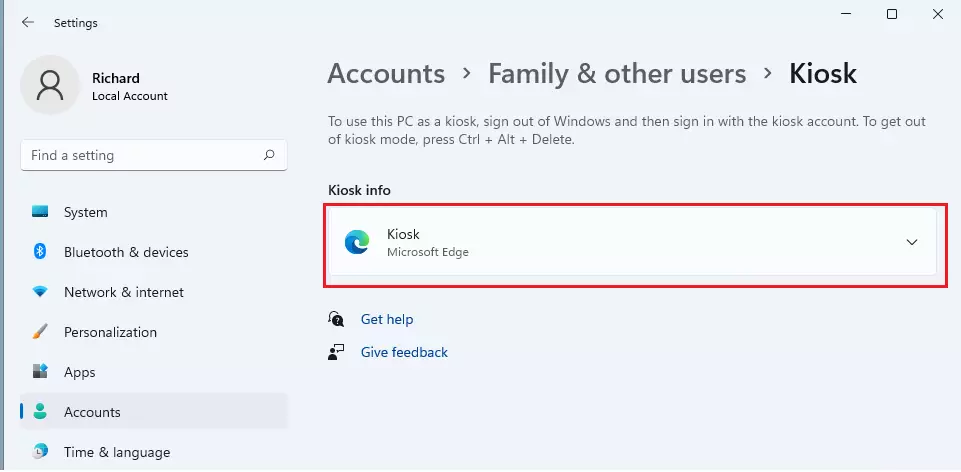
5. Click the Remove kiosk button.

6. A confirmation window appears. Click Remove to complete the deletion process.

Removing Kiosk via PowerShell
Windows 11 lets you remove a kiosk using PowerShell with administrator rights if the normal settings menu does not work. You run specific commands in the terminal to find the active kiosk setup and delete it from your computer entirely.
- Right-click the Start button and select Terminal (Admin) or PowerShell (Admin).
- Type this command to list current kiosk configurations:
Get-AssignedAccess
- Run the following command to remove the configuration:
Remove-AssignedAccess
Troubleshooting Locked-out Scenarios
Locked-out users facing an unresponsive keyboard on a Windows 11 kiosk should try pressing Ctrl + Alt + Del. This action brings up the sign-in screen.
Summary
Remove kiosks from Windows 11 using either the Settings menu or PowerShell to lift restrictions and restore normal computer functionality.
Was this guide helpful?

About the Author
Richard
Tech Writer, IT Professional
Richard is a writer at Geek Rewind who turns complex IT tasks into clear, step-by-step guides. He draws on years of hands-on experience in system administration and enterprise IT operations, focusing on Windows, Linux and WordPress: the problems people actually run into, and the fixes that work. His server and WordPress guides come from systems he runs himself. Richard builds and maintains the platform behind Geek Rewind, from its Ubuntu servers and Nginx configuration to its custom WordPress plugins. Many new tutorials start with readers' questions, and he's always glad to answer them in the comments.



No comments yet — be the first to share your thoughts!