How to Install Moodle on Google Cloud Server

Installing Moodle (a free learning program that teachers and schools use to share assignments and grade student work) on Google Cloud gives you a private, dedicated online space to host your own classes, lessons, and quizzes. This setup runs on an Ubuntu 22.04 server hosted by Google Cloud Platform and takes about 45 minutes to finish.
You connect Moodle to a web server that displays your course pages and a database that saves all your student data and passwords safely in one spot.
Connect to your Google Cloud server via SSH. Then, install Moodle by following the linked guides for Apache or Nginx, completing the setup through your browser.
Connect to Google Cloud servers
Connecting to a Google Cloud server via SSH (Secure Shell, a way to log into another computer over a network) works directly from your web browser without needing extra software. You can use Chrome, Firefox, Edge, or Safari to open a command line window and manage your server right away by clicking the SSH button next to your virtual machine instance in the Google Cloud Console.
The browser connects via SSH with these web browsers:
- Web browsers
- The latest version of Google Chrome
- Firefox
- Microsoft Edge
- Microsoft Internet Explorer 11 and later
- Safari 8 and later. Note that Safari is not supported in private browser mode.
- Virtual machine configurations
- All Linux VM images are natively available in Google Cloud.
Extra software or browser extensions aren’t necessary. Log in to the Google Cloud Console and open Menu Compute Engine VM instances
Find the target instance in the list and click its SSH button.

Alternatively, open an SSH connection by clicking the instance name and then clicking SSH on the details page.
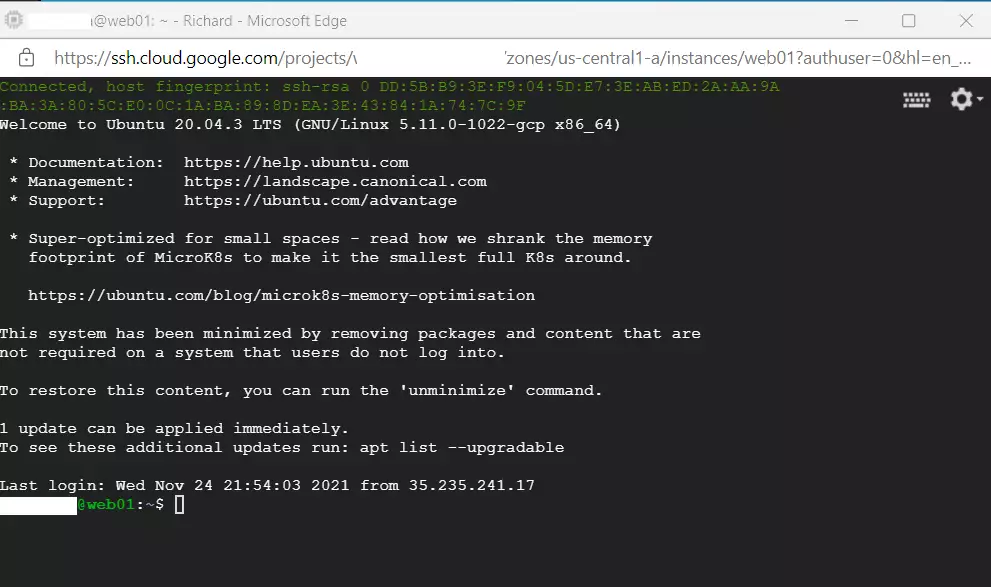
An SSH terminal window opens for the Ubuntu Linux instance created in the series's second post.
You can now run commands in your Ubuntu Linux environment.
Install Moodle on Google Cloud Servers
To install Moodle on Google Cloud, you first need to set up a web server, PHP, and a database on your virtual machine. Once you install these required software packages, you finish the setup by opening your server's web address in a browser and following the on-screen steps to configure your new learning management site.
Once all required packages are installed, Moodle can be set up directly from the browser by browsing the server hostname or IP address.
Moodle installation on Ubuntu Linux uses either Apache or Nginx as the web server. This Moodle installation post on Ubuntu Linux with Apache or Nginx teaches how to install and manage Moodle on the server.
How to install Moodle on Ubuntu Linux with Apache
How to install Moodle on Ubuntu Linux with Nginx
Each link guides readers through the steps covered in previous posts. Learning how to secure the Moodle website with free Let's Encrypt SSL certificates happens along the way.
Following the links above and performing all the steps allows the creation of an online store using Moodle.
Conclusion:
This post covered installing Moodle on Google Cloud servers running Ubuntu Linux. Review these key takeaways:
- Preparation is Key: Ensure you have a registered domain, Google Cloud server set up, and necessary software installed before proceeding.
- Seamless Installation: Connecting to your Google Cloud server using SSH is straightforward and requires no additional software.
- Follow Detailed Guides: Utilize our linked posts to install Moodle effectively, whether you're using Apache or Nginx.
- Enhance Your Learning Environment: With Moodle, you can create professional, dynamic online courses tailored to your audience.
- Secure Your Site: Don't forget to secure your Moodle installation with Let's Encrypt SSL certificates for safe browsing.
Following these steps places readers well on the way to creating and managing an effective online learning platform with Moodle.
Is MoodleCloud free?
MoodleCloud offers a free trial plan for 28 days to explore the features available. Upgrading to one of the paid plans happens directly from the MoodleCloud Portal.
How to connect Google Drive to Moodle?
Connecting Google Drive to Moodle involves a few steps within the Moodle course. First, log in to Moodle and enable Edit mode on the course page. Then, click 'Add an activity or resource' and select 'URL' from the options to create a link to Google Drive files.
Was this guide helpful?

About the Author
Richard
Tech Writer, IT Professional
Richard, a writer for Geek Rewind, is a tech enthusiast who loves breaking down complex IT topics into simple, easy-to-understand ideas. With years of hands-on experience in system administration and enterprise IT operations, he’s developed a knack for offering practical tips and solutions. Richard aims to make technology more accessible and actionable. He's deeply committed to the Geek Rewind community, always ready to answer questions and engage in discussions.


No comments yet — be the first to share your thoughts!