How to Create a Google Cloud Server with Ubuntu Linux


Google Cloud Compute Engine lets you run Ubuntu Linux on virtual computer hardware inside Google’s data center network. This setup gives you a reliable server to host websites, run applications, and build projects in a few minutes.
Ubuntu 22.04 LTS (Long Term Support, a stable release version that receives security updates for 5 years) provides the operating system for your server.
Navigate to Compute Engine VM instances in the Google Cloud console. Click CREATE INSTANCE, configure your server details like region and machine type, and select Ubuntu Linux for the boot disk. Finally, click Create to launch your new server.
How to sign up for Google Cloud
You can sign up for Google Cloud by visiting the Google Cloud Platform website and clicking the get started for free button to register your account. Google gives new users a free trial credit to cover server costs for the first 90 days while you set up your Google Cloud server Ubuntu environment.
Head to Google Cloud Platform (GCP) and register for an account if you don’t already have one.
Click the blue button: “Get started for free” in the page’s upper-right corner.

New Google Cloud users receive a $300 credit upon registration with a Gmail account. This $300 credit applies to server costs for the first 90 days. It serves as a helpful incentive to explore Google Cloud services.

Registration completion leaves the user with an active Google Cloud Platform account. No charges apply initially since no cloud services consume resources yet.
How to create a Google Cloud server
You can create a Google Cloud server by opening the navigation menu in your Google Cloud Platform console and choosing Compute Engine followed by VM instances. This process starts the virtual machine setup where you can choose Ubuntu Linux to host your website or application.
The domain created in the previous post forwards visitors to the Google server. This Google server hosts the online content.
To create a new Google Cloud Server, go to the menu on the top left and navigate to Compute Engine ==> VM instances, as shown in the image below.
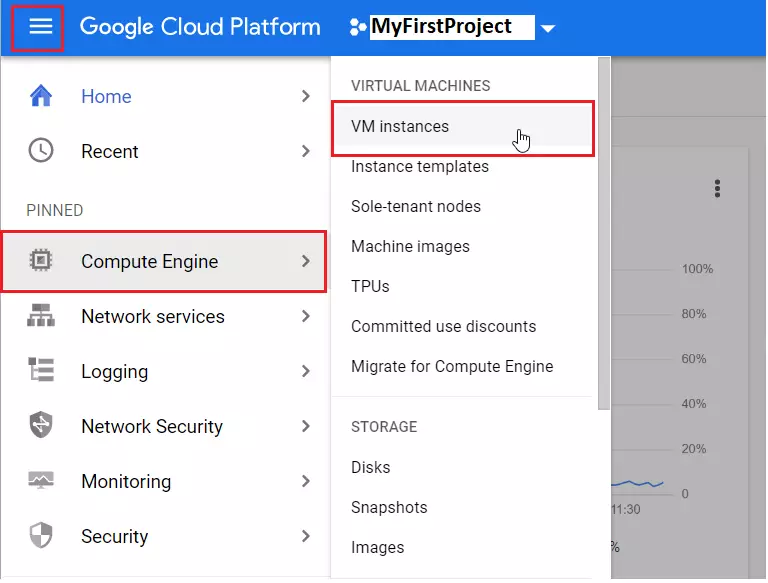
Missing projects prompt the system to request a new project creation before VM instance generation can proceed.
Clicking "CREATE INSTANCE" on the "VM instances" page starts setting up a new virtual machine. This configuration interface lets administrators pick an operating system, such as Ubuntu Linux version 22.04.
Completing this step provisions a brand-new virtual machine inside the Google Cloud infrastructure for hosting content.
Compute Engine takes a few minutes to prepare your VM instance. Once ready, the browser displays a page containing the setup details.
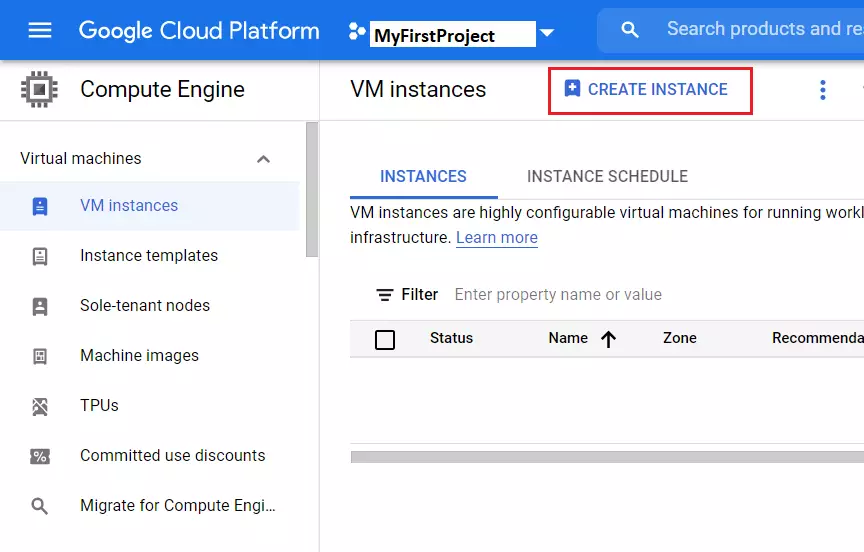
On the VM creation page, choose to Create a new VM from scratch.
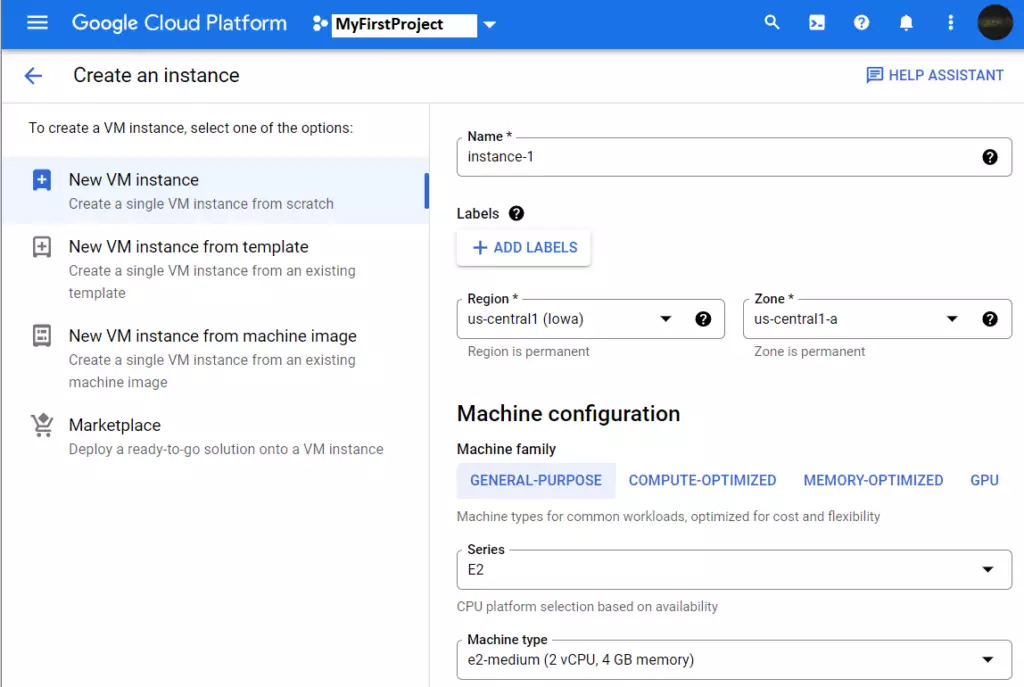
Selecting server details configures the Ubuntu Linux virtual machine. Providing specific parameters, such as the desired region and machine type, tailors the server performance to workload demands.
Server names must start with a lowercase letter. Incompatible names trigger an error prompt requiring adjustments to meet Google Cloud naming rules.
Region: Think of a region as a specific geographical location where resources run. Selecting the region closest to the primary audience minimizes network latency.
A zone is an isolated location within a region that determines where your physical data lives. Zones reside in close proximity to their parent regions.
Machine configuration: Google Cloud offers various virtual machine configurations. Selecting the right one depends on operational needs and budget constraints.
Machine family - General purpose
CPU Series - CPU generation
Machine Type - CPU and Memory allocation.
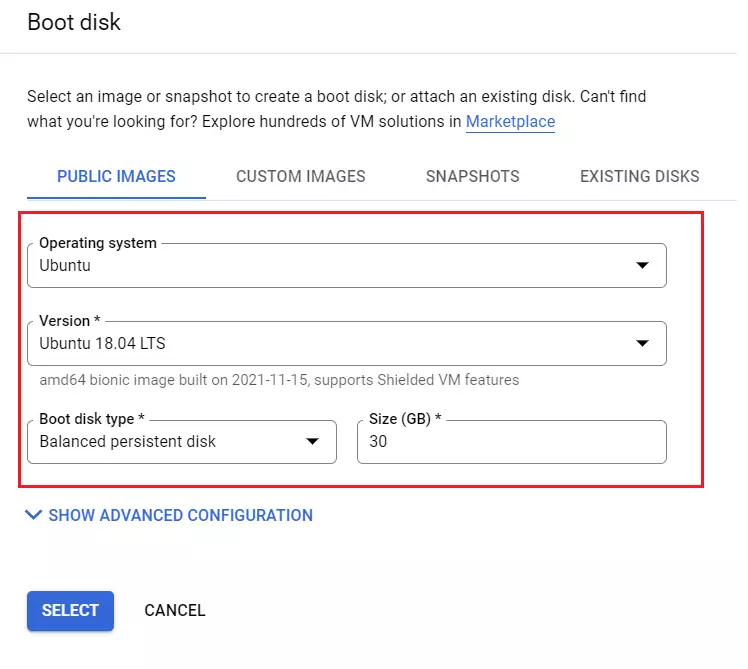
Boot disk: This setting determines the operating system for the Google Cloud server. Linux Debian appears by default, but several alternative operating systems remain available. Ubuntu Linux serves as the operating system of choice for this tutorial.
Click Change; choose Ubuntu Linux.
Firewall: Allowing HTTP and HTTPS traffic enables web connectivity for the Google Cloud server. Adding specific tags and firewall rules permits authorized network traffic originating from the internet.
- Allow HTTP traffic
- Allow HTTPS traffic
Click the Create button at the bottom of the page to provision the first VM instance.
The new server finishes initialization and reaches operational status after a brief wait.
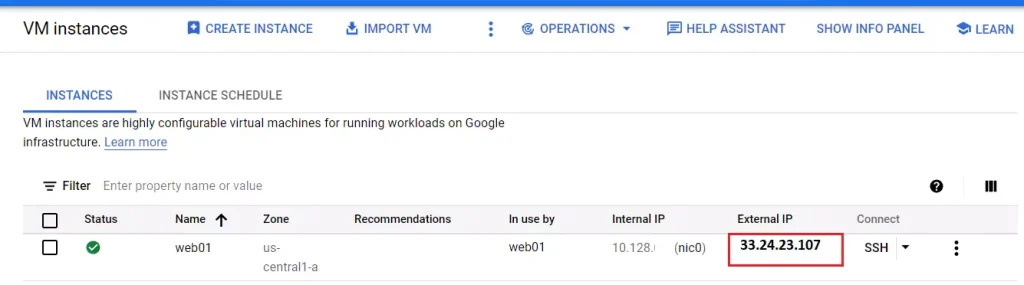
The public or external IP address appears under the External IP column.
Recording this External IP address proves essential for linking the domain name created earlier.
How to point a domain name to the server
You point a domain name to your Google Cloud server by copying the server external IP address and adding it to the DNS settings at your domain registrar. This connects your web address directly to your Ubuntu Linux server so visitors can reach your site.
For us, it's Google Domains.
Log in to Google Domains, click the domain name, and select DNS.
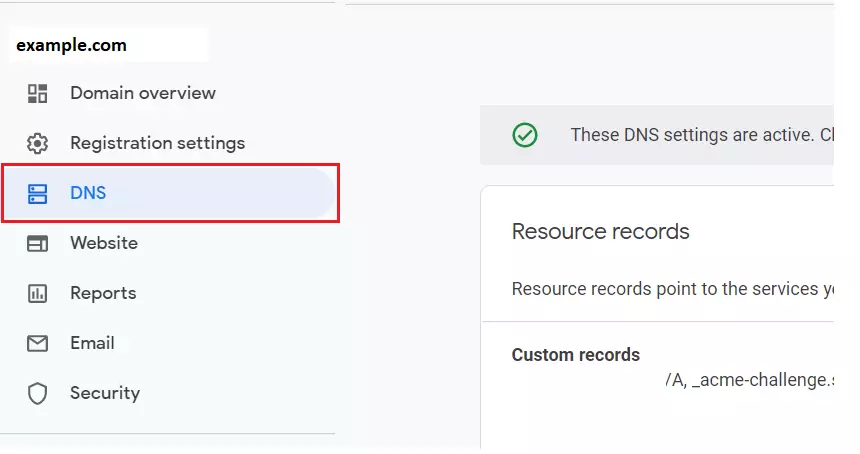
On the DNS page, scroll down to Custom Records in the middle. Then, expand the Custom Records tile and add the first record.
- Host name field, leave blank.
- Type = A
- TTL 3600
- Data: IP address of the host
Click the Save button when finished entering the details.
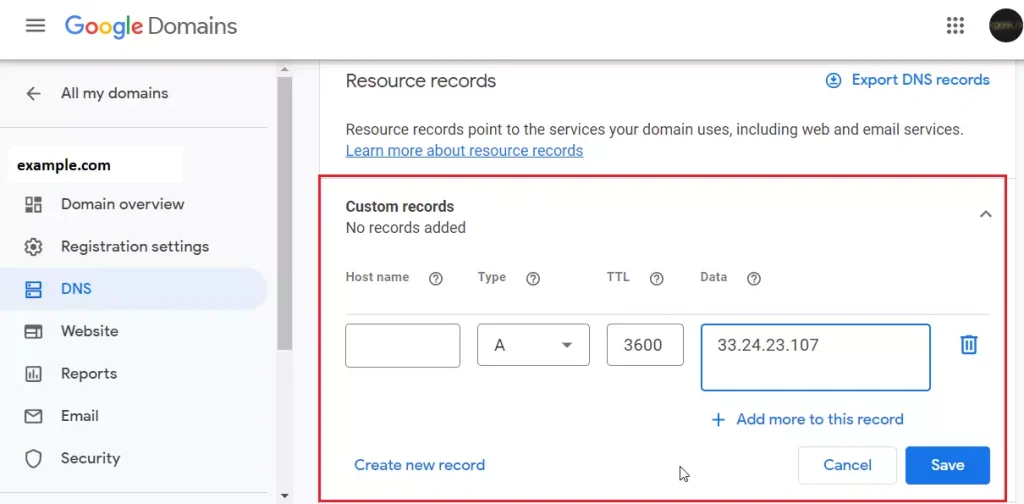
A new record appears, confirming that the website domain points directly to the server IP address.
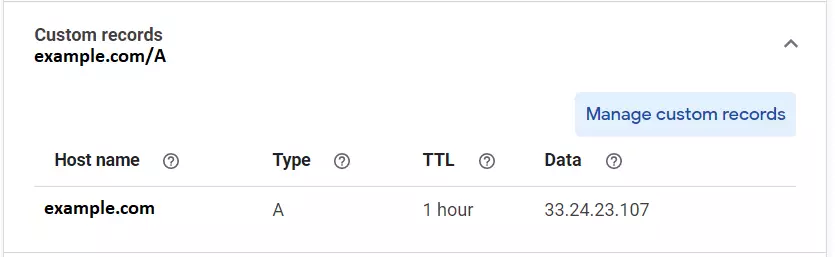
The domain name now correctly points to the host IP address. The server operates online, though web content remains to be added.
The next guide covers web server installation and content deployment on the newly configured Google Cloud server.
That completes the setup process.
Conclusion:
- Setting up a Google Cloud server with Ubuntu Linux is a straightforward process.
- You successfully created a Google Cloud account and a virtual machine (VM) instance.
- Pointing your domain name to the server makes your website accessible online.
- The server is live, but you must create web content to establish your online presence.
- In our next post, we will guide you through creating a web server and adding content to your new Google Cloud server.
Was this guide helpful?

About the Author
Richard
Tech Writer, IT Professional
Richard is a writer at Geek Rewind who turns complex IT tasks into clear, step-by-step guides. He draws on years of hands-on experience in system administration and enterprise IT operations, focusing on Windows, Linux and WordPress: the problems people actually run into, and the fixes that work. His server and WordPress guides come from systems he runs himself. Richard builds and maintains the platform behind Geek Rewind, from its Ubuntu servers and Nginx configuration to its custom WordPress plugins. Many new tutorials start with readers' questions, and he's always glad to answer them in the comments.


No comments yet — be the first to share your thoughts!