How to Delete Printer Drivers in Windows 11

- 20 steps
- Needs administrator rights
- Includes a restart or sign-out
To see the printer drivers on this computer, press Win+R, type printui /s /t2, and press Enter. The Drivers tab lists every one. To delete a driver, remove its printer in Settings first, then remove the driver package from that same list.
A printer driver is a translator program that lets Windows talk to your printer hardware. Deleting old ones clears out hidden software packages left behind by devices you no longer own. Windows 11 often keeps 30 or more old driver packages stored deep in the system long after you disconnect the physical machine.
Cleaning out these leftovers fixes stubborn print errors, stops ghost printers from appearing in your settings, and frees up storage space. The methods below work on both Windows 11 Home and Pro. Start with the simplest one and move on only if it fails. Most of the later methods need an administrator account, so sign in with one before you begin.
Remove the printer first, then delete the driver package in Print Server Properties. Open Settings, go to Bluetooth & devices Printers & scanners, select the printer and click Remove. Then press Win+R, type printui /s /t2, press Enter, select the driver on the Drivers tab and click Remove. Restart afterwards to clear leftovers.
Why delete printer drivers?
When you uninstall a printer, Windows often leaves the driver files behind. These files take up space and can cause conflicts if they are corrupted. Deleting them stops “ghost printers” from showing up in apps like Word or Photoshop.
Old drivers also get in the way when you install a newer printer from the same maker, or when you are updating printer drivers in Windows 11. Windows may pick the stale package instead of the new one. The printer then misbehaves or prints garbled pages. Removing the old package first gives the new driver a clean start.
What happens when done?
Once the steps are finished, the driver package is completely removed from your system. If you decide to use that printer again, you will need to download and install the driver again. That gives you a clean install with no old, broken files interfering with the new setup.
If you might reuse the printer, download the latest driver from the manufacturer’s website first and keep the installer somewhere safe. That way you are not stuck without a driver later.
Step 1Remove the printer
Before you delete the driver, you must remove the printer from your settings. Windows will not let you delete a driver while a printer still uses it. This step removes only the printer entry. The driver package stays on the PC until you use one of the later methods. The steps below take you from Settings to the Remove button.
- Open Settings by pressing Win+I. The Settings window opens with a list of categories on the left.
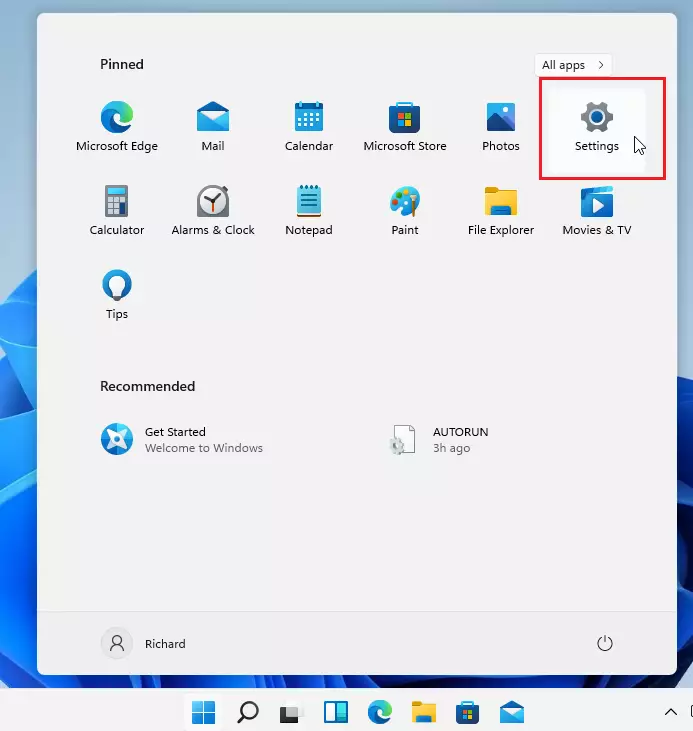
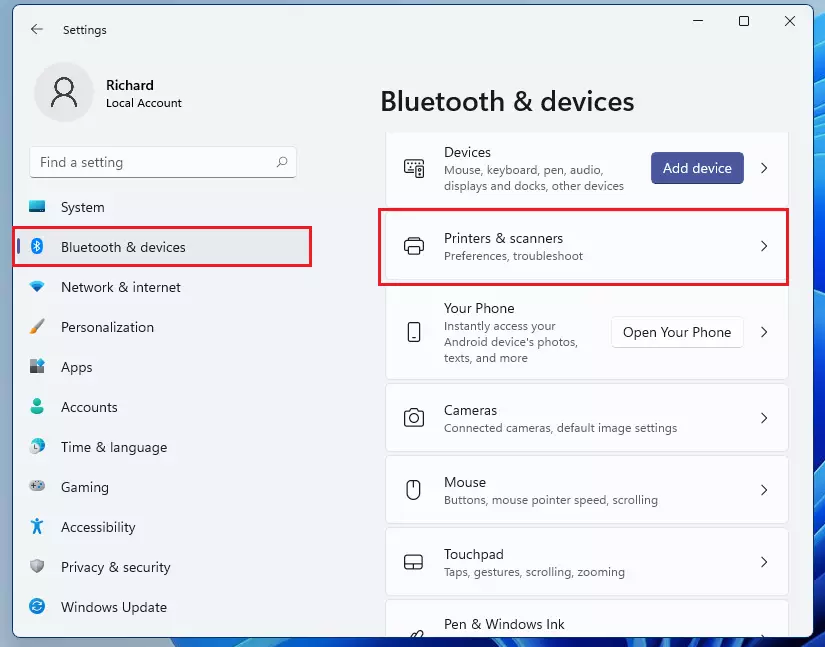
windows 11 settings button - Click Bluetooth & devices on the left. The device options appear on the right.
- Select Printers & scanners on the right. You should now see every printer Windows knows about, including old ones that are no longer connected.
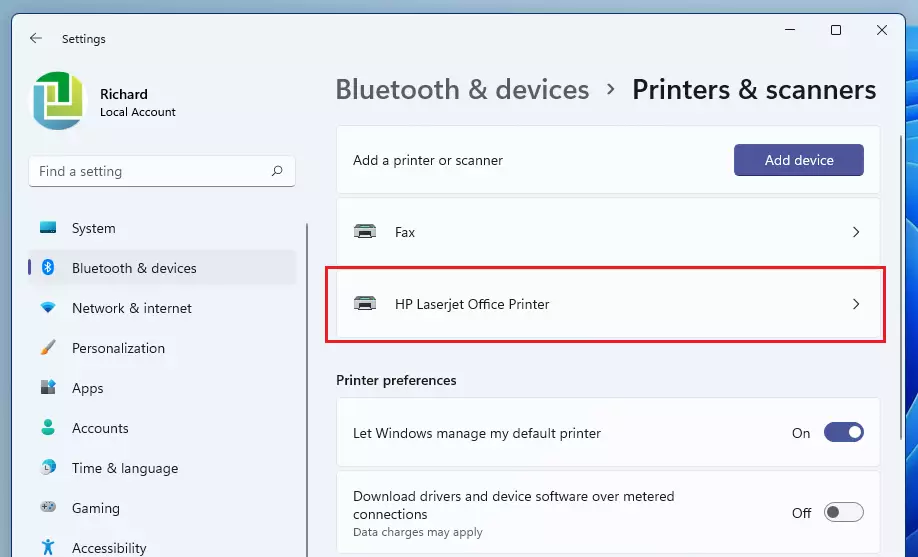
windows 11 add new scanners - Click the name of the printer you want to delete. Its settings page opens, with buttons such as Remove near the top.
windows 11 share a printer with others - Click the Remove button. Confirm if Windows asks you to. The printer should disappear from the list. Repeat for any other old printers you want gone.
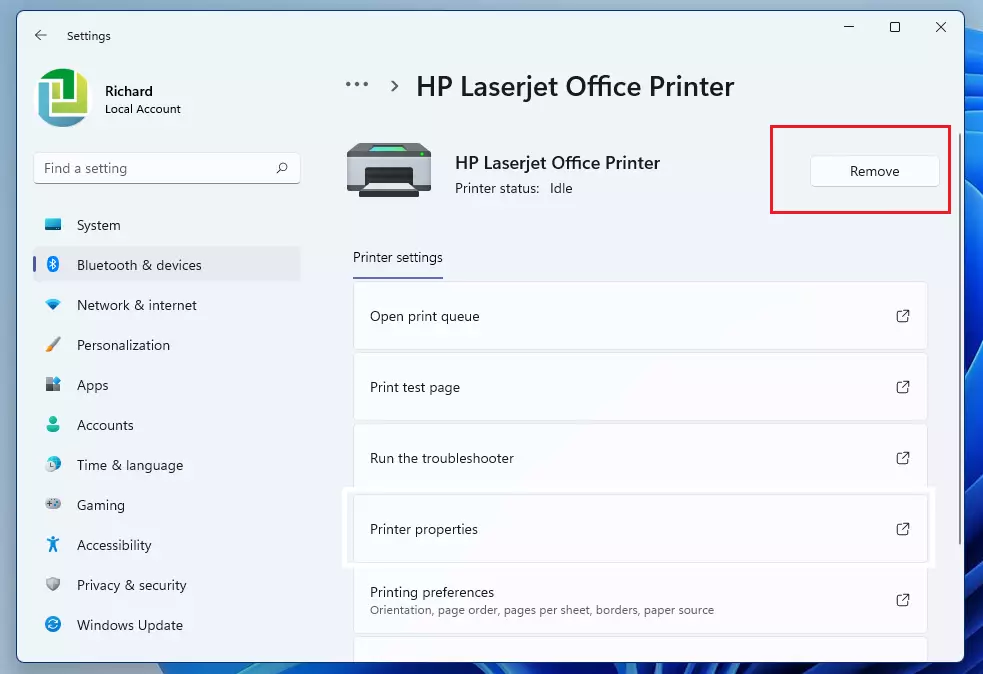
windows 11 share printer properties remove
Step 2Restart the Print Spooler Service
If you get a “printer driver is in use” error, the Print Spooler service is likely holding the file open. Restarting the service releases the file, and then you can try the delete again. It also clears out any print jobs stuck in the queue. The steps below restart the service.
- Press Win+R, type services.msc, and press Enter. The Services window opens with an alphabetical list of services.
- Scroll down to Print Spooler. Its status should read Running.
- Right-click it and select Restart. The status goes blank for a moment and then returns to Running. If Restart is greyed out, you are not signed in as an administrator. If the service shows as stopped, choose Start instead.
Step 3Delete the driver using Print Server Properties
Print Server Properties lets you delete printer drivers in Windows 11 when standard uninstallation methods fail. Open the tool by pressing the Win and R at the same time, typing printui /s /t2 into the Run box, and pressing Enter. This brings up a complete list of every printer driver currently installed on your PC, so you can pick the exact one you want to remove. The steps below walk through it.
- Press Win+R, type printui /s /t2, and press Enter.
- Check the list of installed drivers. The Print Server Properties window opens on the Drivers tab, so you can see each driver’s name and type.
- Click Change Driver Settings if Remove is greyed out. Approve the prompt. This reopens the list with administrator rights.
- Select the driver and click Remove. A window asks how much to remove.
- Choose Remove driver and driver package, then confirm with OK. This fully wipes the driver from 📁C:\
Windows\ . The other choice removes only the driver and leaves the package in the store. If Windows says the driver is in use, remove the printer first and restart the Print Spooler, as described above.System32\ DriverStore
Step 4Advanced Cleanup with Command Line
Note: This step requires administrator privileges. For stubborn drivers, use the pnputil.exe tool. It is built into Windows and removes driver packages straight from the driver store, even when the graphical tool gives you errors. The steps below find the package name and delete it.
- Open Command Prompt as Administrator. Search for Command Prompt in the Start menu, right-click it, and choose Run as administrator. Click Yes if User Account Control appears.
- Type pnputil /enum-drivers and press Enter. This shows all installed drivers. The list is long, so scroll through it. Look for entries where the Class Name is Printer, or where the Original Name matches your printer’s brand.
- Note the Published Name (e.g., oem12.inf). Write it down exactly. The number is different on every PC, so do not copy the example.
- Type pnputil /delete-driver oem12.inf /uninstall and press Enter. Replace oem12.inf with your own Published Name. Windows should report that the driver package was deleted. If it says the driver is still in use, remove the printer in Settings and restart the Print Spooler, then run the command again.
Step 5Registry Cleanup
Sometimes registry keys keep printers alive. Use this method last, and only if a printer still shows up after the other methods. A wrong deletion in the registry can cause problems, so make a backup first. In Registry Editor, choose File Export to save a copy of the key before you change anything.
- Press Win+R, type regedit, and press Enter. Click Yes if User Account Control appears. Registry Editor opens.
- Navigate to 🗝️HKEY_LOCAL_MACHINE\
SYSTEM\ . Expand the folders on the left one at a time. Under Printers you will see one key for each printer entry.CurrentControlSet\ Control\ Print\ Printers - Delete the key for your old printer. Right-click the key that matches the old printer’s name, choose Delete, and confirm. Then close Registry Editor and restart the PC, or at least restart the Print Spooler, so the change takes effect. To undo the change, double-click the .reg file you exported earlier.
Summary
Deleting old printer drivers in Windows 11 helps keep your computer running smoothly and saves disk space by removing unneeded files. Remove the printer in Settings first, then use Print Server Properties, and turn to pnputil.exe or the registry only if a driver won’t go. After that, open Printers & scanners once more to check that the old printer is gone.
Have a question about this guide?
Answered by AI from this guide. Good questions may be added to this page — please don't include personal details.
Did this guide fix your problem?

About the Author
Richard
Tech Writer, IT Professional
Richard is a writer at Geek Rewind who turns complex IT tasks into clear, step-by-step guides. He draws on years of hands-on experience in system administration and enterprise IT operations, focusing on Windows, Linux and WordPress: the problems people actually run into, and the fixes that work. His server and WordPress guides come from systems he runs himself. Richard builds and maintains the platform behind Geek Rewind, from its Ubuntu servers and Nginx configuration to its custom WordPress plugins. Many new tutorials start with readers' questions, and he's always glad to answer them in the comments.
What does it mean if the “remove” button isn’t there when you open up the printer in settings?