How to Change Windows 11 Taskbar Search Button Layout


Change the Search Button Style Using Settings
The Windows 11 taskbar search button can be shown as a full search box , a small icon, or a button, or it can be hidden. These styles are available in Windows 11 build 22621 and newer. Switching styles saves taskbar space and cleans up the desktop. You don’t need any extra software, and you can undo the change at any time.
It works on both Windows 11 Home and Pro and only changes the account you’re signed in with. If you want to apply a style through the registry instead, the second method below covers that.
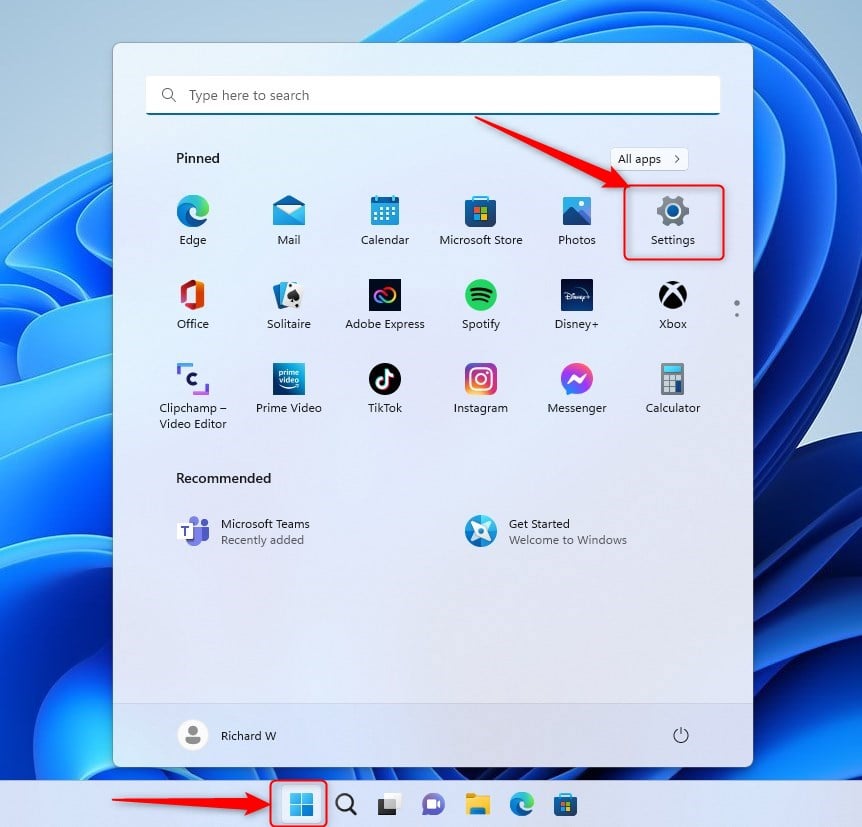
- Open the Settings app. Click the Start button (the Windows icon) at the bottom of the screen, then click Settings. A faster way is to press Win+I. The Settings window opens with the System page showing.
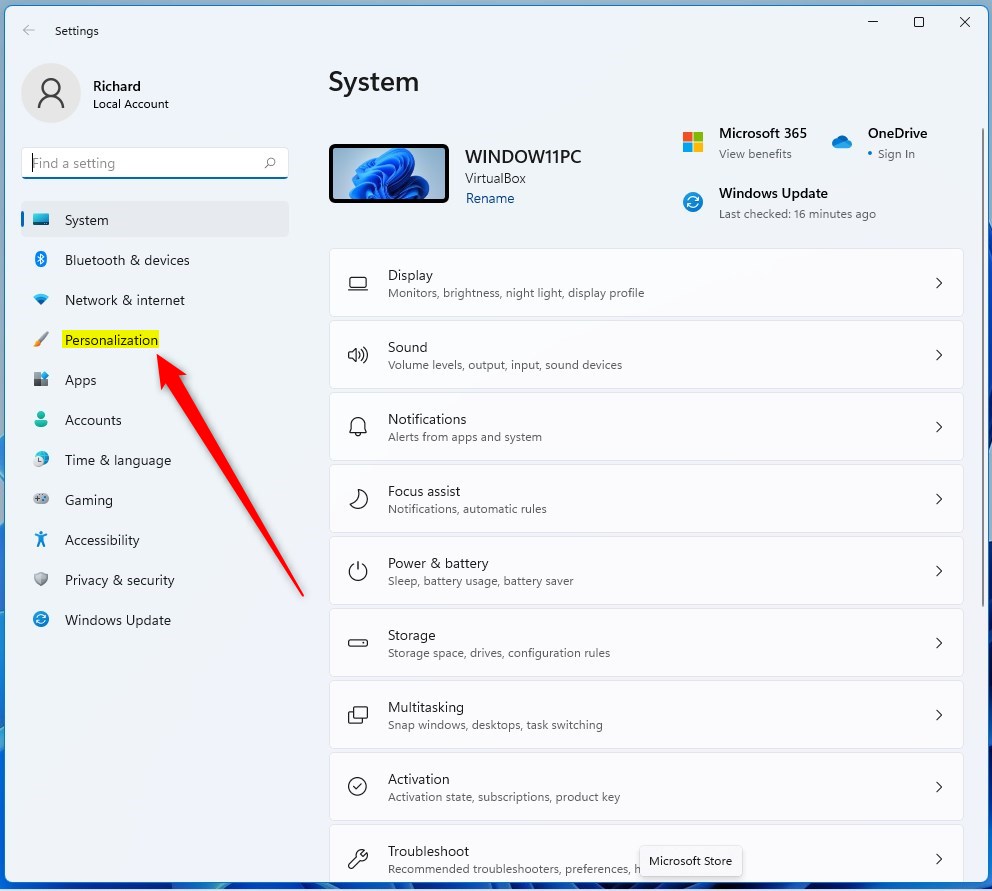
- In the left-hand menu of Settings, click Personalization. The right side now shows options such as Background, Colors, Themes and Taskbar.
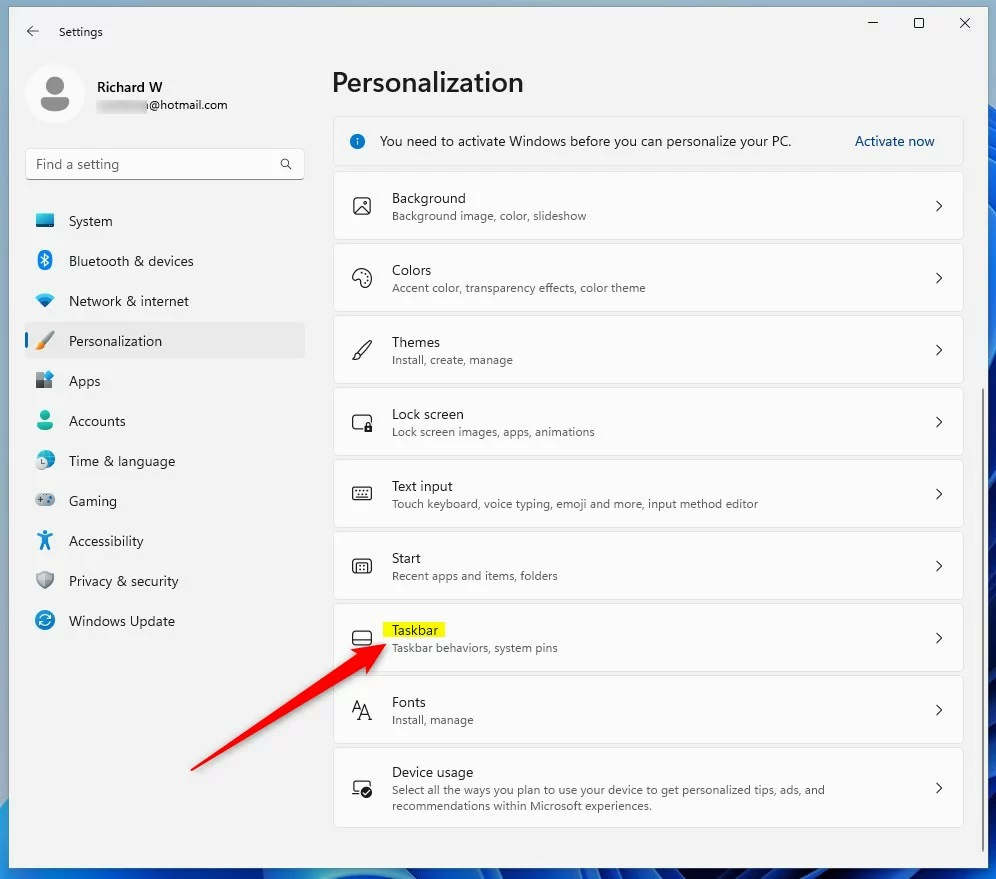
- On the right, click Taskbar. The taskbar settings page opens, with expandable sections such as Taskbar items and Taskbar behaviors.
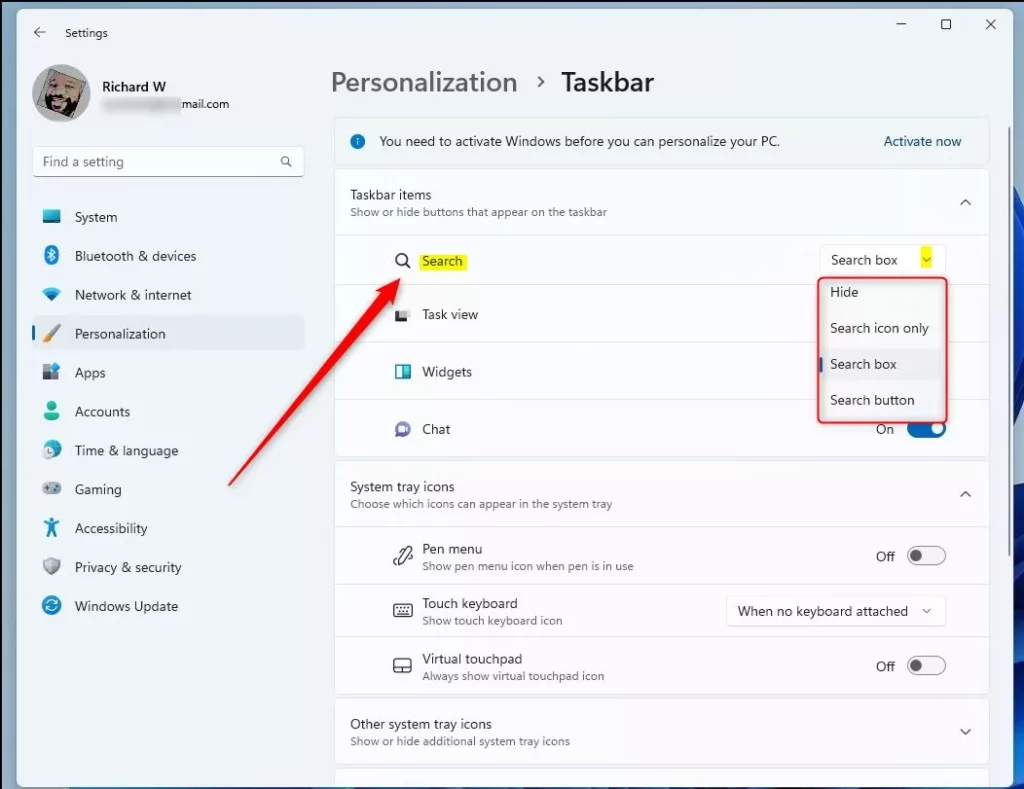
- Scroll to the Taskbar items section. Find Search and click it. A drop-down list of search styles opens. If you can’t find Search, your build is probably older than 22621. Run Windows Update and check again.
- Pick how you want Search to look on your taskbar . The taskbar changes as soon as you choose:
- Hide – No Search button is shown. You can still open search by pressing the Win and typing.
- Search icon only – Just a small magnifying glass icon.
- Search box – A box where you can type your search (default).
- Search button – A button style different from the box. On some builds this option is labeled Search icon and label.
The taskbar updates instantly, and you don't need to restart or sign out. To undo the change, go back to the same drop-down and choose Search box, the default. If the taskbar looks wrong, restart Windows Explorer from Task Manager.
Change the Search Box Layout Using Registry Editor (Advanced)
You can also set the search style in Registry Editor, a database that stores low-level settings for Windows and apps. This is the method to use when you want to push one style to your user accounts without clicking through Settings on each profile. It works on both Home and Pro. Registry mistakes can cause system problems, so follow the steps exactly.
In Registry Editor, click File, then Export, and save a copy of the registry. You can also create a restore point first. You'll need an administrator account to make this change.
These registry values are meant for persistent, repeatable setups, which is why administrators use them for deployments. Check each key name and value carefully before you save.
- Open the Windows Registry Editor. Press Windows key + R, type
regeditand press Enter. If a User Account Control prompt appears, click Yes. Registry Editor then opens. You can also read how to open the Registry in Windows 11. - In the Registry Editor, go to this path:
HKEY_CURRENT_USER\Software\Microsoft\Windows\CurrentVersion\Search. You can paste it into the address bar at the top of the window, or expand the folders in the left pane one by one. - If you do not see the Search folder under CurrentVersion, right-click CurrentVersion. Select New Key and name it Search. The new key appears in the left pane.
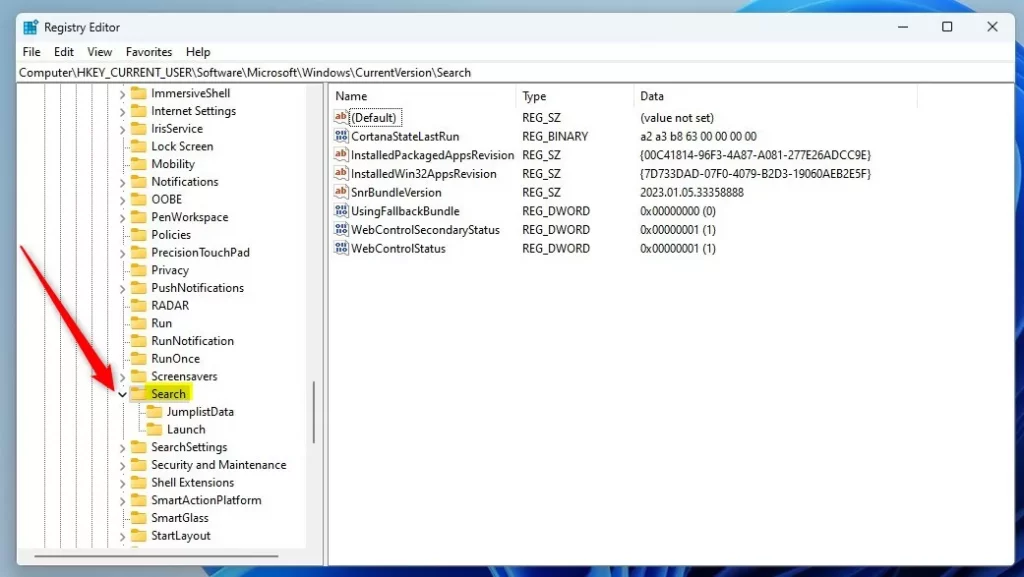
- Click the Search folder on the left. Its values are listed on the right, and the list may be empty.
- On the right side, right-click in the empty space. Choose New DWORD (32-bit) Value. A new value appears with its name highlighted for editing.
- Name this new value
SearchboxTaskbarModeand press Enter. Spell it exactly, because Windows ignores a value with the wrong name. - Double-click
SearchboxTaskbarMode. In the Value data box, set one of these numbers, then click OK:- 0 – Hide the search box
- 1 – Show search icon only
- 2 – Show search box (default)
- 3 – Show search button
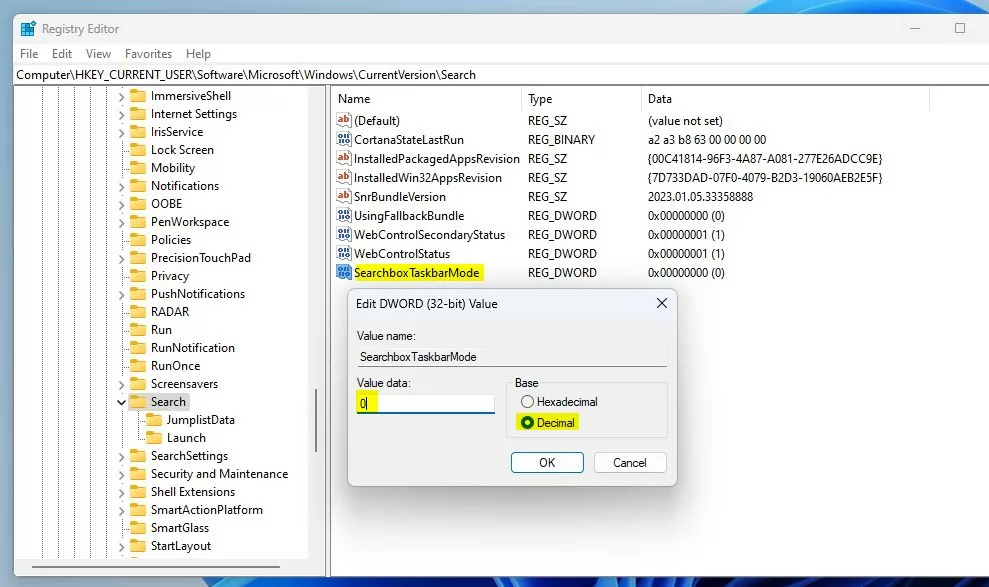
- Check the taskbar. After you set the value, it should update right away. Then close the Registry Editor. If nothing changes, sign out and back in, or restart the computer, and check again.

The taskbar updates your search preferences immediately. To undo the change, set the value back to 2 for the default search box, or delete the value you created. Importing the backup you exported earlier also restores the previous state.
Summary
You can change the taskbar search appearance in two ways. The Settings app changes your own user account and is the safer option. Registry Editor is the method for applying a style across profiles on the machine. Either way, you can choose a hidden state, a small magnifying glass icon, a button, or the full search box, depending on how you work.
The available layouts are hidden, icon only, full search box and search button.
Insider Preview (Microsoft's beta testing channel) builds often get experimental interface changes first. The names or options for search styles may differ there from what is described here.
For more on finding files and documents with Windows search, see this guide: How to Search and Find Documents in Windows 11.
Have a question about this guide?
Answered by AI from this guide. Good questions may be added to this page — please don't include personal details.
Did this guide fix your problem?

About the Author
Richard
Tech Writer, IT Professional
Richard is a writer at Geek Rewind who turns complex IT tasks into clear, step-by-step guides. He draws on years of hands-on experience in system administration and enterprise IT operations, focusing on Windows, Linux and WordPress: the problems people actually run into, and the fixes that work. His server and WordPress guides come from systems he runs himself. Richard builds and maintains the platform behind Geek Rewind, from its Ubuntu servers and Nginx configuration to its custom WordPress plugins. Many new tutorials start with readers' questions, and he's always glad to answer them in the comments.
No comments yet — be the first to share your thoughts!