How to Change Browser Theme in Google Chrome


Visit the Chrome Web Store and select a theme. Click “Add to Chrome” to apply it immediately. To revert, go to Settings , Appearance, and click “Reset to default.
Change browser theme in Google Chrome
Google Chrome themes change the colors, toolbars, and background images of your browser window. The Chrome Web Store has thousands of free themes, and you can switch to one in a few clicks.
If you are signed in to Chrome with sync turned on, your chosen theme follows your Google account to every computer where you sign in. The steps below work the same on Windows 11 Home and Pro.
You change the theme through the Chrome Web Store, which you can reach from the browser settings. Pick a color scheme or background design, then click Add to Chrome. The theme applies at once, so you don’t need to restart the browser or install any extra software. It changes the window colors and the tab appearance.
Let’s walk through the steps. Before you start, make sure you have an internet connection, because the themes load from the Chrome Web Store. If Chrome is managed by your workplace or school, an administrator may block theme changes. In that case the Themes option may be missing or may not work.
- Open the Google Chrome browser. A normal browser window should appear. Use a regular window rather than a Guest window, so the theme can be saved to your profile.
- Click the three vertical dots in the top right corner of the window to open the main menu.
- Select Settings. A new tab opens with the main configuration page, where the browser appearance options and themes are found.

- On the Settings page, look at the left panel and click the section labeled ‘
Appearance‘. The options on the right change to match it.
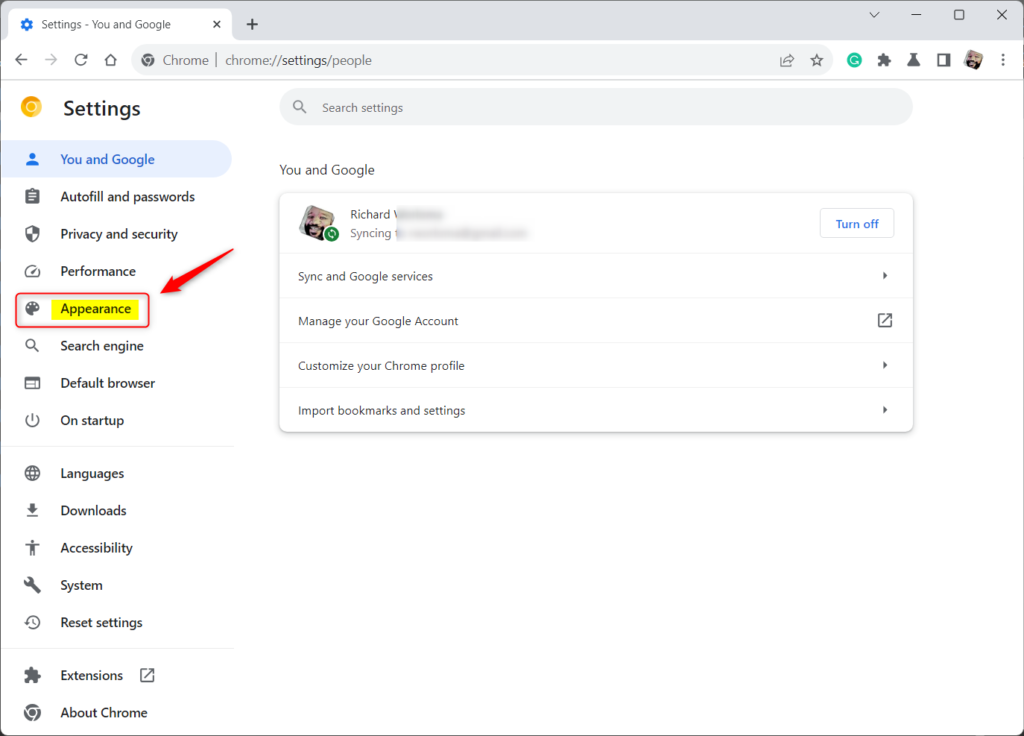
- On the right, under “Appearance,” click Themes. The Chrome Web Store opens in a new tab with the themes gallery.
You can also go straight to the Chrome Web Store Themes gallery in your browser, which gives the same result.
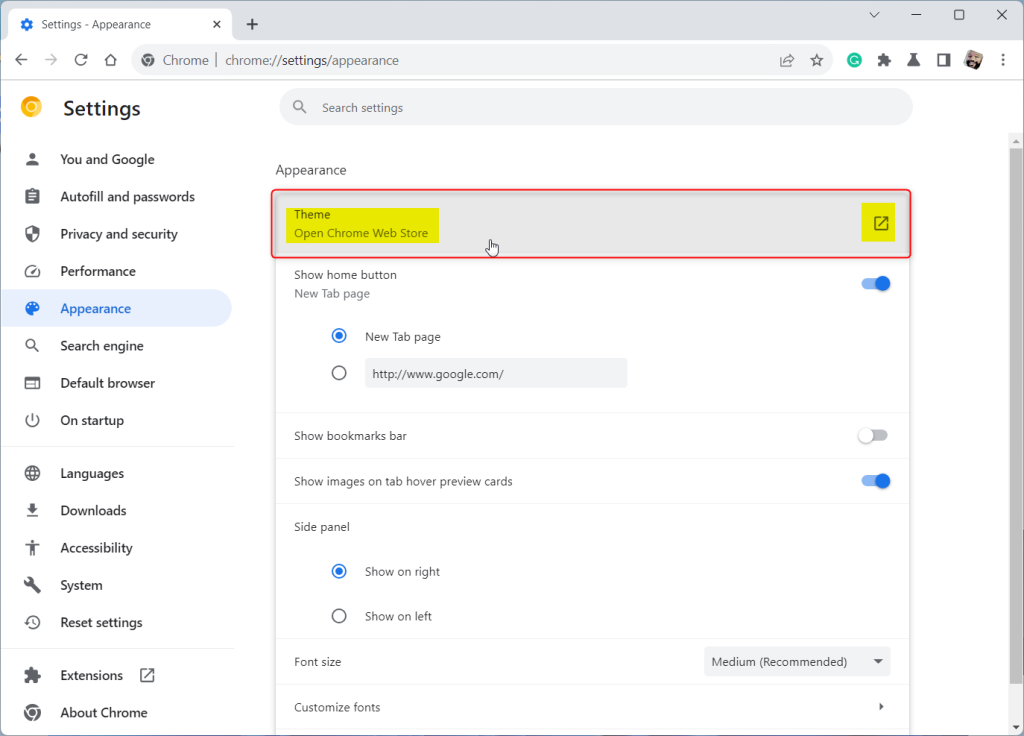
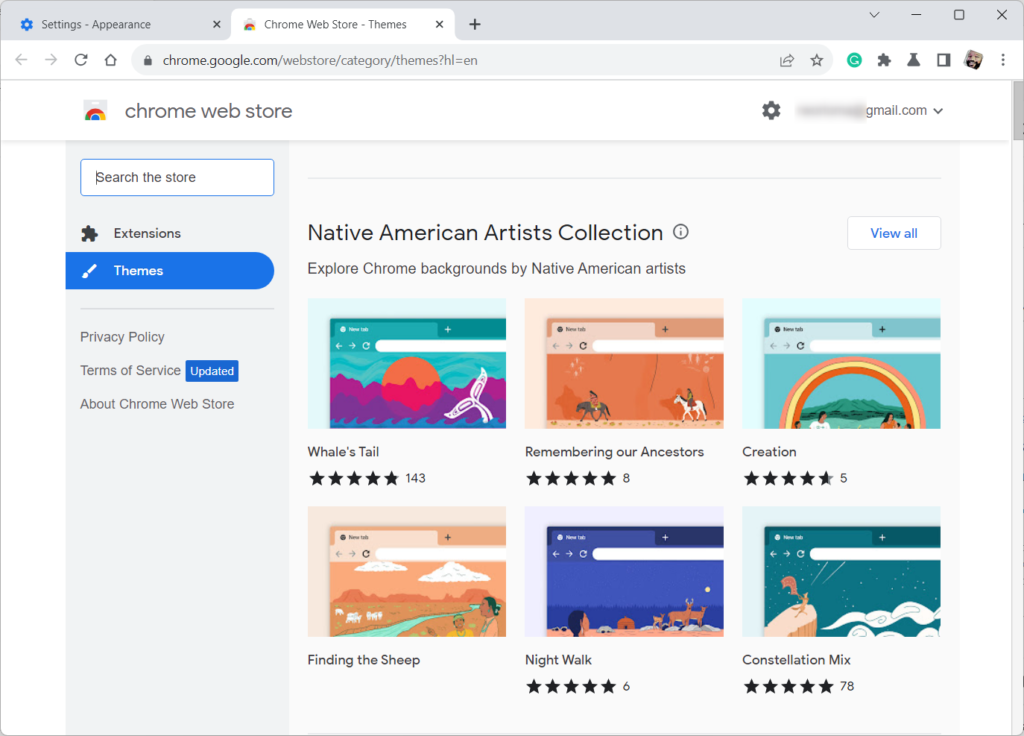
- Browse the store to find a theme you like. Click a thumbnail to open its page and see a larger preview.
- Click Add to Chrome on the theme you want. The button may take a second or two to finish.
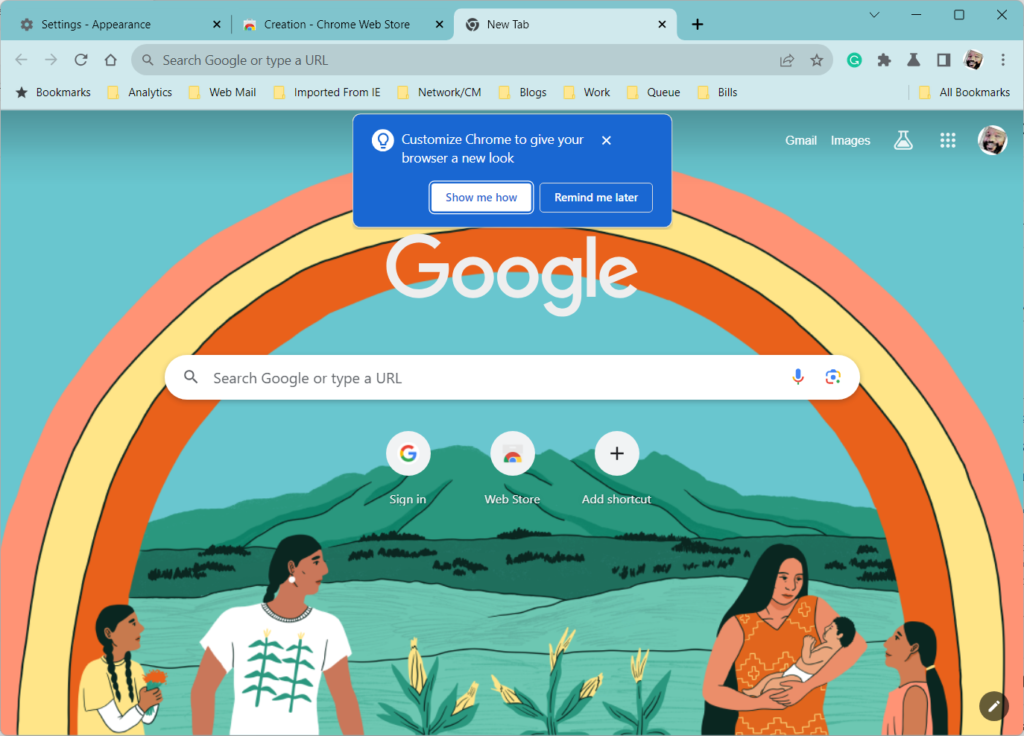
The theme applies immediately, and the window, toolbar and tab colors change. A bar appears at the top with an Undo button. Click it if you don’t like the result, and Chrome goes back to the previous look. The bar disappears after a short while. If you miss it, use the removal steps further down.
If you sign in to Chrome with sync turned on, the theme also appears on your other devices. If it doesn't, check that sync is on in your Chrome settings.
Remove a theme in Google Chrome
To remove a theme in Google Chrome, go back to the Settings page. Start by clicking More, the three-dot menu in the top right corner.


Then choose Settings. This is the same Settings page you used earlier.
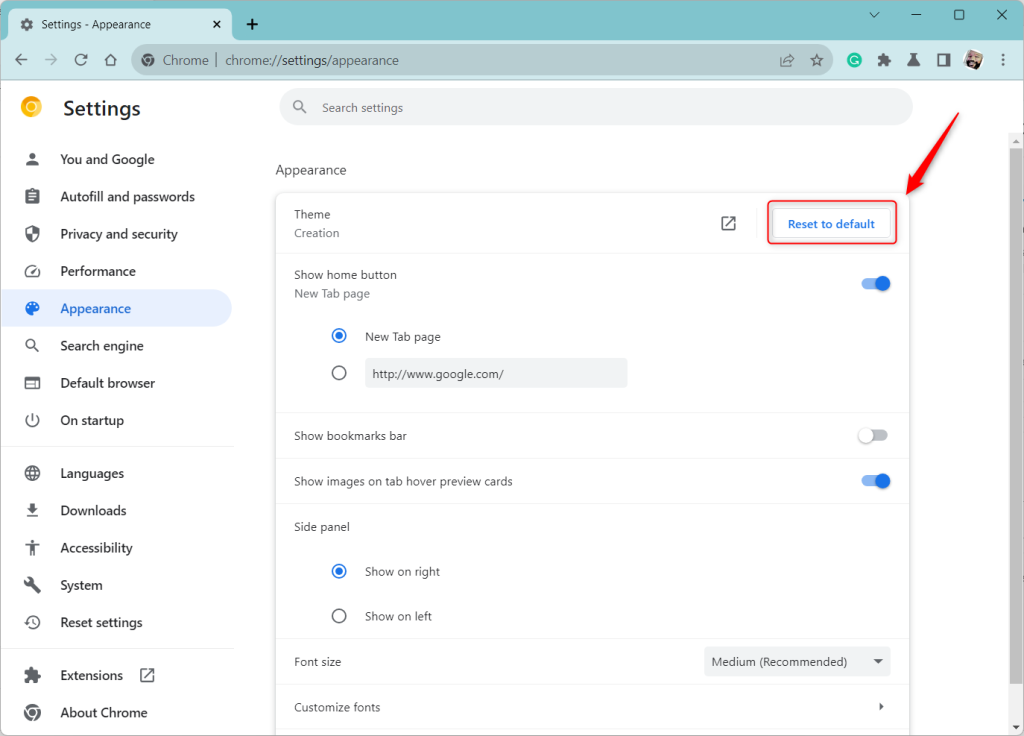
- In the left panel, click Appearance.
- Find the Themes row and click Reset to default. This button only shows up while a theme is installed. If you can't see it, you are most likely already using the standard theme.
Chrome returns to its standard look straight away, with no restart needed. This only removes the theme. Your other settings, bookmarks and extensions are not touched. You can add a theme again at any time from the Chrome Web Store.
That completes the process. You can now add, preview, undo and remove Chrome themes whenever you want a different look.
Reference:
Conclusion:
- Changing the browser theme in Google Chrome allows you to personalize your browsing experience
- Customizing the look of your browser can create a more visually appealing and comfortable environment for web browsing
- It can help differentiate your browser from others and make it easier to identify
- Adding a touch of personality to your browsing experience is worth considering
Have a question about this guide?
Answered by AI from this guide. Good questions may be added to this page — please don't include personal details.
Did this guide fix your problem?

About the Author
Richard
Tech Writer, IT Professional
Richard is a writer at Geek Rewind who turns complex IT tasks into clear, step-by-step guides. He draws on years of hands-on experience in system administration and enterprise IT operations, focusing on Windows, Linux and WordPress: the problems people actually run into, and the fixes that work. His server and WordPress guides come from systems he runs himself. Richard builds and maintains the platform behind Geek Rewind, from its Ubuntu servers and Nginx configuration to its custom WordPress plugins. Many new tutorials start with readers' questions, and he's always glad to answer them in the comments.
No comments yet — be the first to share your thoughts!