How to Use Print Screen Key for Snipping Tool in Windows 11


On Windows 11, the Print Screen key can open the Snipping Tool directly. Press PrtScn and a small bar appears at the top of the screen. You can then draw a rectangle, a freeform shape, capture a window, or capture the full screen, and save or copy the result. You don’t have to open the app first.
There are two ways to turn this on. Pick one:
- Using the Windows Settings app. This is the easiest way for most people.
- Editing a setting in the Windows Registry. This is a bit more advanced, but it’s an option if you prefer it or if the Settings app method doesn’t work for you.
Open Settings , go to Accessibility, then Keyboard, and toggle “Use the Print Screen button to open screen snipping” to On. Restart your computer to apply the change.
Option 1Using Windows Settings (The Easy Way)
The Settings app is the method I recommend. It is built into Windows 11, it shows you exactly what you are changing, and you don’t need any technical background. It works the same on Home and Pro, and you don’t need administrator rights, because the setting applies to your own user account.
Step 1Open Settings
- Press the Win+I at the same time. The Win is the one with the Windows logo.
- The Settings window should open.
Step 2Go to Keyboard Settings
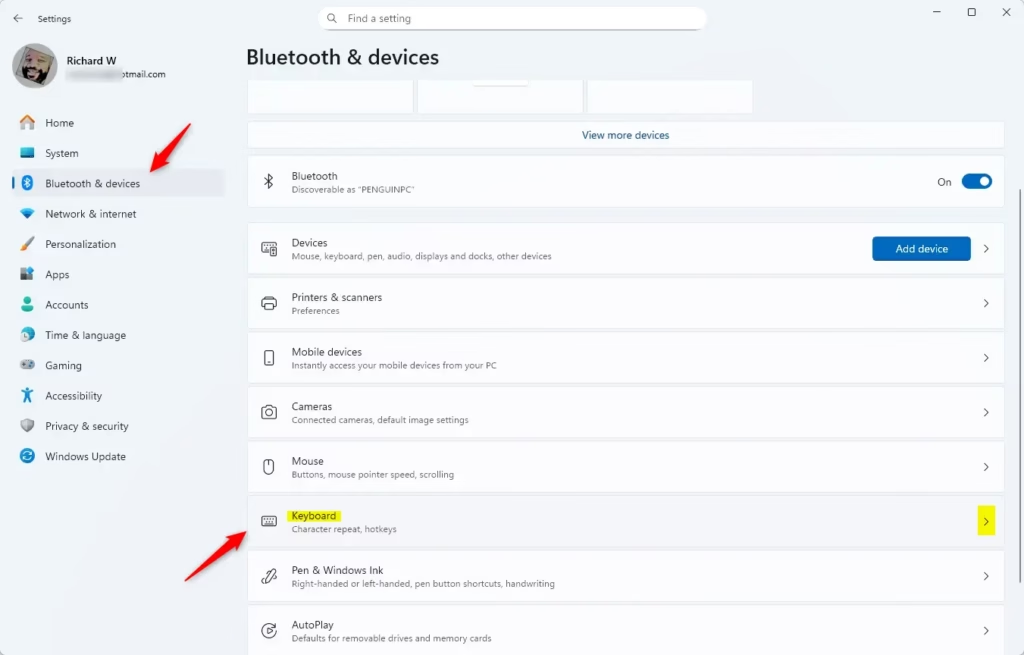
- In the menu on the left side of Settings, click Bluetooth & devices. Extra options appear on the right.
- Scroll down the right side until you see Keyboard, and click it.
- The keyboard settings page should now open.
Note: Windows 11 has moved this option between builds. If you don’t see the print screen setting under Bluetooth & devices Keyboard, open Settings Accessibility Keyboard instead. On most current Windows 11 versions, the toggle lives there.
Step 3Find the Print Screen Setting
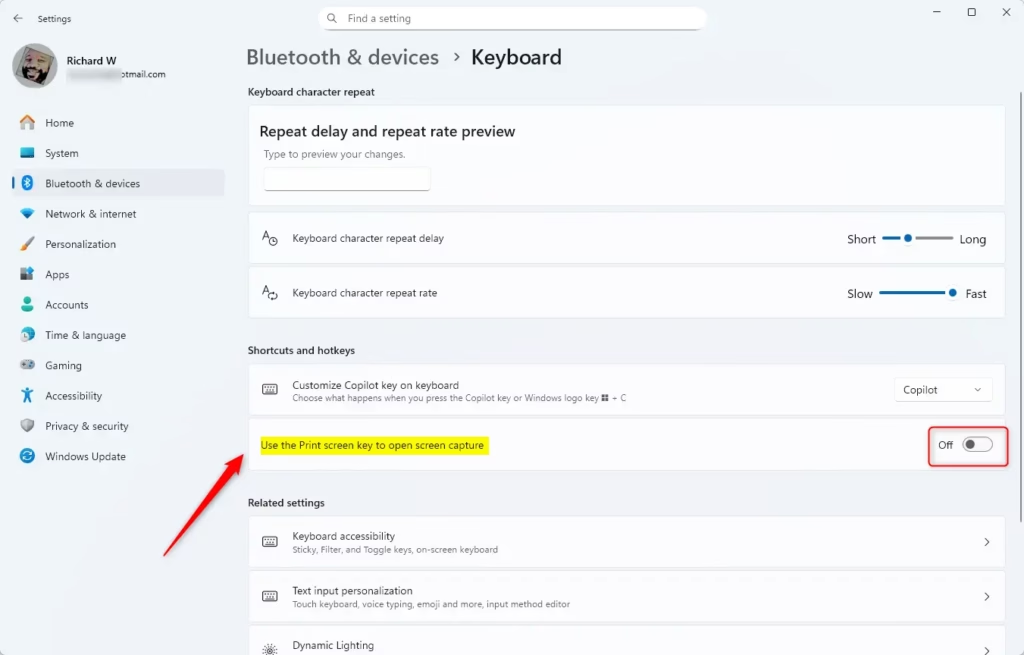
The keyboard settings page contains the control that decides what the Print Screen key does. Look for the setting labeled Use the Print screen button to open screen capture. Older builds word it slightly differently, for example “screen snipping”, but it is the same switch. If you can’t find it, scroll further down the page. It sits among other options and is easy to miss.
Step 4Turn it On or Off
The switch next to that label controls the behavior. Here is what each position does:
- To Turn ON Print Screen for Snipping Tool: Make sure the switch next to "Use the Print Screen key to open screen capture" is set to On. When it's on, pressing your Print Screen key will open the Snipping Tool, letting you choose an area to capture.
- To Turn OFF Print Screen for Snipping Tool: Move the switch to the Off position. If you turn this off, pressing your Print Screen key will go back to its old behavior. It will take a picture of your whole screen and copy it to your clipboard. You would then need to paste it into another program, like Paint or Word, to save it.
You can change this back at any time by returning to the same page and flipping the switch. The Windows key + Shift + S shortcut opens the same snipping bar whichever way this switch is set, so you always have a fallback.
Step 5Close Settings
- Close the Settings window. Windows applies the change as soon as you flip the switch, so there is no Save button.
- Press the PrtScn key. If the setting is on, the snipping bar should appear at the top of the screen.
- If nothing happens, close your open apps and try again. If it still doesn't respond, restart the computer.
A full system restart is rarely necessary but is a reliable final step if the setting appears resistant to change. Also check your keyboard. Some laptops need you to hold Fn with the Print Screen key, or the key is labeled differently, such as PrtSc.
Option 2Using the Registry Editor (For Advanced Users)
The Registry Editor is the alternative if you prefer to make system tweaks by hand, or if the Settings page doesn't have the option on your build. Be careful here. A wrong edit in the registry can cause problems, so back it up first.
Before you begin: It is highly advisable to create a backup of your Registry before making any modifications. In Registry Editor, choose File Export, pick All as the export range, name the file and save it somewhere safe. If something goes wrong, you can double-click that file to restore the previous configuration.
Step 1Open the Registry Editor
- Press the Windows key + R to open the Run dialog box.
- Type regedit into the box and press Enter.
- Click Yes if a User Account Control prompt asks for permission to allow this app to make changes to your device.
- The Registry Editor window should now open.
Step 2Go to the Correct Registry Key
- Click the address bar at the top of the Registry Editor window, just under the menu bar.
- Type or paste HKEY_CURRENT_USER\Control Panel\Keyboard into the address bar and press Enter.
- Watch the left sidebar as the folders update. It should expand and highlight the Keyboard key, and its values appear on the right.
Step 3Find or Create the Setting
The value that controls this feature is called PrintScreenKeyForSnippingEnabled. It is a DWORD value. Look for it in the list on the right side of the window.
- If you find it: Double-click on it.
- If you don't find it: Right-click on an empty space in the right side. Move your mouse over New, then click on DWORD (32-bit) Value. A new entry will appear. Type
PrintScreenKeyForSnippingEnabledas the name and press Enter. Then, double-click on this new entry.
Check the spelling of the name carefully. If it is wrong, Windows ignores the entry. In either case, an edit window titled Edit DWORD (32-bit) Value should now be open.
Step 4Change the Value Data
- In the edit window, make sure Base is set to Hexadecimal.
- Click in the Value data box and enter the number for the behavior you want, as described below.
- Click OK. The new number should appear next to the value name in the list.
- To Turn ON Print Screen for Snipping Tool: In the box that says "Value data", type the number
1. Make sure "Base" is set to "Hexadecimal". Click OK. - To Turn OFF Print Screen for Snipping Tool: In the box that says "Value data", type the number
0. Make sure "Base" is set to "Hexadecimal". Click OK.
Explanation: Within the Registry, a value of 1 typically signifies "On" or "Enabled," while a value of 0 indicates "Off" or "Disabled." This particular setting determines whether the Print Screen key is associated with the screen snipping feature. To undo the change later, come back to this value and enter the other number, or restore the backup you exported earlier.
Step 5Close Registry Editor and Restart
- Close the Registry Editor window.
- Restart your computer. A restart is usually required for this change to be fully applied. Signing out and back in sometimes works too, but a restart is the safer choice.
- After you sign back in, press PrtScn to check that it behaves the way you set it.
Summary
You can manage this behavior with either the standard Windows Settings app or the Registry Editor. Both do the same thing: they decide whether the Print Screen key opens the Snipping Tool for a quick capture or copies the full screen to the clipboard. For most people, the Settings toggle is all they need. Keep the Registry method for cases where the setting is missing or doesn't stick.
Have a question about this guide?
Answered by AI from this guide. Good questions may be added to this page — please don't include personal details.
Did this guide fix your problem?

About the Author
Richard
Tech Writer, IT Professional
Richard is a writer at Geek Rewind who turns complex IT tasks into clear, step-by-step guides. He draws on years of hands-on experience in system administration and enterprise IT operations, focusing on Windows, Linux and WordPress: the problems people actually run into, and the fixes that work. His server and WordPress guides come from systems he runs himself. Richard builds and maintains the platform behind Geek Rewind, from its Ubuntu servers and Nginx configuration to its custom WordPress plugins. Many new tutorials start with readers' questions, and he's always glad to answer them in the comments.
[…] 11 comes with a new Snipping Tool app which replaces the classic Snip & Sketch app in previous versions for taking screenshots. The classic Snip & Sketch and the new Snipping […]
[…] 11 has a new Snipping Tool app that replaces the classic Snip & Sketch app in previous versions for taking screenshots. The classic Snip & […]
[…] of devices under nearby Share when sharing a local file from the desktop, File Explorer, Photos, Snipping Tool, Xbox, and other apps that use the built-in Windows share window has been enhanced by using UDP […]
[…] of devices under nearby Share when sharing a local file from the desktop, File Explorer, Photos, Snipping Tool, Xbox, and other apps that use the built-in Windows share window has been enhanced by using UDP […]