Receive Files over Bluetooth in Windows 11

Receiving files over Bluetooth means your PC gets a file sent wirelessly from a phone or another device it is already paired with. The Bluetooth File Transfer wizard handles the receiving side. It waits for the file and saves it to your PC.
First, pair the sending device with your PC. Then open the Bluetooth File Transfer wizard from Settings, pick Receive files, and have the other device send the file. The wizard must already be open and waiting before the sender starts, or the transfer fails.
Once the devices are paired, the whole process takes about a minute. This page also covers three common problems: the Receive files option is missing, your phone can’t find the PC, and a transfer stops partway through.
To receive files over Bluetooth in Windows 11, pair the sending device with your PC, then open Bluetooth File Transfer from Settings Bluetooth & devices Devices Send or receive files via Bluetooth . Select Receive files and leave the window open. Send the file from your phone or other PC before the wizard closes, or the transfer fails.
Before You Start
Check these four things first. Most failed transfers come from one of them.
- Your PC needs a Bluetooth adapter. Most laptops have one built in. Many desktops don’t, but a USB Bluetooth adapter works.
- The sender must support Bluetooth file transfer. Android phones, other Windows PCs and most tablets do. iPhones and iPads do not send files to Windows PCs over Bluetooth . Use another route for those, such as a cloud service or a USB cable.
- Both devices need to be close together. Keep them within a few metres, with no thick walls in between.
- Airplane mode must be off on both devices.
Turn On Bluetooth and Pair the Device
Pairing (a one-time trusted link between two devices) is required before the PC accepts files from a phone or another computer. You only do this once per device. If the sender already appears in your Bluetooth device list, skip to the next section.
- Open Settings , then select Bluetooth & devices in the left pane.
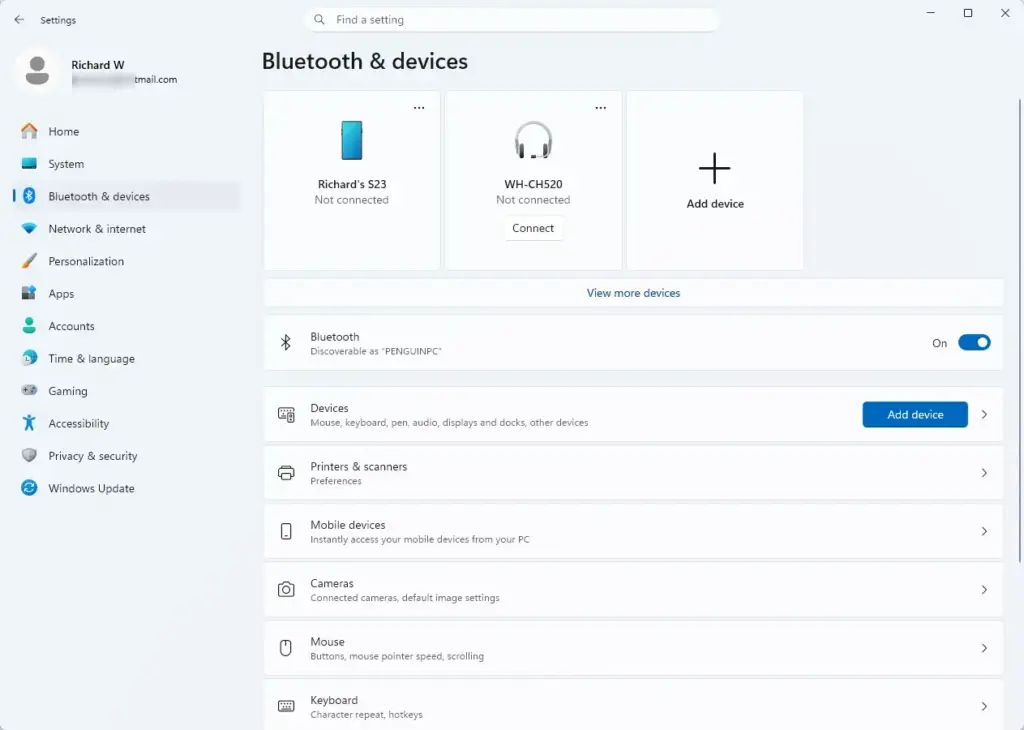
Windows Settings menu highlighting the Bluetooth and devices option for printers - Switch the Bluetooth toggle to On. The toggle label changes to On, and your paired devices appear below it.
- Select Add device. The Add a device window opens.
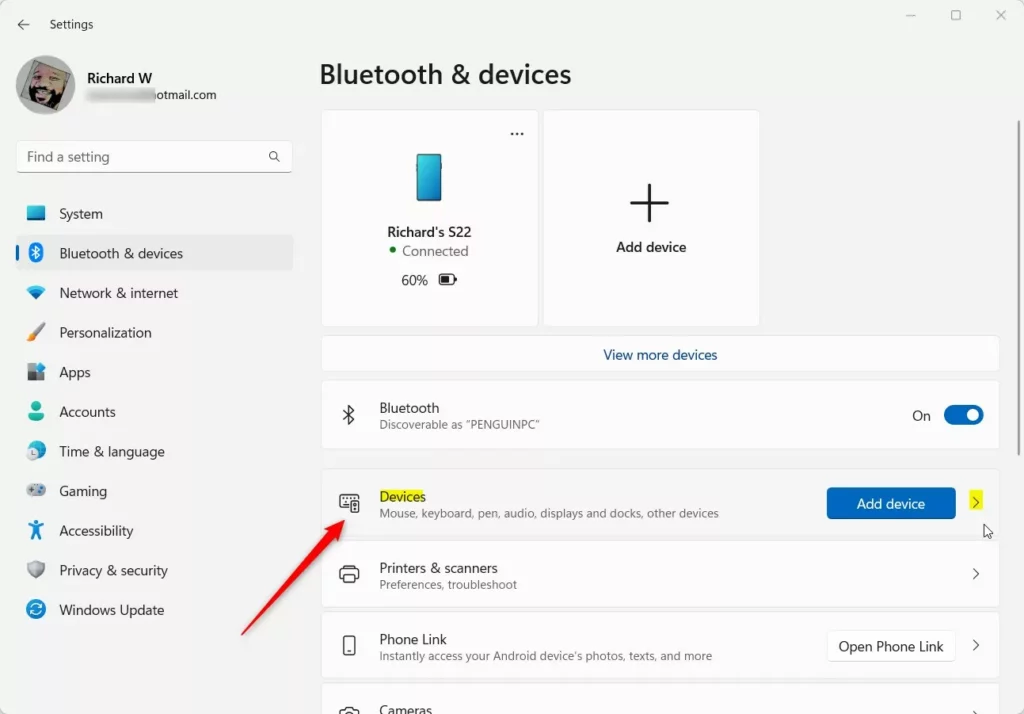
Windows 11 Bluetooth and devices settings with add device option. - Select Bluetooth . Windows starts scanning and keeps your PC discoverable (visible to nearby devices) while this window is open.
- On the sending device, open its Bluetooth settings and make sure Bluetooth is on. Look for your PC under available devices, using the name shown in Settings System About (for example, COMPUTER-NAME).
- Select your PC on the phone, or select the phone in the list on your PC. Both devices show a pairing code.
- Confirm that the codes match, then accept the pairing on both devices. In Windows, select Connect and then Done.
You should now see the other device listed under Settings Bluetooth & devices Devices, with the status Paired or Connected.
If your PC doesn't appear on the phone: keep the Add a device window open on the PC while you search from the phone. Your PC stays reliably discoverable only while that window is open. Move the devices closer together too.
Receive a File over Bluetooth in 🪟 Windows 11
This is the main procedure. Open the receiving wizard first, then send from the other device. Starting in the wrong order is the most common reason a transfer fails.
- Open Settings, then select Bluetooth & devices Devices.
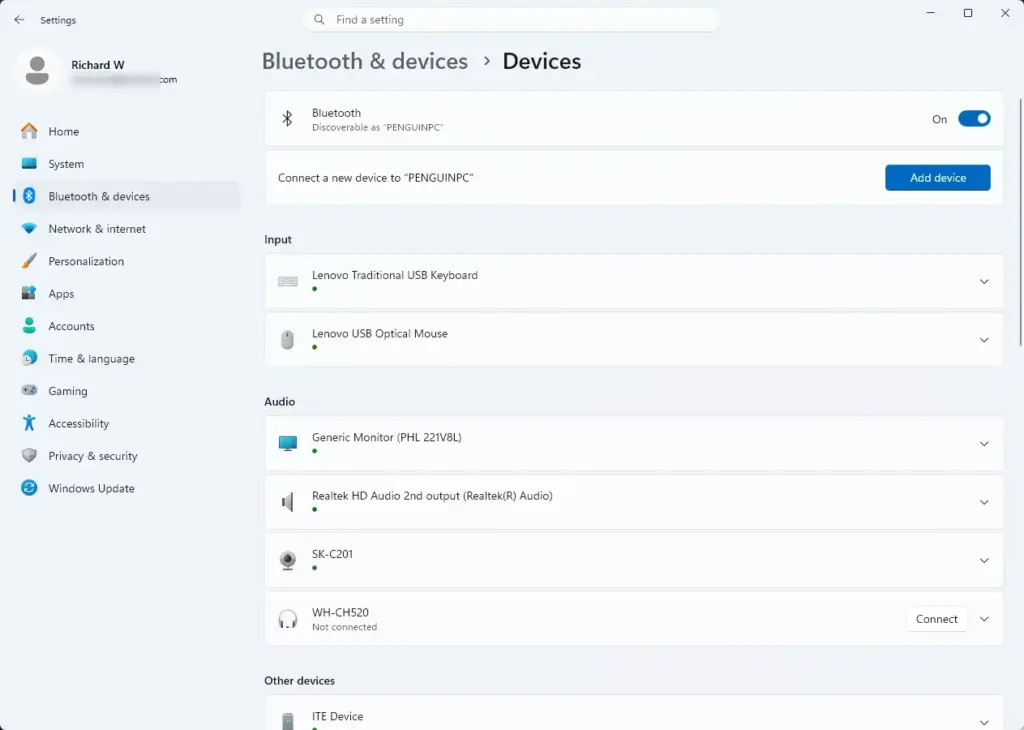
Settings › Bluetooth › Devices - Scroll down to the Related settings section.
- Select Send or receive files via Bluetooth. A window titled Bluetooth File Transfer opens with two choices.
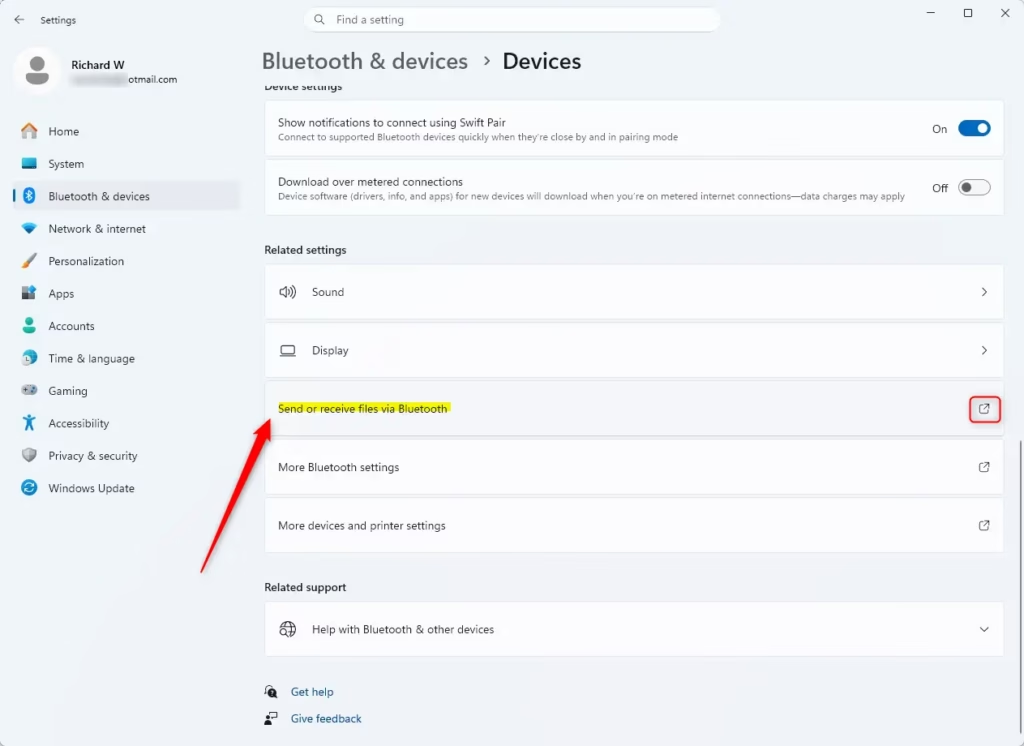
- Select Receive files. The window changes to show that your PC is waiting for a connection. Leave it open.
- Send the file from the other device. The steps for common senders are in the next three subsections.
- Watch the PC window. A progress bar appears while the file arrives.
- When the transfer completes, the wizard shows the received file's name and asks where to save it. Select Browse to pick a folder if the suggested one isn't where you want it.
- Select Finish. The file is saved to the folder you chose.
If the wizard closes before you send the file, the PC stops listening and the sender reports a failure. Reopen the wizard and start again from step 4.
Receive Files from an Android Phone
Android menu names vary by manufacturer and version, so your labels may differ slightly from these.
- Open the file in your Files app or Gallery.
- Select the Share button.
- Choose Bluetooth from the list of sharing options.
- Select your PC from the list of paired devices.
The phone shows a sending progress indicator, and the PC wizard shows the file arriving. If Bluetooth isn't in the Share list, turn Bluetooth on in the phone's settings and try again.
Receive Files from Another Windows PC
Open the same Bluetooth File Transfer wizard on the sending PC and choose the sending side. Then follow these steps.
- On the sending PC, open Settings Bluetooth & devices Devices, and select Send or receive files via Bluetooth.
- Select Send files.
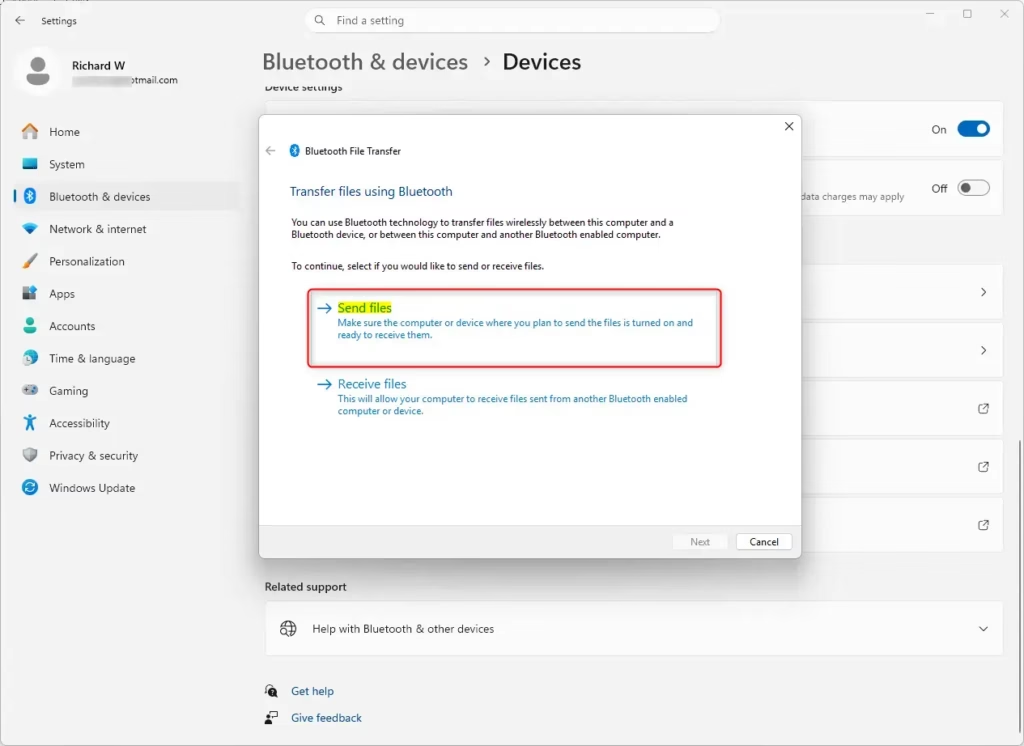
- Select the receiving PC from the device list, then select Next.
- Select Browse, choose the file, then select Next to start the transfer.
The receiving PC must already be on the waiting screen from the previous section. You can also right-click a file in File Explorer, and in Windows 11 choose Show more options Send to Bluetooth device. This is the same wizard.
If the Sender Is an iPhone or iPad
Send the file by email, a cloud storage service, or a cable instead.
Open the Wizard Faster with fsquirt
Running it directly saves you the trip through Settings.
- Press Windows key + R to open the Run dialog.
- Type
fsquirtand select OK.
The Bluetooth File Transfer window opens with the same Send files and Receive files options. You don't need administrator rights for this.
Find the File After It Arrives
The wizard asks you to choose a save location at the end of each transfer, so the file is in the folder you picked. If you didn't change it and can't remember where it went, open File Explorer and search for the file name in the search box at the top right. You can also sort This PC results by date modified to find recent arrivals.
Fix Problems Receiving Files over Bluetooth
Work through the symptom that matches what you see.
Send or Receive Files via Bluetooth Is Missing
This link only appears when Windows detects a working Bluetooth adapter. If Settings Bluetooth & devices has no Bluetooth toggle at all, or the Related settings entry is missing, check the following.
- Confirm Airplane mode is off. Open Settings Network & internet Airplane mode, and turn off both Airplane mode and Bluetooth under it if shown.
- Right-click the Start button and select Device Manager.
- Look for a Bluetooth category. If it is missing, check under Other devices for an unknown device or a device with a yellow warning icon.
- If the adapter has a down-arrow icon, right-click it and select Enable device. This needs administrator privileges, and Windows may ask you to confirm.
- If there is a warning icon, right-click the adapter, select Update driver, and then Search automatically for drivers. This also needs administrator privileges. If that finds nothing, download the Bluetooth driver (the software that lets Windows control the adapter) from your PC or adapter maker's support page.
If there is no Bluetooth category and no unknown device, the PC has no Bluetooth hardware. Plug in a USB Bluetooth adapter and wait for Windows to install it. Then check Settings again.
The Phone Can't Find or Connect to the PC
Open Settings Bluetooth & devices Devices and look at the Device discovery setting if your version shows it. It is a drop-down with Default and Advanced options. Advanced makes the PC easier for nearby devices to find. This setting appears only in recent builds of Windows 11. If you don't see it, your PC runs an earlier build, so skip this step. Keeping the Add a device window open while the phone searches also helps.
You can also check the older Bluetooth Settings dialog. In Settings Bluetooth & devices Devices, under Related settings, select More Bluetooth settings. On the Options tab, tick Allow Bluetooth devices to find this PC, then select OK. On the same tab, Alert me when a new Bluetooth device wants to connect controls whether Windows notifies you about incoming connection requests. Leave it ticked while you troubleshoot so you see prompts that need your approval.
The Transfer Starts and Then Fails
- Check the order. The PC wizard must show the waiting screen before the phone sends.
- Move closer. Bluetooth drops large transfers when the signal weakens.
- Send one file at a time to see whether a specific file is the problem.
- Check free space. The PC needs room in the folder you save to. Open Settings System Storage to see how much is free.
- Remove and re-pair the device. Go to Settings Bluetooth & devices Devices, select the three-dot menu on the device, and select Remove device. Then pair it again using the steps near the top of this guide.
Pairing Works but Files Never Arrive
Windows relies on the Bluetooth Support Service (a background service that manages Bluetooth connections) to handle file transfers. If it has stopped, Bluetooth may appear to work while transfers go nowhere. Starting a service requires administrator privileges.
- Press Windows key + R, type
services.msc, and select OK. - Find Bluetooth Support Service in the list and double-click it.
- If Service status says Stopped, select Start.
- Set Startup type to Manual or Automatic if it is set to Disabled, then select OK.
Restart the PC if the service refuses to start or the transfer still fails after you start it.
Another Option: Nearby Sharing Between Windows PCs
If both devices run Windows 10 or Windows 11, Nearby sharing is an alternative that is usually faster for large files. Open Settings System Nearby sharing and choose who can send you files. It can use Bluetooth to find nearby PCs. Phones and other platforms can't use it, so use the Bluetooth File Transfer wizard for those.
Stop Receiving Files or Undo the Setup
Receiving files over Bluetooth doesn't change a Windows setting you need to restore. The PC accepts files only while the wizard is open on the waiting screen.
- Stop listening: close the Bluetooth File Transfer window, or select Cancel.
- Turn Bluetooth off completely: go to Settings Bluetooth & devices and switch the Bluetooth toggle to Off.
- Unpair a device: go to Settings Bluetooth & devices Devices, select the three-dot menu next to the device, and select Remove device. You can pair it again later.
What to Do Next
If you also need to send files from the PC, open the same wizard and choose Send files. For a phone that keeps losing its connection, remove the pairing and set it up again. If you move a lot of data regularly, use Nearby sharing between Windows PCs or a cable, since both are faster than Bluetooth.
How to receive files on PC via Bluetooth?
Pair the sending device with your PC first. Then open Settings, select Bluetooth & devices, and click Send or receive files via Bluetooth. Choose Receive files and keep the window open. Start the transfer on your phone or other device while the wizard is waiting, and the file saves to your PC.
Why can't my laptop receive files via Bluetooth?
Usually the cause is Bluetooth being turned off, the devices not being paired, or no Bluetooth adapter in the laptop. Check that Bluetooth is on in Settings, confirm the sender supports Bluetooth file transfer, and make sure the Receive files option is open before sending. iPhones cannot send files to Windows PCs this way.
How to turn on Bluetooth to receive files?
Open Settings, select Bluetooth & devices, and switch Bluetooth to On. Then pair the sending device, open Send or receive files via Bluetooth, and choose Receive files. Bluetooth must stay on for the transfer to work. If the switch is missing, your PC has no Bluetooth adapter.
Where to find files received via Bluetooth on PC?
Received files are saved to the location the wizard shows when the transfer finishes. If you did not pick a folder, check your Downloads folder first. Open File Explorer and select Downloads in the left pane. You can also search for the file name in File Explorer.
Was this guide helpful?

About the Author
Richard
Tech Writer, IT Professional
Richard is a writer at Geek Rewind who turns complex IT tasks into clear, step-by-step guides. He draws on years of hands-on experience in system administration and enterprise IT operations, focusing on Windows, Linux and WordPress: the problems people actually run into, and the fixes that work. His server and WordPress guides come from systems he runs himself. Richard builds and maintains the platform behind Geek Rewind, from its Ubuntu servers and Nginx configuration to its custom WordPress plugins. Many new tutorials start with readers' questions, and he's always glad to answer them in the comments.




No comments yet — be the first to share your thoughts!