Control Microsoft Edge Diagnostic Data Settings


Microsoft Edge diagnostic data settings control the browsing activity, crash reports, and feature use details that Edge sends to Microsoft to improve browser performance. You can choose between three levels: optional diagnostic data, required diagnostic data, or no diagnostic data at all.
Edge has its own privacy settings for this, and you can change them whenever you want to limit what leaves your computer. This tutorial covers the registry method. It works on both Windows 11 Home and Pro, and it is useful when you want to set the choice yourself or lock it so it stays fixed.
Control diagnostic data by opening the Windows Registry Editor and navigating to 🗝️HKEY_LOCAL_MACHINESOFTWAREPoliciesMicrosoftEdge. Double-click DiagnosticData and set the value to 0 to disable, 1 for required data only, or 2 for required and optional data.
Enable or disable sending diagnostic data to Microsoft from Edge
These settings decide whether Edge sends your browser usage info and crash reports to Microsoft. You can control them with the Registry Editor, a tool for changing advanced system settings. You can turn the feature on or off again at any time. You need an administrator account to make these changes.
Editing the registry affects the whole system, so be careful. Before you start, consider backing it up. In Registry Editor, go to File Export, choose All as the export range, and save the file somewhere safe.
- Open the Windows Registry Editor, a tool for managing Windows settings . The quickest way is to click Start and search for Registry Editor.
- Click Yes if User Account Control asks whether to allow the app to make changes.
The Registry Editor window should now be open, with the registry keys listed in the left pane.
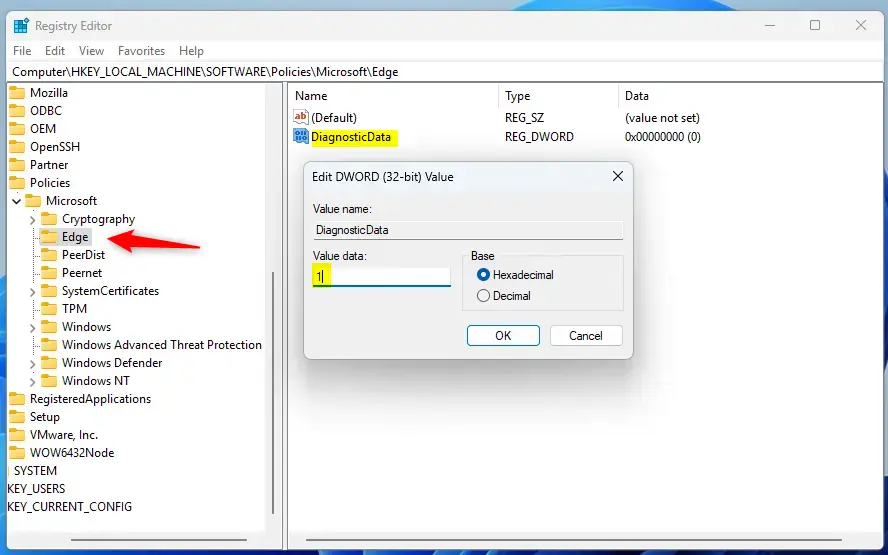
Go to the registry key shown below. You can expand the folders in the left pane one at a time, or paste the path into the address bar at the top of the Registry Editor window.
Computer\HKEY_LOCAL_MACHINE\SOFTWARE\Policies\Microsoft\Edge
- Select the key in the left pane so its contents appear on the right.
- Look in the right pane for an entry named DiagnosticData.
- Double-click DiagnosticData in the Explorer key's right pane to open it.
A small Edit DWORD (32-bit) Value window should open. If you don't see a DiagnosticData entry, skip ahead to the step about creating it.
Type a number in the Value data box, based on the list below, then click OK. Make sure the Base option is set to Decimal or Hexadecimal. These single digits are the same in both.
2= Always send required and optional diagnostic data from Edge to Microsoft1= Only send required diagnostic data from Edge to Microsoft.0= Disable sending required and optional diagnostic data from Edge to Microsoft.
If the DiagnosticData entry is missing, you need to create it. Policy entries like this don't exist until someone adds them.
- Right-click an empty space in the right pane.
- Choose New, then click DWORD (32-bit) Value.
A new entry should appear in the list with its name highlighted, ready for you to type.
- Name the new entry "DiagnosticData" and press Enter. Spelling and capitalization must match exactly.
- Double-click the entry you just created.
- Enter the value you want in the Value data box, using the list above, and click OK.
The entry should now show your chosen number in the Data column.
To undo the change, right-click the "DiagnosticData" item you created, choose Delete, and confirm. Deleting it restores the default behavior. If you exported a backup earlier, you can also restore it with File Import
Close Registry Editor, then close and reopen Microsoft Edge. Rebooting the computer may be necessary for the changes to take effect, so restart if Edge still behaves as before.
Your changes should now be applied. Edge will follow the diagnostic data level you set, and the related option in Edge's own privacy settings may appear locked or managed while the entry exists.
Reference:
Conclusion:
- Enabling or disabling diagnostic data collection in Microsoft Edge is a personal choice that can affect both privacy and browser performance.
- You can configure the "DiagnosticData" policy in the Windows Registry Editor to control whether Edge sends required and optional diagnostic data to Microsoft. Deleting the entry puts things back to default.
- Weigh what sending diagnostic data means for you, and decide based on your privacy concerns and the need for product improvement.
Have a question about this guide?
Answered by AI from this guide. Good questions may be added to this page — please don't include personal details.
Did this guide fix your problem?

About the Author
Richard
Tech Writer, IT Professional
Richard is a writer at Geek Rewind who turns complex IT tasks into clear, step-by-step guides. He draws on years of hands-on experience in system administration and enterprise IT operations, focusing on Windows, Linux and WordPress: the problems people actually run into, and the fixes that work. His server and WordPress guides come from systems he runs himself. Richard builds and maintains the platform behind Geek Rewind, from its Ubuntu servers and Nginx configuration to its custom WordPress plugins. Many new tutorials start with readers' questions, and he's always glad to answer them in the comments.
No comments yet — be the first to share your thoughts!