How to Turn On or Off AutoPlay for Cameras and Phones in Windows 11

AutoPlay in Windows 11 opens a menu right after you plug in a camera, phone, or memory card so you can pick what to do with your files. This built-in feature saves you time by automatically launching apps to import photos, play music, or view folders.
You can turn AutoPlay on or off in the Settings app in 3 quick clicks to stop unwanted pop-ups from appearing every time you connect a device.
Control what happens when you connect cameras or phones in Windows 11 via Settings. Navigate to System AutoPlay and choose your preferred action or turn it off. These settings apply to non-storage devices like cameras and phones, not USB drives.
What is AutoPlay?
AutoPlay is a built-in feature that decides what happens when you plug in cameras, phones, or other devices. When you connect a device, Windows 11 AutoPlay settings can automatically open photos and videos, prompt you to choose an action, or open a folder to view files without extra clicks.
- Automatically open photos, videos, or music from your device.
- Ask you what you want to do each time you connect a device.
- Show you a list of apps to choose from if your device has different types of content.
- Simply open the folder with your files.
- Do nothing if you’ve told it not to act on that device before.
Those appear instead under File Explorer This PC.
Holding the Shift key while plugging in hardware forces the AutoPlay prompt to appear regardless of current configurations.
How to Turn On or Off AutoPlay for Cameras, Phones, and Other Devices (Non-storage Devices)
Administrative privileges are required to modify these settings.
Option 1Using Local Group Policy Editor (🪟 Windows 11 Pro, Enterprise, Education only)
Local Group Policy Editor lets you manage Windows 11 AutoPlay settings on Pro, Enterprise, and Education editions of the operating system. You can use this built-in tool to turn AutoPlay on or off for connected cameras and phones by changing system policies.
- Press Windows + R on your keyboard to open the Run box.
- Type
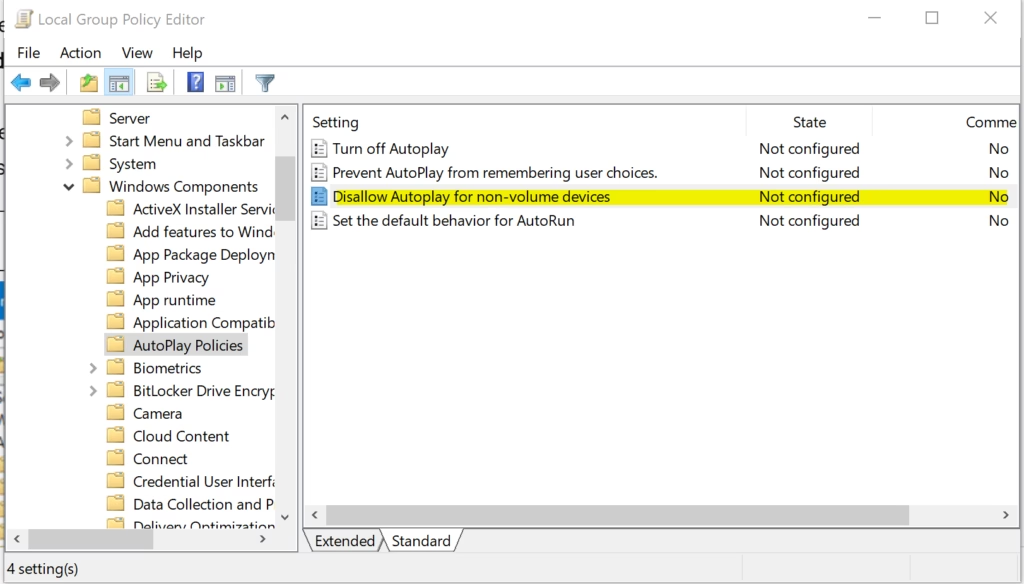
gpedit.mscand press Enter to open the Local Group Policy Editor. - In the left panel, go to:
Computer Configuration > Administrative Templates > Windows Components > AutoPlay Policies - In the right panel, find and double-click Disallow AutoPlay for non-volume devices.
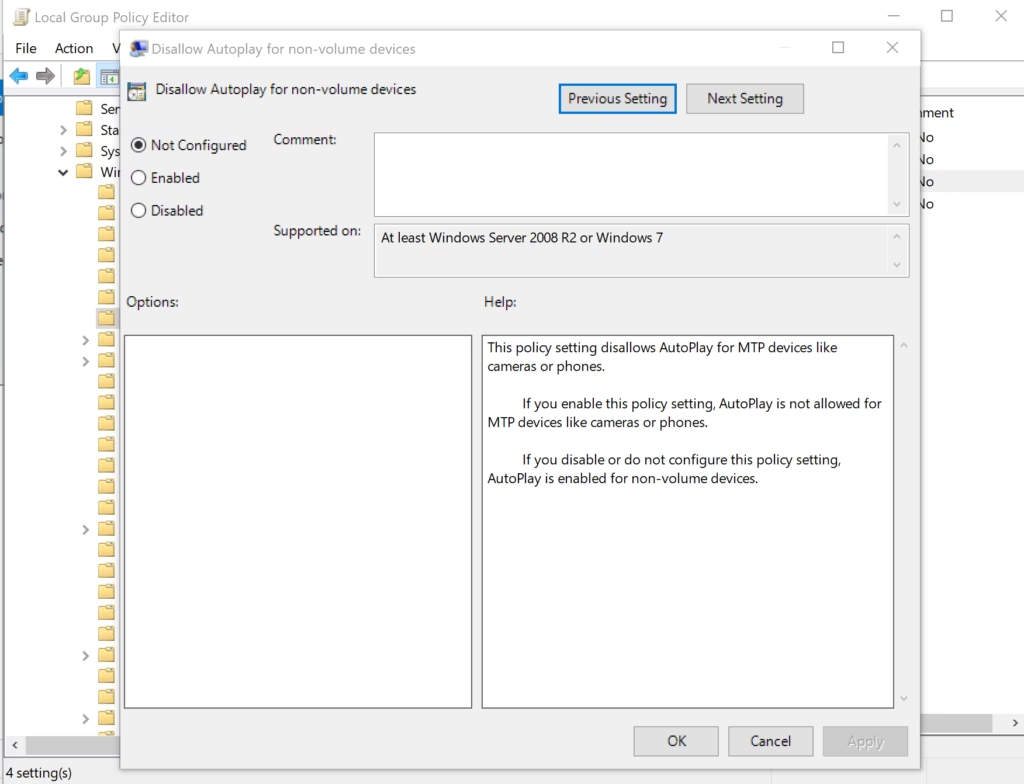
- To enable AutoPlay (default):
Select Not Configured or Disabled, then click OK. - To disable AutoPlay:
Select Enabled, then click OK. - Close the Local Group Policy Editor.
The policy editor displays these options:
Option 2Using the Windows Registry (All 🪟 Windows 11 editions)
Registry Editor provides a way to adjust Windows 11 AutoPlay settings on all editions, including Windows 11 Home. You can run simple commands to turn AutoPlay on or off when the Group Policy Editor is not available on your PC.
To Enable AutoPlay (default):
reg delete "HKCU\Software\Policies\Microsoft\Windows\Explorer" /v NoAutoplayfornonVolume /f
reg delete "HKCU\Software\Policies\Microsoft\Windows\Explorer" /v NoAutoplayfornonVolume /f
Deleting or removing the NoAutoplayfornonVolume value turns AutoPlay back on for these devices.
To Disable AutoPlay:
reg delete "HKCU\Software\Policies\Microsoft\Windows\Explorer" /v NoAutoplayfornonVolume /f
reg add "HKCU\Software\Policies\Microsoft\Windows\Explorer" /v NoAutoplayfornonVolume /t REG_DWORD /d 1 /f
This adds a value to turn off AutoPlay for cameras, phones, and other non-storage devices.
How to apply these changes:
- Or you can open Registry Editor (
regedit), navigate to the keys, and change or delete the values manually. - Restart your PC or sign out and back in for changes to take effect.
Summary
- AutoPlay helps you quickly open photos, videos, or music when you connect cameras, phones, or other devices.
- You can turn AutoPlay on or off for these devices using either the Group Policy Editor or the Registry Editor.
- You need to be an administrator to change these settings.
- AutoPlay settings only affect non-storage devices (like cameras and phones), not USB drives or external hard drives.
- Press Shift when plugging in a device to force the AutoPlay prompt to appear.
Windows 11 AutoPlay settings let you control what happens when you connect devices like cameras and phones to your computer. You can turn this feature on or off using either the Group Policy Editor or the Registry Editor depending on your version of Windows.
Official Microsoft documentation provides additional details regarding this setting: Disallow AutoPlay for non-volume devices.
Was this guide helpful?

About the Author
Richard
Tech Writer, IT Professional
Richard, a writer for Geek Rewind, is a tech enthusiast who loves breaking down complex IT topics into simple, easy-to-understand ideas. With years of hands-on experience in system administration and enterprise IT operations, he’s developed a knack for offering practical tips and solutions. Richard aims to make technology more accessible and actionable. He's deeply committed to the Geek Rewind community, always ready to answer questions and engage in discussions.

No comments yet — be the first to share your thoughts!