How to Restore Default Folder Locations in Windows 11


Restoring default folder locations in Windows 11 moves personal folders like Documents, Downloads, Pictures, and Videos back to their original paths on your primary drive. These system folders live inside your user profile folder at 📁C:\
Accidental shifts or low storage space often cause these folders to move to a new drive. Resetting them puts your files back in the correct spot so Windows and your apps find them without errors.
This guide covers two methods. The first uses the folder’s Properties window and works on every edition of Windows 11. The second uses the Registry Editor and is meant for cases where the Properties method does not work. Try the first method before the second.
Open File Explorer , type shell:UsersFilesFolder in the address bar, right-click the folder, select Properties, click the Location tab, then click Restore Default and confirm. Windows moves your folder and all files back to 📁C:\
Why restore your folders?
Moving folders like Downloads or Documents to a different drive helps save space on your main drive. However, this can cause issues with apps that expect files to be in the default C: drive. Restoring them helps fix broken links and keeps your system organized.
Typical signs of a moved folder are apps that save files to the wrong place, installers that cannot find your Downloads folder, and backup tools that skip folders they expect to find in your profile. If you see any of these, restoring the default location is a good first fix.
What happens when you are done?
Windows will move your folder and all its contents back to your main user profile directory. Your files will be exactly where Windows expects them to be. Your system will treat them as if they were never moved.
The move can take a while if the folder is large, so let it finish. You do not normally need to restart the PC afterwards. If an app still saves to the old location, close it and open it again.
Important: Safety First
Moving folders can lead to data loss if the process is interrupted. Creating a System Restore Point is a smart safety step.
To create a restore point, type Create a restore point into the Start menu search and open the result. On the System Protection tab, select your C: drive and click Create. If the Create button is greyed out, protection is turned off for that drive. Select the drive, click Configure, and choose Turn on system protection first. A restore point covers system settings, not your personal files, so also copy the folder you plan to move to an external drive or another safe location.
Method 1The Properties Menu
Using the Properties menu is the fastest way to restore default folders Windows 11 users accidentally move or delete. This built-in feature lets you reset folders like Documents, Downloads, or Pictures back to their original system paths inside File Explorer without needing advanced technical tools.
This method works on Windows 11 Home and Pro. The Location tab appears only for personal folders that Windows tracks in your user profile, such as Desktop, Documents, Downloads, Music, Pictures, and Videos. If a folder has no Location tab, it is not one of those folders, and this method will not apply to it.
- Open File Explorer . You can press Win+E to do this quickly.
- Type
shell:UsersFilesFolderin the address bar and press Enter. File Explorer should load that location and show its contents. 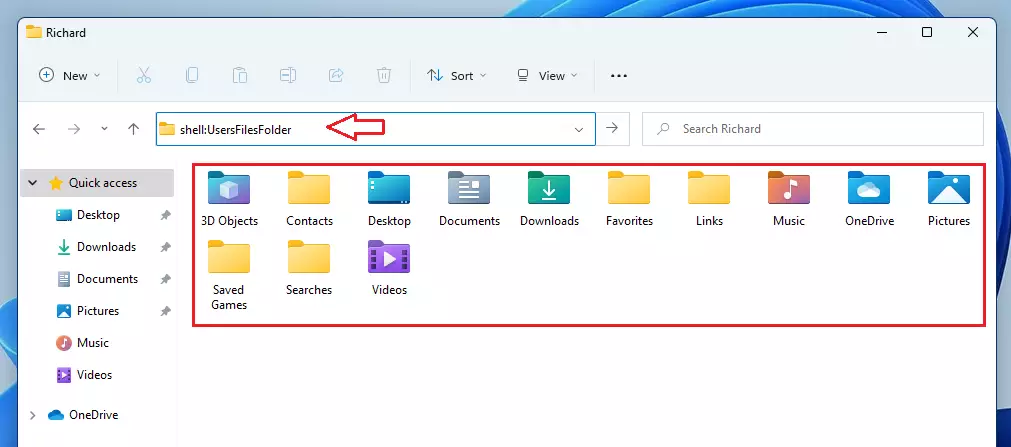
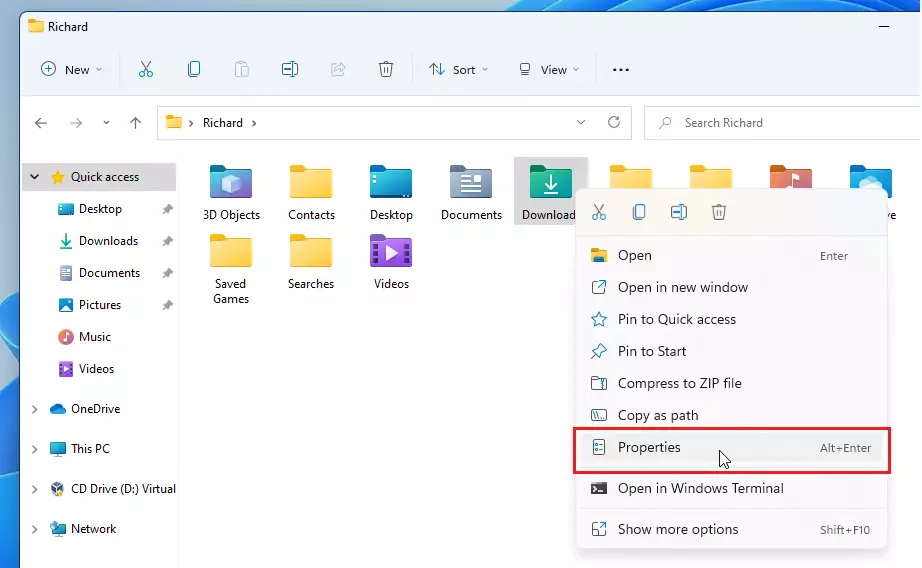
windows 11 personal folder in home directory - Right-click the folder and select Properties. On Windows 11, the right-click menu may show only icons at first. If you do not see Properties, click Show more options, or select the folder and press Alt+Enter. The folder’s Properties window should open.
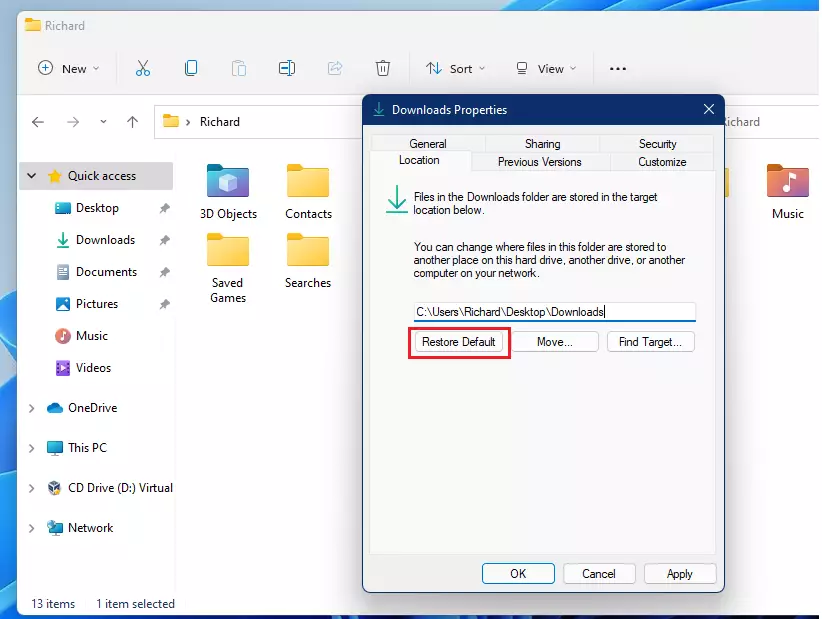
right click context menu windows 11 - Click the Location tab. It shows the folder’s current path in a box. If the path points to another drive, that confirms the folder was moved.
- Click Restore Default. The path in the box should change to the default location inside your user profile folder.
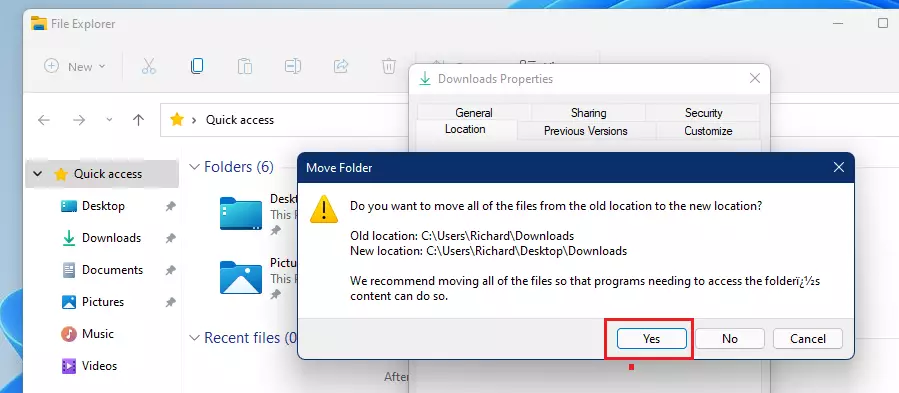
windows 11 restore default button personal folder - Click Apply and Yes to move your files. Windows will ask whether you want to move all files from the old location to the new one. Wait for the progress window to close.
windows 11 desktop downlaods folder
If the folder is empty at the old location, or you choose not to move the files, only the path changes. Your files then stay where they were, and you will have to copy them over yourself. To undo the change, return to the Location tab and use Move to pick the other folder again.
If you back up your folders with OneDrive, the default location may point to a OneDrive folder instead of 📁C:\
Admin privileges may be required to change the default folder location if the folder resides in a protected area of the computer. This is necessary to prevent unauthorized changes to system files.
If Windows shows a permission error, sign in with an administrator account and try again. On a work or school PC, a policy set by your organization may also block the change, and you will need to ask your IT team.
Method 2Using the Registry Editor
Using the Registry Editor (a tool for changing low-level Windows settings ) helps you restore default folders Windows 11 cannot fix through normal menu options. This advanced method lets you manually update the folder paths stored in your user profile keys so Windows points to the correct locations again.
Use this method only if the Location tab is missing or the Restore Default button fails. A wrong edit in the registry can cause problems, so back up first. In the Registry Editor, click File Export and save a copy of the key you are about to change. You can double-click that saved file later to put the old values back. Editing the registry works the same on Home and Pro.
- Press Win+R, type
regedit, and press Enter. If User Account Control asks for permission, click Yes. The Registry Editor window should open. - Navigate to:
HKEY_CURRENT_USER\Software\Microsoft\Windows\CurrentVersion\Explorer\User Shell Folders. You can also paste the path into the address bar at the top of the Registry Editor. The values for your personal folders should appear in the right pane. - Find the folder path, double-click it, and change the value back to the default path (e.g.,
%USERPROFILE%\Downloads). Click OK to save it.
Changing the registry value only changes where Windows looks. It does not move any files. Copy your files from the old folder into the default folder yourself. Then sign out and sign back in, or restart the PC, so Windows and your apps pick up the new path.
Comparison of Methods
| Method | Ease of Use | Risk Level |
|---|---|---|
| Properties Menu | Easy | Low |
| Registry Editor | Advanced | High |
Summary
Restoring default folders in Windows 11 helps fix errors and keep files tidy, whether you use the simple Properties menu or the advanced Registry Editor, so you can ensure your computer runs smoothly.
Start with the Properties method, since it moves your files for you. Keep the Registry Editor for the cases where it fails, and back up before you change anything.
Have a question about this guide?
Answered by AI from this guide. Good questions may be added to this page — please don't include personal details.
Did this guide fix your problem?

About the Author
Richard
Tech Writer, IT Professional
Richard is a writer at Geek Rewind who turns complex IT tasks into clear, step-by-step guides. He draws on years of hands-on experience in system administration and enterprise IT operations, focusing on Windows, Linux and WordPress: the problems people actually run into, and the fixes that work. His server and WordPress guides come from systems he runs himself. Richard builds and maintains the platform behind Geek Rewind, from its Ubuntu servers and Nginx configuration to its custom WordPress plugins. Many new tutorials start with readers' questions, and he's always glad to answer them in the comments.
No comments yet — be the first to share your thoughts!