How to Find Your Computer Name in Windows 11


A computer name in Windows 11 is the label that identifies your PC on a network, so other devices can find it. It is also called the hostname. By default it looks like a random mix of letters and numbers, such as DESKTOP-A1B2C3D4, unless you or the manufacturer changed it.
You need this name when you connect a wireless printer, share files between computers, map a network drive, or troubleshoot a home network. Windows 11 shows the exact name at the top of the About page in Settings. This tutorial covers three ways to get there: a keyboard shortcut, the Settings menu, and Command Prompt.
Open Settings , go to System About, and read the Device name at the top of the page. You can also press Win+Pause/Break to jump straight there, or type hostname in Command Prompt. The name looks like DESKTOP-A1B2C3D4 unless it was changed, and you need it for network printers and file sharing.
Method 1The Fastest Way (Keyboard Shortcut)
It needs a keyboard with a Pause/Break key. Many laptops don’t have one, or hide it behind the Fn key. If the shortcut does nothing on your machine, use the Settings method further down.
- Press Win+Pause/Break on your keyboard. On some laptops you may need to hold Fn as well.
- Wait a moment while Windows opens the About page in Windows 11 settings. It is the same page you reach through System About
- Look for Device name at the top of the window. The name shown there, in larger text, is your computer name. A Rename button sits next to it, but you only need that if you want to change the name.
Method 2Using the Settings Menu
The Settings app is the standard route and works on every Windows 11 PC, Home or Pro. From the About page you can read your current device name, rename the PC if you want, and check other system details such as the processor, installed memory and Windows edition. No advanced tools are needed. Open Settings, go to the System section, and open About. The computer name is the first thing you see.
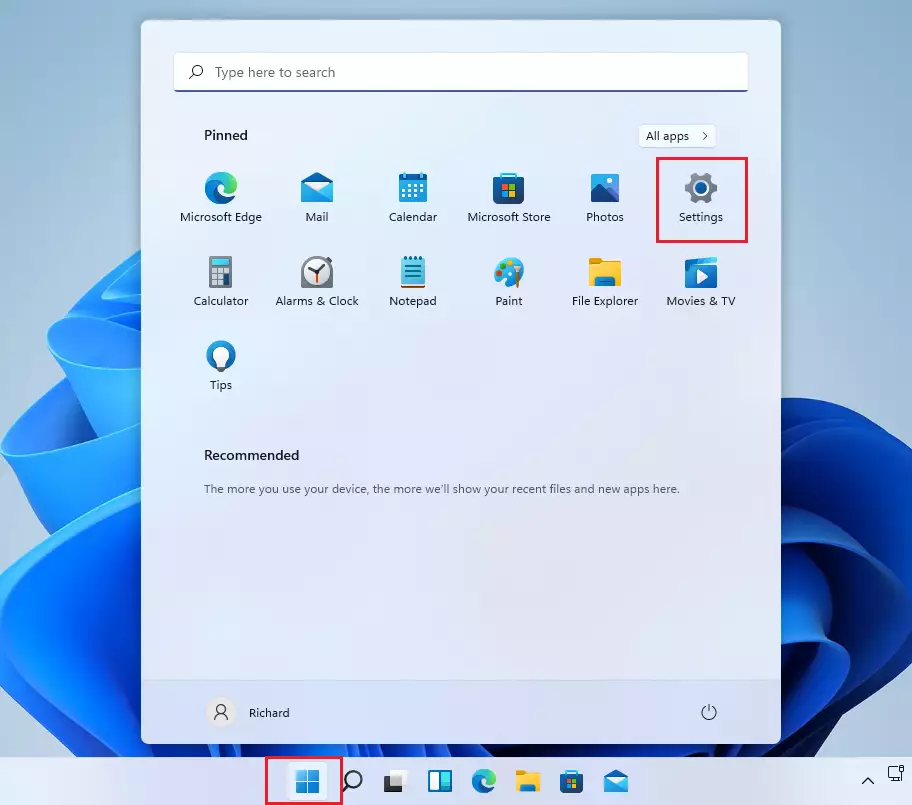
- Press Win+I to open Settings . You can also right-click the Start button and choose Settings. The Settings window should open with the left sidebar visible.
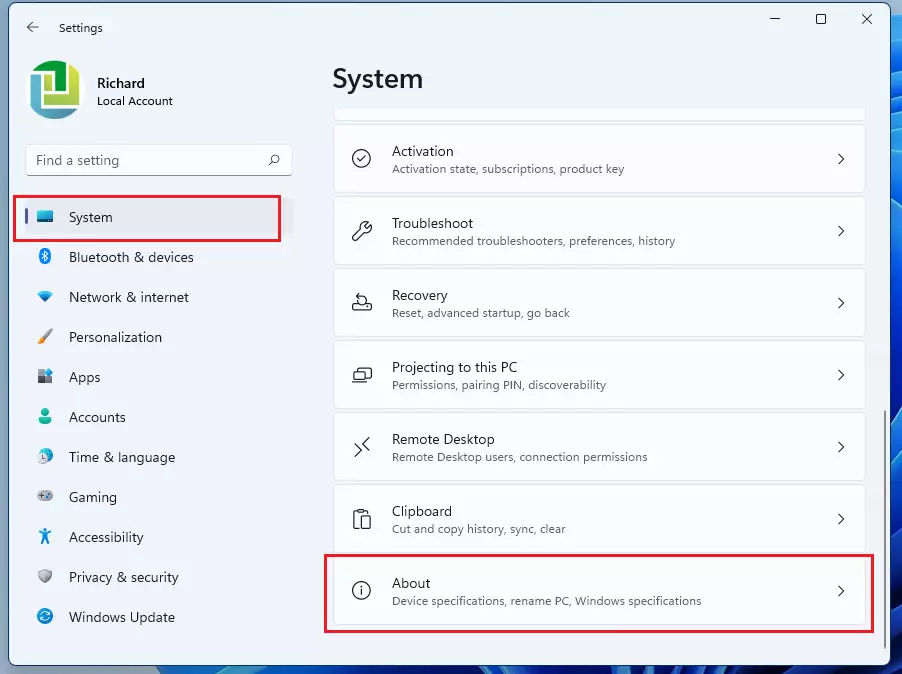
- Click System on the left sidebar. The main pane shows display, sound, notifications and other system options.
- Scroll to the bottom of the list and click About. The page that opens shows your device name at the top, followed by the device specifications and Windows specifications.
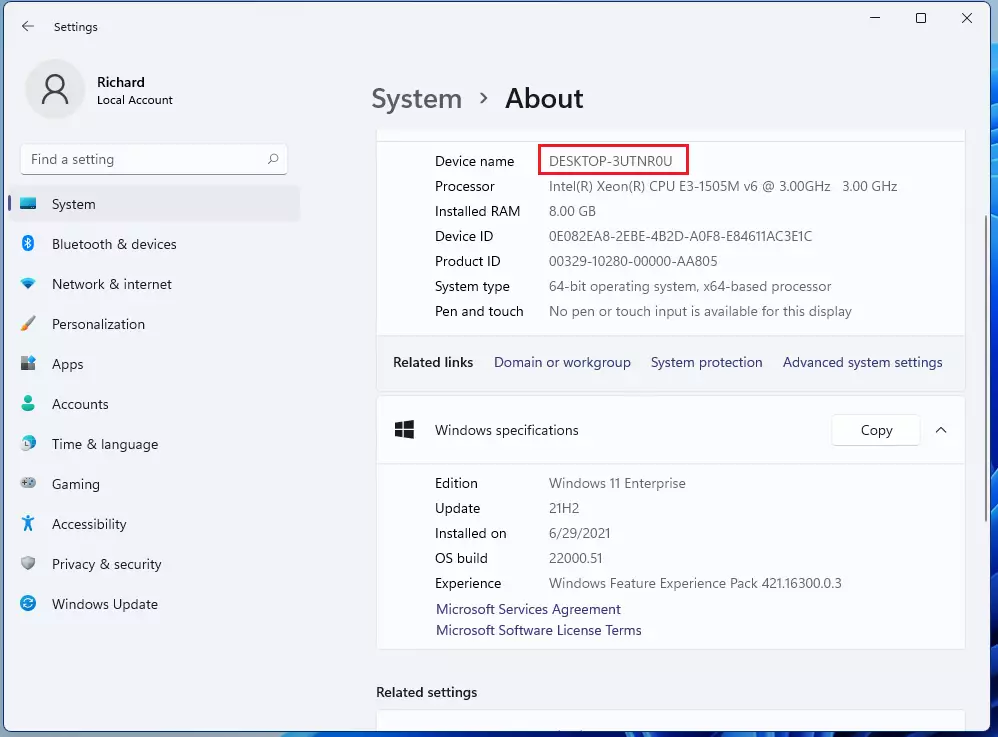
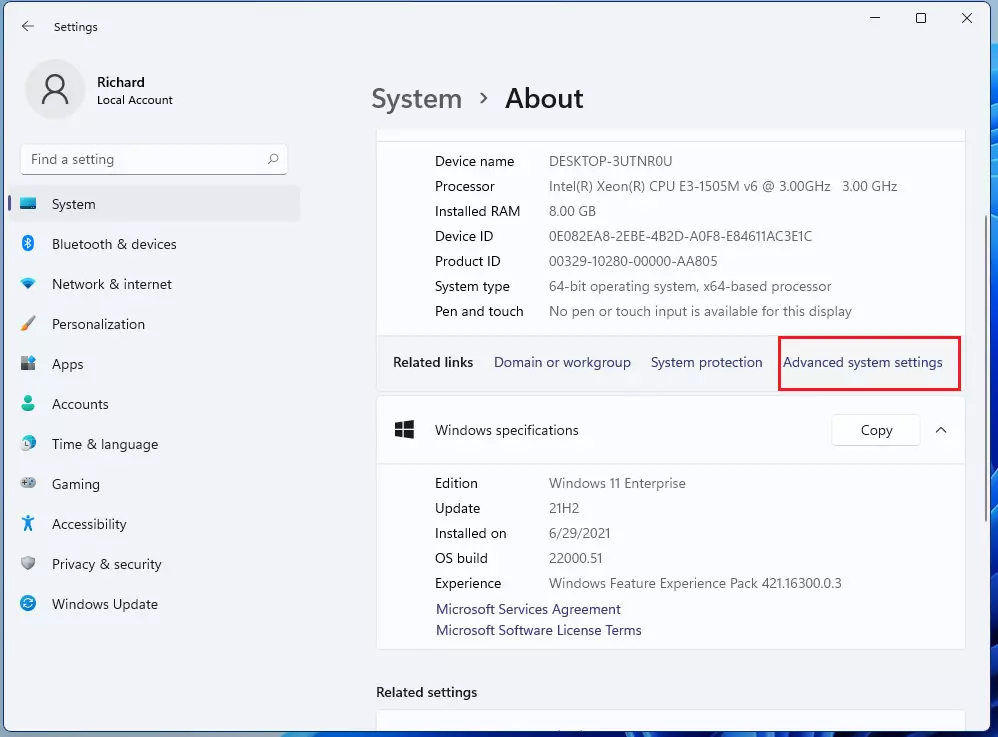
Your device name is displayed clearly at the top of the About page. If you need more detail, such as your domain or workgroup status, click Advanced system settings in the related links on that page. This opens the classic System Properties window. On its Computer Name tab you can see the full computer name and whether the PC belongs to a workgroup or a domain.
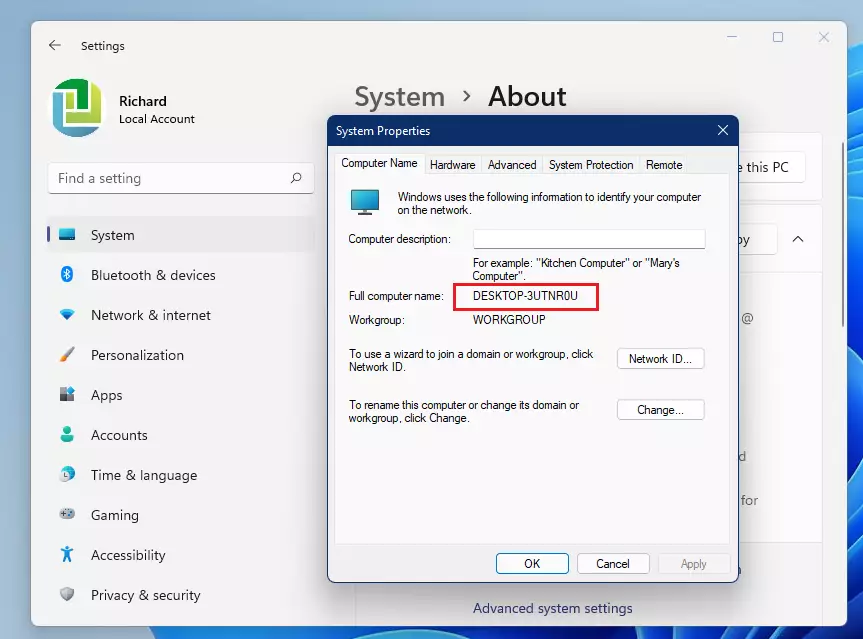
Method 3Using the Command Prompt
Use Command Prompt if you prefer text-based tools, or if you are working over a remote session where clicking through Settings is awkward. This method gives you only the name and nothing else, which makes it easy to copy. It does not need administrator rights.
- Click the Search icon on your taskbar. A search box opens, ready for you to type.
- Type cmd and press Enter. A Command Prompt window opens.
- In the black window, type
hostnameand press Enter.
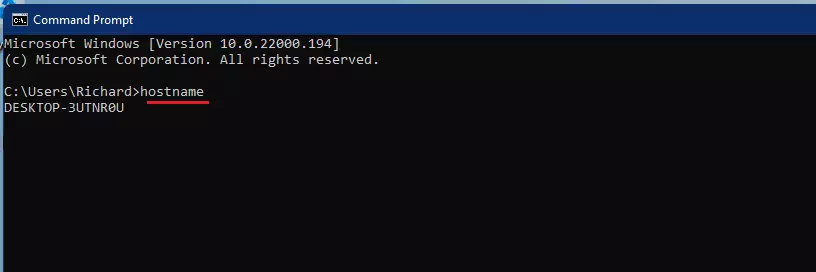
To copy it, right-click and select the text in the window, or right-click the title bar and use the Edit options. The name should match the Device name shown in Settings. If you rename the PC, the new name only takes effect after a restart, so both places may show the old name until then.
Related Articles
Summary
Your computer name is needed for network tasks and for fixing problems, and you can find it in several ways. The shortcut is quickest, Settings gives you the most context, and Command Prompt is best when you want the plain text.
A quick note: you don't need administrator privileges (also called admin rights) to view your computer name, but you do need them to change it. If the Rename button asks for an admin password, or your PC is managed by a school or employer, ask whoever manages the device. After a rename, Windows asks you to restart before the new name applies.
Have a question about this guide?
Answered by AI from this guide. Good questions may be added to this page — please don't include personal details.
Did this guide fix your problem?

About the Author
Richard
Tech Writer, IT Professional
Richard is a writer at Geek Rewind who turns complex IT tasks into clear, step-by-step guides. He draws on years of hands-on experience in system administration and enterprise IT operations, focusing on Windows, Linux and WordPress: the problems people actually run into, and the fixes that work. His server and WordPress guides come from systems he runs himself. Richard builds and maintains the platform behind Geek Rewind, from its Ubuntu servers and Nginx configuration to its custom WordPress plugins. Many new tutorials start with readers' questions, and he's always glad to answer them in the comments.
No comments yet — be the first to share your thoughts!