How to Use Periods in Windows 11 Date Formats

Windows 11 normally shows short dates with forward slashes, such as 09/12/2023. You can change this to dots (09.12.2023) by editing the short date format. The new style shows up on your taskbar clock and in apps that read the system date format. It suits regional writing habits or just your own preference.
The short version: open the Region settings, find the Short date box, and type dd.MM.yyyy or a similar pattern with periods in place of slashes. Windows applies the change as soon as you save it. The full steps are below, along with the Control Panel , Registry Editor and PowerShell methods.
Change your short date format in Windows 11’s regional settings to use periods. Go to Settings Time & Language Language & Region, then Administrative language settings Formats Additional settings Date, and change the Short date to `dd.MM.yyyy`.
Why Change Your Date Format?
Windows 11 lets you swap the slashes in the date for periods. This helps when you need the date to match a regional standard, such as the dotted style common in much of Europe, or when you simply find it easier to read. The setting changes how the system clock and date are displayed, so it affects your whole daily workflow, not just one program.
The default format lists don’t include a dotted option, so you type the pattern in by hand. It takes a minute and is easy to reverse.
What happens when you are done?
When you finish, the taskbar clock and system apps show the new date format. The change applies to your user profile only, not to other accounts on the PC. Most apps that read the system date format pick up the new style right away. A few apps read the format only at launch, so close and reopen any that still show slashes.
Method 1Using Windows Settings
The easiest route is the built-in Settings app , and you don’t need any extra software. You open Settings, go to Time & language Language & region, and reach the older Region dialog from there. The steps work the same on Windows 11 Home and Pro.
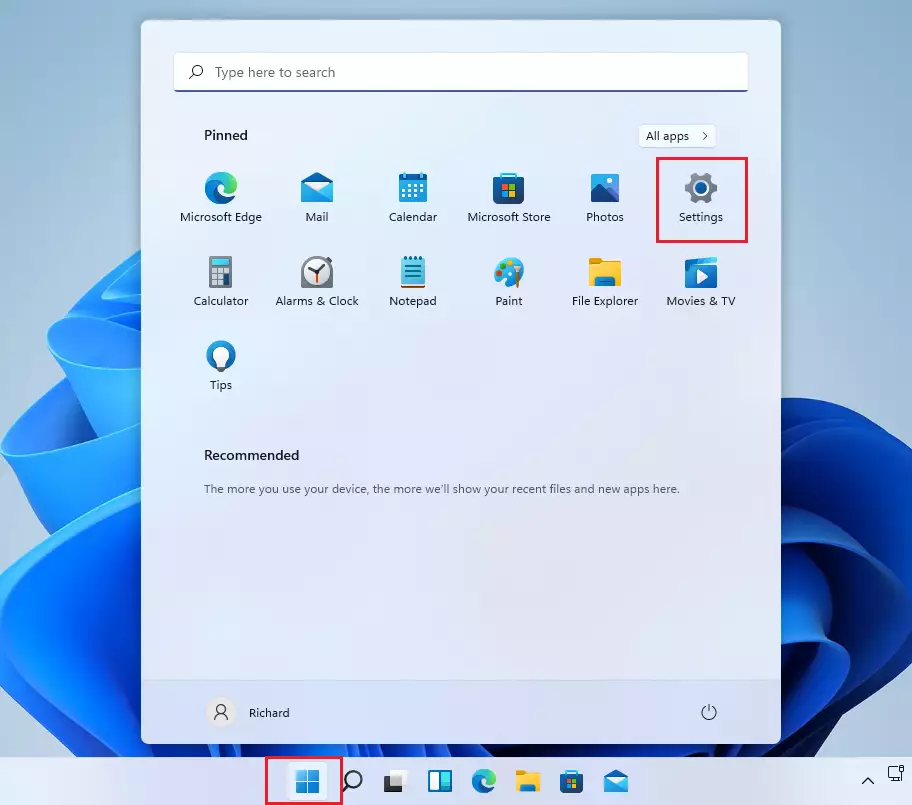
- Open Settings (press Win+I).
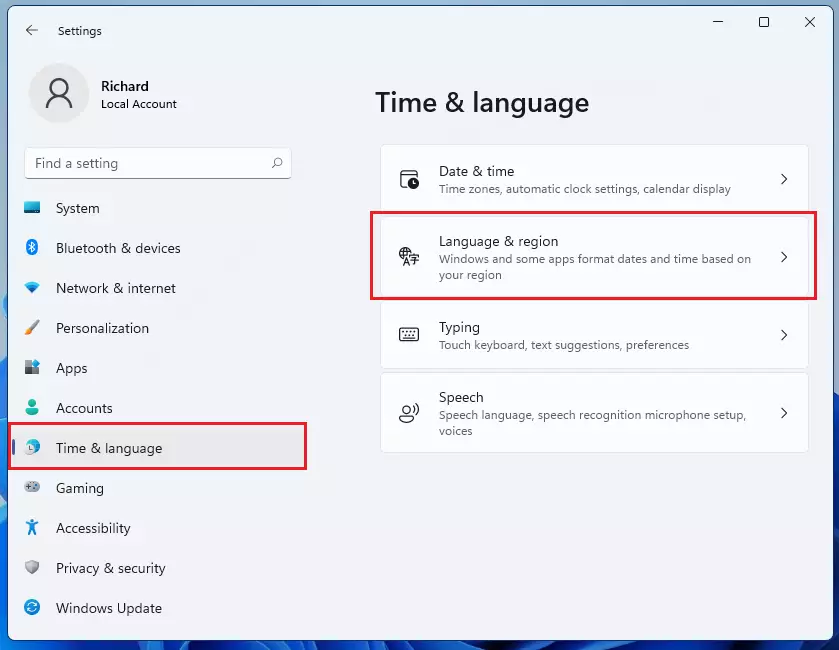
- Click Time & language in the left pane.
- On the right, select Language & region.
You should now see your display language, regional format and related options.
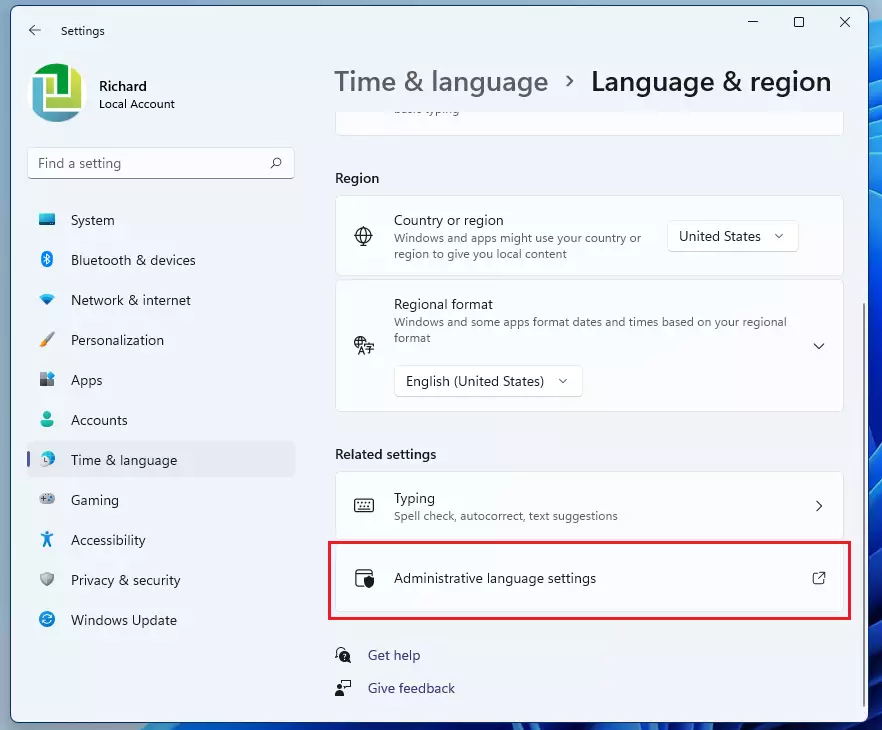
- Scroll down to the “Related settings” area.
Be aware: This step may require administrator permission. If you use a standard account, Windows may ask for an administrator password. A work or school PC may also block the change through policy. If so, ask your IT team.
- Wait for the Region box to appear.
- Click the Formats tab.
The format lists on this tab don’t include a dotted date style, so you have to type the format in manually. That happens in the next steps.
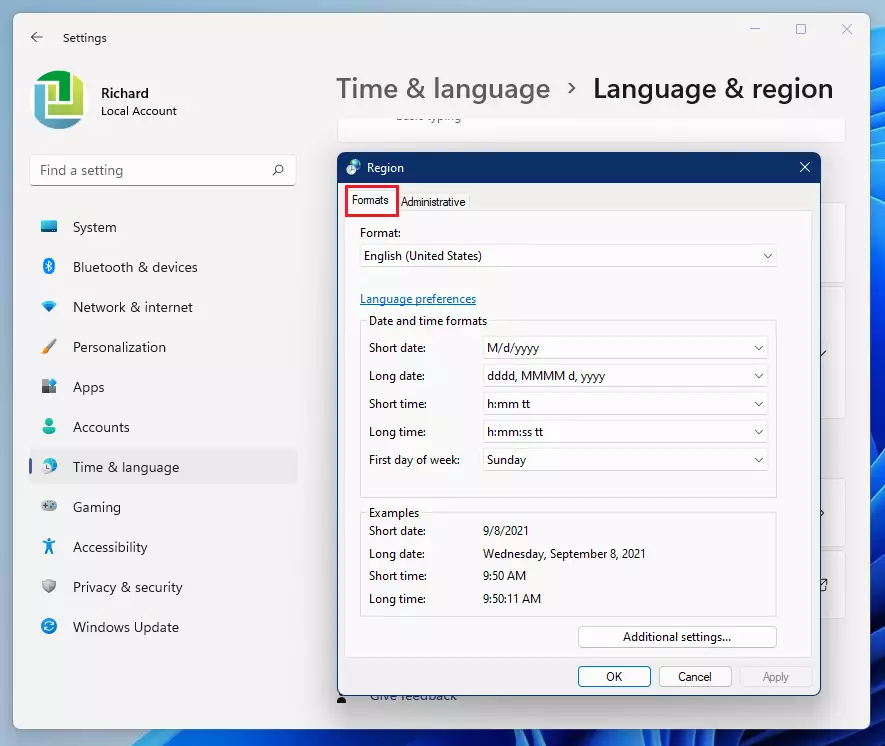
- Click the Additional settings button at the bottom of the window.
A second window opens with detailed number, currency, time and date options.
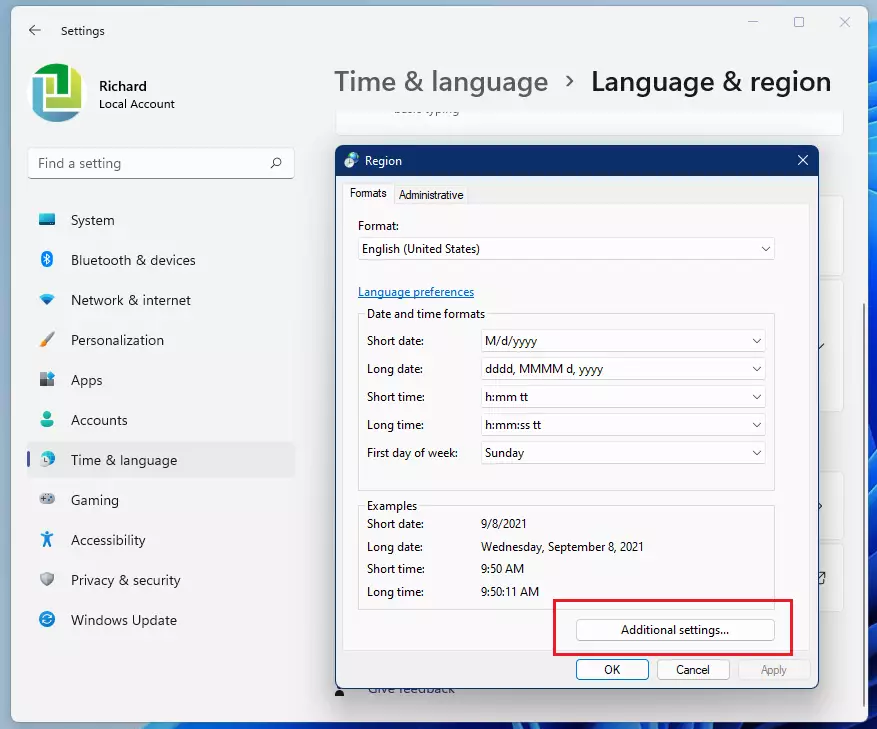
- Check that the Customize Format box is open.
- Click the Date tab at the top.
You should now see the Short date and Long date settings, along with a calendar and year range options.
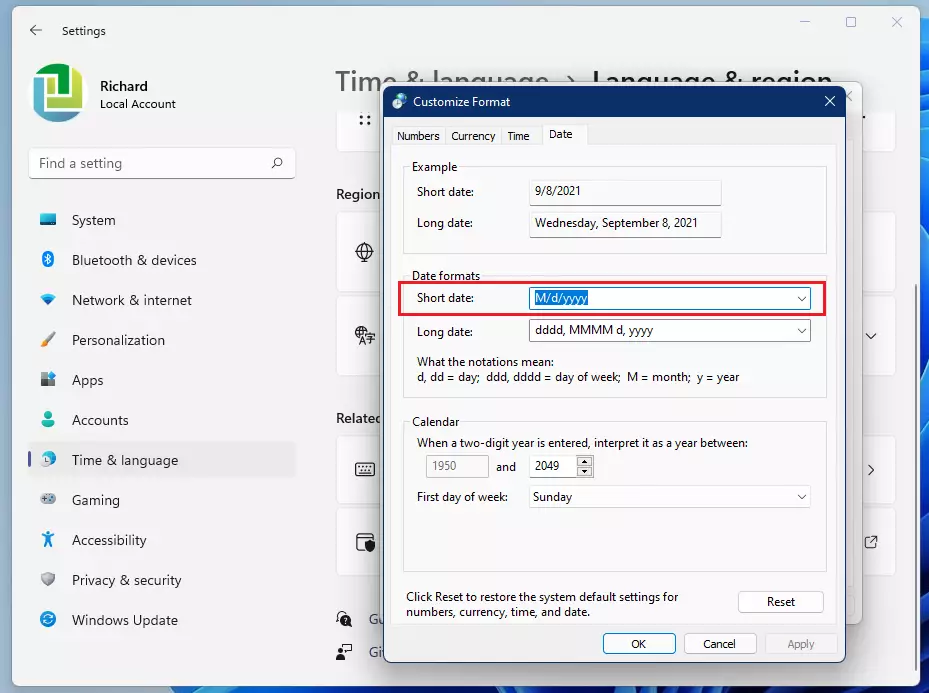
- Find the Short date box.
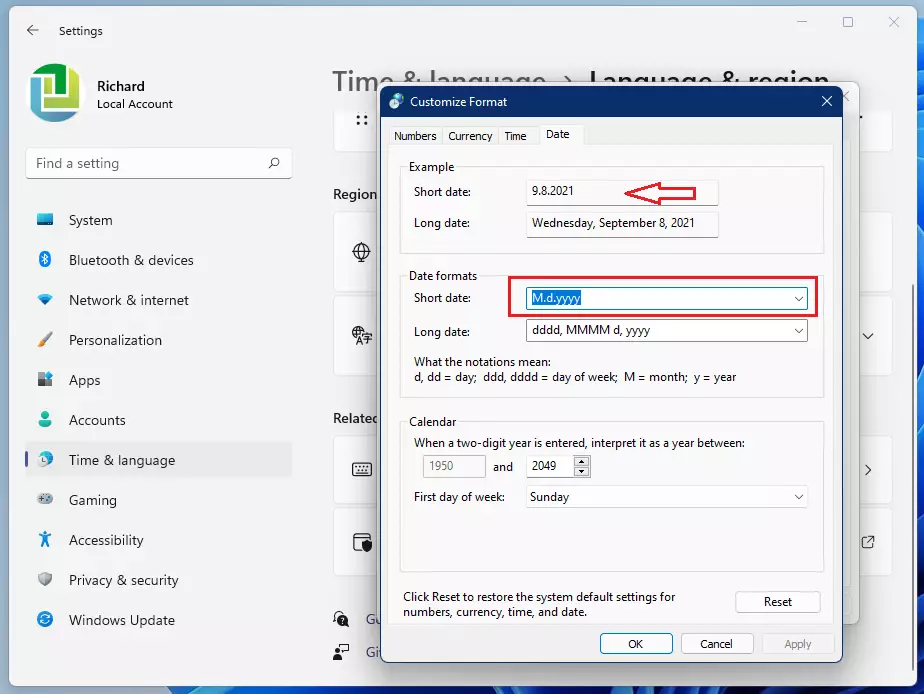
- Replace the slashes with periods. For example:
dd.MM.yyyy. Here MM is the month, dd is the day and yyyy is the four-digit year. You can reorder them if you prefer day first or year first. - Click Apply.
The sample date above the box should now show dots. If it doesn’t, check the letters. The month must be capital MM, and a lowercase mm would mean minutes.
- Optional: change the Short time format if you want a different clock style. This setting is on the Time tab of the same window.
- Click OK to save your settings.
- Click OK again in the Region box to close it. Close Settings too.
The taskbar clock should now show the dotted date. You don’t need to restart for this method.

Method 2Using Control Panel
The classic Control Panel is a shortcut to the same dialog. It’s handy if you find the Settings route slow.
- Press the Win, type Control Panel , and press Enter.
- Go to Clock and Region Region
- In the Region dialog, click the Formats tab, then Additional settings.
- On the Date tab, edit the Short date box as in Method 1.
This is the same Region dialog used in Method 1, so everything works the same from here. If you can’t find Clock and Region, switch the Control Panel ’s “View by” option to Category.
Method 3Using Registry Editor
Editing the registry incorrectly can cause problems. Before you start, back up the key: in Registry Editor, right-click the key and choose Export.
- Press Win+R, type regedit, and press Enter.
- Navigate to 🗝️HKEY_CURRENT_USER\
Control Panel \ .International - Locate the sShortDate string value and double-click it.
- Change the value to yyyy.MM.dd and click OK.
- Restart your computer for the change to take effect.
After the restart, the clock should show the year first, then month, then day, separated by periods. To undo it, restore the value you had before, or import the backup you exported.
Method 4Using PowerShell
You can also change the date format with PowerShell, a command-line shell for system administration. This is useful if you prefer the keyboard or want to script the change.
This command updates registry settings directly, so the same caution applies as in the registry method. It is a fast way for IT administrators to apply the change on many computers at once, for example through a login script or a deployment tool. If the clock doesn't change right away, sign out and back in, or restart the PC.
How to Revert to Default Settings
If you want to go back to the original format, follow these steps:
- Return to the Region dialog, then click Additional settings on the Formats tab.
- Click the Date tab.
- Click the Reset button at the bottom of the window.
- Click OK to save.
This restores the default Windows date format for your region. If you changed the short time format too, the reset brings that back as well.
Summary
Customizing the Windows 11 date format lets you choose how dates appear and makes the PC feel more your own. Whether you use the Settings app, the Control Panel, or advanced tools like the registry and PowerShell, you can switch from slashes to periods. For most people the Settings or Control Panel route is the safest. Keep the registry and PowerShell methods for cases where you need them, and remember that Reset always brings the default back.
Have a question about this guide?
Answered by AI from this guide. Good questions may be added to this page — please don't include personal details.
Did this guide fix your problem?

About the Author
Richard
Tech Writer, IT Professional
Richard is a writer at Geek Rewind who turns complex IT tasks into clear, step-by-step guides. He draws on years of hands-on experience in system administration and enterprise IT operations, focusing on Windows, Linux and WordPress: the problems people actually run into, and the fixes that work. His server and WordPress guides come from systems he runs himself. Richard builds and maintains the platform behind Geek Rewind, from its Ubuntu servers and Nginx configuration to its custom WordPress plugins. Many new tutorials start with readers' questions, and he's always glad to answer them in the comments.
[…] How to change dates and times in Windows 11 […]
[…] post describes the steps to change the date format in Windows […]
[…] How to change the date format in Windows 11 […]