How to Boot into Windows Recovery Environment in Windows 11

The Windows Recovery Environment (WinRE) is a built-in repair tool. It lets you fix startup problems, reset your PC, or restore a backup before Windows 11 version 22H2 or later loads. It is included in every edition, Home and Pro alike, and you do not need to install anything.
You can open it with a few clicks from your desktop. Windows also opens it for you if your computer fails to start twice in a row. Knowing how to reach this menu gives you a reliable safety net when your system crashes or refuses to boot properly. This guide covers the Settings method, three alternatives for when Settings is not available, and what each repair tool in WinRE does.
Open Settings , go to System Recovery, click Restart now next to Advanced startup, then click Restart now in the confirmation box. Your PC reboots into the blue Choose an option screen where you can access repair tools like Troubleshoot.
Understanding the Windows Recovery Environment Architecture
Think of WinRE as a separate, lightweight operating system that sits alongside your main Windows installation. It lives in its own hidden recovery partition, so it still works when your normal copy of Windows is damaged.
Because it is separate, it can repair files that Windows cannot fix while it is running. That is why the tools in it are useful for boot failures, corrupted system files, and bad updates.
How to enter the Recovery Environment
If Windows still starts and you can reach the desktop, this is the easiest route. You open WinRE from the Settings app by going to System and then Recovery. The menu you land in helps you fix boot problems, restore your computer from a backup, or reset Windows when your PC will not start normally.
The steps end with a restart.
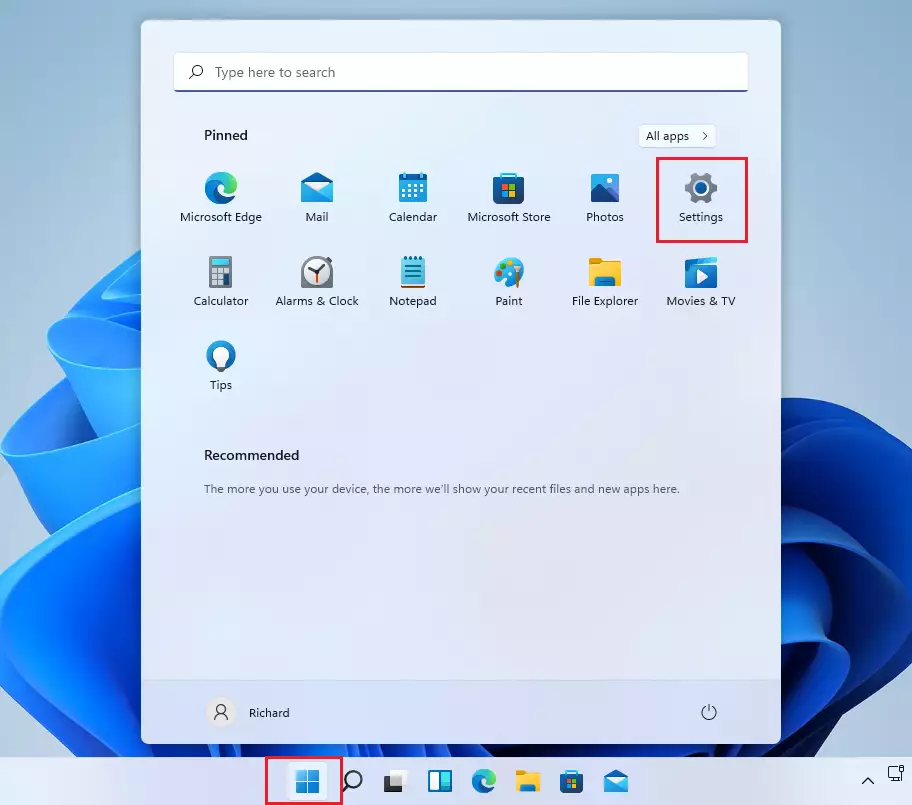
- Open the Settings app. Press the Windows key + I on your keyboard, or click Start and then Settings. The Settings window opens with a list of categories on the left.
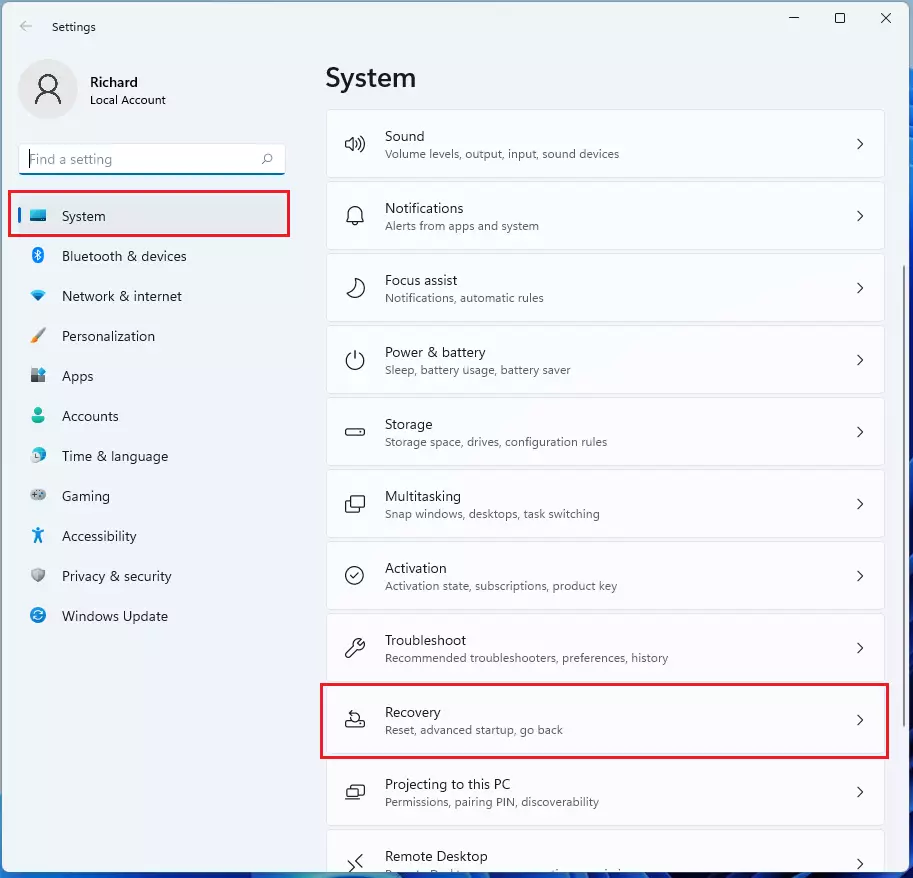
- In the Settings window, click System, then scroll down and select Recovery (Settings System Recovery). You should see a list of recovery options on the right.
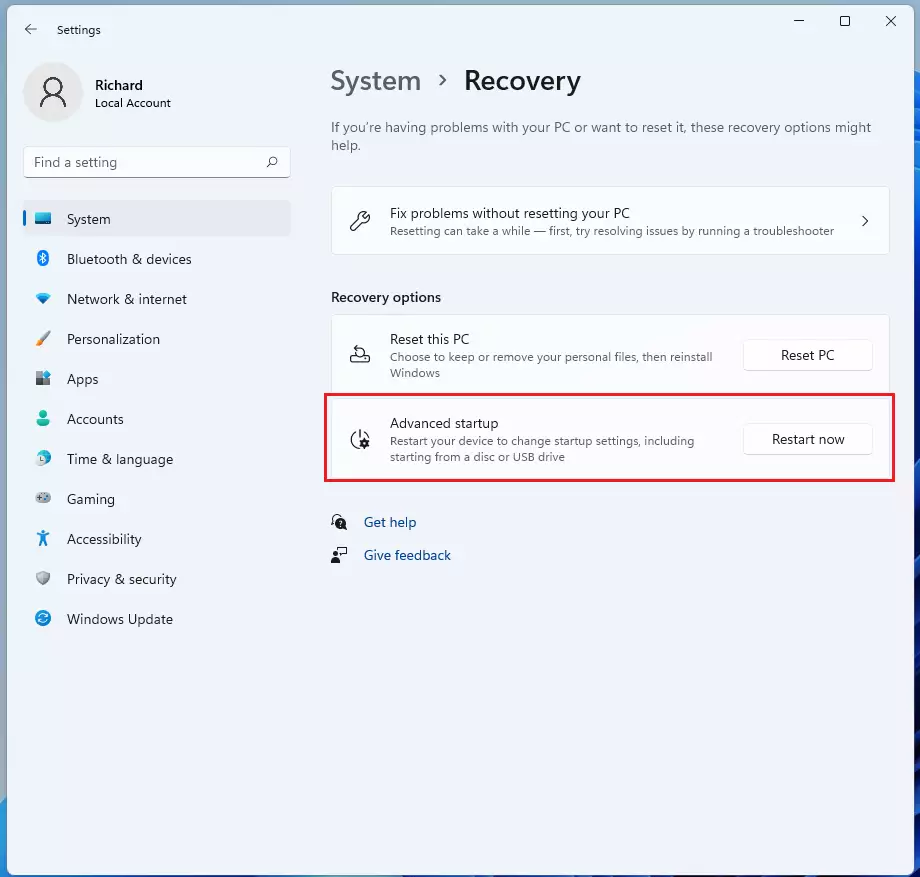
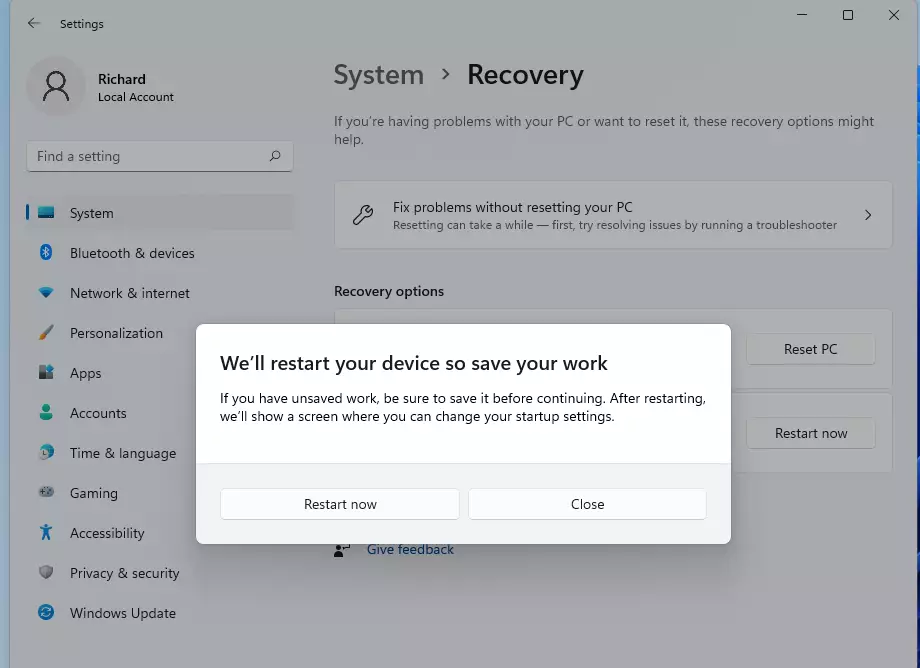
- Find Advanced startup and click the Restart now button next to it.
- A confirmation box appears and warns you that Windows is about to restart. Click Restart now again to reboot your machine into the recovery menu. The screen goes dark for a moment, and a short "Please wait" message may show.
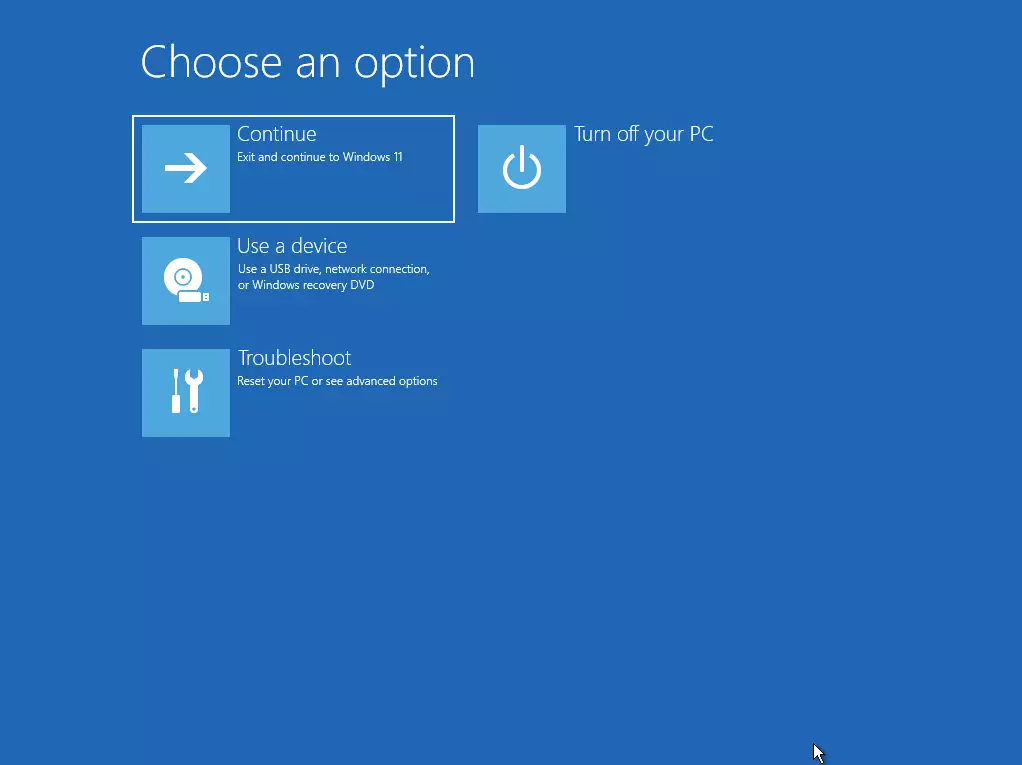
- Once the computer restarts, a blue screen titled Choose an option displays several choices. Click Troubleshoot to view the available repair utilities.
If you opened WinRE by mistake, click Continue on the same screen. Your PC then exits recovery and starts Windows normally. Nothing has changed unless you picked a repair tool.
Alternative Methods
You can reach the Windows Recovery Environment without using the Settings app. One way is to hold down the Shift key while clicking Restart in the Start menu. Another is to run a shutdown command from an administrator Command Prompt that boots your PC straight into the recovery menu. The third is a recovery USB drive, which is the one to use when Windows will not start at all.
- Shift + Restart: Open the Start menu, click Power, and hold the SHIFT key while clicking Restart. Keep holding Shift until the blue recovery screen appears. This is the fastest way to trigger the recovery menu. It also works from the sign-in screen, so you can use it when you cannot log in but can still see the Power button.
- Command Prompt (Requires Admin Privileges): Open the Command Prompt as an administrator and type the following command:
shutdown /r /oPress Enter and the PC restarts into the recovery menu. Save your work first, because the restart is not optional once the command runs. If you get an "Access is denied" message, the Command Prompt was not opened as administrator. Close it and reopen it with Run as administrator. - Recovery Media: If your system is unbootable, use a USB recovery drive. Insert the drive, boot your PC, and select the USB from your BIOS/UEFI boot menu. The key that opens the boot menu depends on the manufacturer, and F12, F10, F9 and Esc are common. Check your PC's manual or the key hint on the startup screen. After you choose your keyboard layout, you reach the same recovery menu. If you boot from a Windows 11 installation USB instead, click Next on the setup screen, then choose Repair your computer in the lower-left corner.
Essential Tools Inside WinRE
The Windows Recovery Environment (WinRE) includes several built-in troubleshooting tools to fix your computer when it fails to start. You can use Startup Repair to fix common boot failures. You can also open the Command Prompt to run advanced commands that repair damaged system files and check your hard drive for errors.
To find most of these tools, click Troubleshoot on the first blue screen, then Advanced options. Reset this PC sits one level up, directly under Troubleshoot.
- Startup Repair: Automatically fixes common issues that prevent Windows from loading. Try this first when the PC will not boot. It can take several minutes and may restart the PC on its own.
- Command Prompt: Allows you to run manual commands like
chkdsk C: /f /rto fix disk errors,sfc /scannowto repair system files, ordism /image:C:\ /cleanup-image /restorehealthfor deep image repairs. WinRE asks you to pick an account and enter its password before the prompt opens. If the drive is encrypted with BitLocker, you may also be asked for the recovery key. Drive letters inside WinRE can differ from what you see in Windows, so your Windows drive may not be C:. Confirm the correct letter before you run a repair command. - System Image Recovery: Restores your entire computer from a previously saved backup file. This only works if you created a system image earlier. Anything saved after that image was made is lost when you restore it.
- Reset this PC: Reinstalls Windows. Warning: Depending on your choice, this can remove all your personal files and installed apps. Always back up your data first. Read the options carefully. Keep my files removes apps and settings but keeps your personal files, while Remove everything wipes the drive.
Summary
Start with the least destructive tool, which is Startup Repair. Move on to the Command Prompt tools next, and leave Reset this PC for last. If you can still reach the desktop, take a backup before you try any of them.
Was this guide helpful?

About the Author
Richard
Tech Writer, IT Professional
Richard is a writer at Geek Rewind who turns complex IT tasks into clear, step-by-step guides. He draws on years of hands-on experience in system administration and enterprise IT operations, focusing on Windows, Linux and WordPress: the problems people actually run into, and the fixes that work. His server and WordPress guides come from systems he runs himself. Richard builds and maintains the platform behind Geek Rewind, from its Ubuntu servers and Nginx configuration to its custom WordPress plugins. Many new tutorials start with readers' questions, and he's always glad to answer them in the comments.



No comments yet — be the first to share your thoughts!